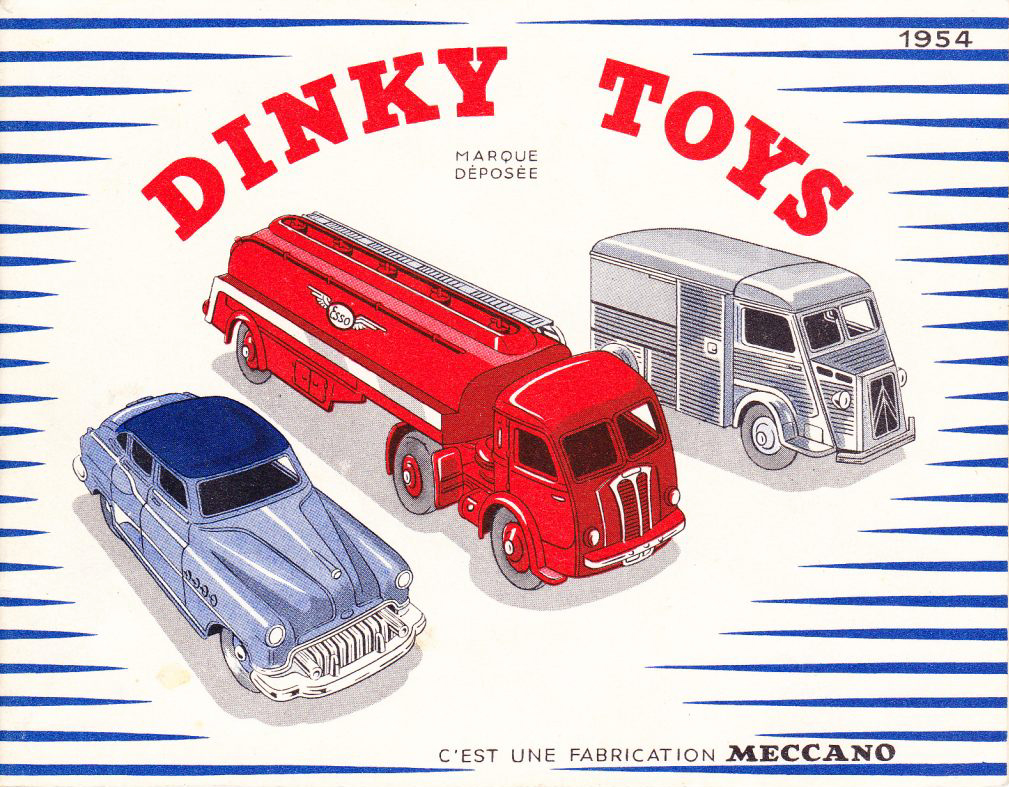
The early 1950s were a busy time for Meccano Limited, with both their English and French Dinky Toys factories busy introducing desperately needed new models. Both companies came out with several models of typical American cars during this period, one of which is the subject of this article, the Dinky 24V/538 Buick Roadmaster sedan which was introduced by the French Dinky Toys company in 1954.
This lovely model is based on the 1952 Buick Roadmaster, which seems a bit odd since the Dinky model wasn’t released until 1954. Unfortunately, there’s no written history to peruse and determine why a later model wasn’t chosen or why the Dinky model wasn’t released earlier.
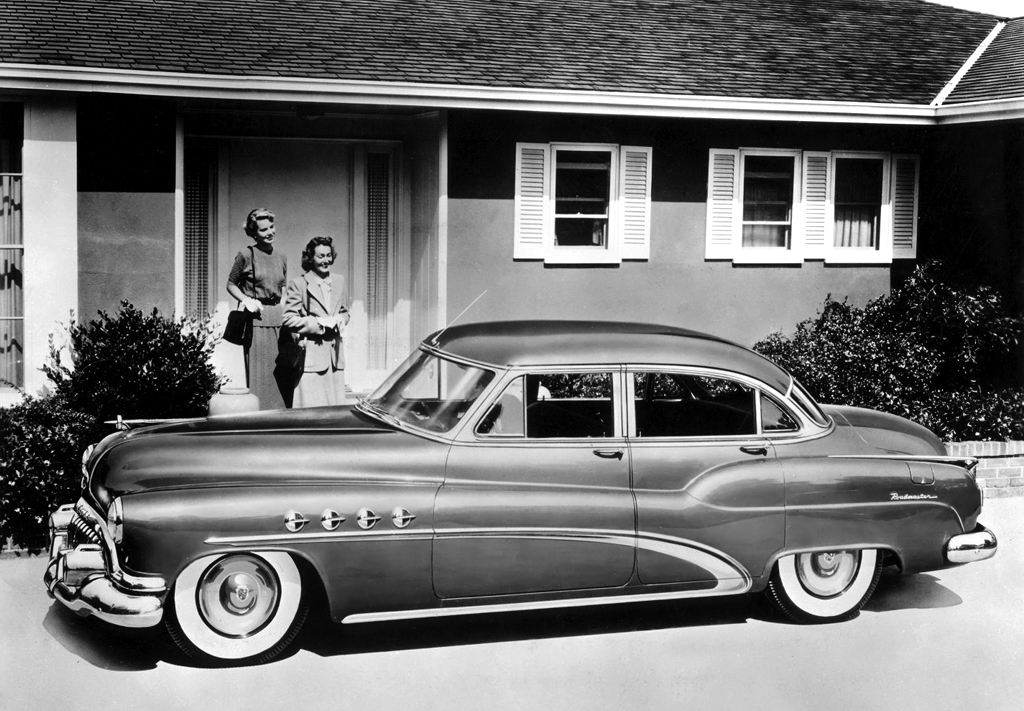
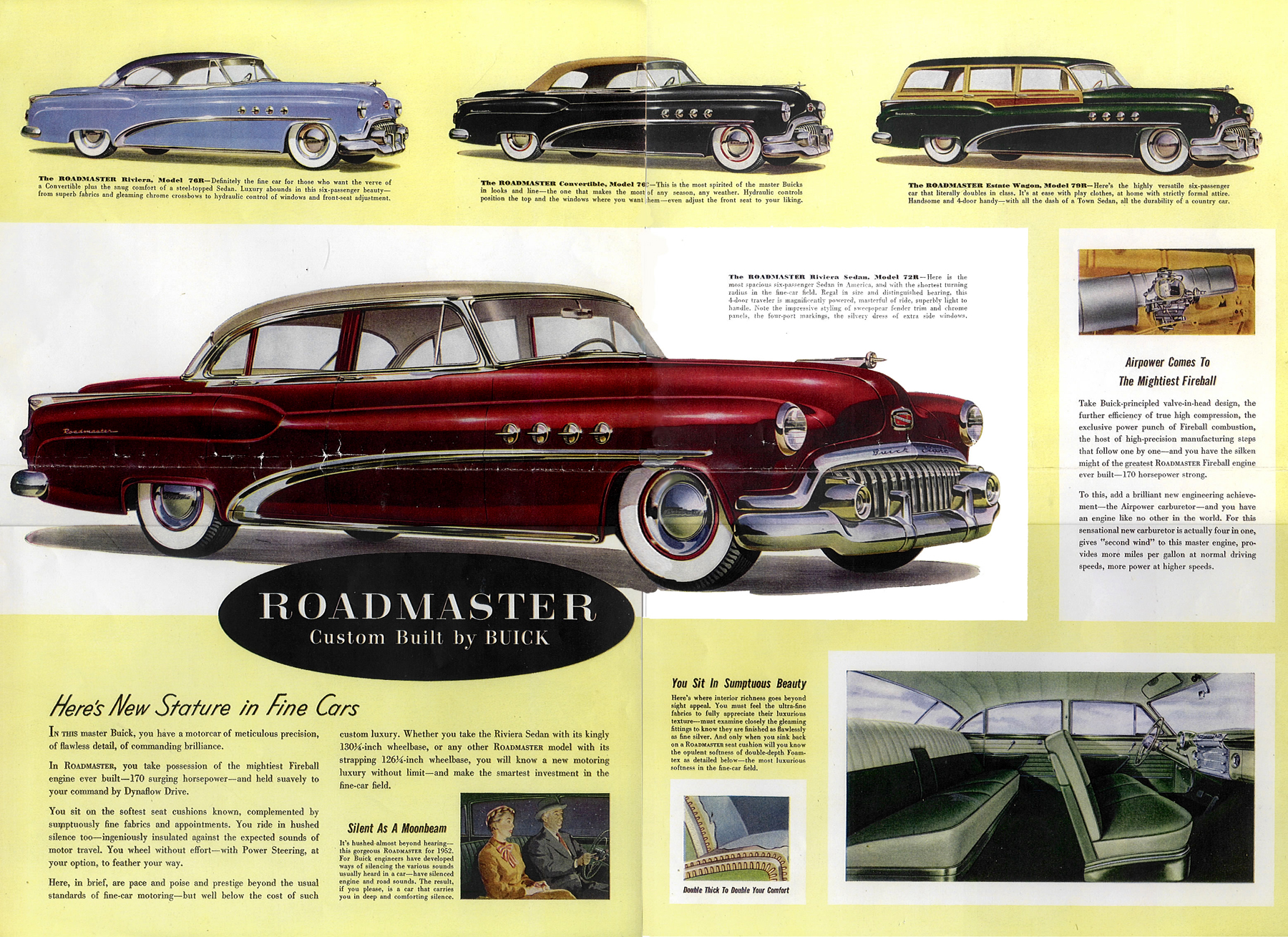
The 1952 Buick was largely a continuation of the 1951 model with some exterior changes, as well as an improved Fireball 8 cylinder engine, with more power. The new V‑8 wouldn’t appear until 1953. Buick had always been an upscale car, and the Roadmaster represented the best that Buick had to offer. Quoting from the sales brochure:
Here is the most lordly, most spacious of Buick’s six-passenger sedans. Regal in size and distinguished bearing, this four-door traveler is magnificently powered, masterful of ride and superbly light to handle.
During 1952, about 32,000 Roadmasters were produced, and they sold for the then princely sum of USD 3,200 each.
Many of the other American cars produced by Dinky Toys during this era were decent enough models, but some of them weren’t very accurate representations of the originals. In particular, the English produced Cadillac Eldorado and Packard Convertible were both relatively poor models and not very true to scale. The Cadillac was too narrow and the Packard was too wide, and this was obvious to me even as a young boy.
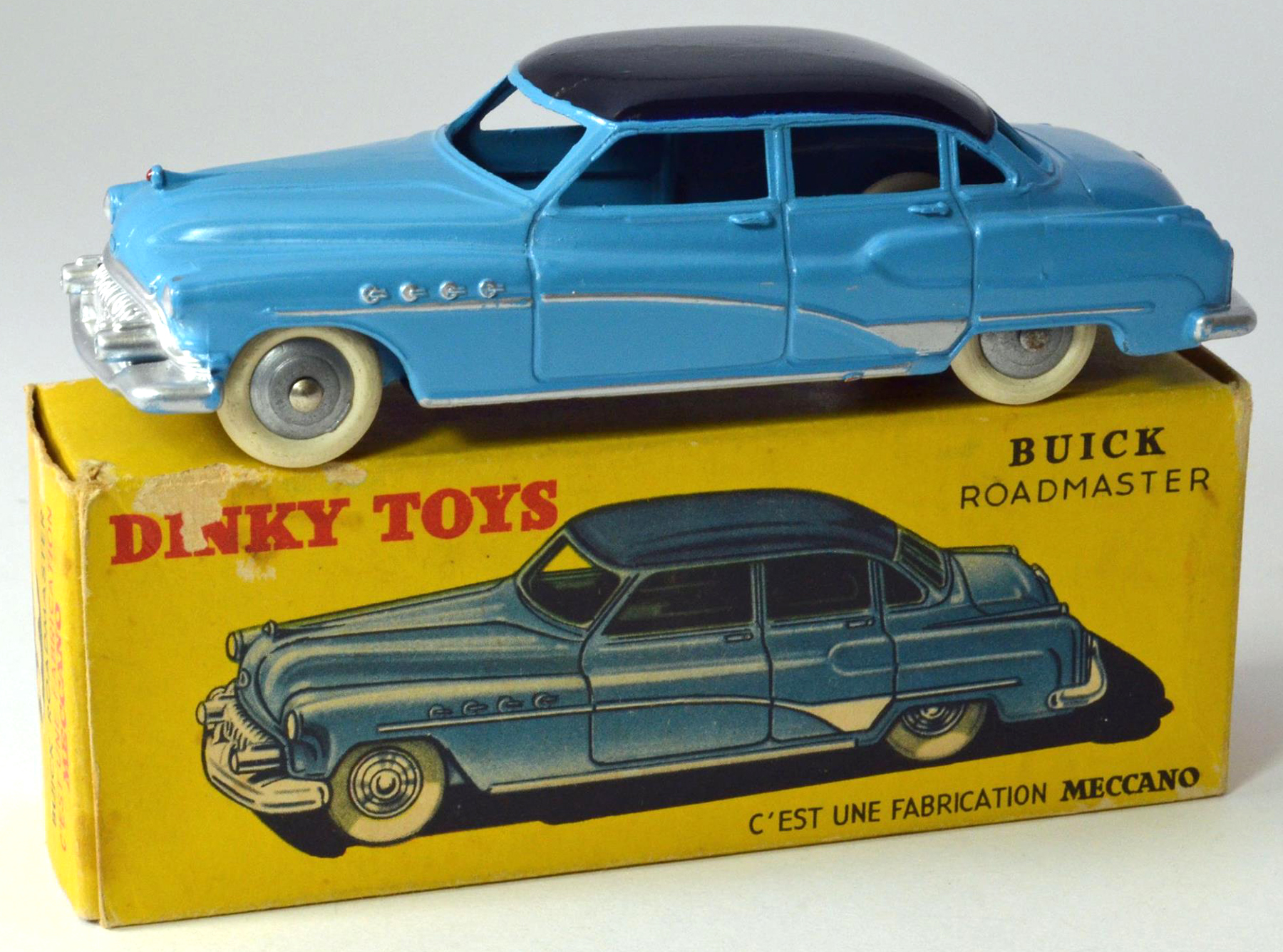
However, the Buick Roadmaster appears to be nearly a masterpiece of diecasting for 1954. It’s a very accurate rendition of the real car, with all the proportions being very close to the full size vehicle. This is impressive, especially because the model’s dies were produced without the help of modern computer imaging techniques. The level of detail in the model is equally impressive, especially the famous Buick teeth front grill, a design that was used for several years. It’s quite intricate and has been modelled almost perfectly, along with the front bumper and over riders. Each side of the car also has the famous Buick “sweepspear” running the length of the model from front to back, along with the iconic Buick port holes. And to cap things off, the rear deck or trunk includes a nicely represented emblem and handle.
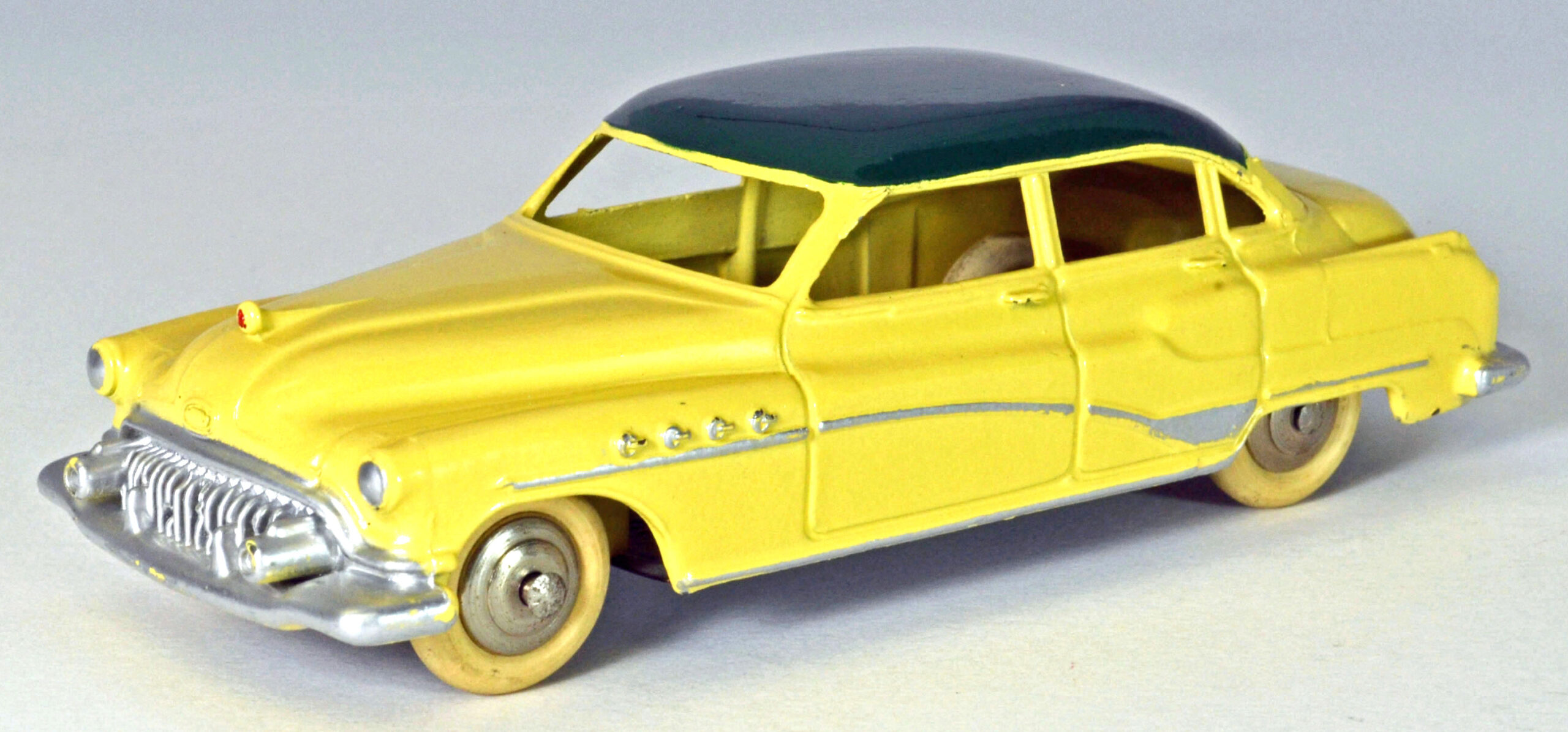
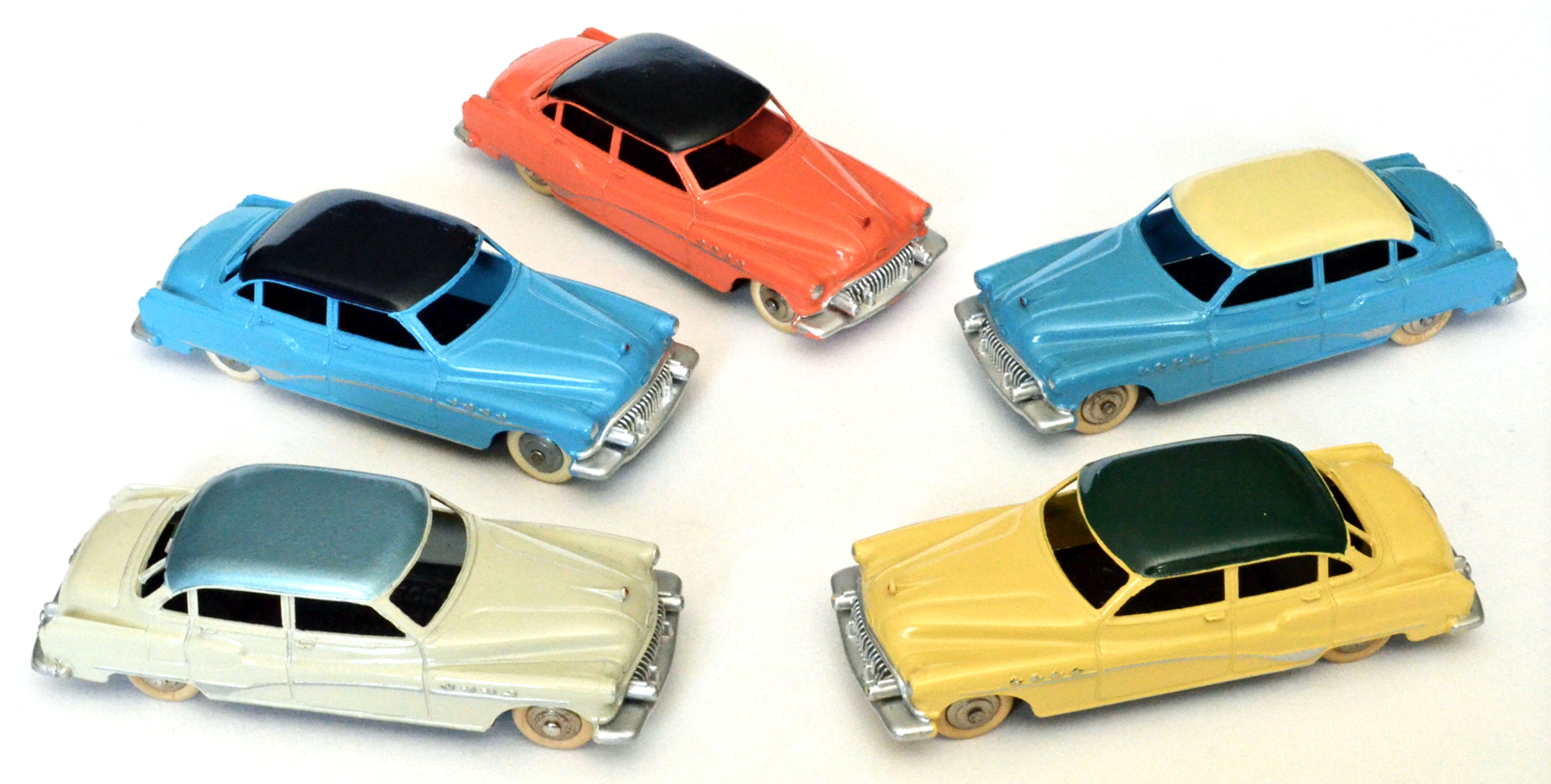
With such a wonderful diecast model to work with, the French Meccano factory was then challenged to finish it with a paint job to do it justice — and they did. When it was introduced in 1954, it was available in two color schemes: light blue with a dark blue roof, and butter yellow with a dark green roof.
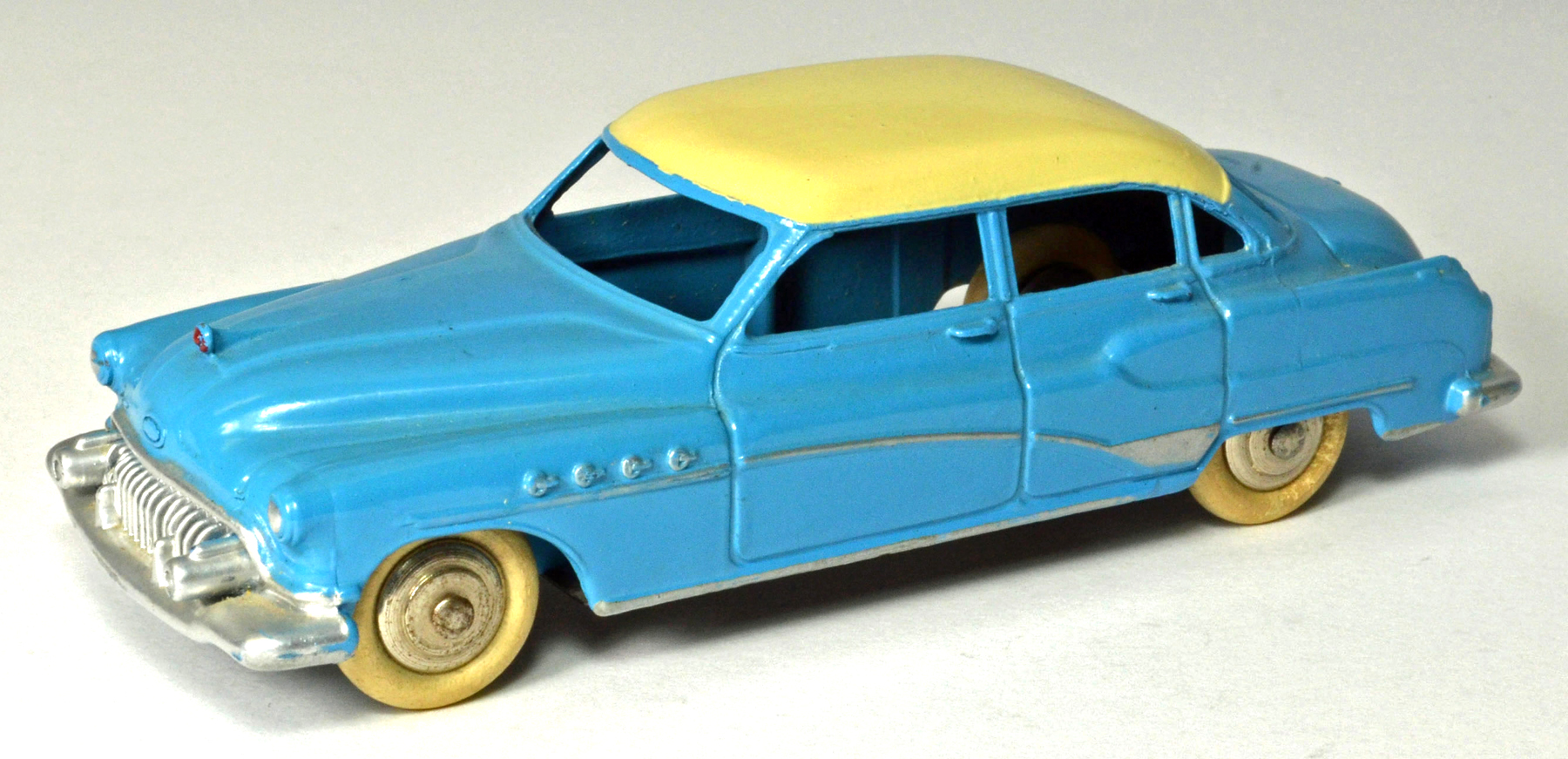
Later, a light blue model with cream roof was added to the range, and finally in the last two years of production, black on salmon and metallic blue on ivory models were introduced.
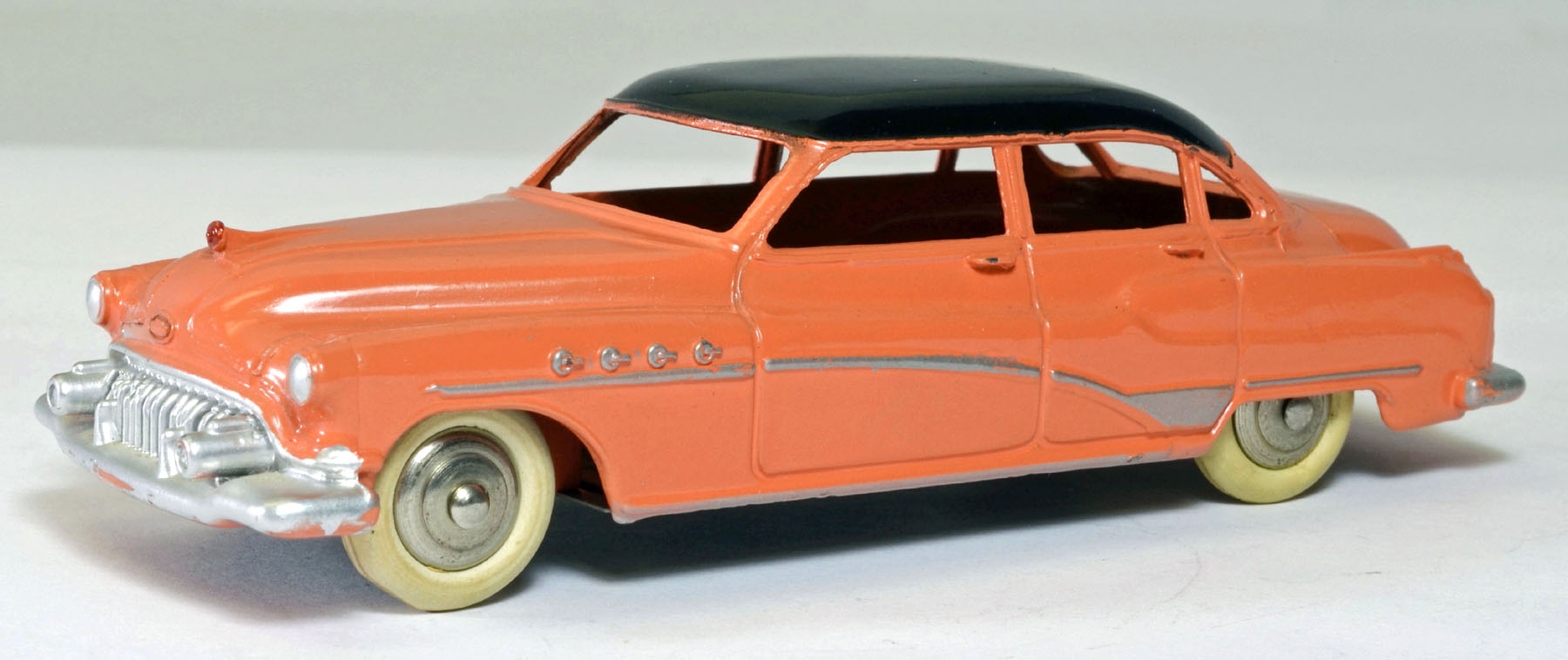
But perhaps the nicest finishing touch was the superb application of silver trim on the model’s details. Painting the very slim sweepspear on the side had to be difficult, as well as carefully masking the front grill area. Even the tiny trunk handle has been very carefully detailed in silver, and I’m sure the rear red tail lights were hand painted.
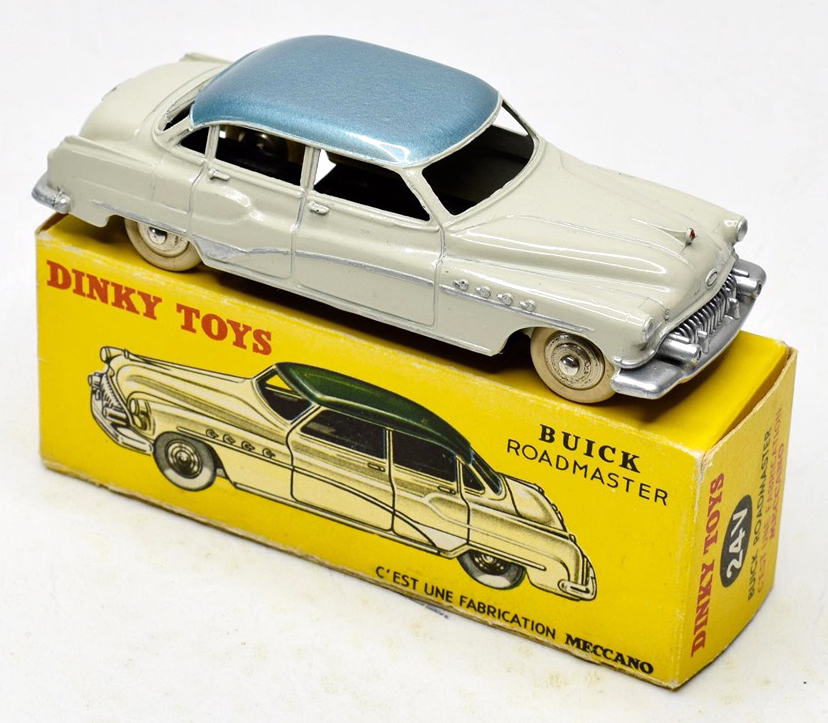
There were few changes during the Dinky Buick Roadmaster’s six year run. The very first models came with plain Zamac wheels, which appear to be of a dull grey color, but this was changed to the familiar shiny wheels that normally graced French Dinky models. The early models also featured a smooth interior roof, which later became checkered. The early boxes featured the model with a shadow beneath it and the word “Miniatures” printed on the side. Later boxed omitted this.
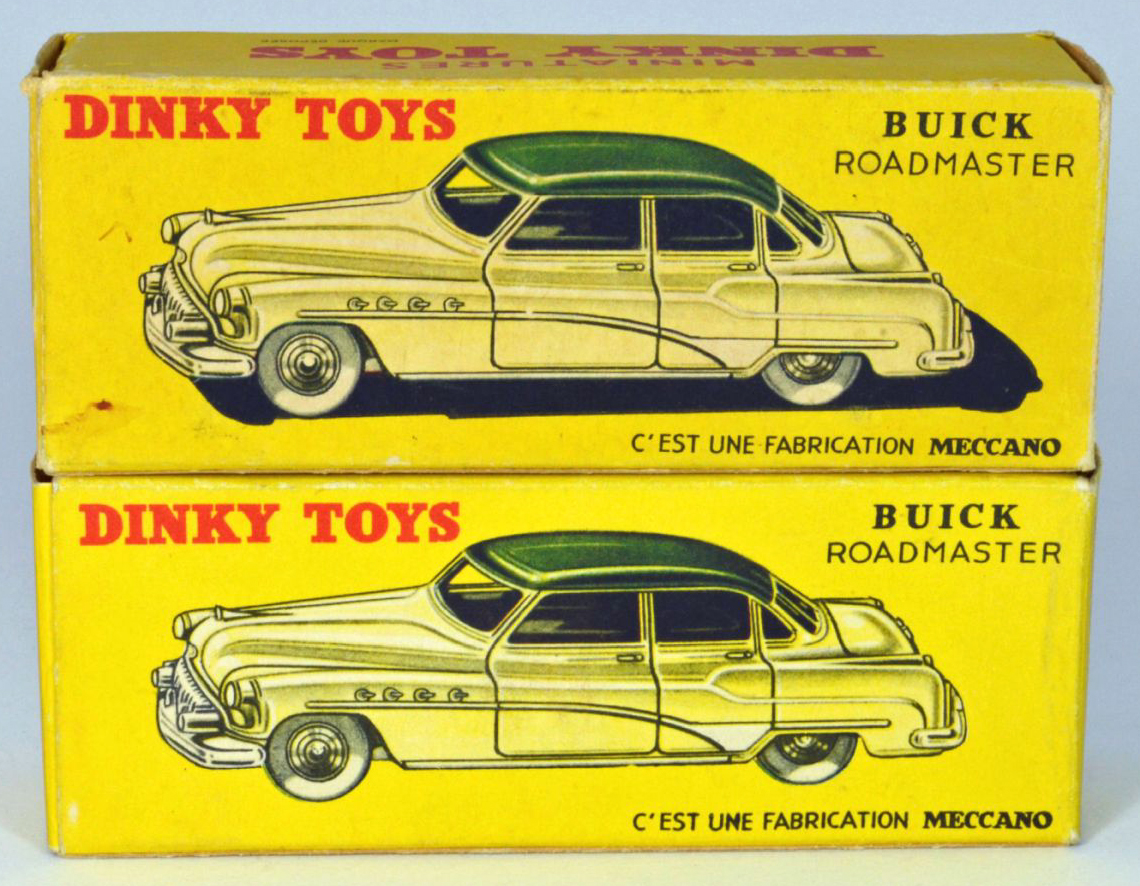
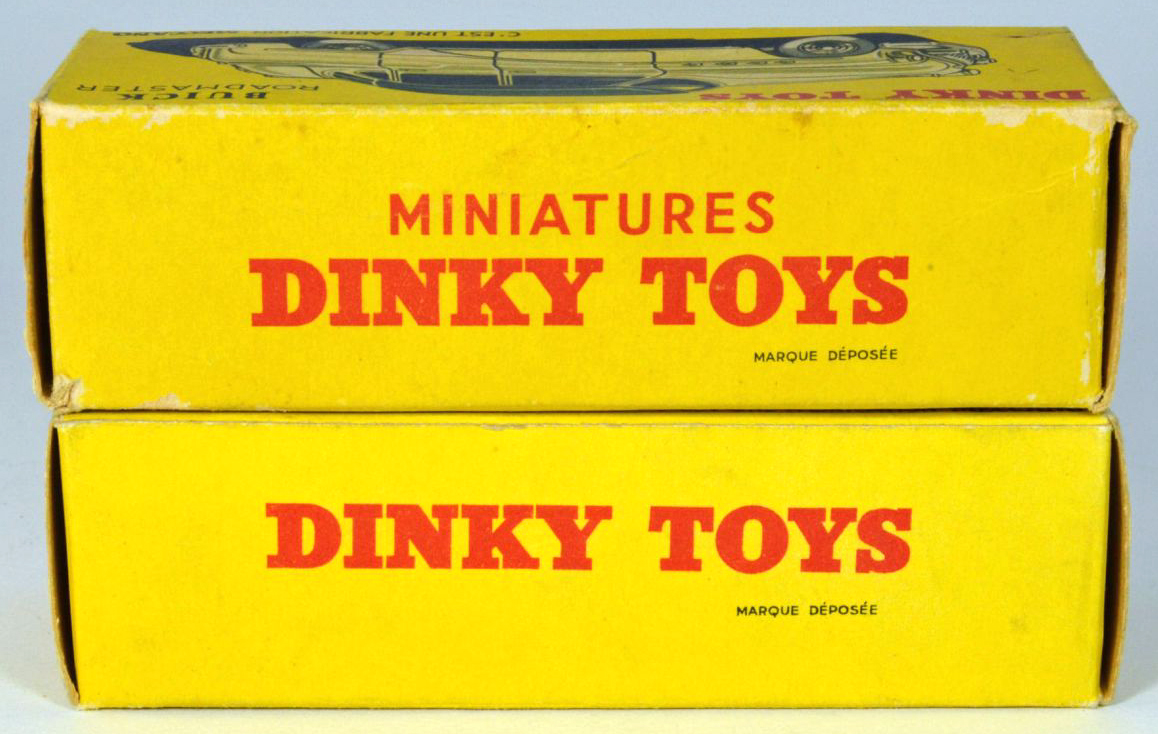
The number 538 was assigned to the model in 1959, the last year of its production. All in all, the Buick Roadmaster was a lovely mid-century model and to me, at least, was one of the best that Dinky produced in that era.