I was born in 1970 and for the first five years of my life, my parents and I lived on the fourth floor of an apartment building in Fort Lee, New Jersey, a very urban suburban town. Our building was perched on a hill overlooking busy Interstate 95, and the George Washington Bridge was less than 1000 feet away. It was so close that the lights on the bridge would shine into my bedroom at night.
There was never a shortage of commercial vehicle traffic to stare at through the window or look at on walks with my parents, and as a young child I quickly became fascinated by commercial vehicles. Interstate 95, Interstate 80 and Cross Street where the apartment located was always filled with truck traffic going to and from New York City. But there was one truck apart from all others that caught my eye, and that was Mercedes-Benz. The big chrome three pointed star that adorned the grill left a lasting impression on me at a very early age.
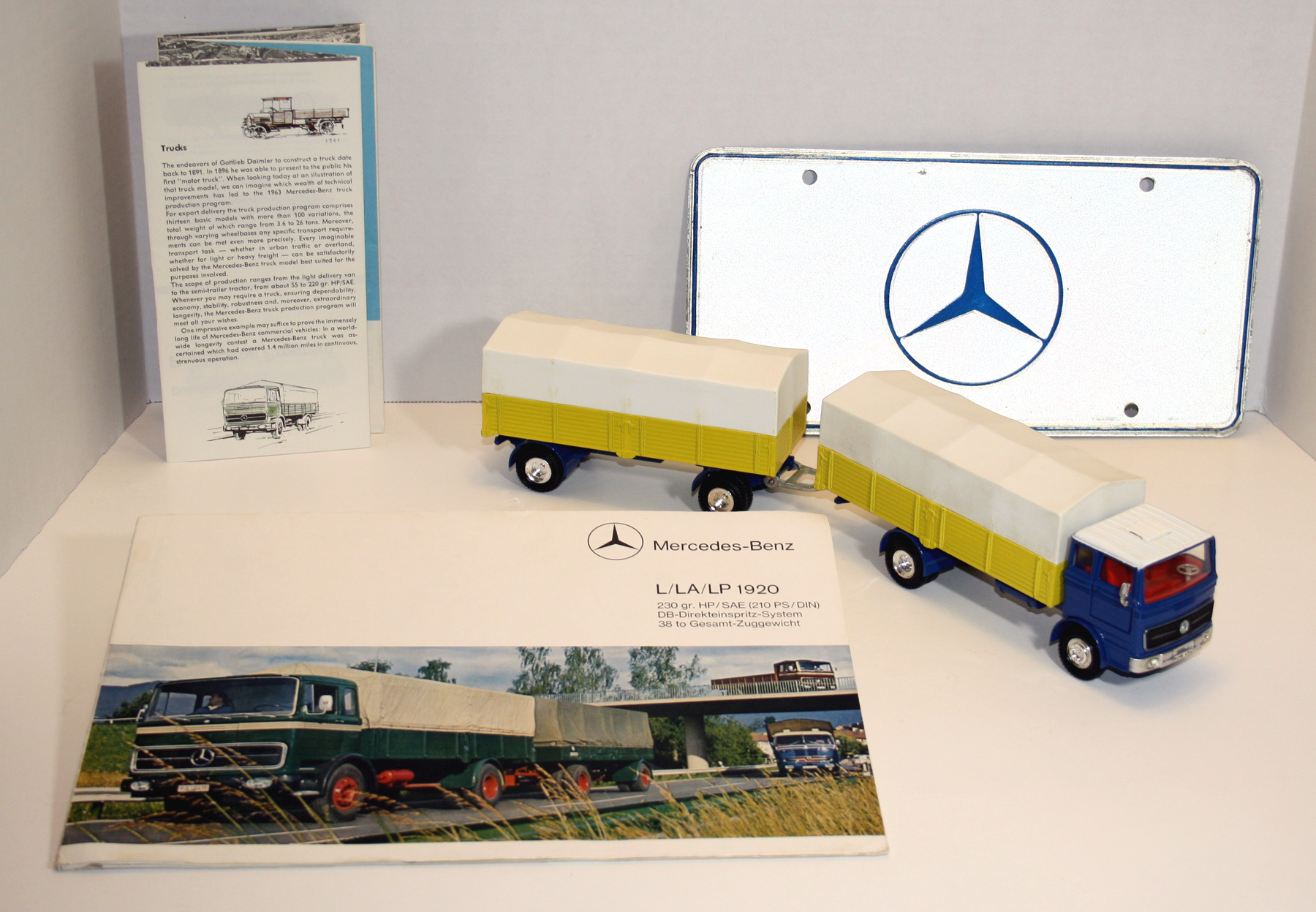
The 917 Dinky LP 1920 Mercedes Benz truck and trailer was released in 1968 and is shown here with related Mercedes Benz factory material: A 1963 Mercedes Benz LP 1920 brochure, a smaller 1963 pamphlet with a sketch of the LP 1920 truck and a vintage Mercedes Benz North America license plate, all which complement the model superbly.
For a brief period, the US headquarters of Mercedes-Benz was located literally right down on the road from me on Linwood Avenue in Fort Lee, and since the mid-1960’s, Mercedes-Benz had been gradually entering the massive US truck market, especially in the lucrative NY/NJ area. I saw Mercedes-Benz trucks daily and I was so enamored by them that my Montessori school teacher Ms. Kathy had one drawn on my cubby box. Other kids wanted animals or superheroes drawn, but I wanted a truck. Naturally, I had to have my own toy trucks to match, and my parents obliged.
My first Mercedes-Benz trucks were the Matchbox Mercedes-Benz covered truck and an Efsi model, also Matchbox sized which were made in Holland. Both these toys were based on the real Mercedes-Benz LP 1920 models which were never imported into the USA by Mercedes-Benz.
The L in “LP” stands for “Lastwagen” which is German for “truck”, while the P stands for “Pullman cab” which relates to the advanced spacious cab over or forward control cab designs that these trucks utilized. Pullman harks back to the early American railway cars that were very spacious and luxurious. Mercedes-Benz often called their flagship 600 limousine Pullmans. So “LP” is “Truck Pullman” in English.
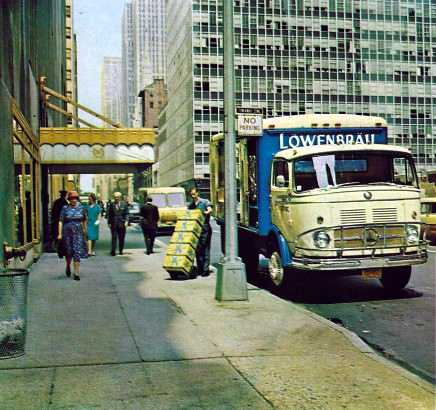
Beginning in the early 1960’s, Mercedes-Benz slowly began to enter the massive US truck market and this handsome first generation Mercedes-Benz LP shown above was well suited for the job of hauling beer for Lowenbrau. For the truck enthusiast at the time, seeing this truck would have been a very rare treat. It was photographed around 1961 while delivering Lowenbrau to the Waldorf Astoria Hotel in New York City. Note the optional decorative wheel covers and the chrome grill guard, a must for inner city delivery trucks to prevent front end damage. Tekno and Wiking modelled these early first generation LP trucks.
When I was about seven, while browsing through a group of Dinky Toys catalogs that were given to my mom and I from a local retailer, Five Corners Toy and Gift in Westwood, NJ, I discovered that Dinky Toys had made a model of a LP 1920 Mercedes-Benz truck and trailer. However, it wouldn’t be until 1981 that I would finally acquire one.
The 917
The Dinky 917 was introduced in 1968 and withdrawn in 1974. It was the second longest Dinky Toy commercial vehicle ever made after the earlier 983 car carrier and trailer. Modelled after the typical European rigid truck and trailer in 1/42 scale, it was based on the real Mercedes-Benz LP 1920 trucks that were unveiled at the Frankfurt Auto Exhibition in late 1963. The LP model trucks boasted an extremely modern design with a very clean, simple look and uncluttered lines. Many have said the LP was the most modern truck design of the 1960’s and its look is still timeless more than sixty years later. The large cab, often referred to in German as “Kubische Kabine” (Cubic Cabin) was designed to maximize interior space and the tall windows afforded excellent visibility. There was an option for two bunks, and the expansive windshield required three windshield wipers.
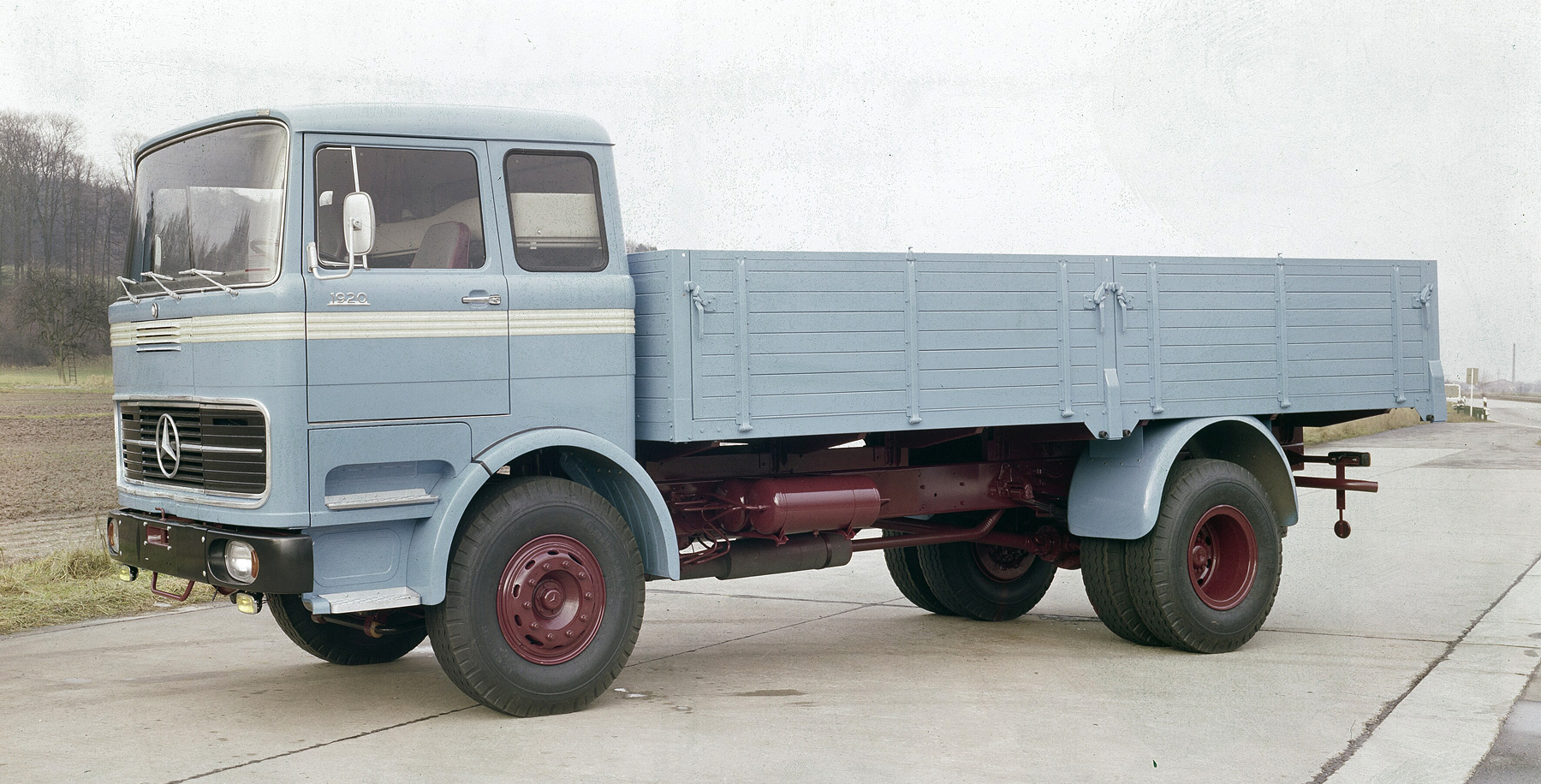
This rare color Mercedes Benz factory photo dates back to 1963 and shows an early LP 1920. Note the clearly visible wooden slats on the double sided drop down cargo bed.
Image: Mercedes Benz Trucks Classic archive
The naming was also new for 1963 and the leading one or two numbers designated the gross vehicle weight rating while the last two digits indicated the horsepower rounded off, or with a zero as needed. The LP 1920 would have translated into a 19 ton gross vehicle weight truck with a 200 horsepower diesel engine. They were built at the Manheim plant and were very good sellers until 1973 when they were replaced by the NG model.
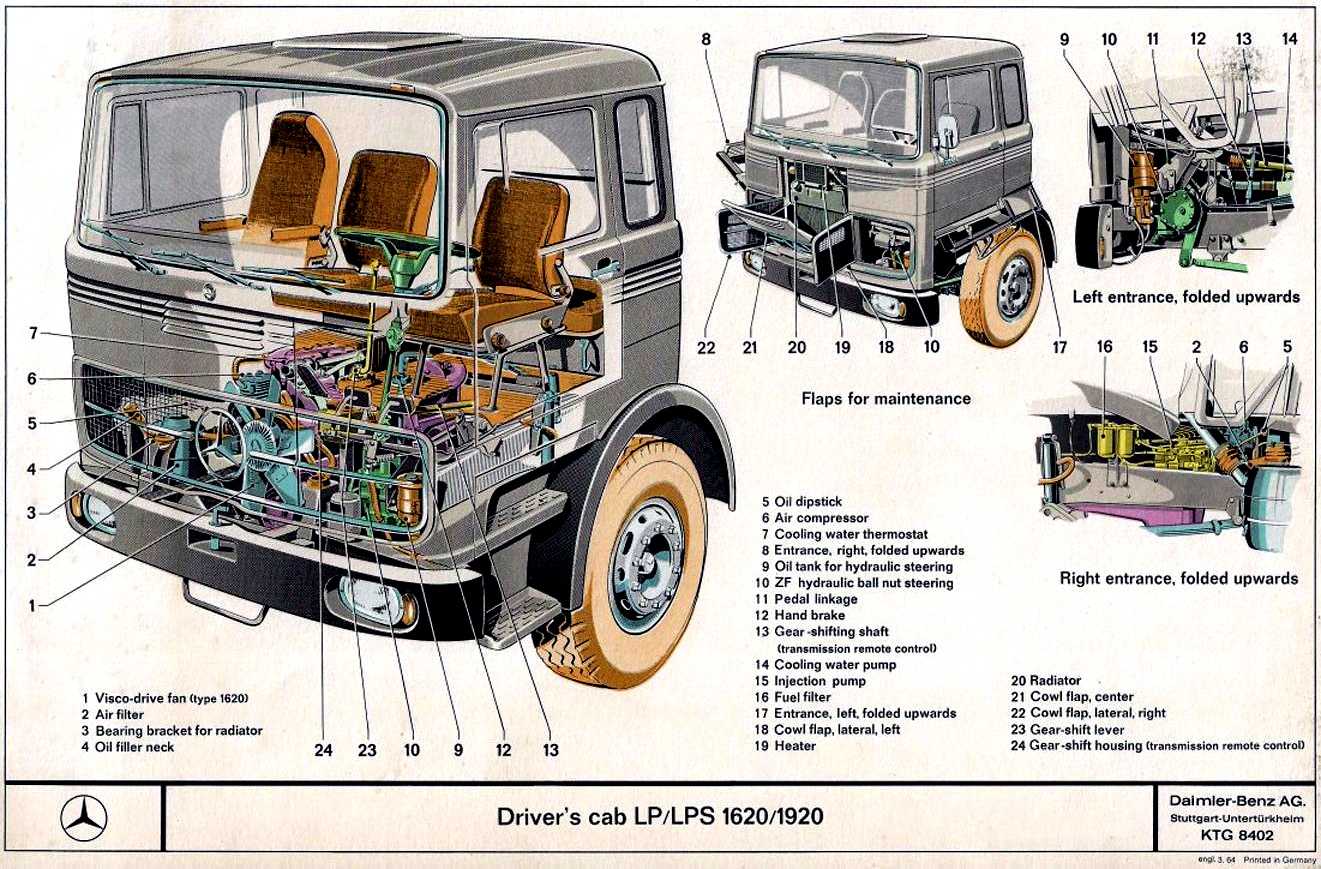
The 1964 cutaway flyer from Mercedes-Benz shown above illustrates the mechanicals of the LP/LPS 1620/1920 Drivers cab. Despite being a cab over engine truck, the cab did not tilt for engine access on early models. Maintenance flaps were instead utilized. Close examination reveals many of the details that Meccano captured for the Dinky 917 including the three cab seats, with armrests on the passenger side seat.
The Dinky 917 was heavily laden with features which were all the rage at Meccano at the time, including a very unique one-off suspension system and it was a very expensive model to produce. It was first previewed in the February 1968 issue of Meccano Magazine. Writer Chris Jelley who reviewed the model wrote:
The truck itself is built up on an excellent reproduction of the Mercedes-Benz LP 1920 cab and chassis, to which a 6 inch long truck body has been fitted. The cab, however, is undoubtedly the star of the show, being the most sophisticated commercial cab ever produced by Meccano or indeed by anybody else to my knowledge.
Not only is it fitted with windows, seats and steering wheel, but it also has an opening roof ventilator and opening upholstered doors — the very first diecast on the market with this latter feature! The right hand passenger seat, incidentally, has proper armrests.Other features include wing mirrors, big oval jeweled headlamps, and German style license plates. But the thing I personally found most interesting is the superb suspension system fitted to all the wheels, both of the truck and trailer. The fact that the suspension is included in such a large model is in itself, fairly unusual, but the Dinky system used has never appeared on a Dinky Toy. It consists of sprung “plungers” acting on each axle, the axles being mounted in slotted bearings to allow vertical movement. The result is excellent.
Both the truck and trailer bodies are identical, being large detailed castings equipped with opening tailgates and carrying detachable molded canopies, shaped to represent tarpaulins. The swiveling bogey wheels at the front of the trailer are attached to a special tow bar which slots into a recess in the back of the truck. The chassis is blue with the truck and trailers bodies in yellow, and the cab roof and tarpaulins are white. All in all, a very pleasing sight.
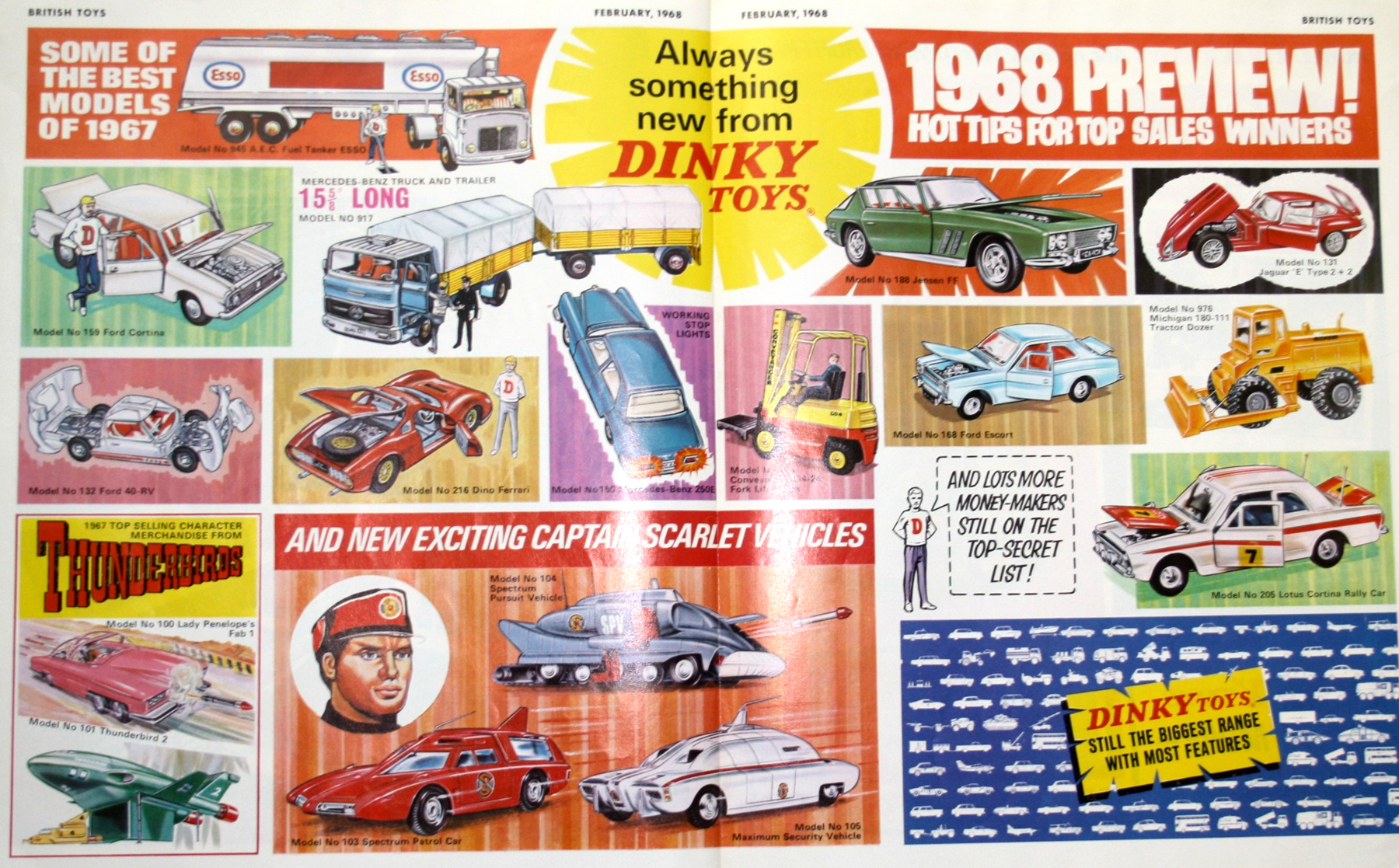
Meccano issued this rare large format catalog shown above in late 1967 to accompany the February 1968 issue of British Toys, a trade publication for the British toy industry. This catalog is a sight to behold with many colorful illustrations of the wonderful new for 1968 Dinky toys, including the 917.
Meccano packed the 917 trucks in all card boxes with a simple colorful illustration of the truck on the exterior and a very attractive illustrated inner stand with an illustration of a German Autobahn. This insert in the all card box was a nice holdover from an earlier era when Meccano spent heavily on all carded box design even when they already had later changed to blister boxes.
Instructions on hooking and unhooking the trailer were printed on the rear of the insert. The card box evolved from having the old Dinky logo, to one with the new Dinky logo and a Meccano logo, and finally to one that had both the new Dinky logo and the Airfix logo.
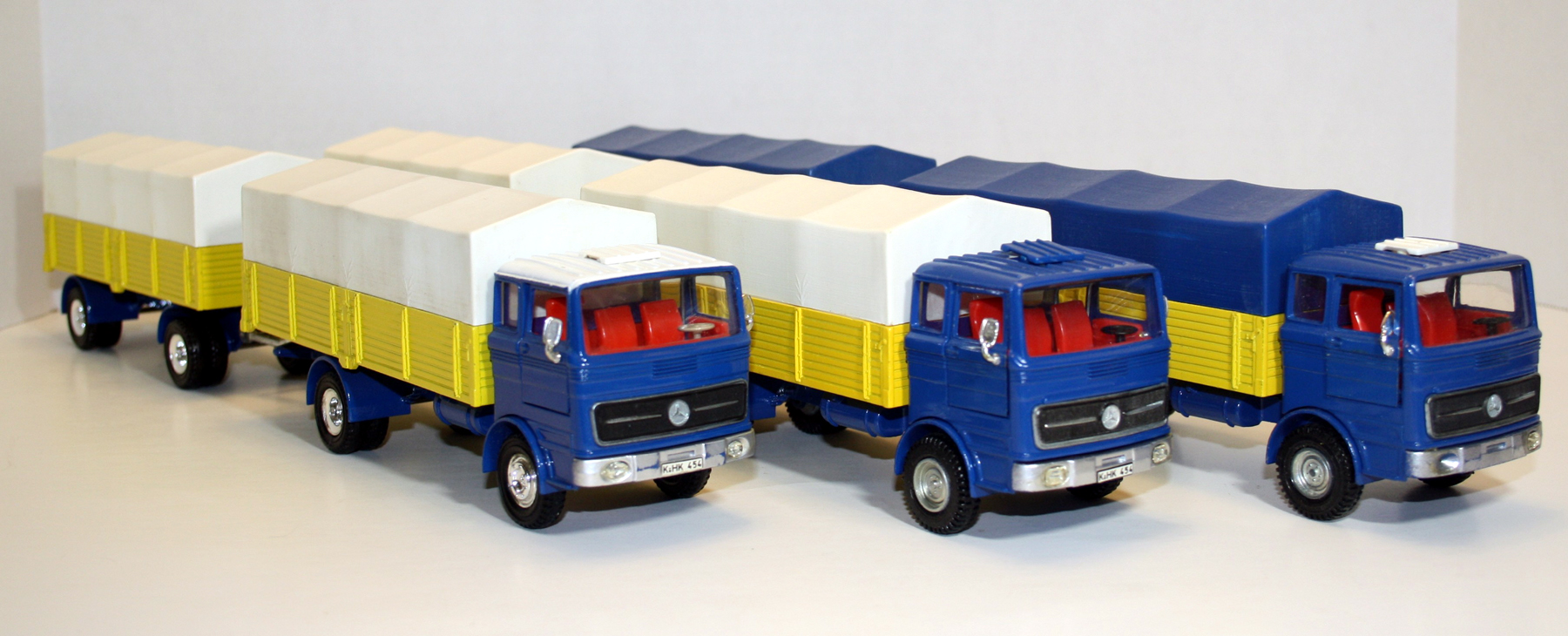
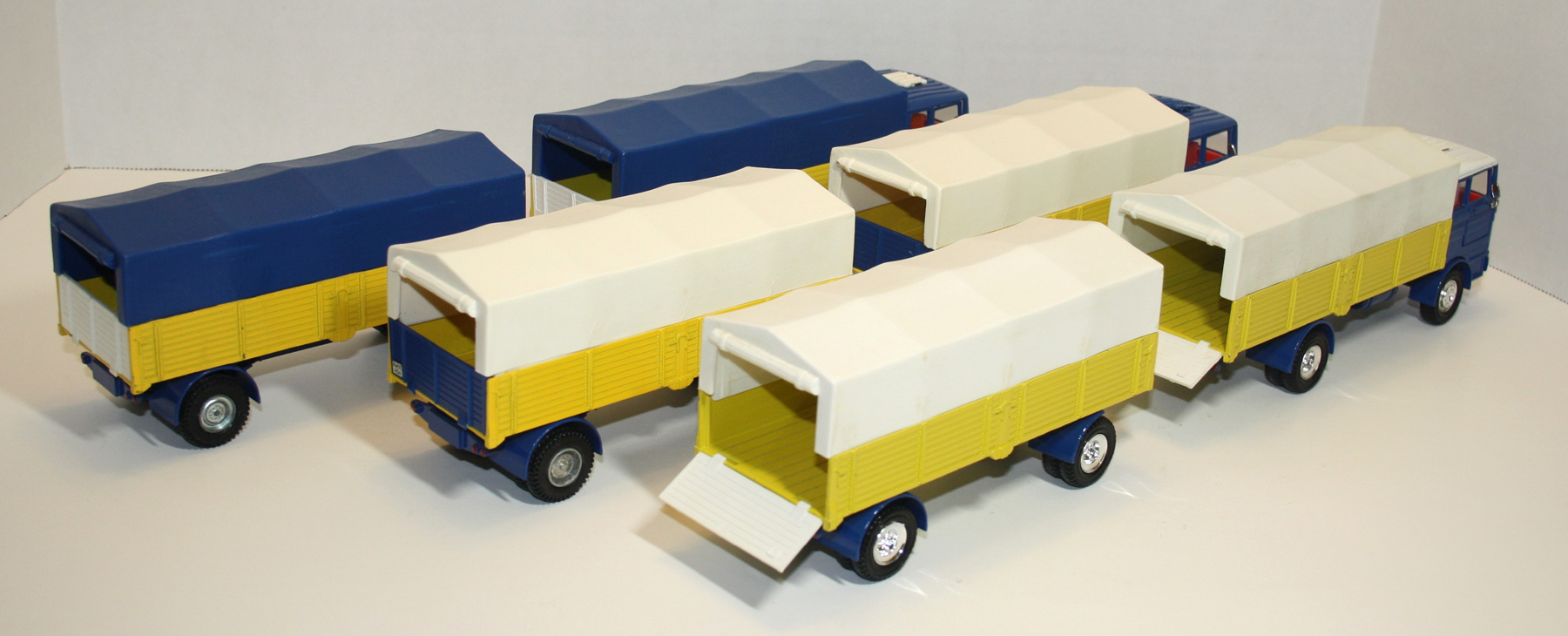
Shown above is my trio of Dinky 917’s showing typical variants when it comes to roof vent, cab roof colors and wheel designs. Early trucks had detailed plastic chrome wheels while later versions were fitted with 12 lug cast wheels. The blue tilt version is the rarest of the non-promotional 917 models and the blue tailgate version is scarce compared to the usual white.
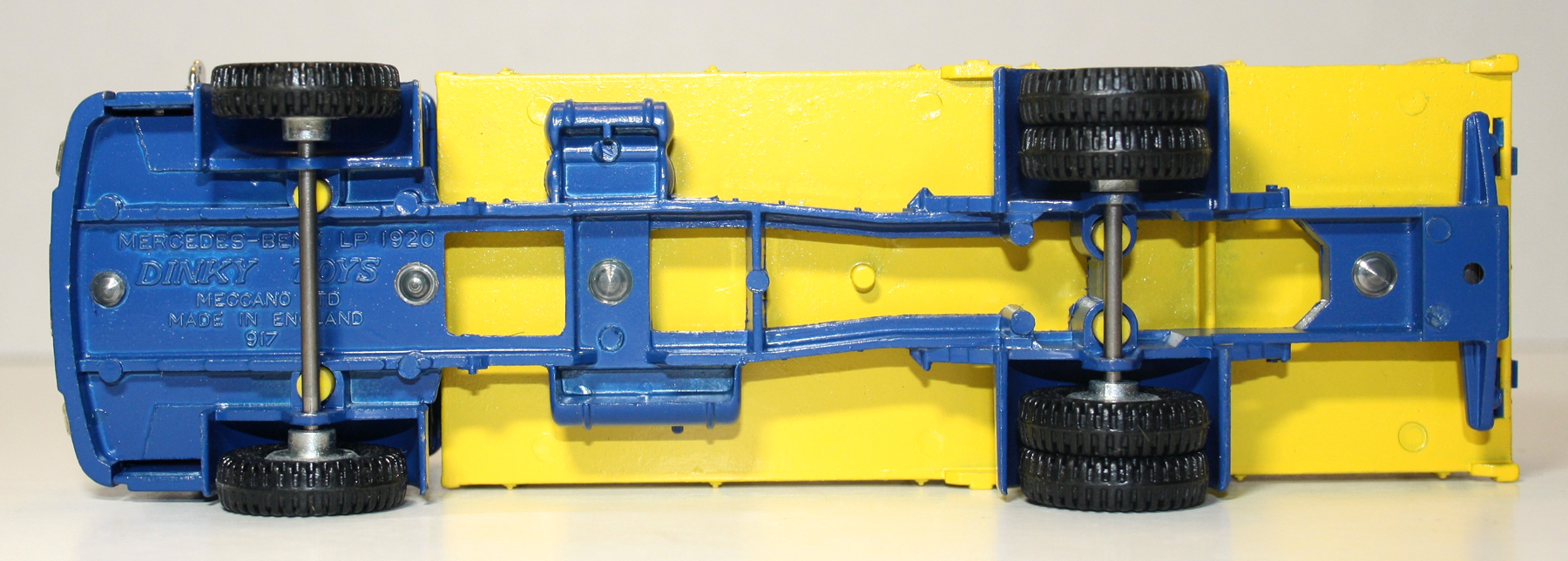
Underside view of the Dinky 917 chassis sans trailer which enables a view of the very unique one-off spring operated suspension system on both axles. The trailer featured the same as well.
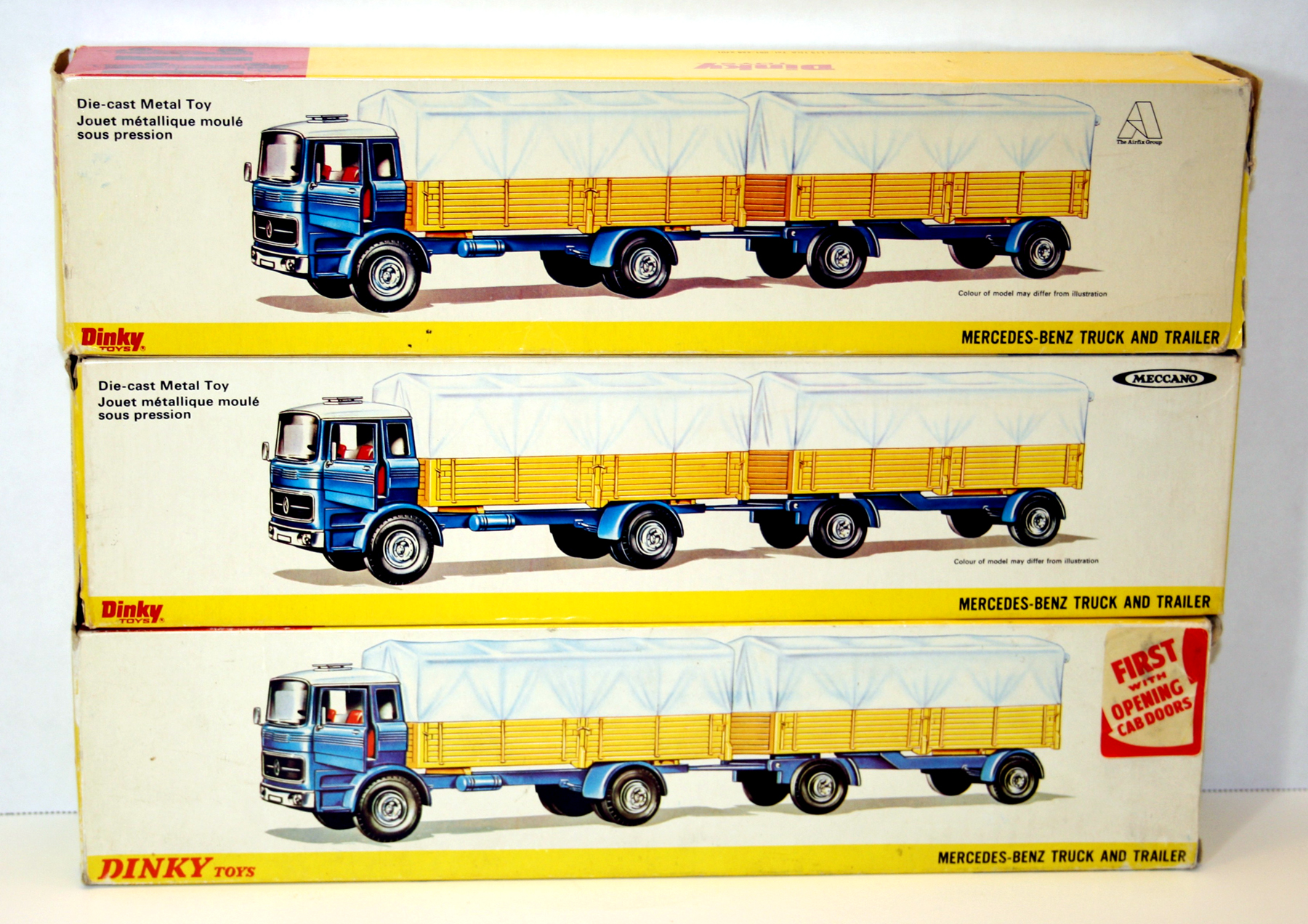
The card box evolved from having the old Dinky logo (bottom box), to the new one with the Meccano logo and finally to one that had both the new Dinky logo and the Airfix logo.
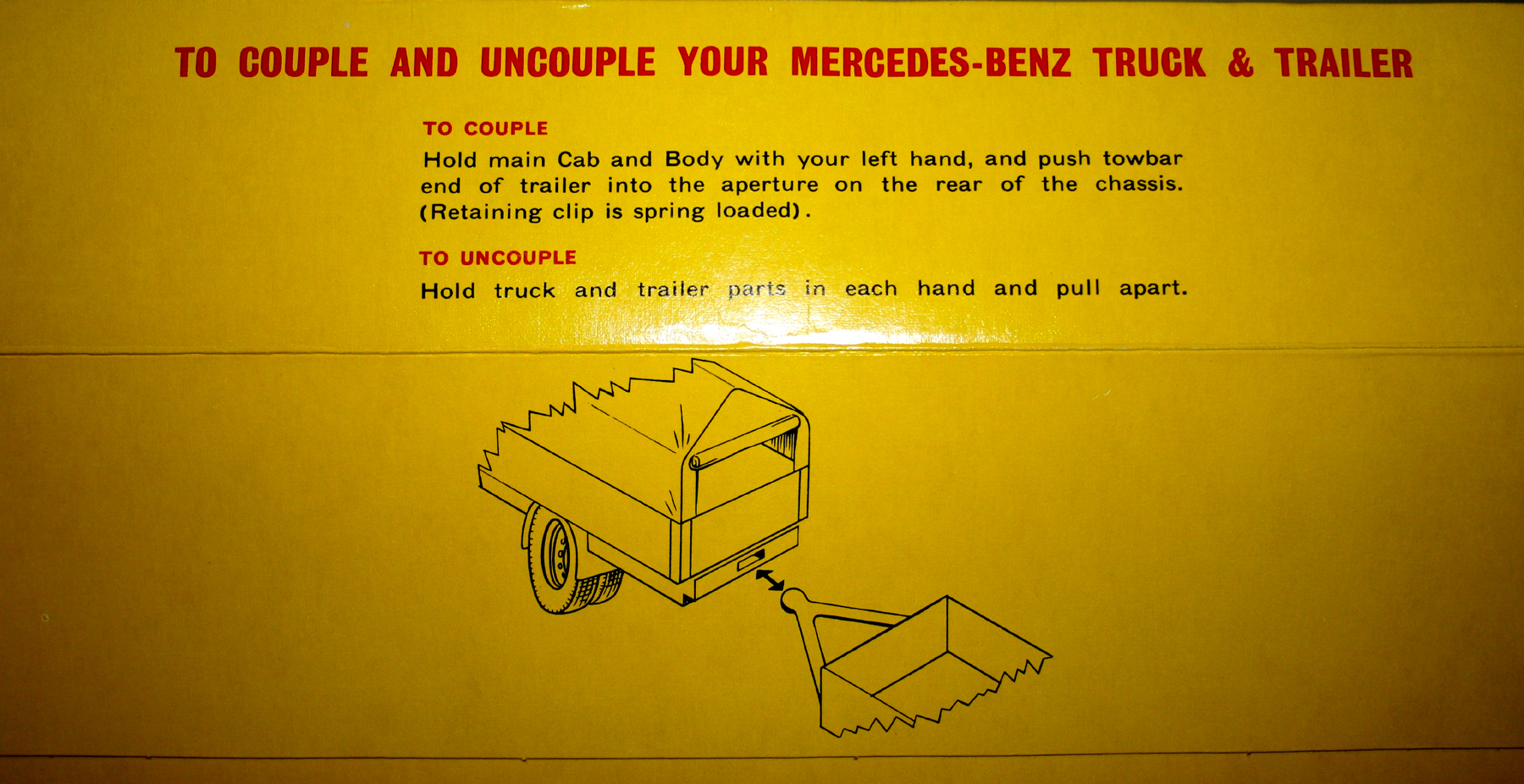
The back of the Dinky 917 had printed instructions for hooking and unhooking the trailer drawbar.
The early issues featured detailed chromed plastic rims that mimicked the actual trucks wheels. While the wheels were a very accurate representation of the actual trucks, the chrome plating was designed to sell toys, giving them a flashy look to attract a child’s attention while the real trucks were painted steel. Around 1973 the new 12 lug truck type wheels would replace the chrome versions and the license plates were deleted as a cost saving measure.
Early versions featured a blue cab with a white roof, all yellow bodies and white molded color plastic tilts textured like real canvas, with white plastic tailgates. Later variants would see a blue roof with a white or blue roof vent and white or blue tailgates, and the rarest color combination would be the all blue cab with blue tilts. I’ve never seen any noticeable casting variants on the 917, just the color variants as described. Some collectors and sellers have noted there is a cream tilt version but this looks more like the aging of the white plastic, changing color over time. I say this as I have cleaned and polished the white tilts on a few of my trucks to bring back some of the original white, and the cream shading turns lighter.
The Dinky 917 from my childhood shown here is the blue tilt version, and not knowing its scarcity as a kid, it was almost resold soon after. In 1981, while perusing Model Railroader magazine, I noticed a classified ad from a Canadian seller advertising mint boxed Dinky toys. With my mom’s help I wrote to get a sales list and when it arrived, it included a mint boxed 917 for sale. I had always wanted the 917 but since it was withdrawn in 1974, I missed it since I was too young. My mom kindly purchased it for me with an international money order from the US Post Office, my first international toy purchase!
I was disappointed when it arrived, because it looked nothing like the white tilt version in the older Dinky catalogs I had. Instead, it had blue tilts which weren’t present in any any catalog. I kept my disappointment to myself and it would take me years to finally realize it was actually the rarest variant of the normal non promotional 917 models!
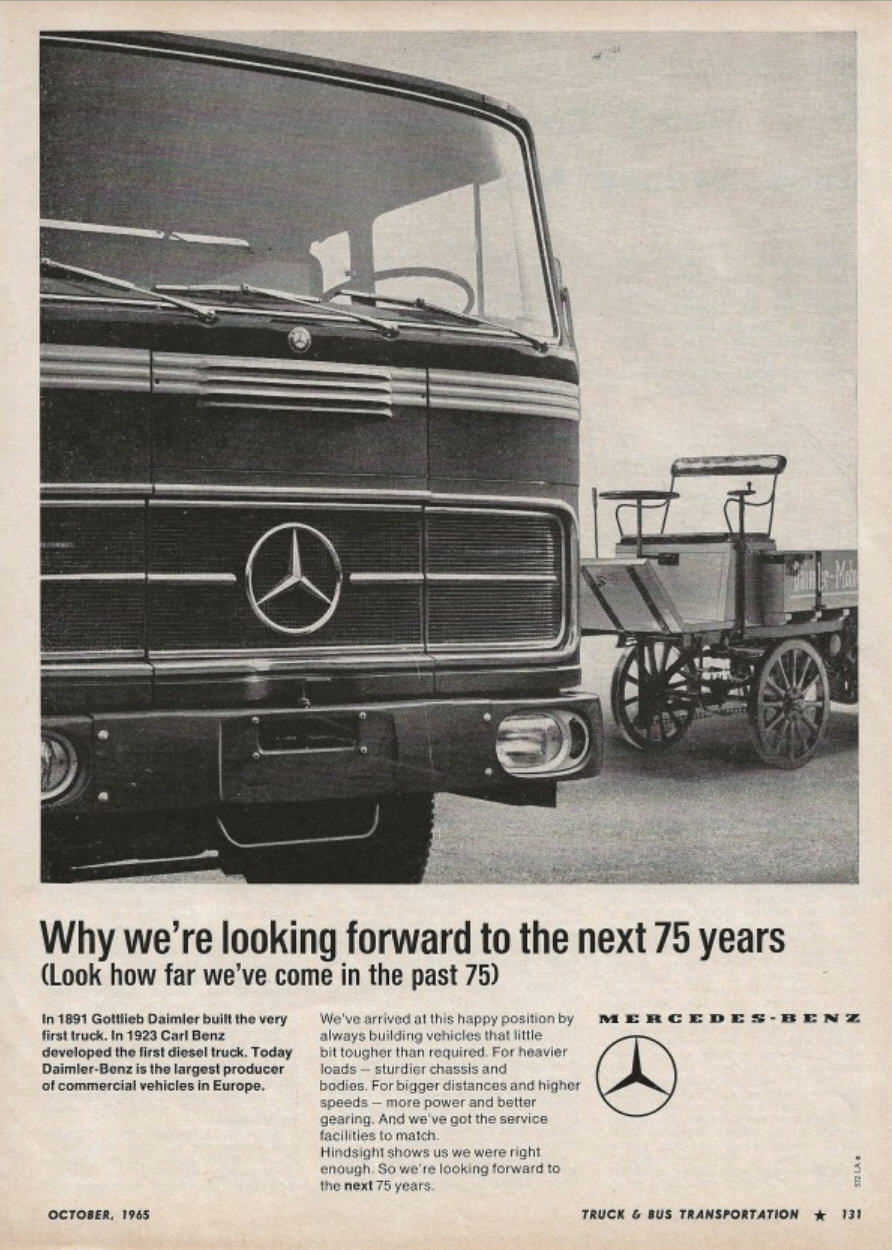
This LP 1920 ad appeared in the October 1965 issue of Truck and Bus Transportation, an Australian publication. Gottleib Daimler built the world’s first truck in 1891, which is shown next to the then state-of-the-art LP 1920.
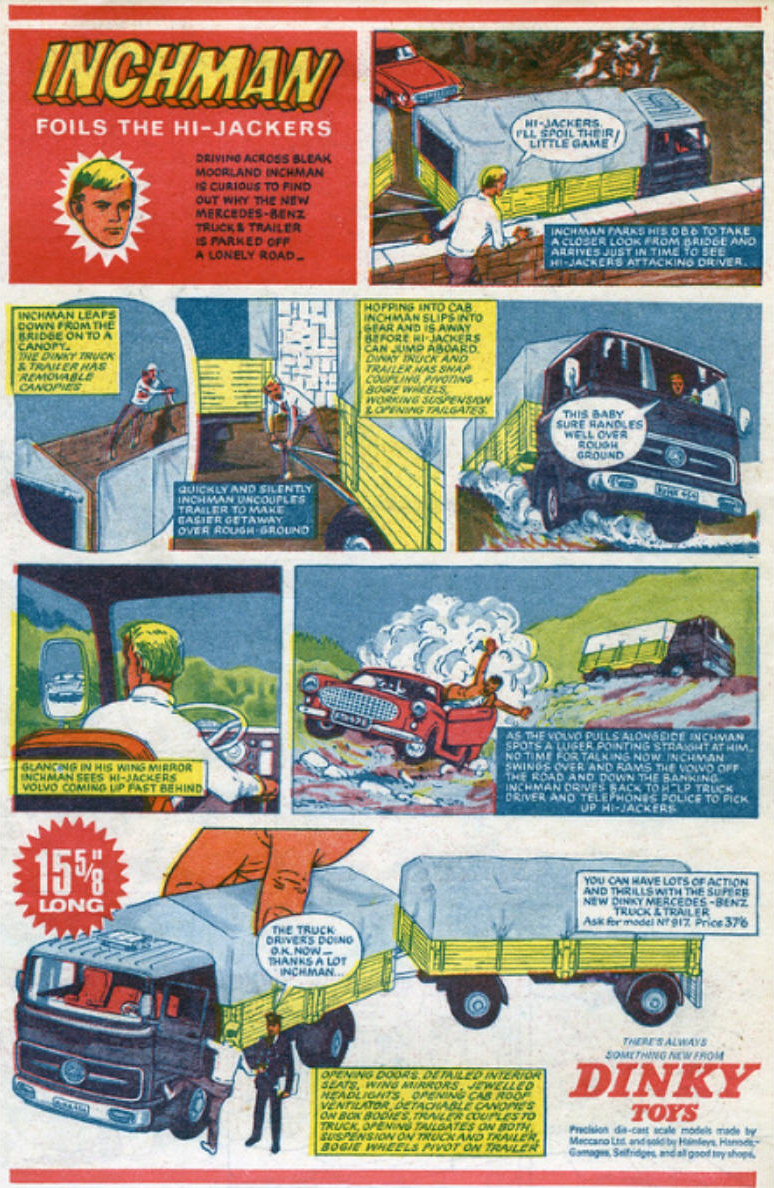
In 1968, the Inchman comic strip appeared in Meccano Magazine for the first time. In this issue, the 917 was featured and Inchman foils hi jackers. The same illustration with the policeman would be used for a few years in other Meccano printed material.
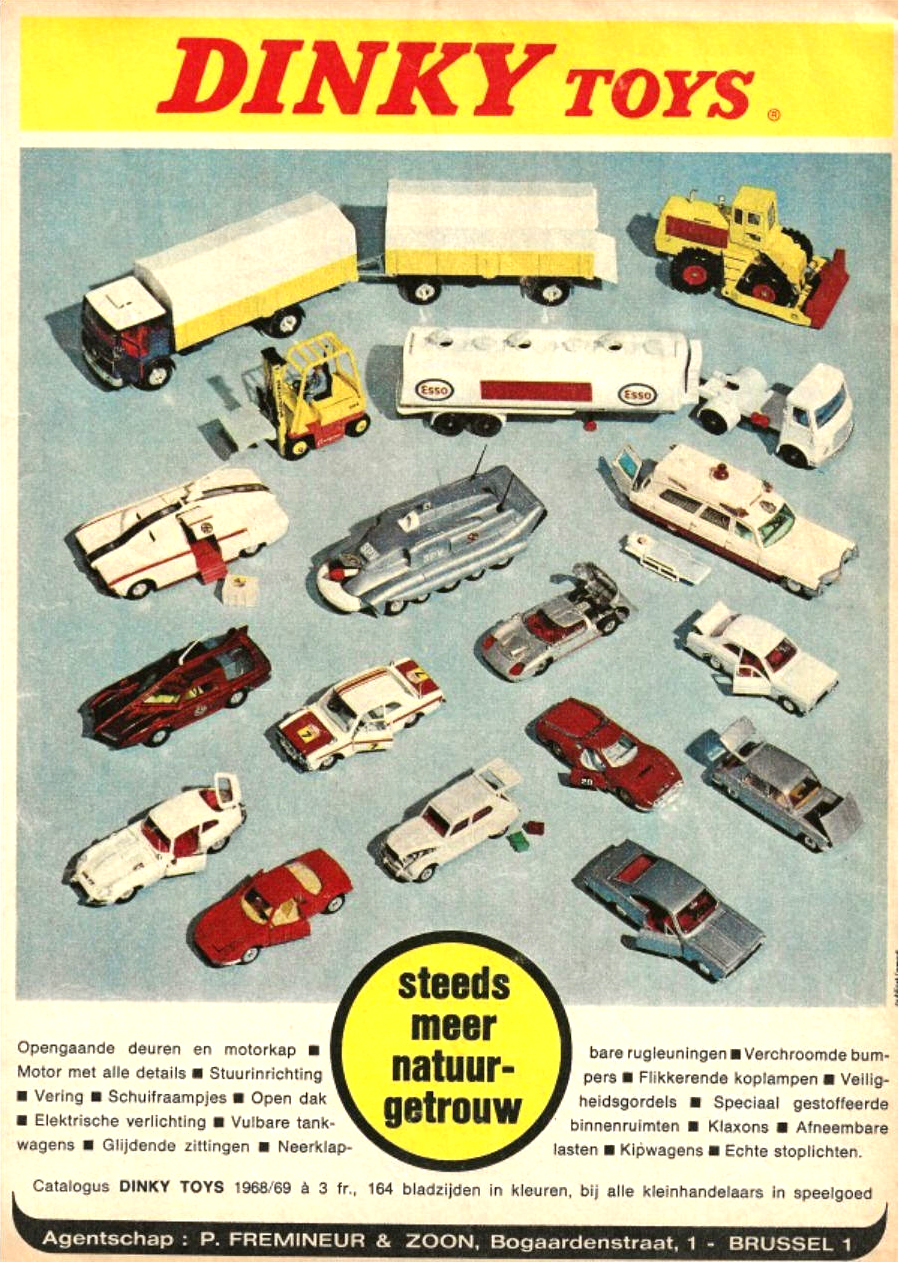
The Brussels based Dutch Meccano importer, P. Fremineur and Zoon utilized this attractive advertisement to promote the new for 1968 Dinky models which included the Dinky 917. “Steeds meer natuur-getrow” translates in English to “increasingly true to life”.
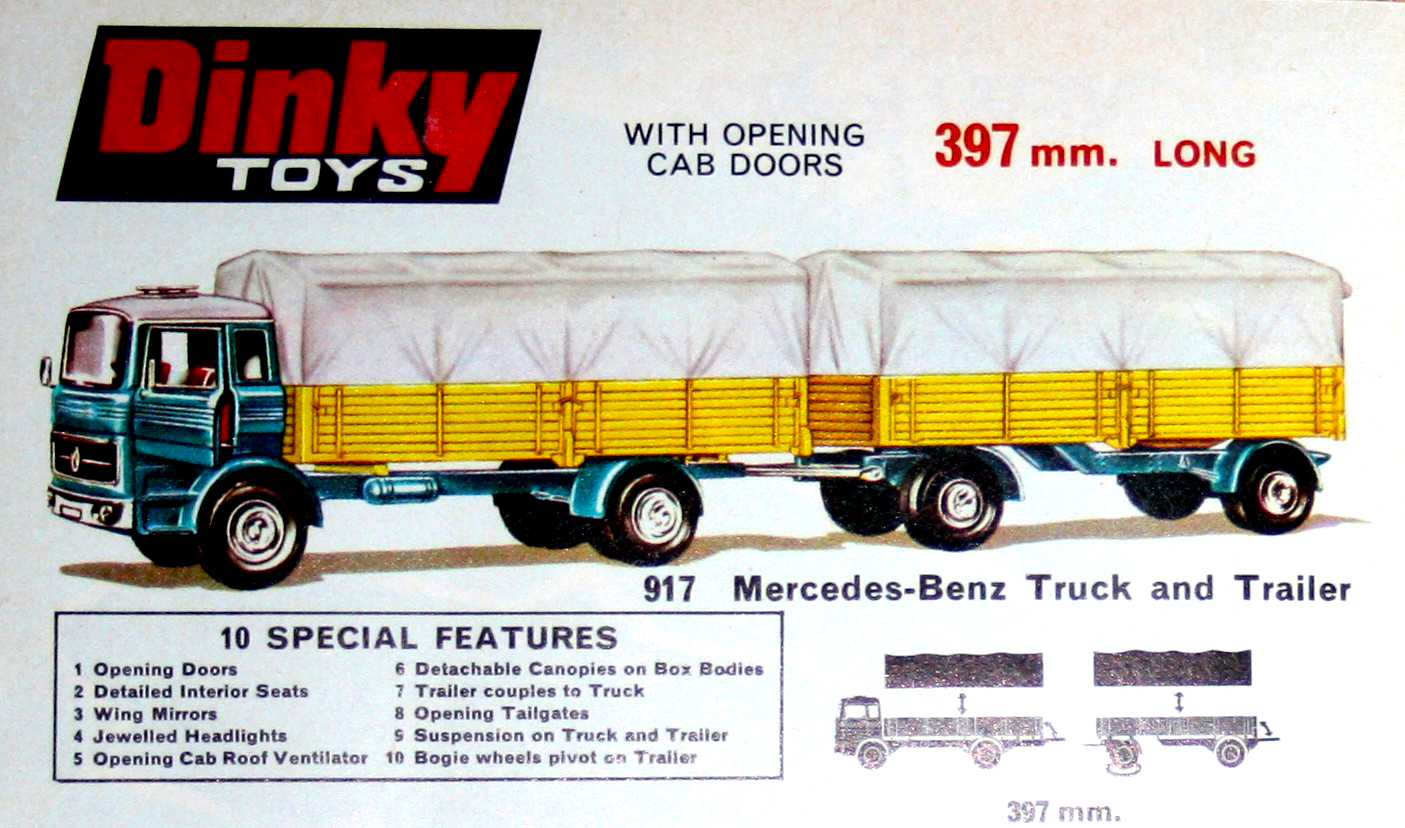
The dealer poster and catalog illustration for the Dinky 917 was updated in 1972 with the new Dinky logo. 1972 would be the last time this image was used in a catalog , because by 1973 all models would be photographed and not drawn.
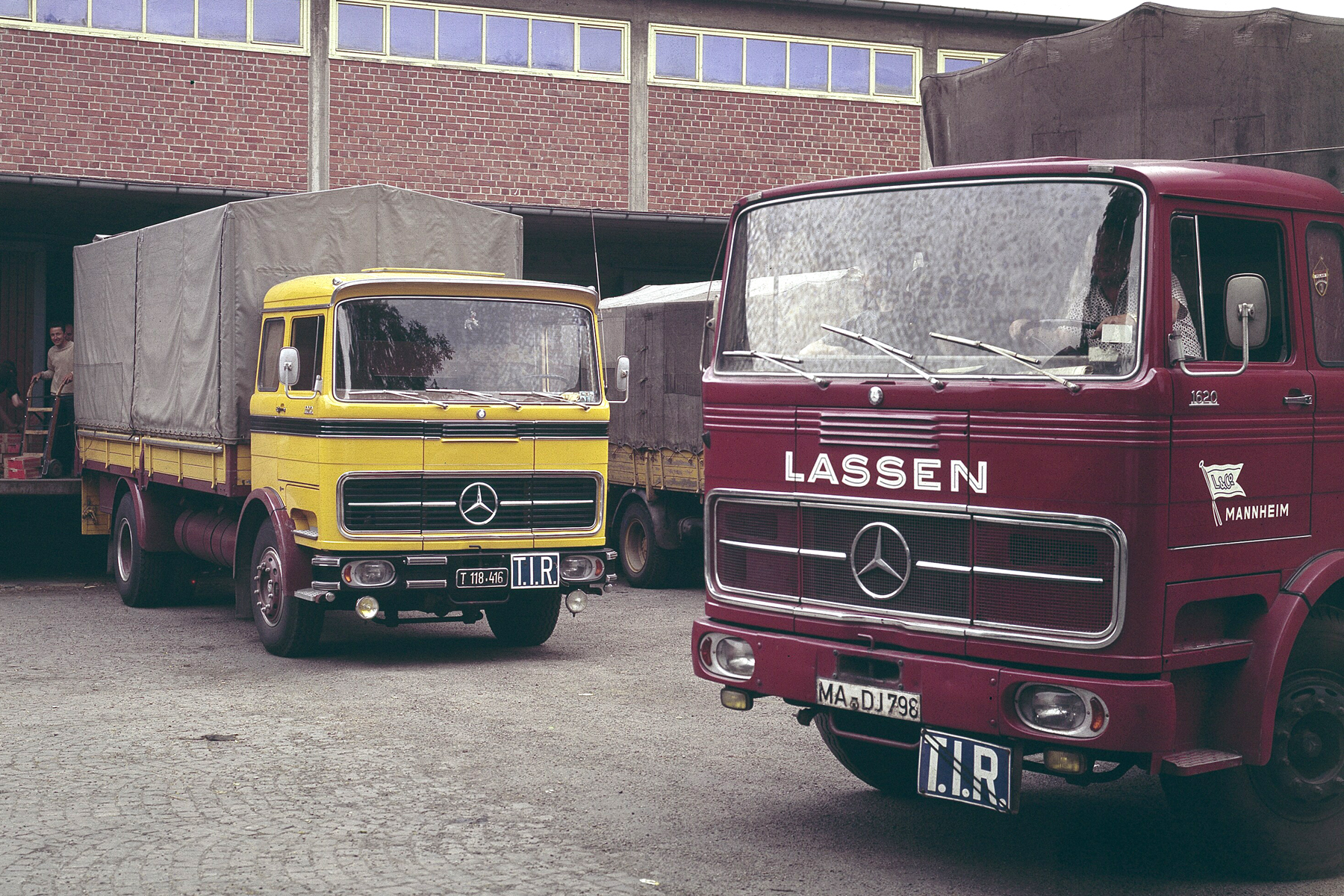
A pair of LP trucks and trailers at work in the 1970s.
Image: Mercedes-Benz Trucks Classic
Photographed in the 1970’s, the pair of LP truck and trailers shown above were hard at work in what was then West Germany. Note the TIR plates, which comes from the French term “Transports Internationaux Routiers” which allows for easy transportation of goods across international borders without the need for customs clearance at each border crossing.
There were two promotional versions of the Dinky 917. The rarest and most attractive is the German issued Münsterland version made for the German transport company around 1973. It was painted in Kelly green, and its white tilts made for a very eye catching promotional. Supposedly a few hundred were made. I have been a lifelong fan of the 917 and this version was unknown to me until about twenty five years ago. As soon as I saw it, it went onto my “want” list, but they are very elusive and usually only turn up for sale at European auctions. They are also quite expensive so I doubted I’d ever find one.
In January 2025, I found mine on eBay Germany and while the seller was very friendly, he couldn’t end the auction early to change the listing for shipping to USA shipping since it already had bids. I reached out to my fellow collector contact in Germany, Hubert Moller who sold me the Dinky Coles German promotional cranes some years back and he graciously won it for me for a fair price. It’s a lovely very near mint example and after a thorough detail cleaning, the Kelly green finish shows its lovely sheen. Finding the Münsterland truck was one thing, but the other fascinating parts of my acquisition are the unique Münsterland sticker on the insert and an incredible provenance. The insert wasn’t visible in the pictures that accompanied the auction, so the sticker was a big surprise. I had seen this sticker only once on some previously sold examples; however, it was never clear enough to read so I translated mine:
It was a pleasure for us to be able to serve you quite often last year with our MUNSTERLAND TRUCK (or also with a smaller vehicle).
Of course, we would be very happy if, in the coming year, the MUNSTERLAND TRUCK could deliver our quality products to you even more frequently than before. With these words, our sincerest thanks, and our best wishes for 1974, we would like to present you with this small “Remember Me” gift, the “Mini-Munsterland ‑Truck”.
Munsterlandische Margarine-Werke.
J. Julf
I have often reached out to the seller of toys I purchase and asked if they can share any background or history, especially if they are rare or outstanding examples, and the answer I received certainly didn’t disappoint.
The seller’s name was Mathias and he was from Luneburg, Germany. He was more than happy to share that he was given the Münsterland truck as a gift from his uncle around 1978. His uncle was Director of the Export Division at Deutsches Milchkontor GmbH (Hamburg), the head organization of the German co-op dairy industry. He thinks his uncle received the Münsterland truck from a business partner and then gave it as a gift when he visited.
Being born in 1967 he enjoyed playing with it (ever so gently judging by its appearance) and eventually it was put away, box and all. It had been lying in a moving box in his basement for decades and he found it when cleaning out the basement. He thought it would be a shame to just put it back in the moving box, so he decided to sell it to someone who would be happy to have it.

The Münsterland promotional shown above was made for the German Münsterland transport company around 1973. It’s an attractive model and very rare. If you’re a 917 collector like me, it’s the Holy Grail of 917 models. This version is even scarcer with the unique sticker on the right side of the insert. The Henry Johnson promotional was issued around 1974 for the UK/French conglomerate Henry Johnson and didn’t include a trailer. Note the white cab seats.
The other promotional model was the Henry Johnson version made for the over 200 year old UK/French transport company around 1975. Supposedly less than 500 were made. The Henry Johnson version is painted dark green and was unique because it lacked a trailer and was just the 917 truck by itself. This model was packaged in a plain white card box, while the Münsterland truck came in the usual 917 Dinky box as did the regular issues. My sans box example came from the estate of a UK accountant. His daughter who sold it on eBay UK found it in the loft along with some other toys carefully stored away when he passed in 2024. She told me her father may have done some bookkeeping work for an employee of Henry Johnson.
I’ve seen some Münsterland and Henry Johnson trucks over the years without decals so it’s possible these were leftovers in the build runs. This was common for Dinky promotional models and they were sold to the general public.
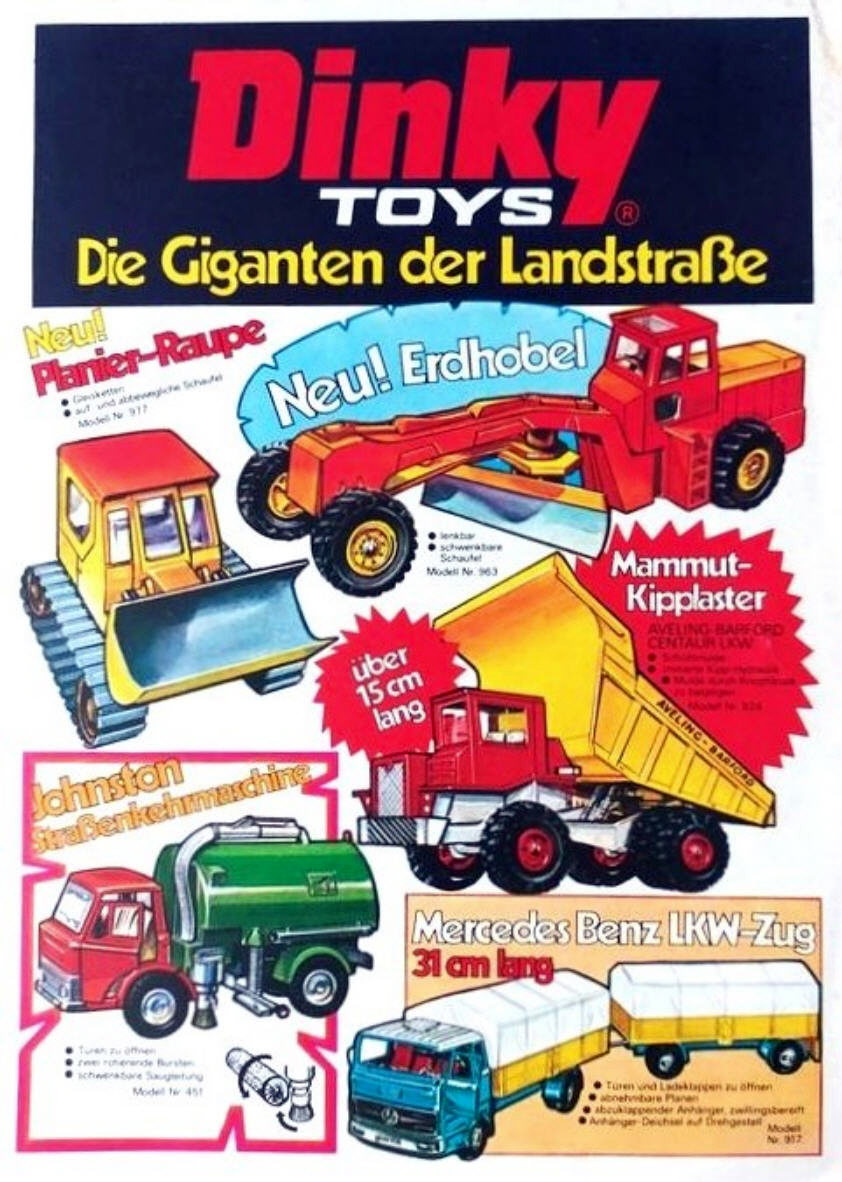
This 1973/74 German market Meccano dealer poster featured heavyweight models, including the early illustration of the 917. “Die Giganten der Landstrabe “translates to “The Giants of the Country Road”.
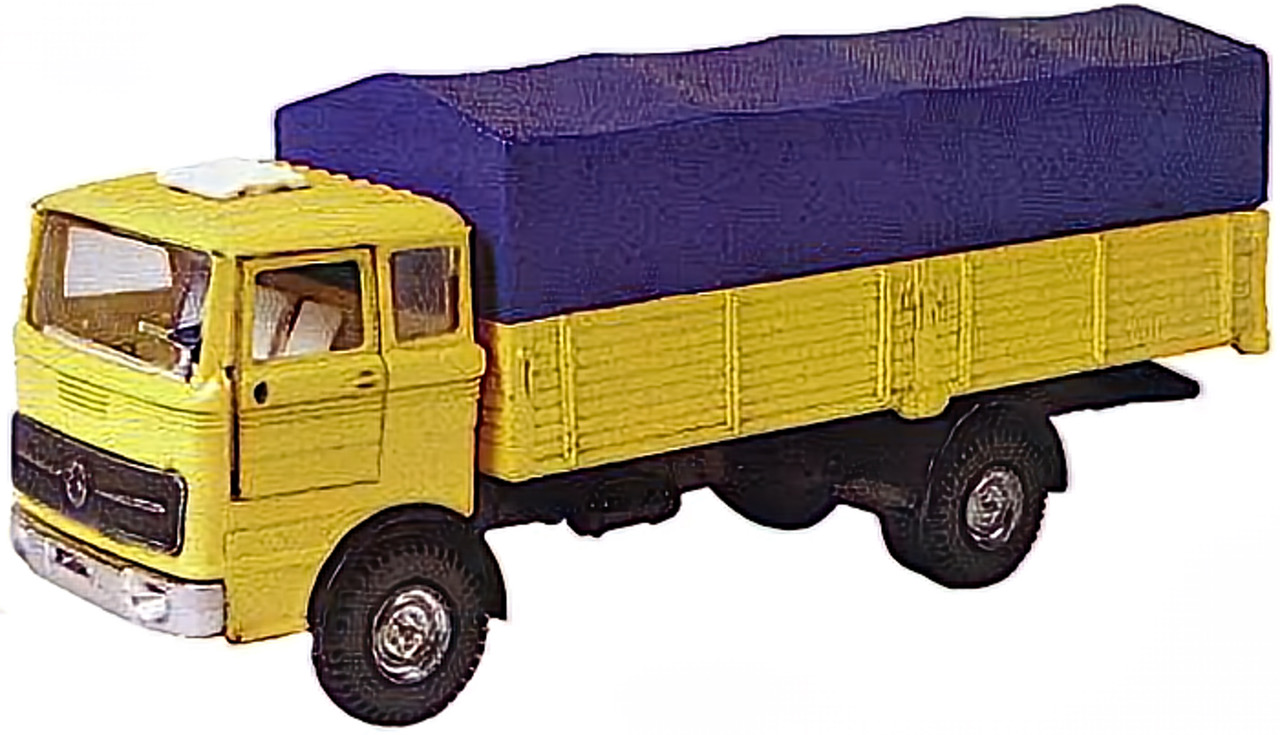
Christies sold this color trial 917 some years back. It would have made an attractive model in all yellow with the black chassis. Despite the poor photo quality, it’s worth showing.
Image: Dinky Toys Encyclopedia
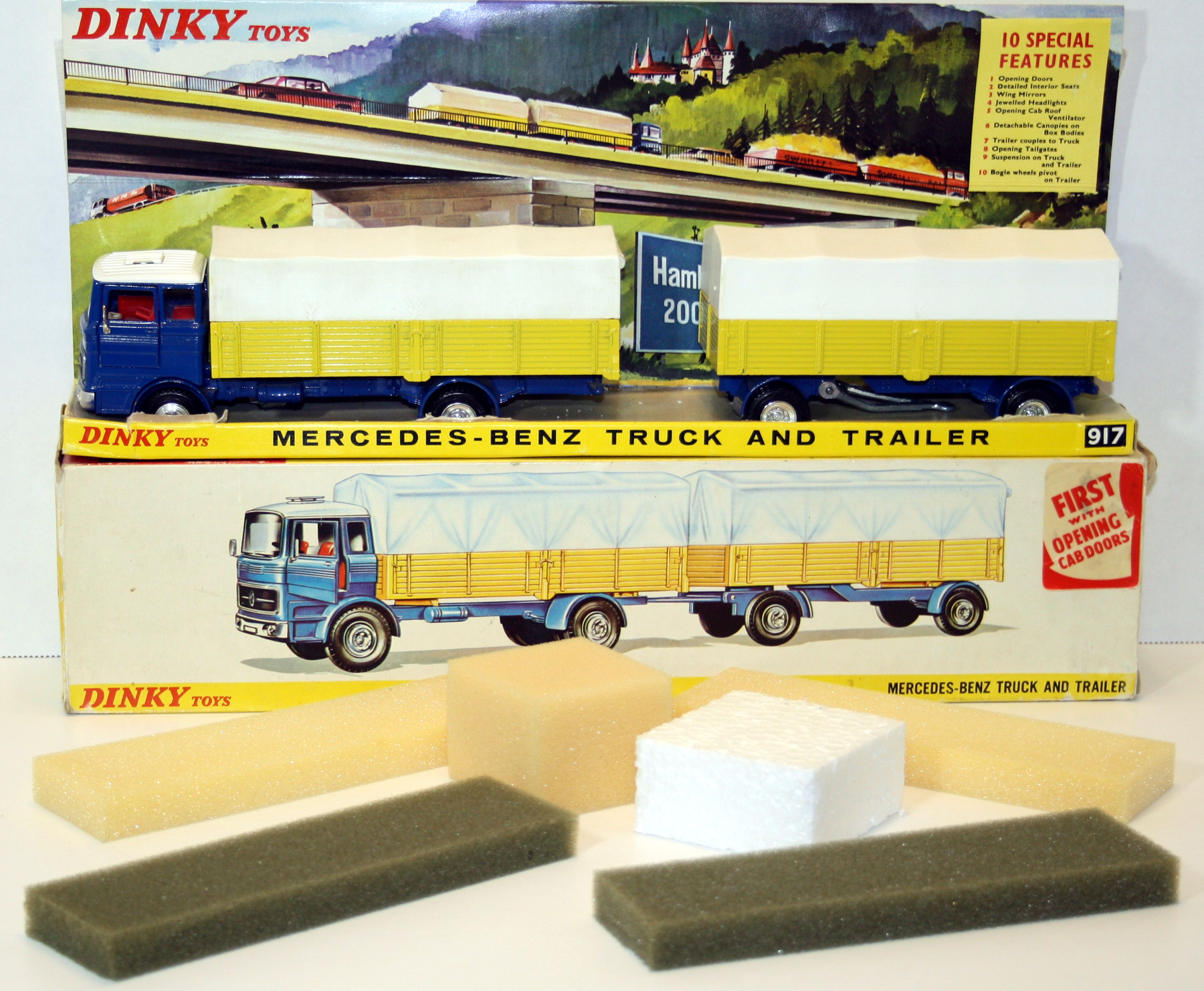
The 917 was a heavy model and required sturdy inner packaging. It consisted of three pieces of foam and a block of Styrofoam. The pair of narrow pieces rests on the tilts while the block is wedged between the truck and trailer. The greenish foam pieces were on my blue tilt 917 that I acquired as a child.
The 940
In 1977, Meccano dusted off and updated the casting for the 917 Mercedes-Benz truck sans trailer. These were difficult times at Meccano and funds allocated for new models were minimal, so this was a very good effort at recycling and economizing an old model to keep development costs low. The engineers had become good at this and kids like me back then were still able to get new Dinky Toys despite the writing on the wall that the end was nearing at Meccano.
The opening doors, opening roof vent, super detailed interior, unique suspension, door mirrors, cast wheels, silver grill details and jeweled headlights were all deleted. Despite these changes simplifying the model, Meccano still produced a handsome new old truck model, the 940.
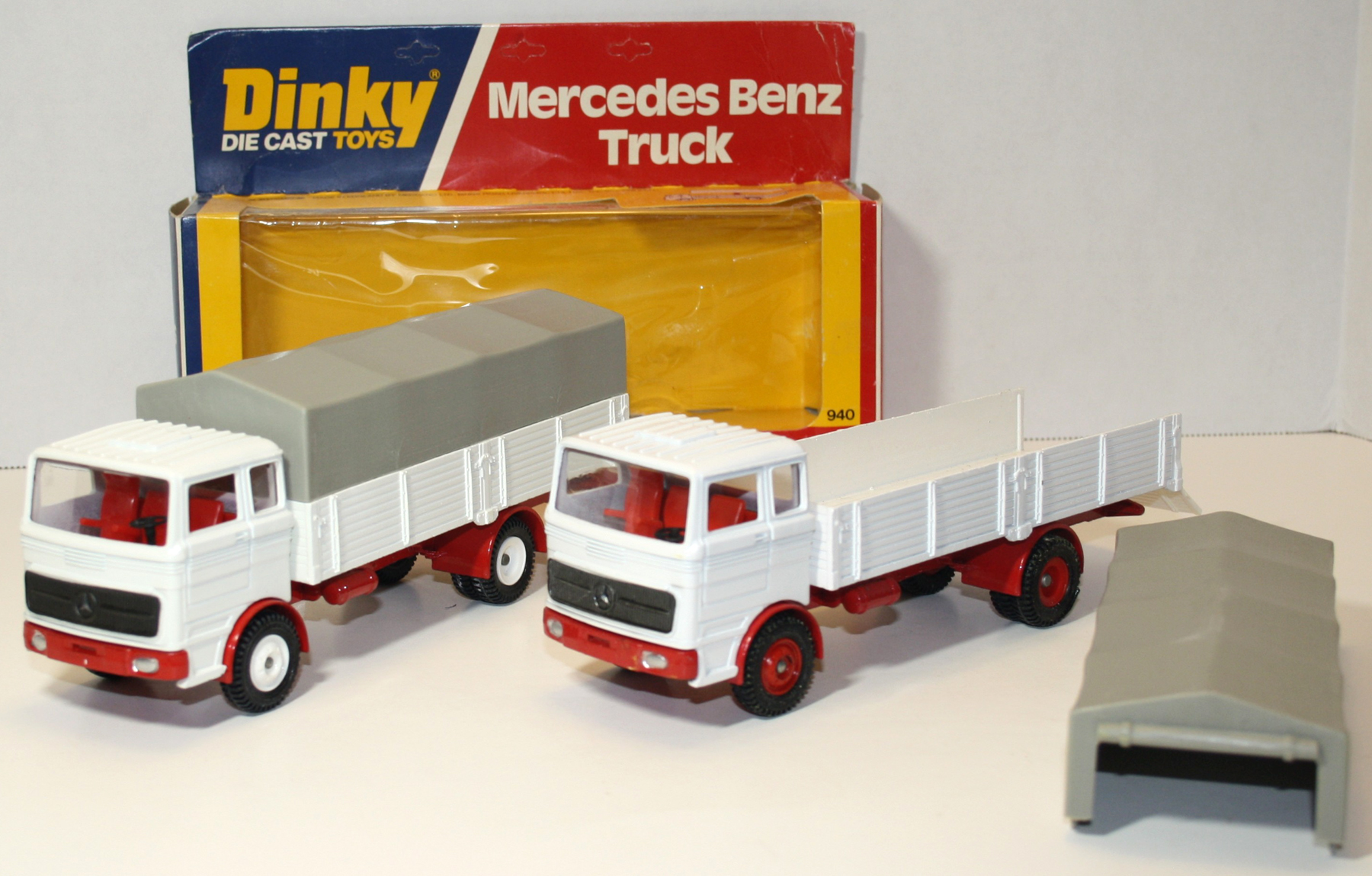
Despite the 940 Mercedes-Benz truck being an economized version of the 917 sans trailer when it was released in 1977, it was still an attractive model with a white over red paint scheme. The 940 only came in hanging boxes and its wheels were initially red and later available in white.
The Dinky 940 came with a white cab with a red chassis, grey plastic tilt, functioning plastic tailgate and the typical of the era plastic disc type wheels that were on many of the big Dinky trucks at this time. There were no casting variants and the only differences were red or white wheels. It would be interesting to know if Dinky Toy dealers missed the 917, thus causing the 940 version to be introduced.
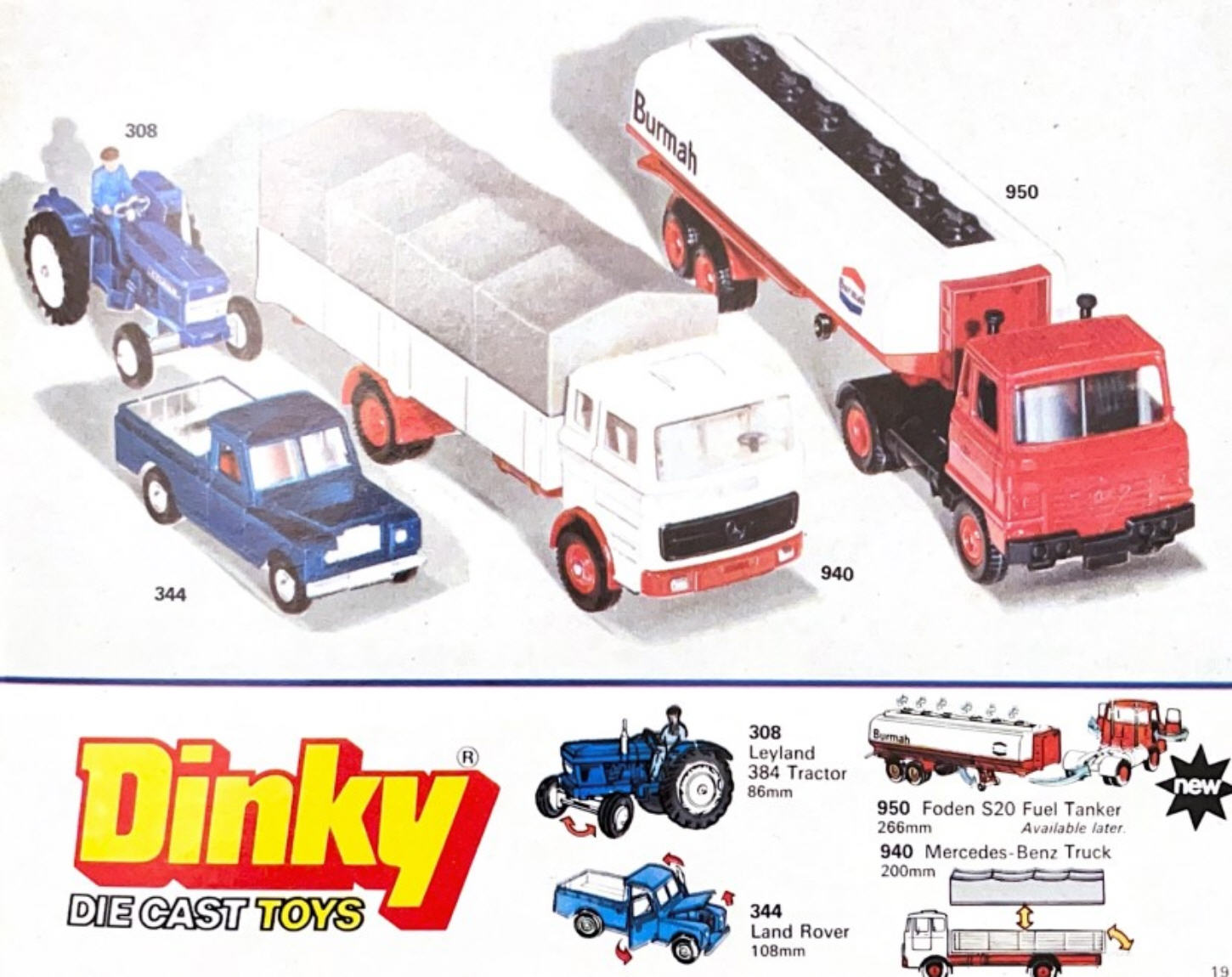
The 940 as it first appeared in the 1977 Dinky catalog.
The 917 was a good seller despite being one of Dinky’s more expensive models and it enjoyed a six year production run. The 940 was available right until the end of Dinky Toys in 1979. My red wheel version came from FAO Schwarz in Paramus, NJ in 1980 and the white wheel version was bought on eBay in 2024.
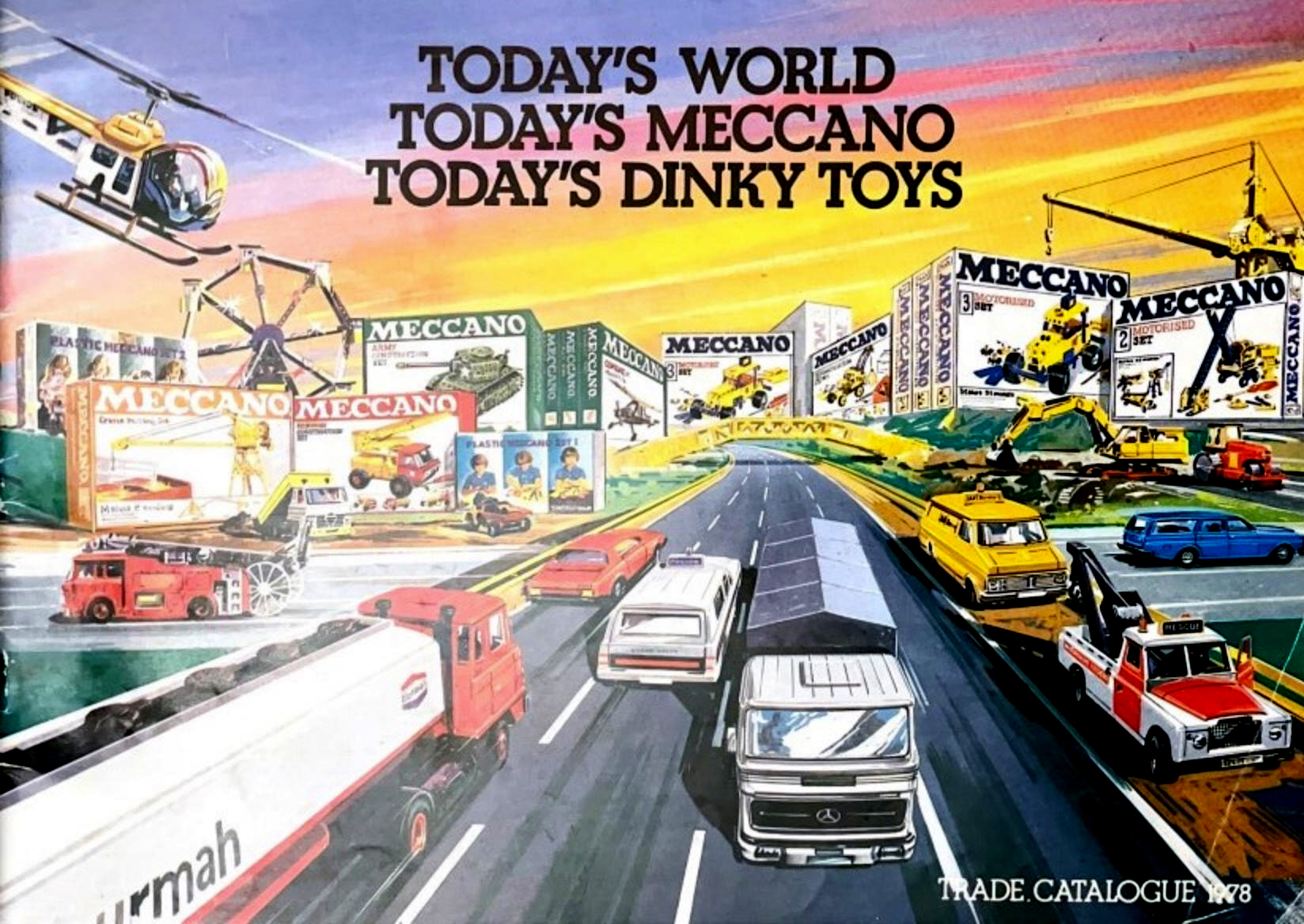
The 1978 Meccano trade catalog had an attractive motorway scene cover with the 940, and Meccano building kits that mimicked tall buildings.
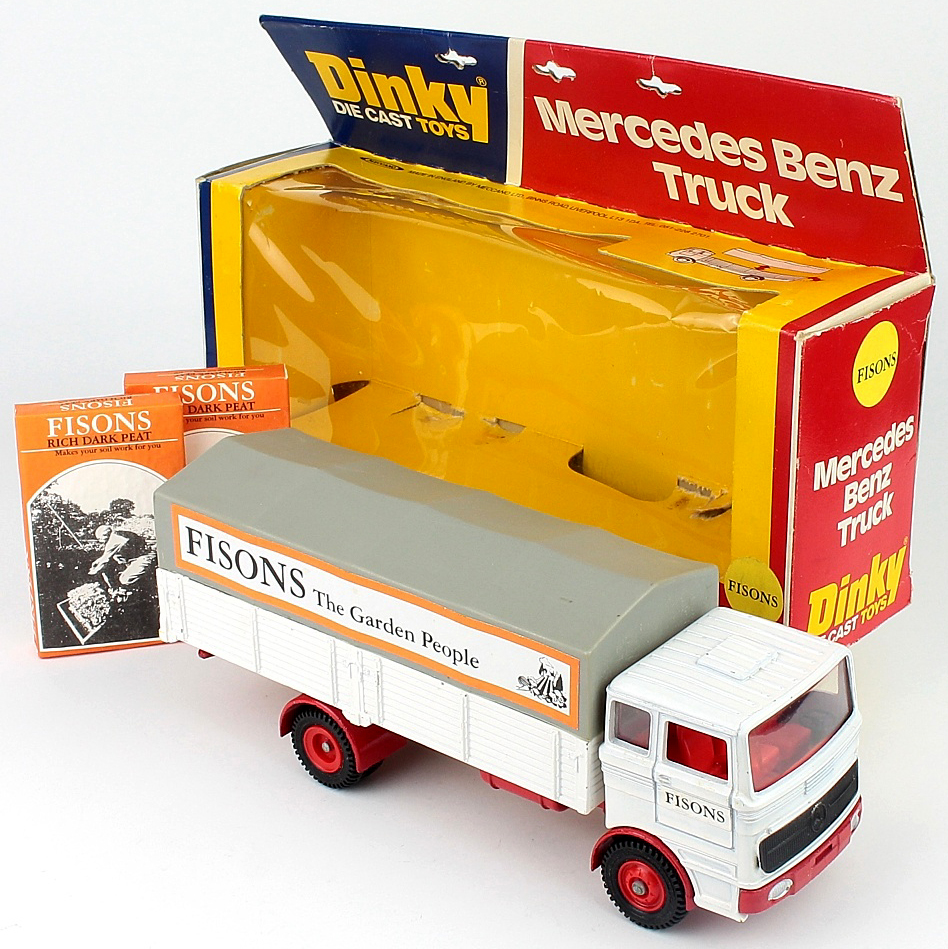
Around 1997, “Fisons the Garden People”, a UK based garden supply company commissioned Meccano to make a small run of the 940 promotionals. Two small boxes of Fisons rich dark were included. Like the 917 promotionals, this model is also quite rare.
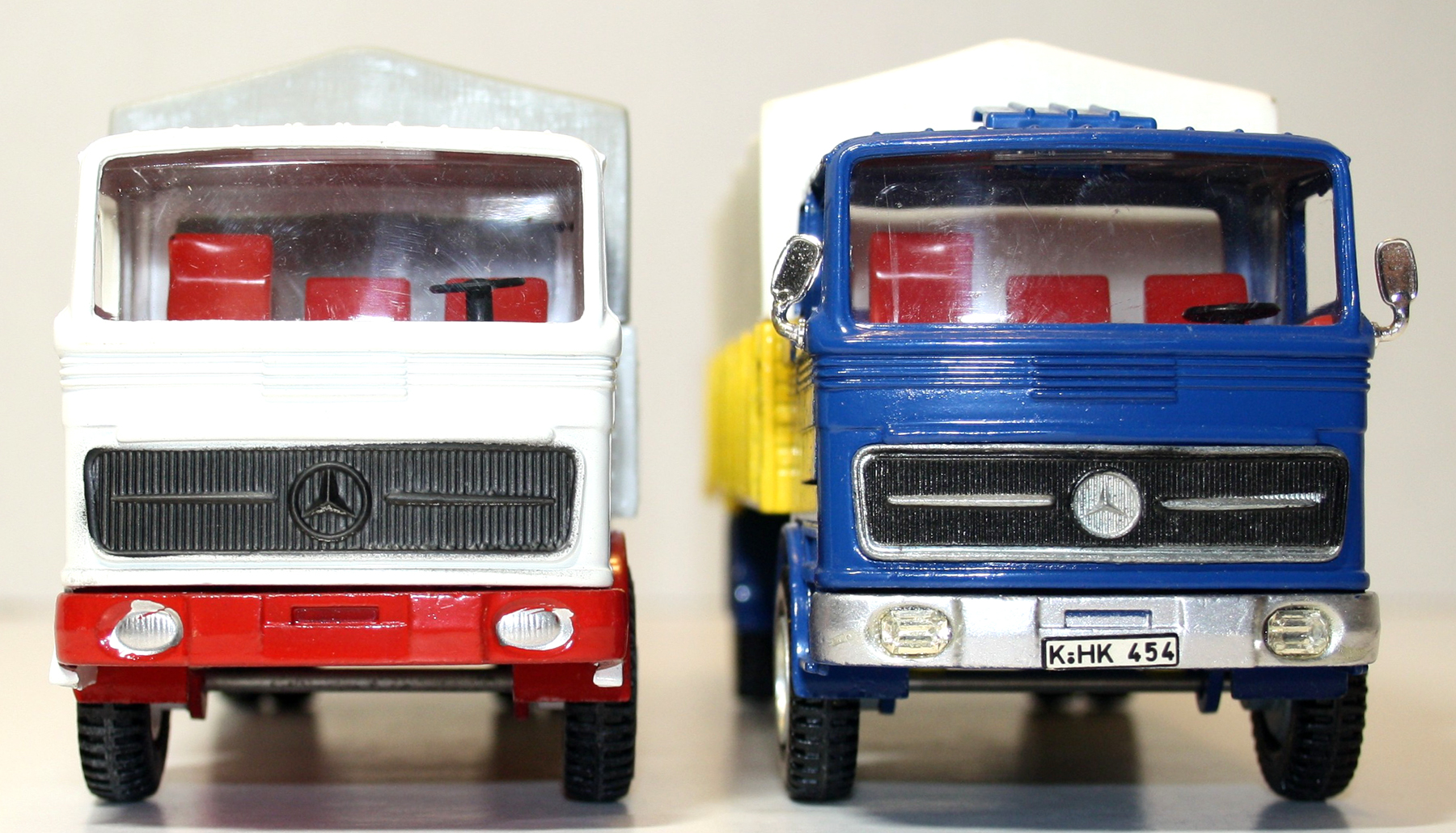
This head on view of both models shows the economizing differences between the 940 and 917. Note the poorly painted headlights on the 940.

Described as a protoype, Vectis sold this never issued 940 Landlink Europa truck in 2007 for GBP 580. It was certainly a colorful model and the canvas tilt appears to have been painted.
Image: Vectis Auctions
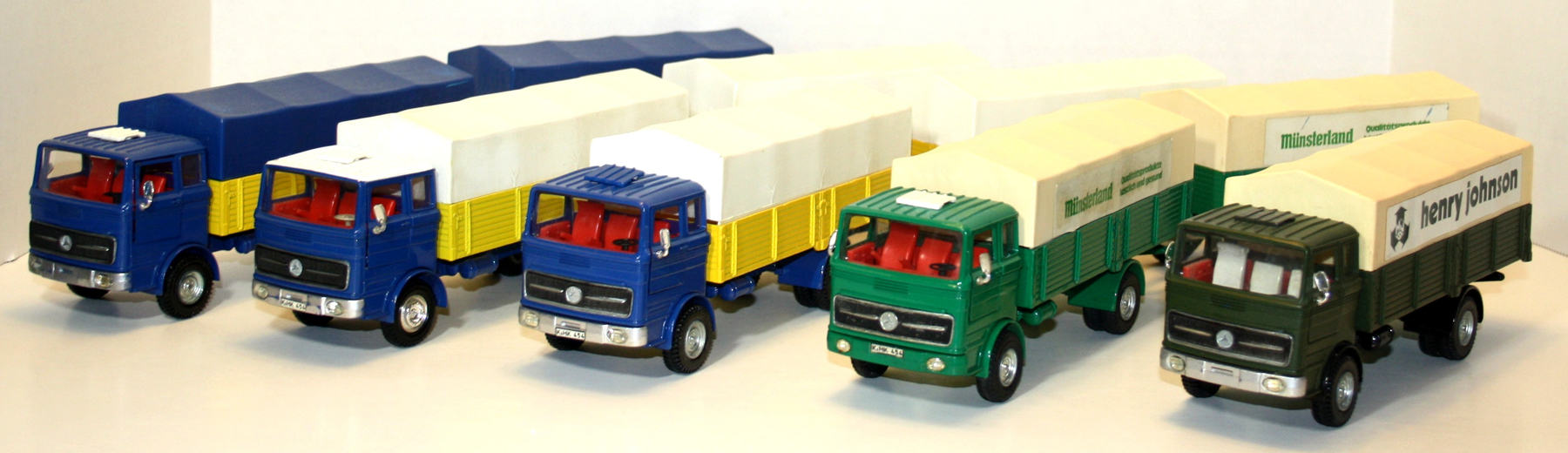
Shown above is my collection of 917s. From left to right: the blue tilt version came from a Canadian seller in 1981, the first issue chrome wheel version came from Unique Collections in 1990, the blue roof vent/tailgate version was bought at a Lloyd Ralston Auction in 2025, the Münsterland promotional model was bought on eBay Germany in 2025 and the Henry Johnson promo was bought on eBay UK in 2024.
There was one fairly well known scarce promotional. and that is the Fisons version. Fisons was a UK based garden supply company and one of their products was rich dark peat. The promotional model was the standard red and white with grey tilt 940 model. It had decals that read “Fisons the Gardening People” on the tilt and came with two little boxes of Fisons rich dark peat.
There were some other promotionals based on the 940 and according to Jaques Dujardin’s Dinky Toys Encyclopedia they could be Code 3 models, as little is known about them. They are the Scandinavian Air Service and Warner and Swasey models. There was also a Landlink truck that was sold at Vectis auction in 2007.
On the collectability front, both the 917 and 940 are still easy to find on eBay and in auction houses. I follow sales of these models often and the 917 has actually become more popular and expensive than it was more than ten years ago, which is a positive as many collectors sadly shun this final era of big scale Dinky toys. Promotional versions of the 917 remain quite scarce and are very expensive, especially the Münsterland truck. The 940 Fisons promotional is also an expensive model and hard to find. Regular issue 940 models are very inexpensive, almost always under USD 85.
As nice as these trucks are, due to their large size scale and numerous operating features, most Dinky collectors shun them, as they do many — if not all — late 1960s and 1970s Dinky toys. This is lamentable as Meccano deserves credit since they were the only one of the Big 3 (Corgi, Dinky Matchbox) UK toymakers at the time to offer a large scale version of the LP 1920 trucks.
This article was a special one for me that details my favorite truck as a child. It features the Dinky 917 that was purchased for me by my mom when I was eleven. Some of the sales literature and related items shown here came directly from the Mercedes-Benz Museum in Stuttgart over 35 years ago, through a contact I made. My uncle, who was a salesman at Prestige Motors in Paramus, NJ, a large Mercedes-Benz and Land Rover dealer, got me a summer job at Prestige in the service department in 1989 during my college years. When the Mercedes Benz factory reps and engineers visited the dealer, I would often wash and fuel their company vehicles. I asked one of the engineers, a German fellow about older Mercedes-Benz truck sales literature and he put me in touch with his factory contact in Germany. To my surprise a heavy package filled with obsolete material arrived a month later. The Mercedes-Benz factory reps were often Mercedes-Benz enthusiasts themselves and were very proud of their work, so he was more than happy to assist a young fan.
Writing an article like this is never a one person endeavor. Special thanks go to Kathrin at Mercedes-Benz Trucks Classic whose motto is “We Love Trucks”. Thanks also to Jonathan Angel, Ravi Bhavnani, Jacques Dujardin and his Dinky Toy Encyclopedia, Vic Mumby and Mark Redman.