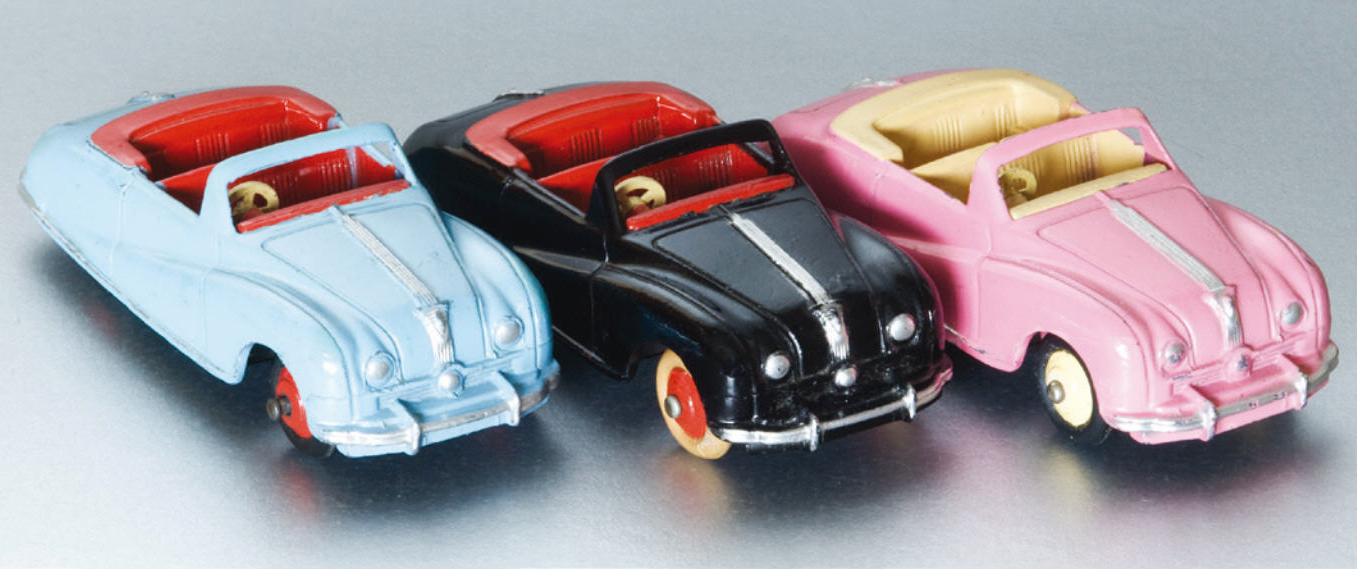
As is well documented, Meccano modeled the the Austin A90 Atlantic Sports Car at ¼ inch to a foot. This was a streamlined model of the real car that was produced in the UK from September 1948 to June 1952.
“Export or Die!”
In a desperate attempt to earn foreign currency to pay off enormous war loans, the British Labor government turned to the motor industry to provide cash. Sir Stafford Cripps issued the chilling dictate to CEOs: “Export or die!”
For many companies, exporting meant pumping cars out to countries with preferential trade status like Australia, New Zealand, South Africa, etc. But it was the U.S. dollar the government really had in mind, by tapping what they felt was a lucrative American market. It was perhaps a bit naïve to expect Americans to want to buy “quaint”, out-of-date and expensive British motor cars when they had a perfectly good motor industry of their own that catered better to their needs, and could reliably provide spare parts and service. Nonetheless, British manufacturers — desperate to achieve their quotas — made the attempt.
Enter the Austin A90
One of the first problems encountered was the resistance to conservative British styling. So a specially styled model to appeal to American tastes became the ‘idee fixe’ of company chairmen. A new generation of motor cars was born: “Americo-Anglican”. Of all the British companies that participated, Austin was probably the most vigorous exponent of streamlined styling, and the Austin A90 was their best attempt.
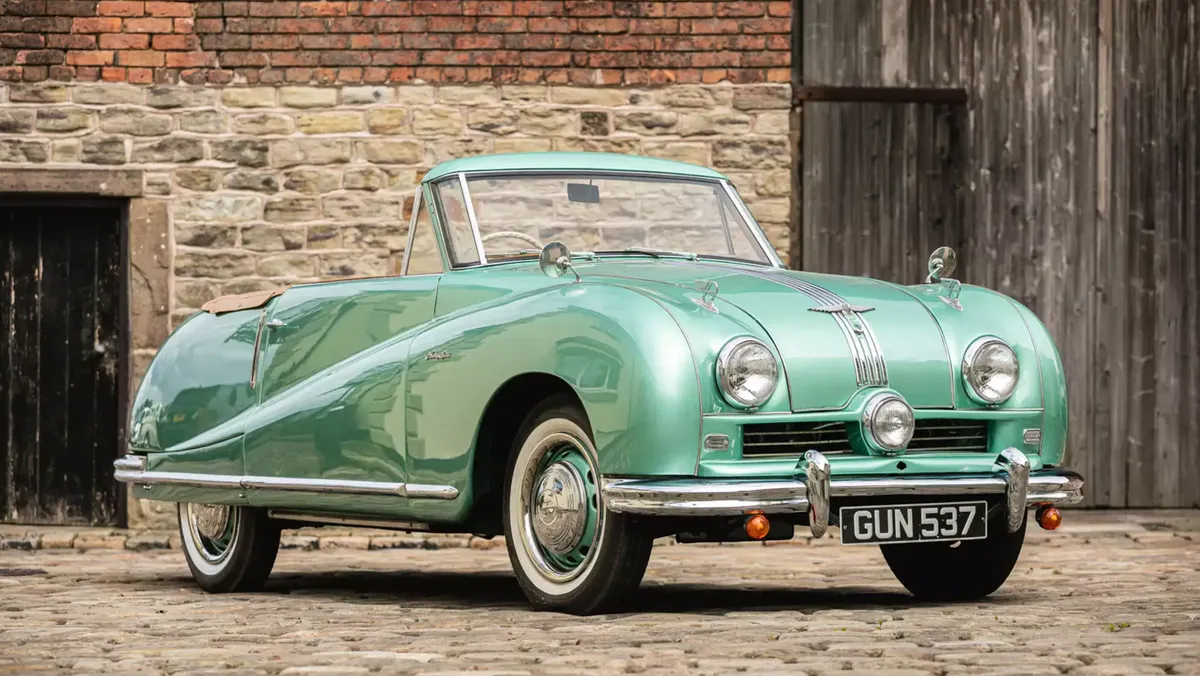
Austin Atlantic A90.
Image: classic.com
One concern of the American public was reliability. They also had to overcome prejudice against a 4 cylinder car competing in a 6 and 8 cylinder market. Journalist, driver and broadcaster Alan Hess, then in charge of Austin publicity, had the idea of combining the sales drive with an attempt to break American Stock Car records in order to attract attention to the new model.
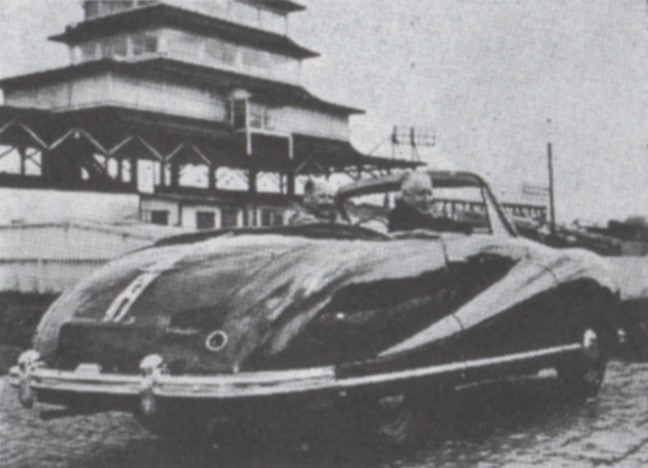
Racing driver Alan Hess (left) takes Arthur H. Marlow, the British Consul General at Chicago, for a ride in the high-speed Austin Atlantic at the Indianapolis Speedway, USA, 19th April 1949.
Image: Keystone/Hulton Archive/Getty Images
There were only two Austin Atlantic prototypes in the USA at the time and they were used for dealer evaluation. Well known automobile speed record breaker George Eyston travelled to America and convinced the AAA (American Automobile Association) to accept a standard production A90 Atlantic convertible as an entry by the Austin team to attempt a speed record at the Indianapolis Speedway during 12–19 April 1949.
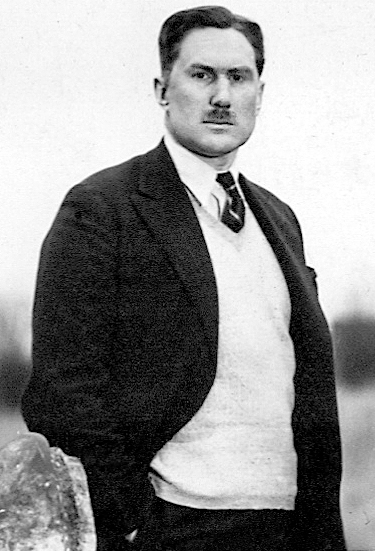
George Eyston , circa 1931.
Image: Palmes family of Naburn.
A Record Breaking Performance
After seven days and nights of constant driving at an average speed of 70.54 mph, the record was beaten of any open car at any capacity. Hess and his team had collected no less than 63 records, completing 11,875 punishing high-speed miles.
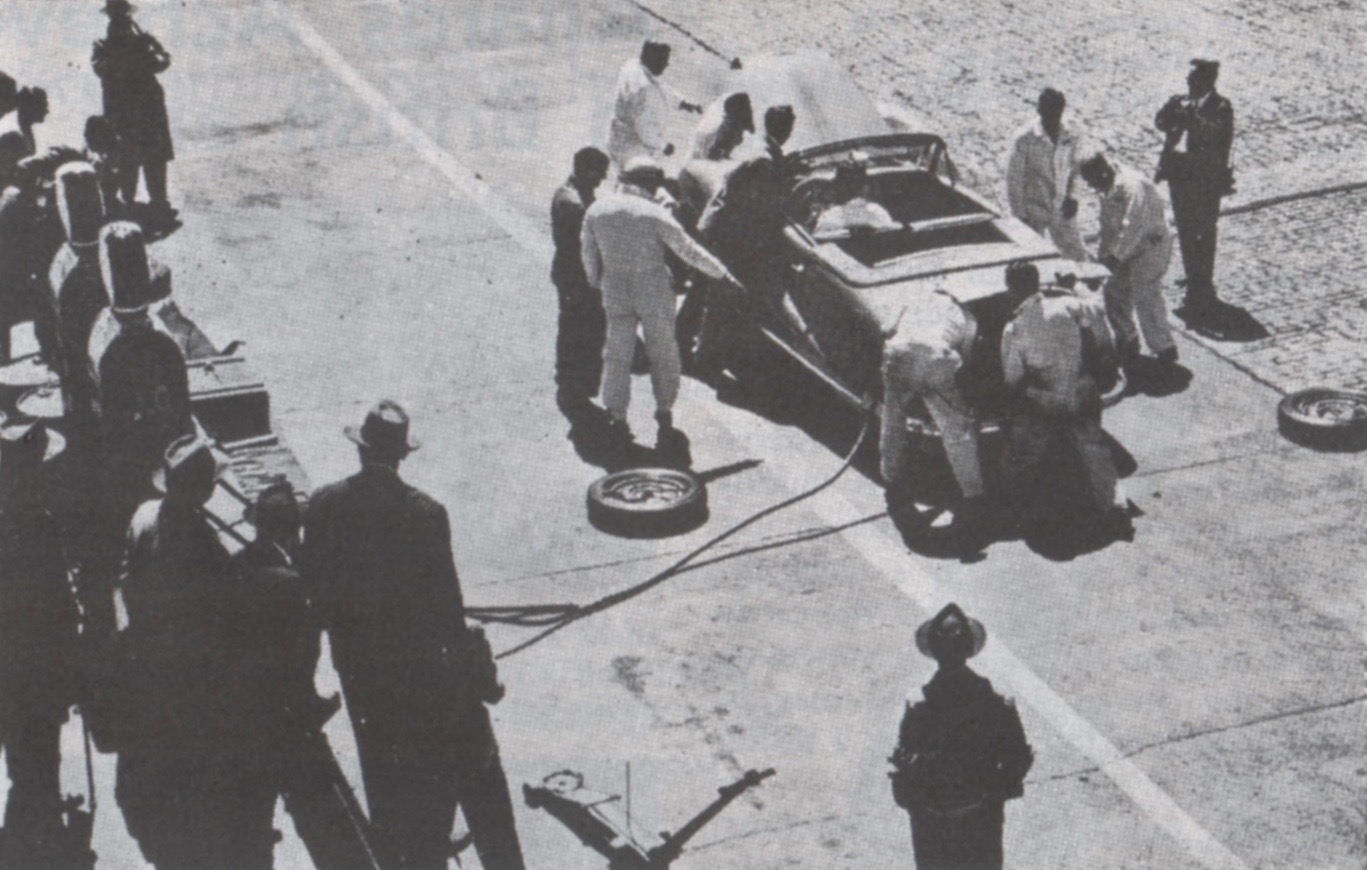
Alan Hess, with helmet, replacing Charles Goodacre, who has just finished three hours of driving.
Image: simanaitissays.com
This record breaking now car resides in the Birmingham City Museum. The achievement was significant and Austin got the publicity they wanted.
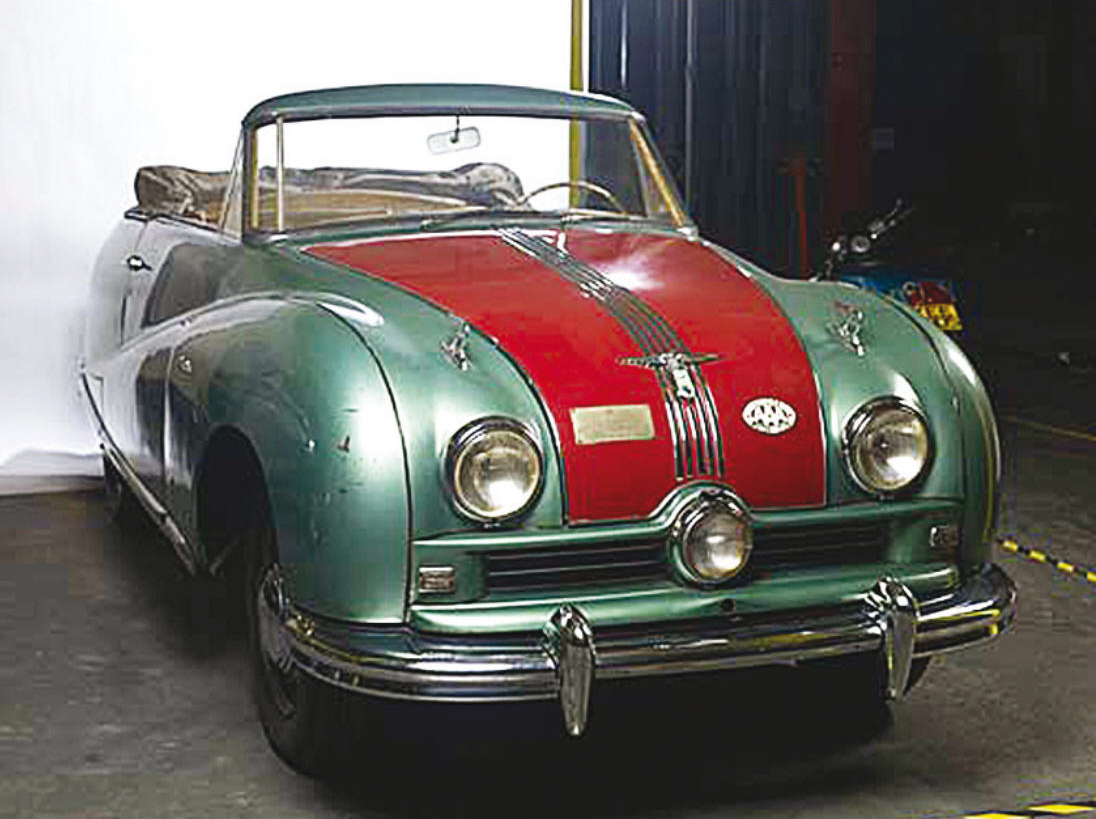
The Austin Atlantic A90 driven by Hess and his team.
Image: Birmingham City Museum.
Colorful Advertising
The American market was flooded with advertisements and brochures for the Austin Atlantic from 1949 to 1952, including the last known catalog shown in the pictures below. The asking price at the time was $2,995, which was largely out of reach for the average consumer.
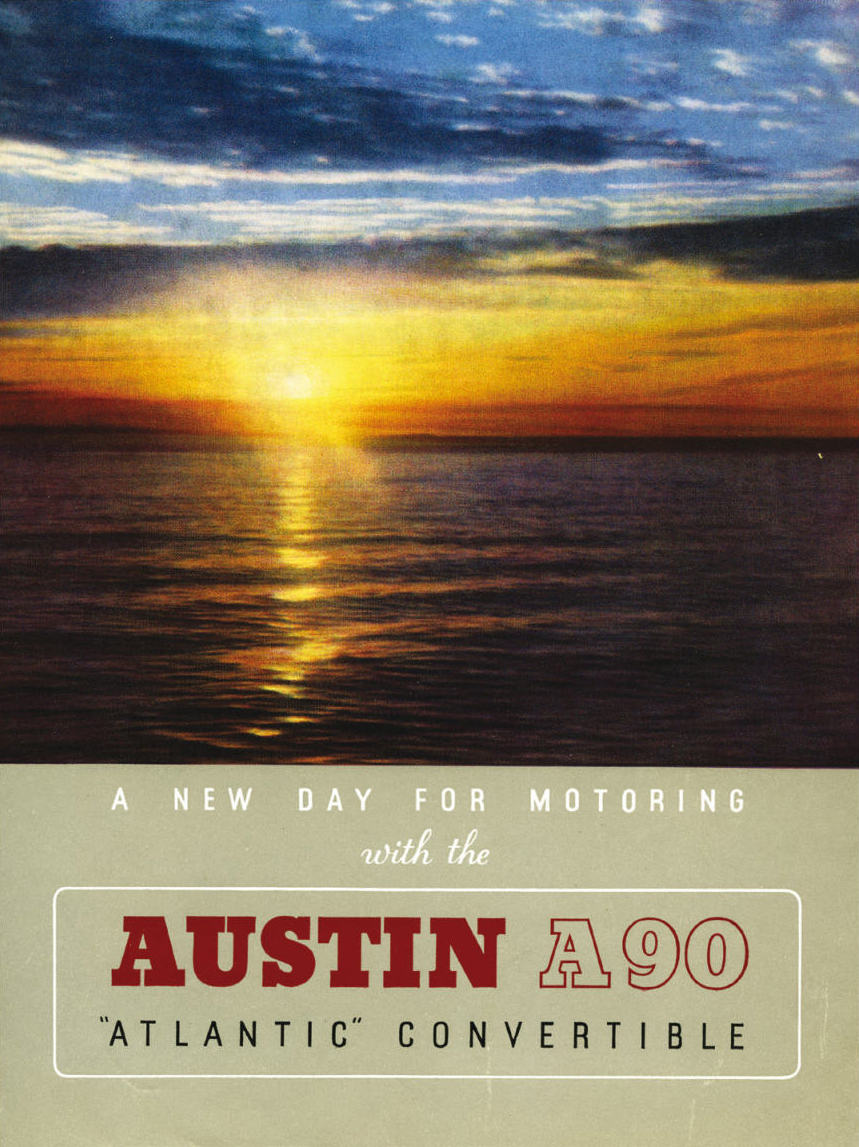
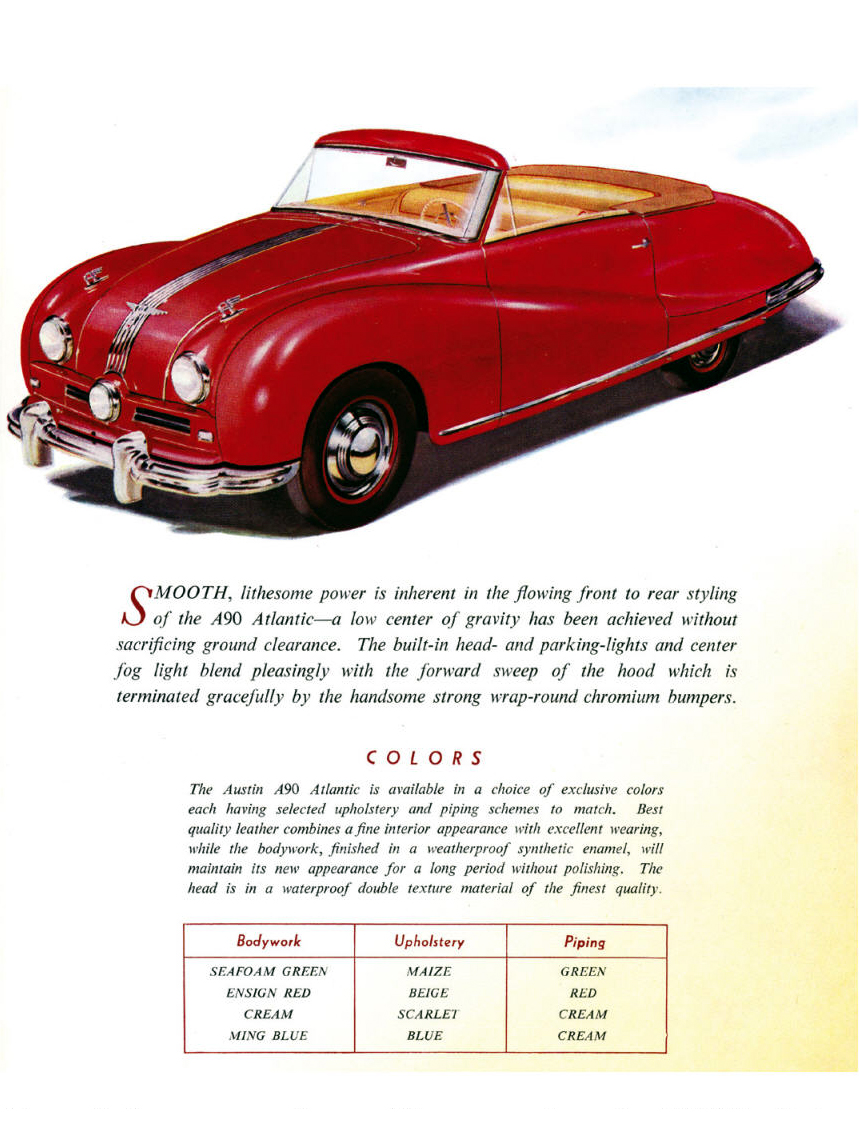
It’s interesting to note that the colors offered were:
- Sea foam green with maize upholstery
- Ensign red with red beige upholstery
- Cream with scarlet upholstery
- Ming blue with blue upholstery
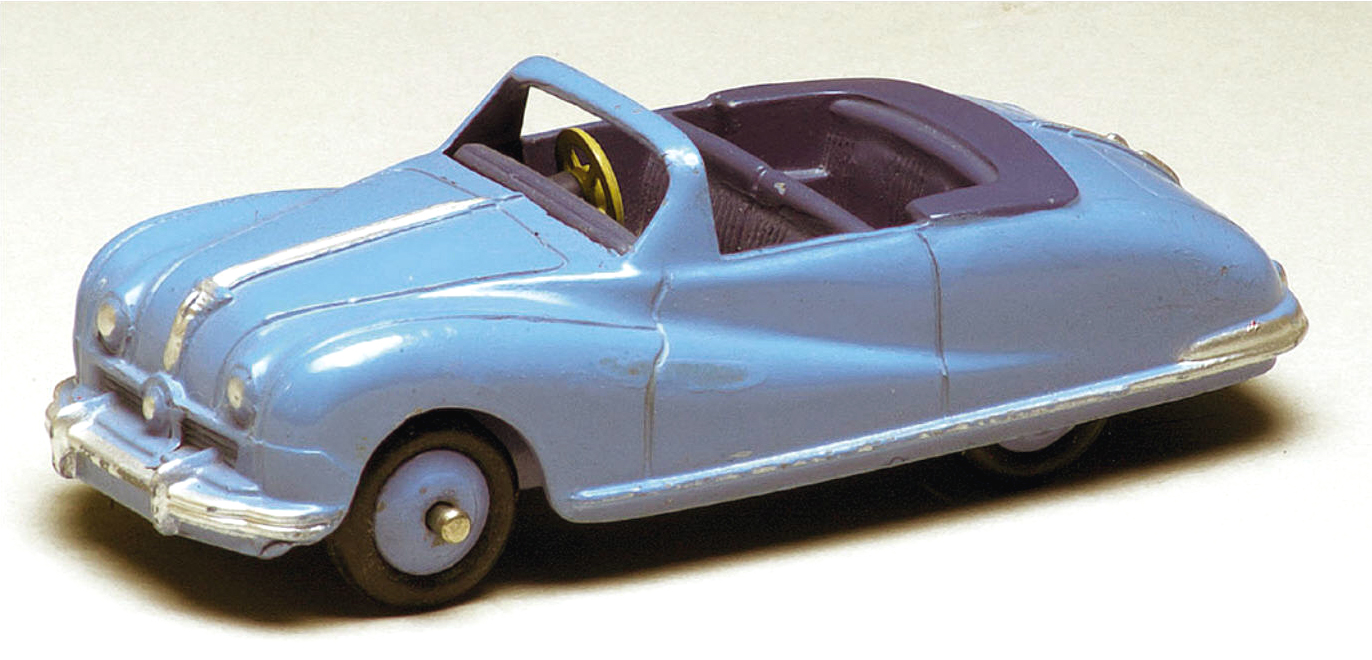
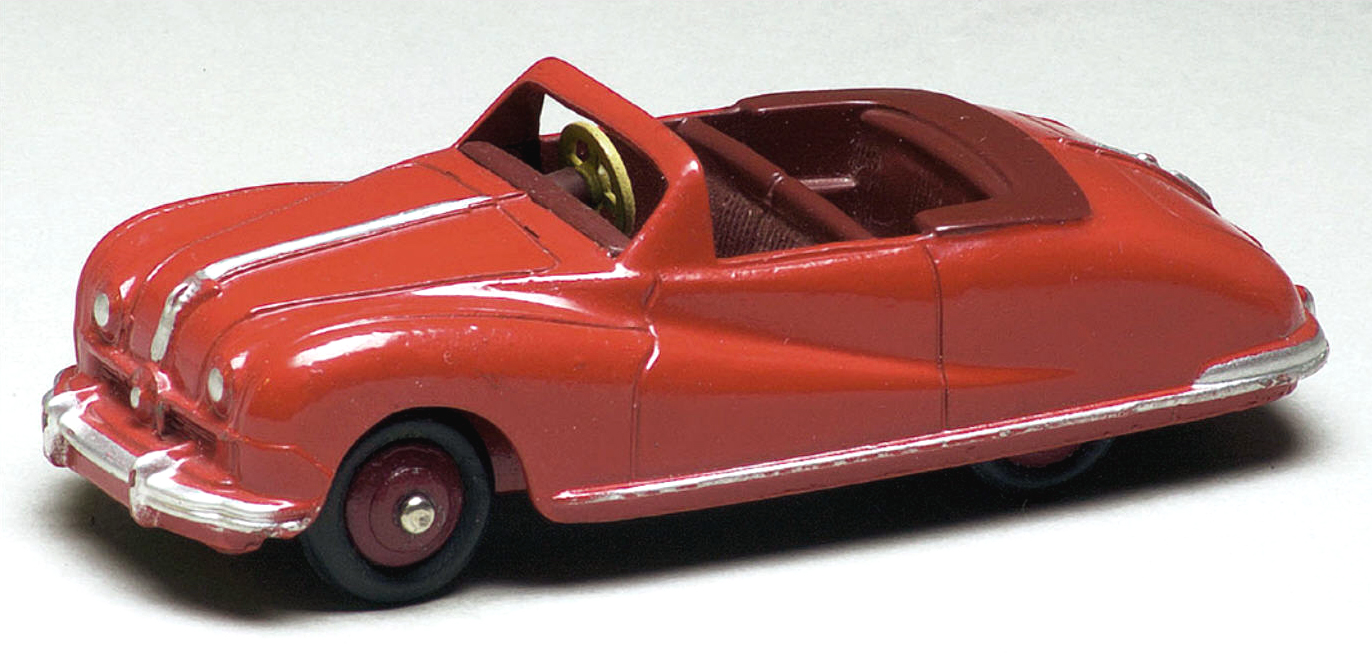
This likely explains why Meccano produced a limited batch of toys for two of these color schemes, red and turquoise blue, both very rare and hard to find, for export to the American market along with the real car, perhaps to be offered by dealers to potential buyers as a promotion. These colors can be seen in the brochure above.
It was customary in the USA for auto dealers to offer a “promo” scale model of the real car to customers as giveaways to their children. TootsieToy 1/43 models of the La Salle sedan were given away in the early forties; and later, plastic 1/24 scale cars in the fifties and sixties.
Missing the Mark
But the Atlantic failed to take America by storm, despite a $1000 USD price cut. A meager 350 units found their way stateside, and no more than 3,500 cars left the UK during its production period. It was estimated that between five to ten thousand units were produced in the four years of existence, although the official number stands at 7,981.
When Autocar tested the Austin Atlantic convertible in August 1949, it was described as one of the ‘star cars produced after the war’, of outstanding merit and appeal. The Atlantic was certainly value for the money at 952 GBP, which included a power-operated hood and electrically operated door windows. The four cylinder, overhead valve engine was largely unbreakable and propelled the car to a dizzying 96 mph. Unfortunately, due to poor sales, the convertible ceased production in January 1951. A fixed head coupe that was introduced in 1950 was cancelled in 1952. Cars continued to be sold until 1953, when the stock eventually depleted.
Coincidentally, a relative of mine bought one in Peru in 1953 — a luxury at the time — and used it to enter a beginner’s rally in Lima. Unfortunately he crashed and suffered grave injuries, but survived despite the car rolling out of control on a curve.
My Dinky Austin Atlantic Models
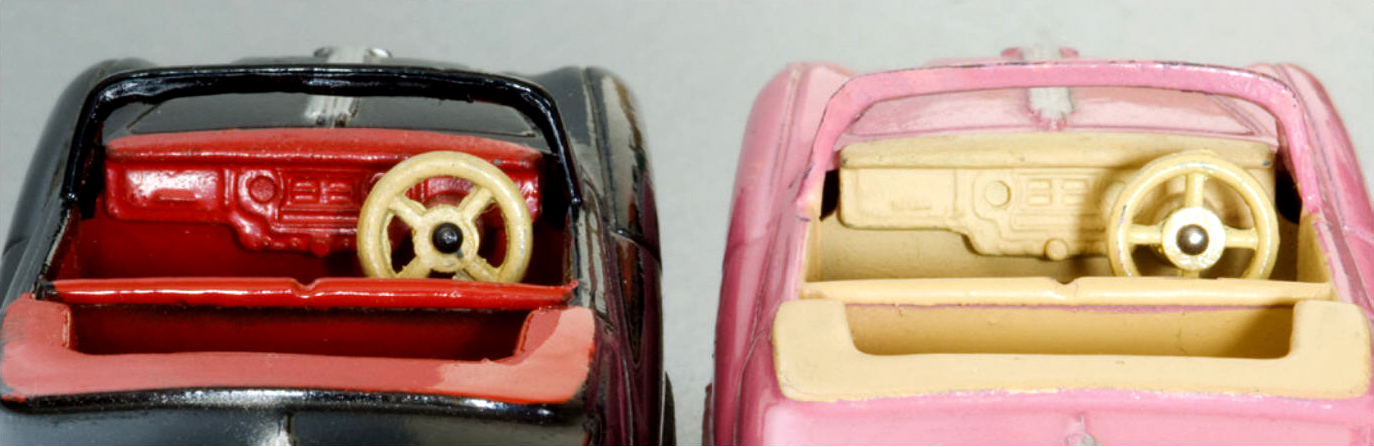
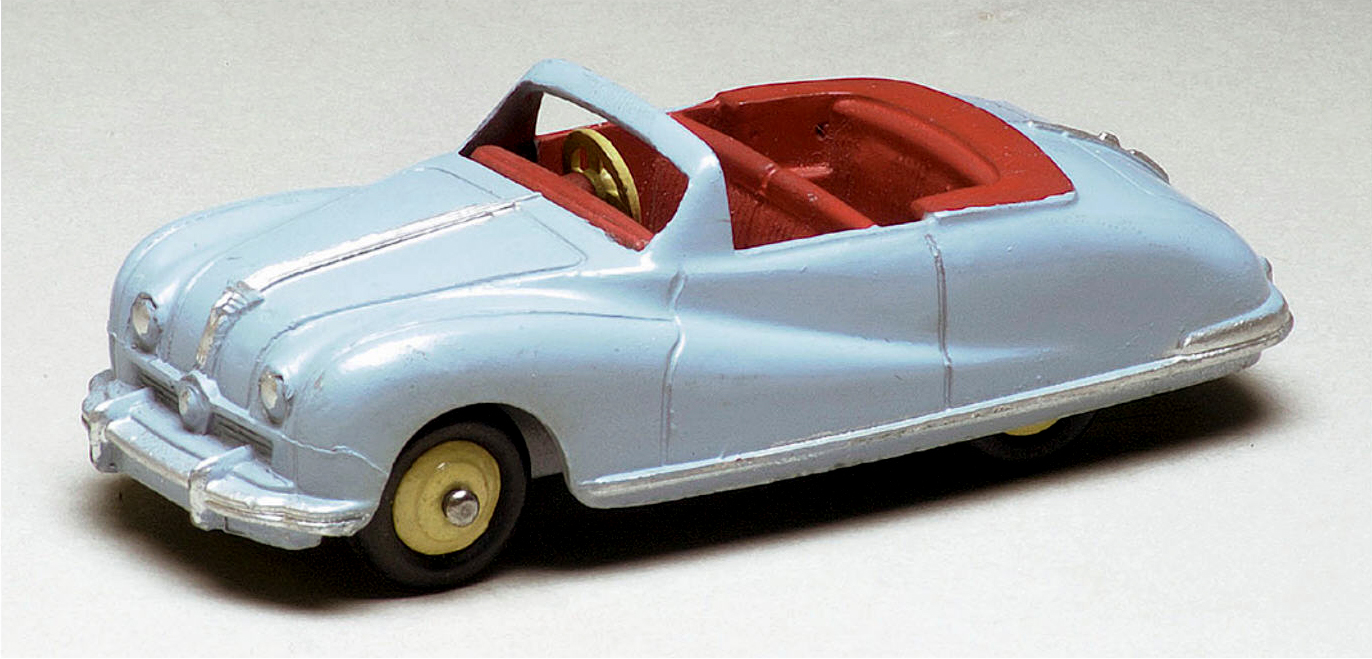
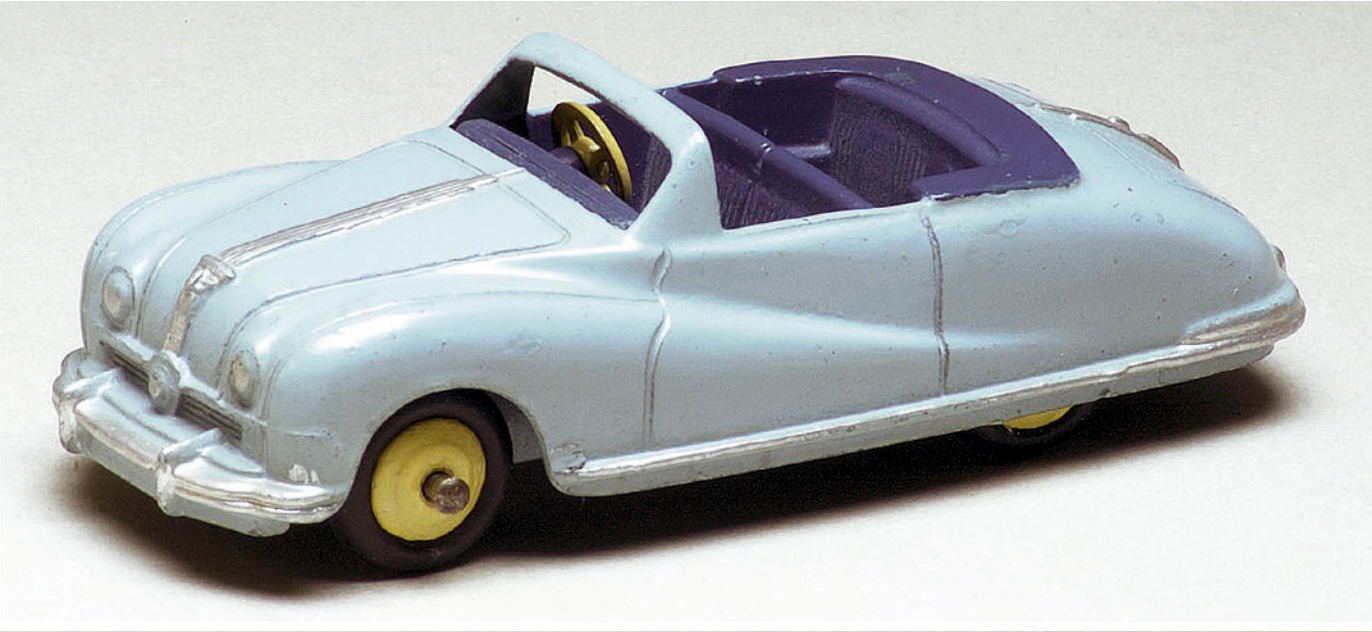
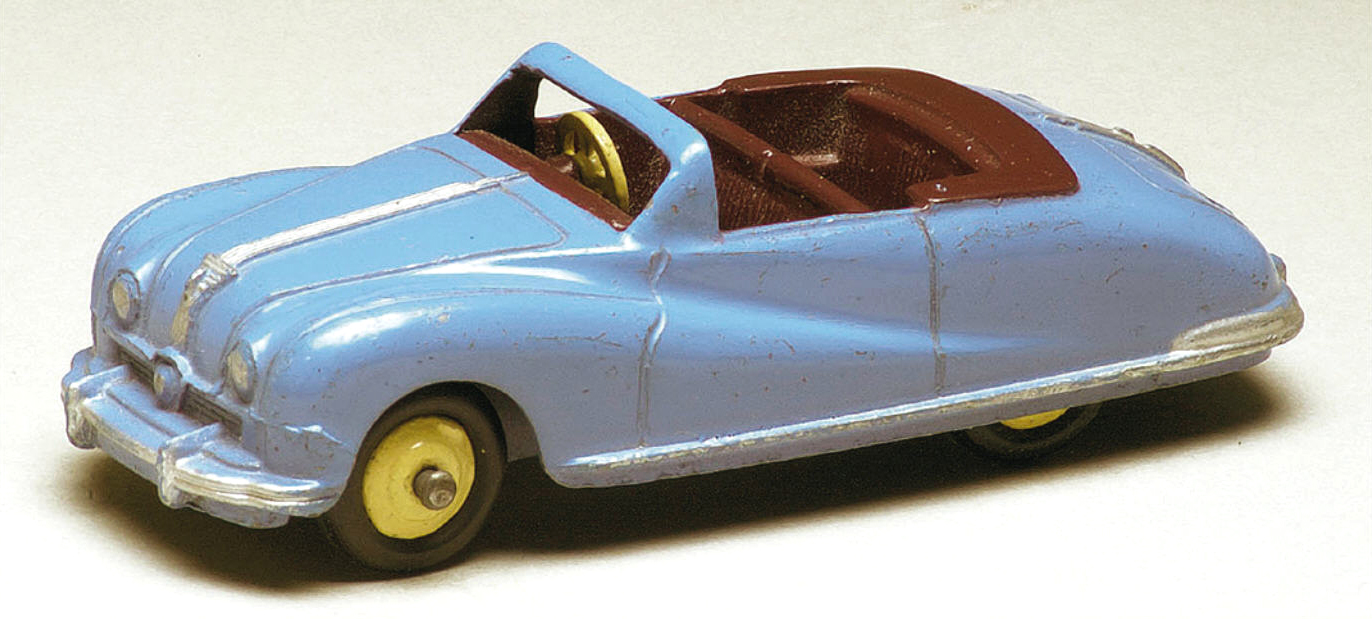
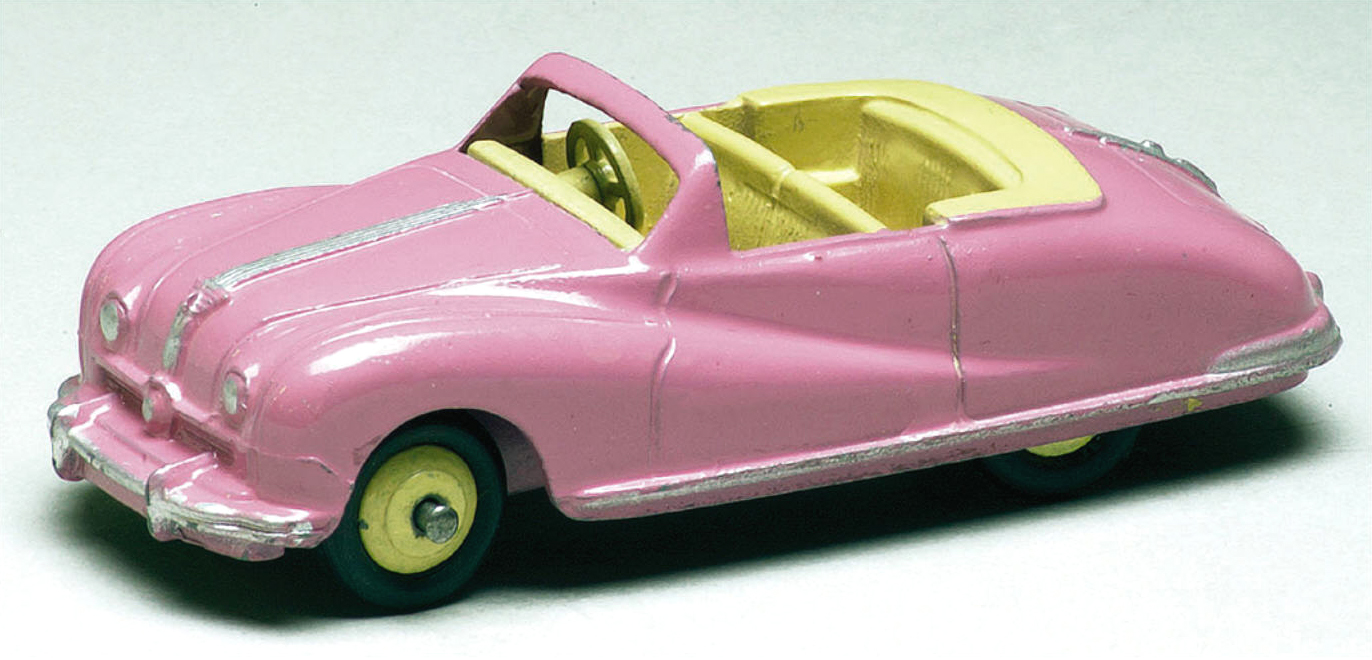
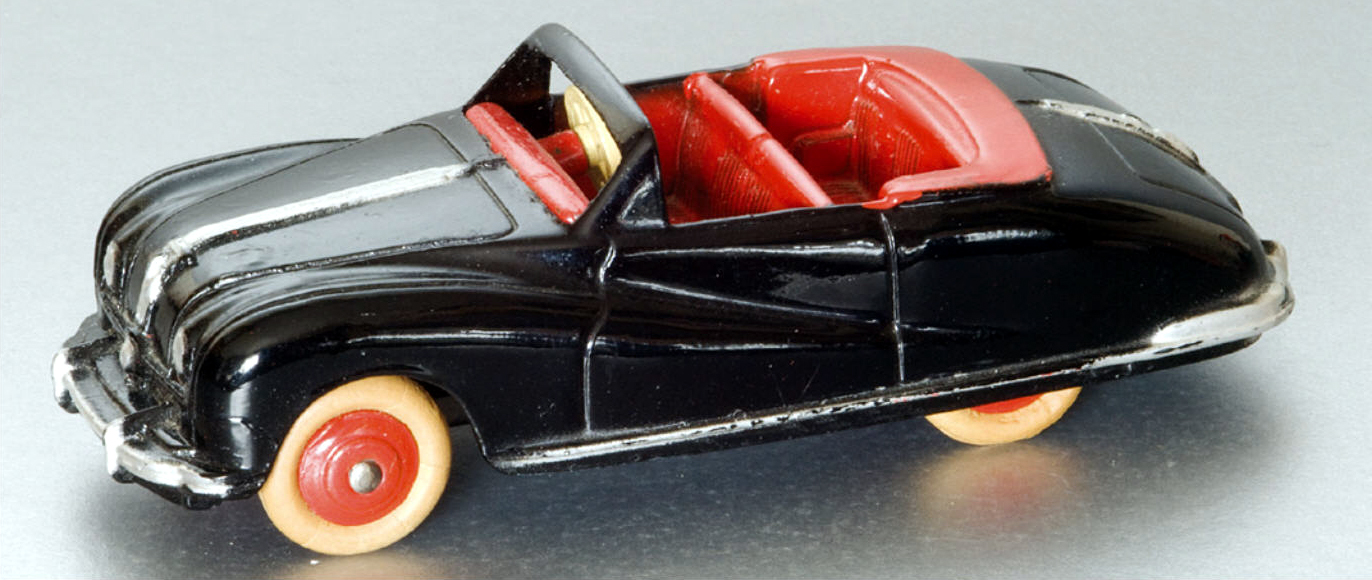
The overall length of the Austin Atlantic was 177”, and compared to the Dinky Toys model of 3.75” which was scaled to 1/47.32, or roughly 1/48. Produced by Meccano from 1951 to 1958, first as 140A, then changing to 106 in 1954, the toy outlasted the real car. By its streamlined design, the Austin Atlantic Convertible is one of the nicest British Dinky Toys, and sought after.
Here are my Dinky 106/140A Austin Atlantic models.
Acknowledgement
This article was written by Jose Heraud and our late friend Dave Busfield and first appeared in the July 2012 issue of the Journal of the Dinky Toys Collectors’ Association.