
Image: HobbyDB
In early 1964, Spot-On were designing six new models for their range, all based on contemporary U.S. cars; unfortunately at the same time, Tri-ang, the parent company of Spot-On, were in negotiations with Meccano for a buy out. The deal was accepted and by the end of February 1964, Meccano was now part of the huge Tri-ang Toys company who now had Dinky Toys, the “jewel in their crown”.
The change of ownership from Dinky’s point of view wasn’t a problem; they would continue to benefit from a cash injection from their new parent. For Spot-On however, their future wasn’t so clear, but they continued with their usual production program in Northern Ireland by introducing ten to twelve new models each year until 1967. However, they lost the six new US car models to Dinky. I heard that Dinky shipped them over to a plant in Hong Kong for new baseplates and final finishing, at the same factory that Tri-ang used and where it would soon make six British sports cars for Scalextric.
However, the Industrial History of Hong Kong Group reported at their website (Farmer, 2019a, 2019b) that Hong Kong Industrial (HKI) made the six Dinkys from scratch during 1965 and 1967. HKI was owned by Loh Te Sing and located in Smithfield, Hong Kong Island. They made toys for both Lines Bros, Ltd. (Tri-ang) and Meccano Ltd. (Dinky). In 1966, Mattel bought HKI for Barbie doll production and later started tooling for their Hot Wheels product introduction, with sales starting in 1968.
In 1967, Mattel stopped Dinky Toy production at HKI to make room for Hot Wheels, but around the same time (1967 or 1968) Dinky started manufacturing their new Mini Dinky range at HKI to compete with the “Matchbox” 1–75 series models. (See The Mini Dinky Story)
Catalogs
To introduce the new models as Dinky Toys, all six models were shown on a flyer for Canada in 1964. The following year, four models were introduced in Canada and North America, and finally in 1966 the last two models were released.
Mike and Sue Richardson (1981) said that these six cars had quality and manufacturing issues, so production only lasted from 1965 to 1967. Dinky tried again in 1978 and 1979 with the No. 180 Rover 3500 with production issues again, they report (see Two Dinky Police Cars from 1979). All six cars were shown in the 1965 US catalog but only 001 and 003 appeared in the 1966 UK catalog. It’s not clear how many of the six were actually sold in the UK.
Three leaflets or flyers have been seen for the US market along with a price list. I assume the oldest one used color drawings of the original cars before any prototypes were ready to photograph. The green US price list is dated January 1965. Both are marked Lines Bros. Ltd. and show 004 as a Dodge Polara convertible which was replaced by the Oldsmobile 88, perhaps being easier to manufacture than a convertible. Trademarks might not have been such a stumbling block in the 1960s but that may have been an issue as well. The third picture below shows the back of a 1967 leaflet for the US. Lines Bros. isn’t mentioned in this one.
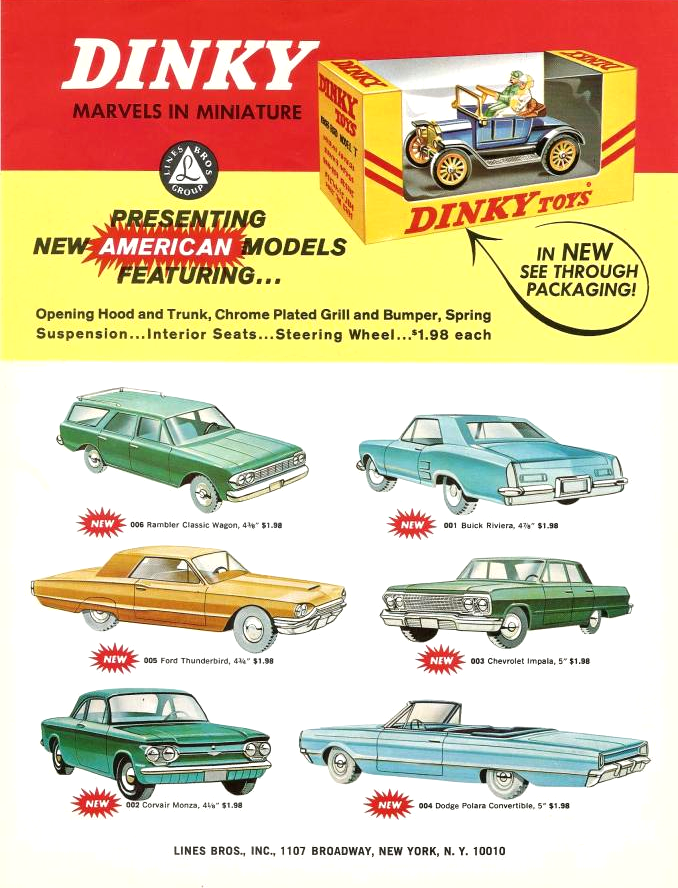
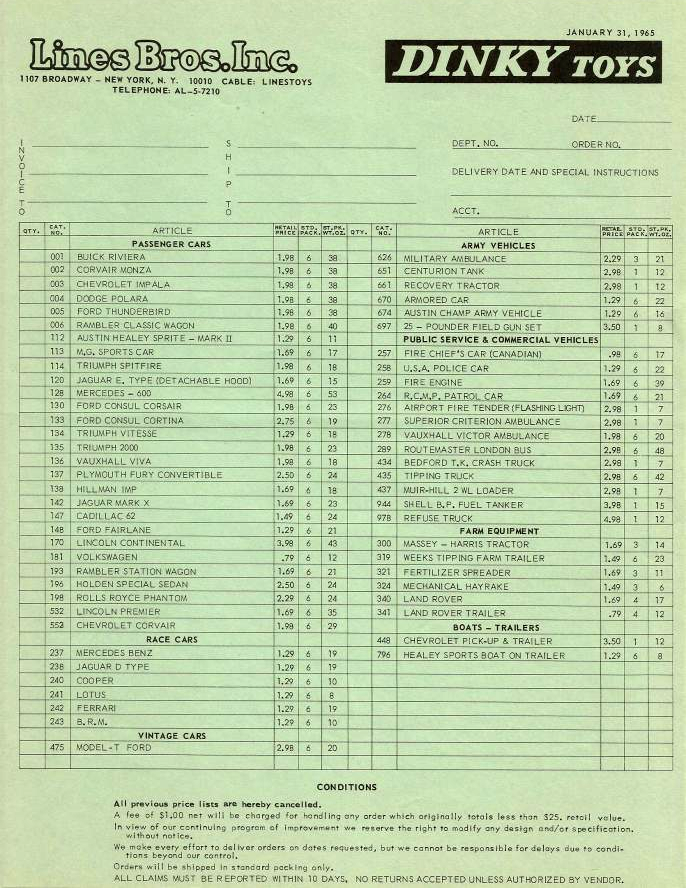
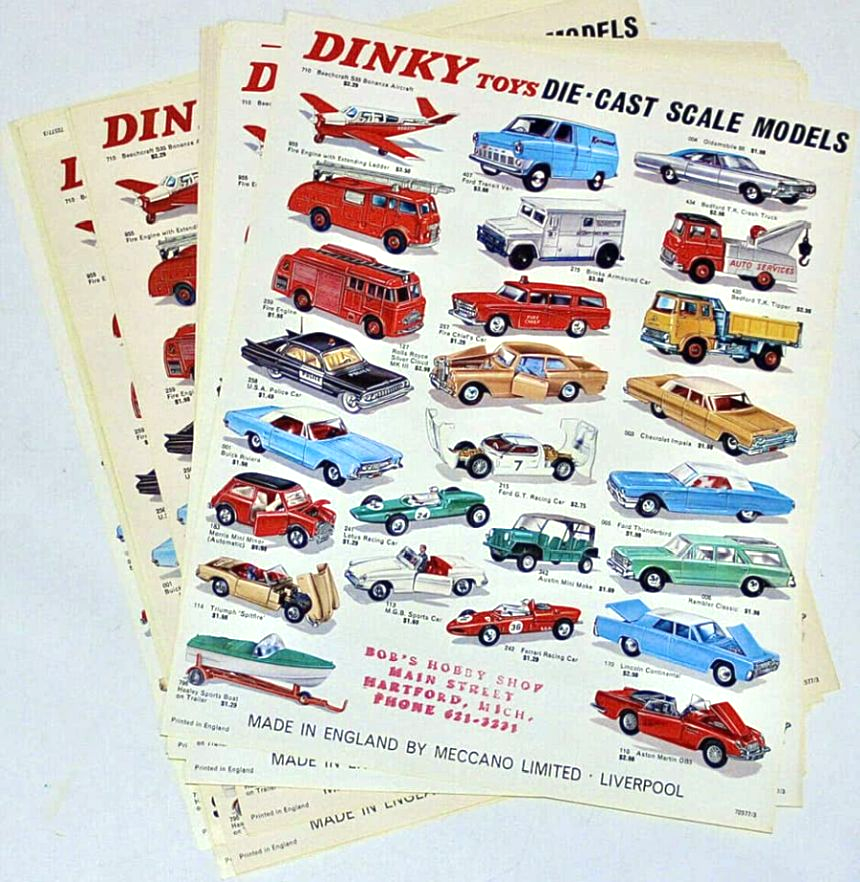
Images: Jonathan Angel, Jan Oldenhuis, Jonathan Angel
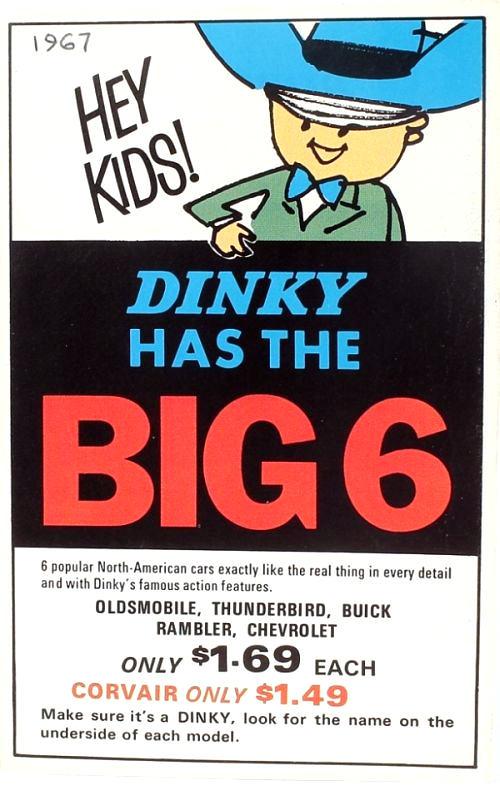
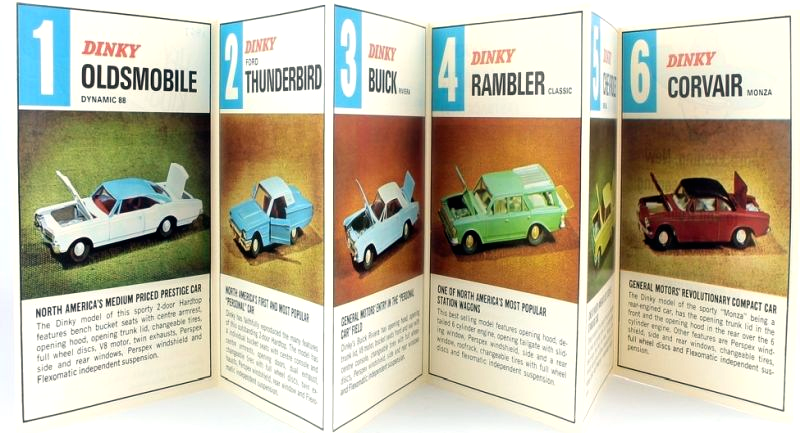
The small accordion-fold one pager shown below shows the “Big 6” cars. This copy is pencil dated 1967 but may have been published earlier.
Images: Chris Turner
The Hong Kong Six
The six models listed below have distinctive chromed bumpers and grill components introduced by Spot-On as a major new feature for 1961, and also sport “spun alloy” wheel rims with large section nylon based tires. Dinky adopted these for some of their models. All the baseplates are marked “1/42 scale” and “Made for Meccano Ltd. in Hong Kong”.
- 57/001 Buick Riviera
- 57/002 Chevrolet Corvair Monza
- 57/003 Chevrolet Impala
- 57/004 Oldsmobile 88
- 57/005 Ford Thunderbird
- 57/006 Rambler Classic
During 1964, Dinky introduced a new “Visi-Pac” box: it was a double “window” box in yellow with red text. For 1965, this was modified by adding some extra red angled stripes on each side of the viewing window. These boxes proved to be too delicate, so a new fully closed picture box was designed for the 1966 season.
The six Hong Kong Dinkys have been found in both the 1965 red-striped “window” box (shown in the 1965 US catalog) and in a fully closed picture box in 1966.
Since then, none of the models have turned up in another company’s range and I believe they were scrapped along with a lot of the original Dinky tools and several sets of Spot-On tools. In 2008, the French company Norev reintroduced some Spot-On models (as Spot-On branded models in Spot-On boxes) to the retail market, but none of the Hong Kong Six were reproduced and their range lasted only a few years.
57/001 Buick Riviera
This is quite a common model within the range and there seems to be a good number of these in circulation. This model was shown in the 1966 UK catalog and presumably sold in England and is based on the 1963 Riviera model year.
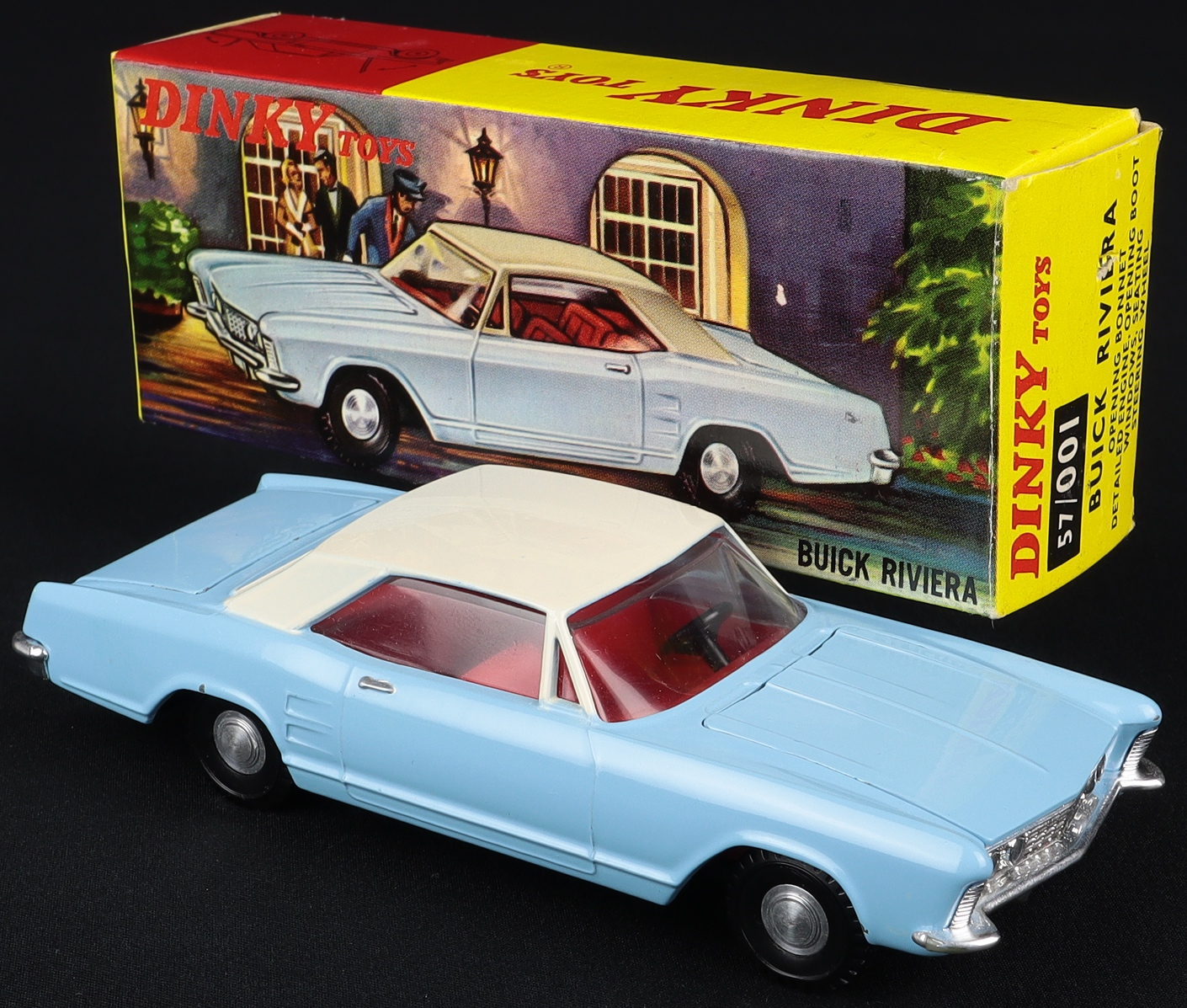
Image: Quality Diecast Toys
Shown below is the 1965 red striped “window” box, essentially the same as the 1964 version, but with the angled red stripes added to each side of the viewing window. All six models were probably available in this box for the US market, but when three models came to the UK in 1966, they were packaged in the fully closed picture box. The three models for the UK were probably the Buick Riviera, the Chevrolet Impala and the Nash Rambler.
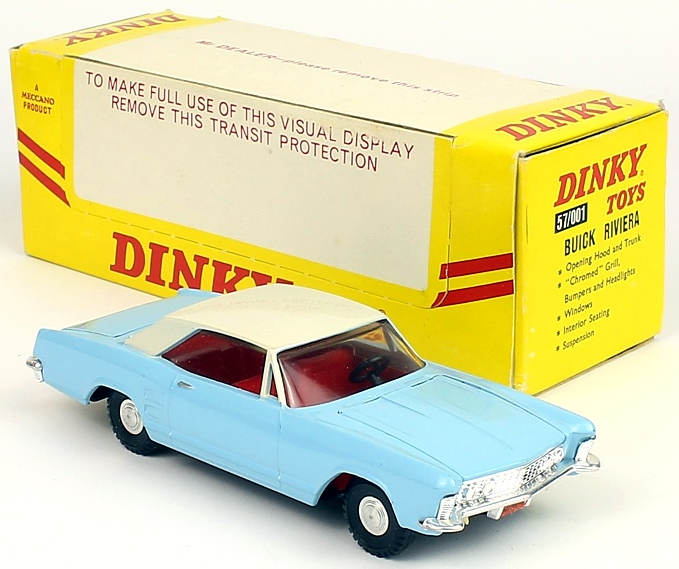
Image: Quality Diecast Toys
57/002 Chevrolet Corvair Monza
The Chevrolet Corvair Monza isn’t as common as the Buick Riviera and appears to have not been offered in the UK. It also exhibits some “artistic license” in that it seems to be a cross between a 1963 and a 1964 model. The panel shut-lines on this model stand proud from the body surface, but the overall shape doesn’t seem to be very representative of the actual car from either year.

Image: Quality Diecast Toys
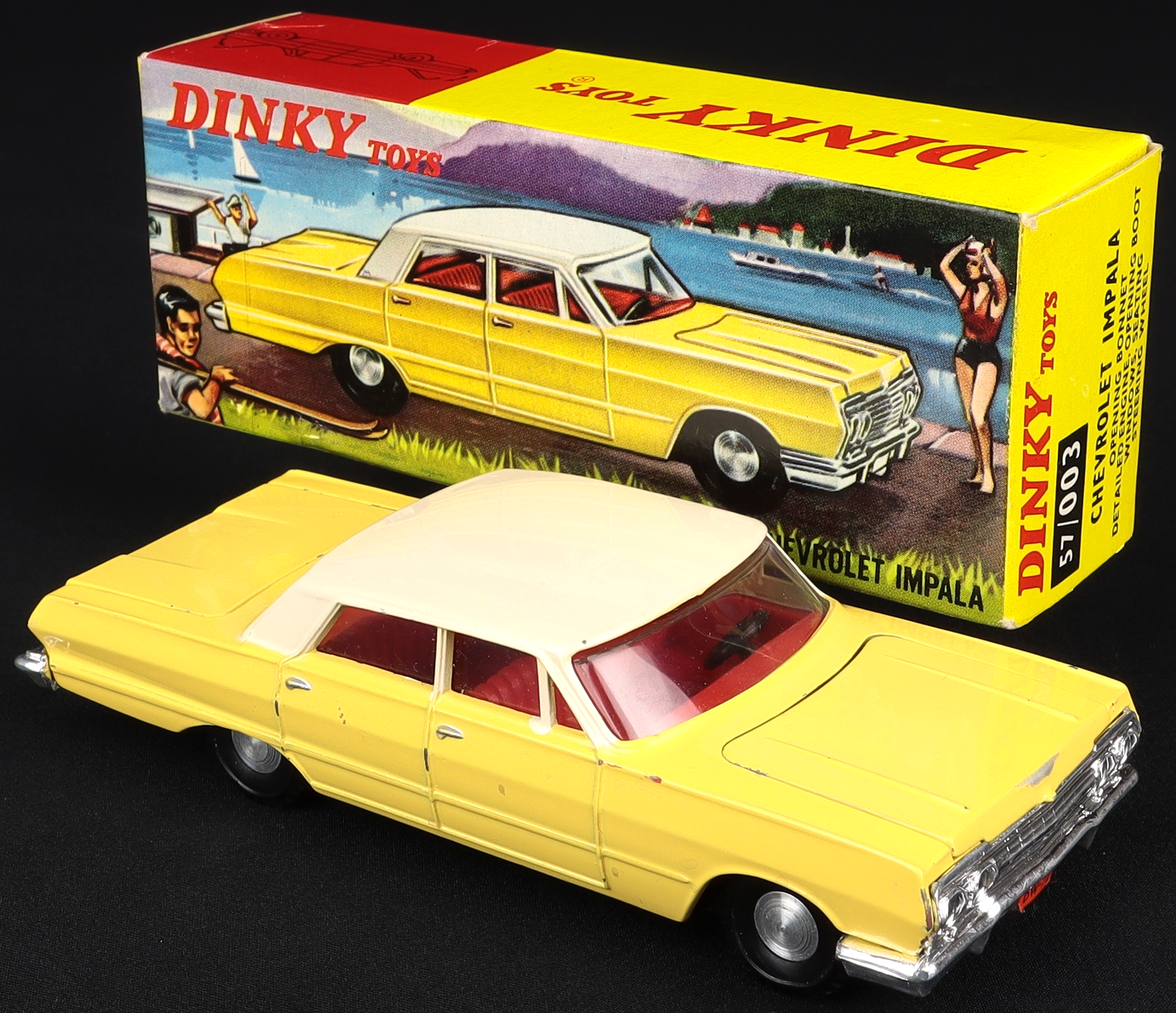
57/003 Chevrolet Impala
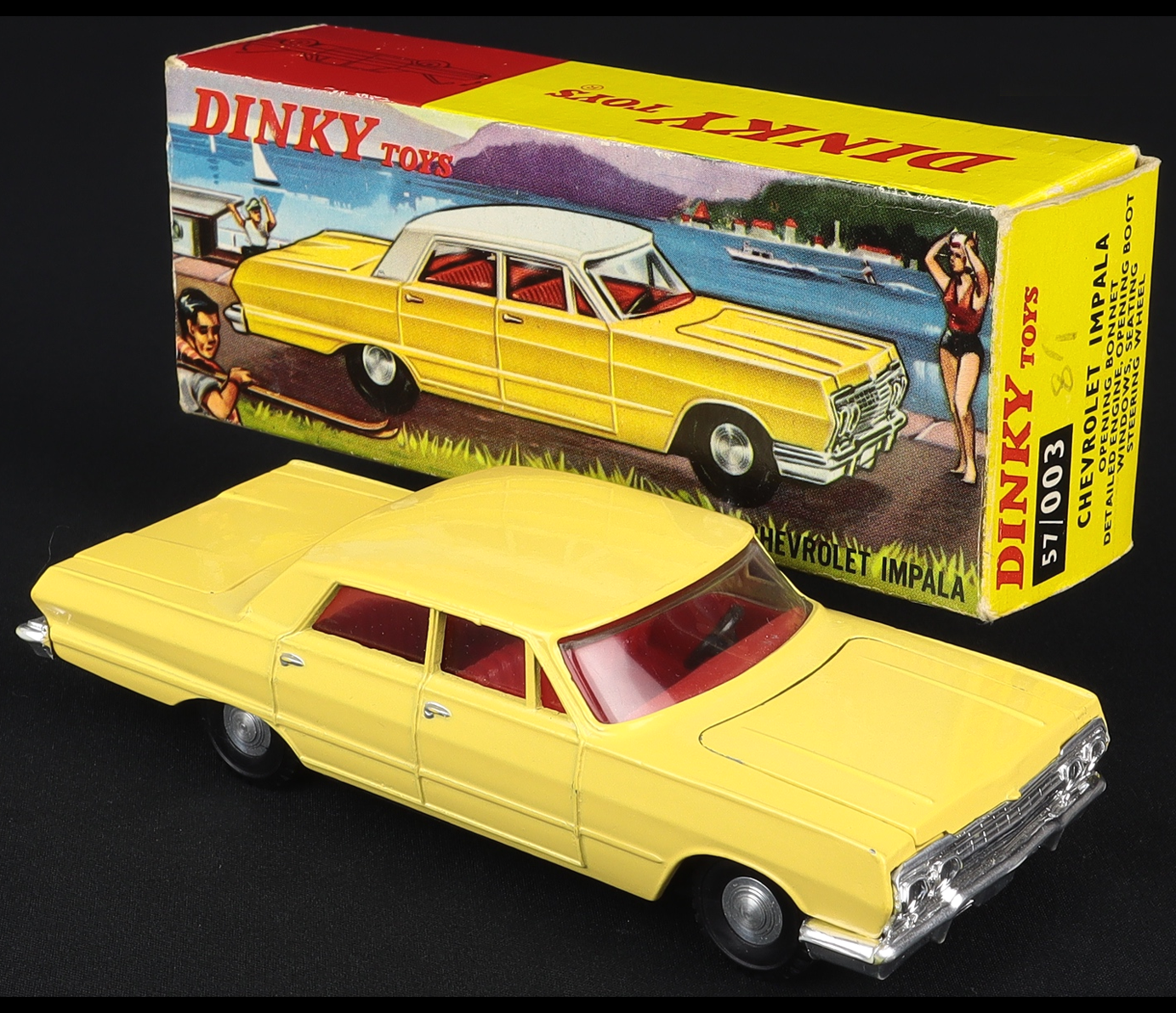
The Chevrolet Impala is another uncommon model, yet is shown in the 1966 UK catalog. Two versions of this model exist: one with a white roof and the other in all yellow. I don’t remember which one was destined for the UK market and which for the US market, but that was probably the reason for the two versions. This model is also a little difficult to identify fully; it has details from both a 1963 and a 1964 car and like the Corvair, the panel shut-lines are proud.
Images: Quality Diecast Toys
57/004 Oldsmobile 88
The Oldsmobile 88 is based on the 1963 Oldsmobile Delta 88 two door coupe. Although another model that seems to be freely available, it wasn’t included in the 1966 UK catalog.
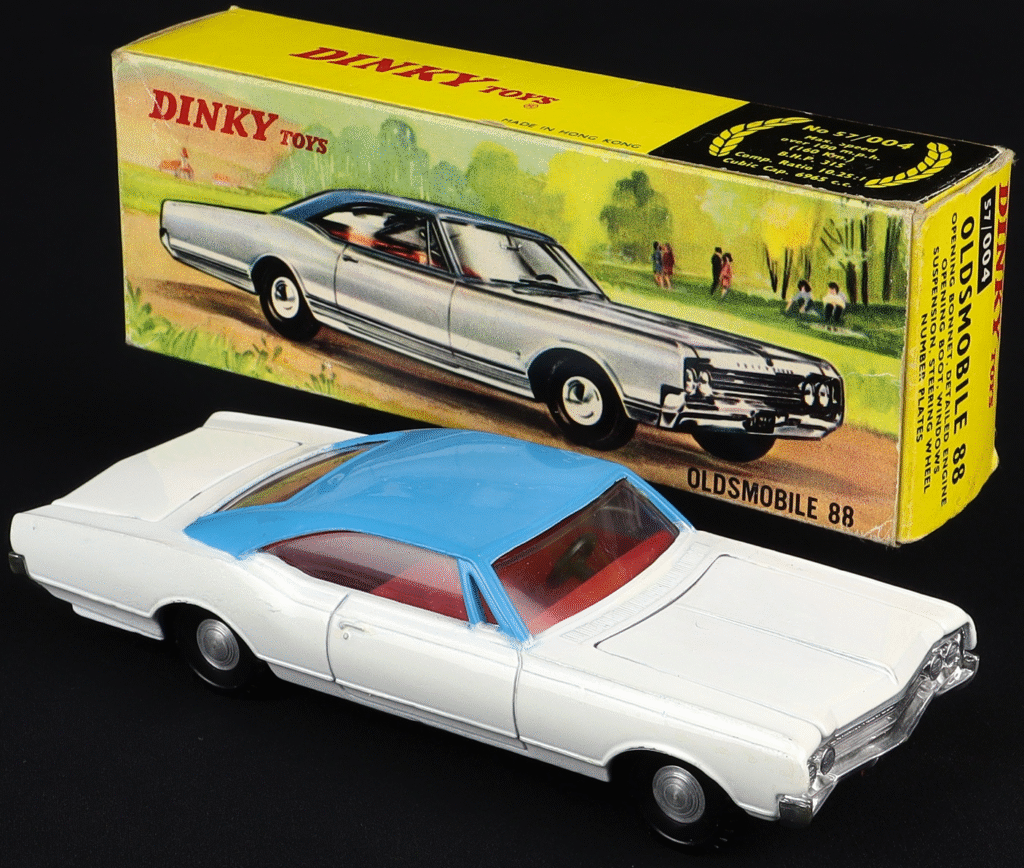
Image: Quality Diecast Toys
57/005 Ford Thunderbird
A fine model based on the 1964 Ford Thunderbird two door coupe, this was also missing from the 1966 UK catalog. With opening doors, the overall look is spoiled if the doors are pushed in too far when closed. This model can be quite hard to find.
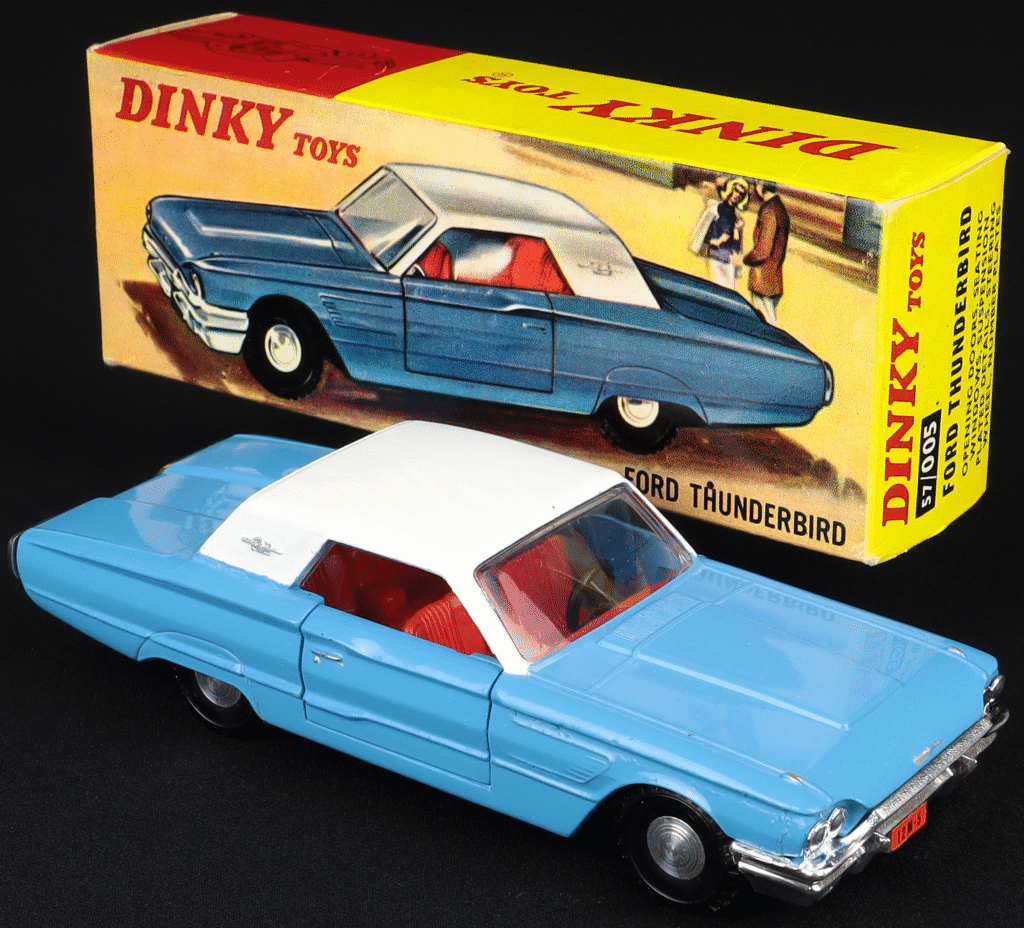
Image: Quality Diecast Toys
57/006 Rambler Classic
The 1964 Nash Rambler is the last model in this range and also appeared in the 1966 UK catalog. The example below is sitting in front of its 1965 red striped “window” box and you can see how fragile this design was.
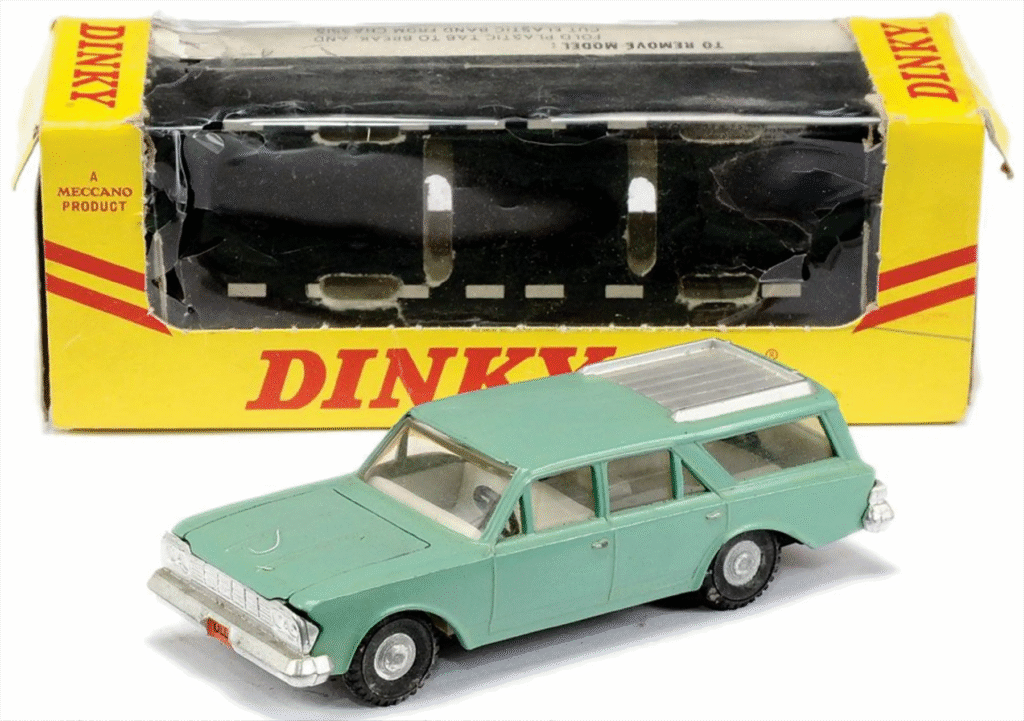
Image: Vectis Auctions
It’s not surprising that Dinky introduced the fully closed box for the 1966 model range. This model also has the panel shut-lines standing proud of the body. It is based on the Rambler Classic 770 Station Wagon and is hard to find.

Image: Quality Diecast Toys
When new, this model wasn’t very popular but it has since become quite collectible and as of this writing has sold for as high as GBP 400.