In 1961, I joined Meccano Ltd. as an Apprentice Toolmaker based at their factory in Hanson Road, Aintree, Liverpool. This factory had considerable molding facilities for the production of Bayko and Hornby Dublo models. After about six months I was transferred to the main tool room at Binns Road. My starting wage was the princely sum of £3 9s 11d (£3.50 in new money) for a 40 hour week.
The apprenticeship was well organized, starting out by learning to use the most common machines in turn, after which you were placed alongside a fully qualified toolmaker. I was very fortunate to be placed under the top man in the tool room, Billy Carr. As your skills improved your work became more responsible, moving from jigs and fixtures to (in my case) specializing in injection molds.
At the age of 20 I had completed two plastic injection molds before being asked to take up a post in the Drawing Office. The molds were a 144 impression wing mirror tool (used on various prestigious Dinky saloons) and an 8 impression mold for the seats and dashboard of the Dinky 161 Ford Mustang Fastback.
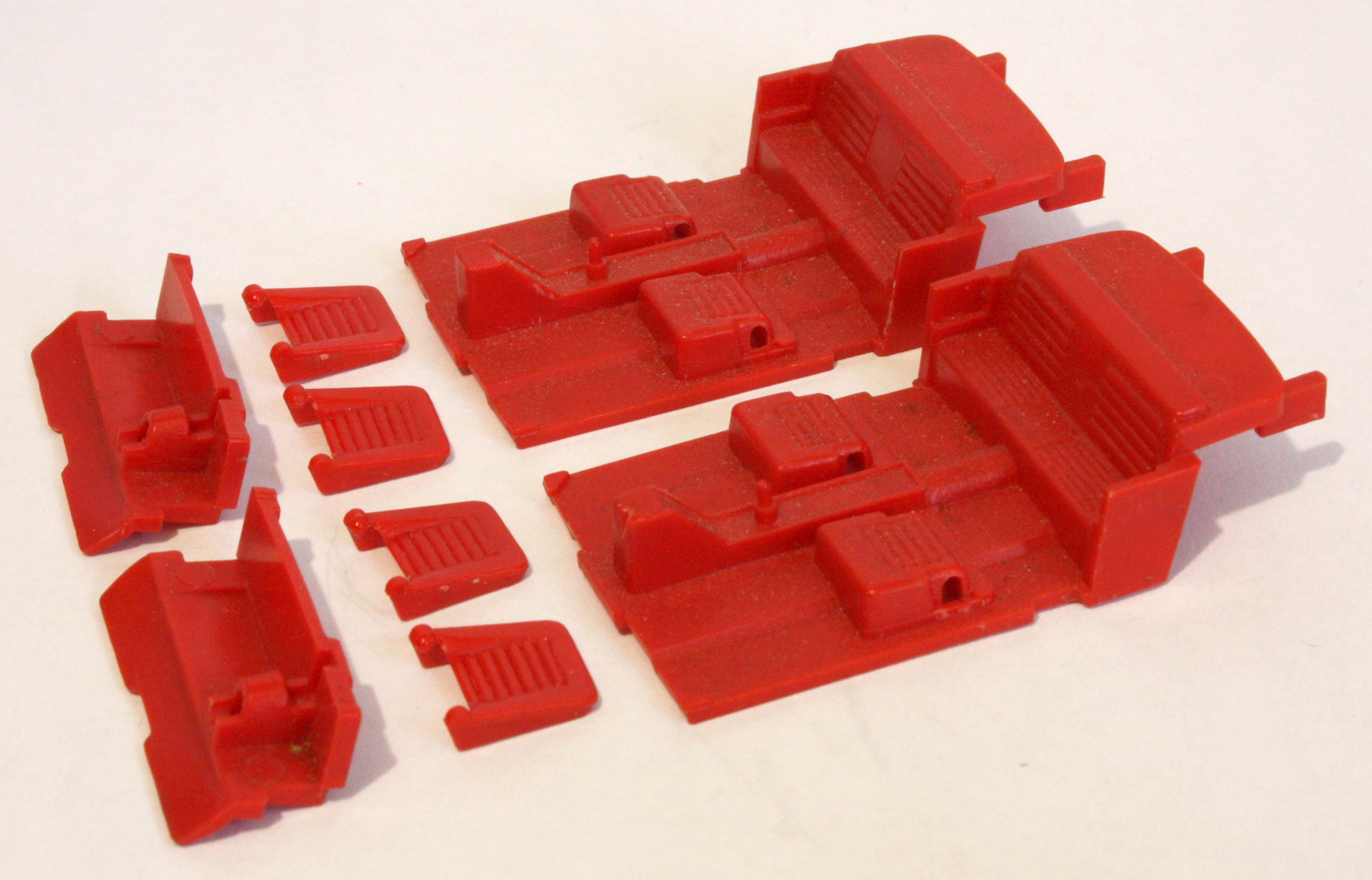
Dinky 161 Ford Mustang Fastback interior moldings.
In 1965, I transferred to the Drawing Office as a Product Designer earning £9.50 per week.
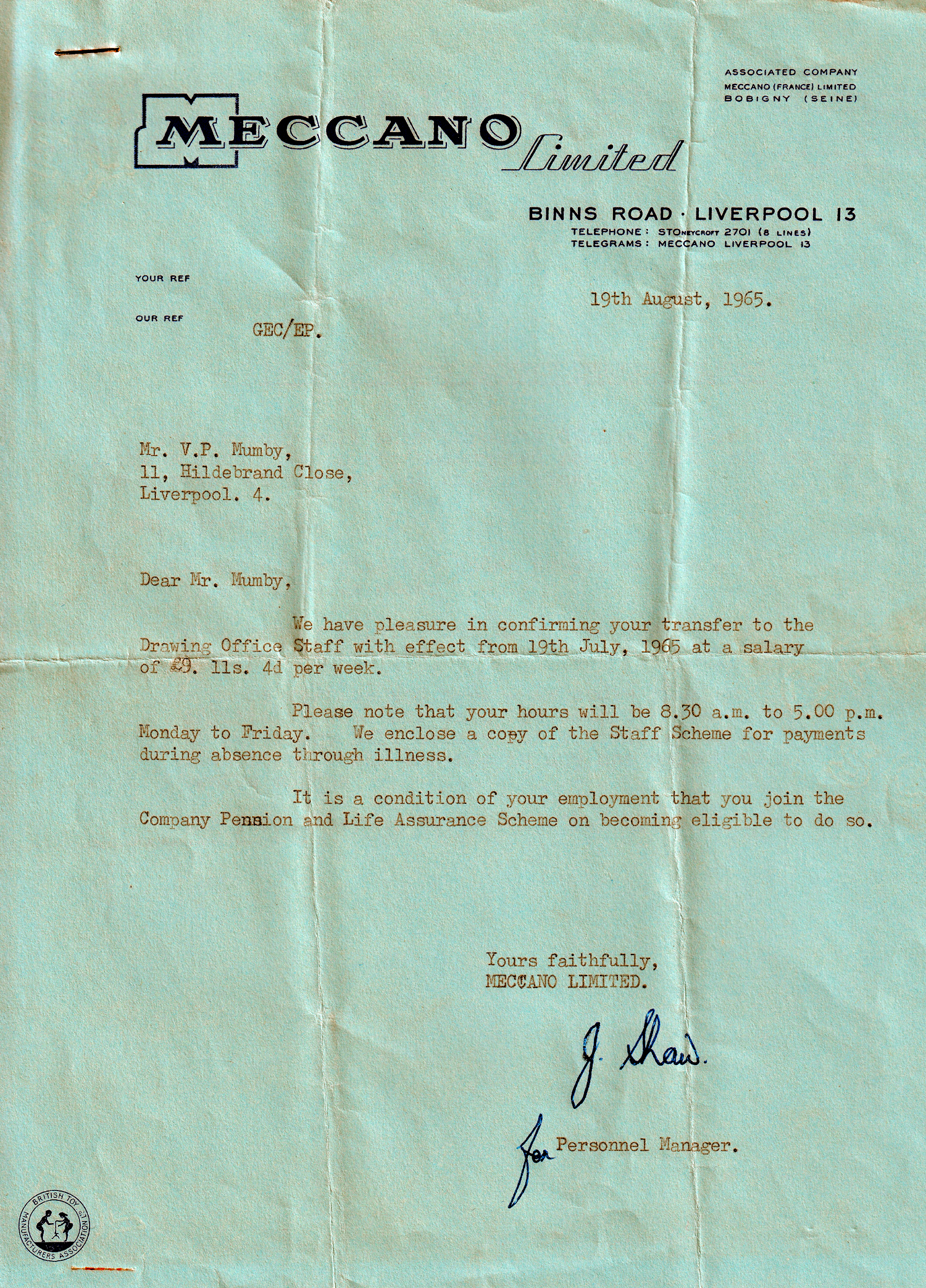
My appointment letter to the Drawing Office.
Products I designed
Between 1965 and 1970, I designed the following products:
- Dinky 163 Volkswagen 1600TL Fastback
- Dinky 159 Ford Cortina Mk II
- Dinky 187 De-Tomaso Mangusta 5000
- Dinky 153 Aston Martin DB6
- Dinky 102 Joe’s Car
- Dinky 344 Long Wheelbase Land Rover
- Dinky 995/996 Boeing 2707 SST
- Electric screwdriver for Meccano sets
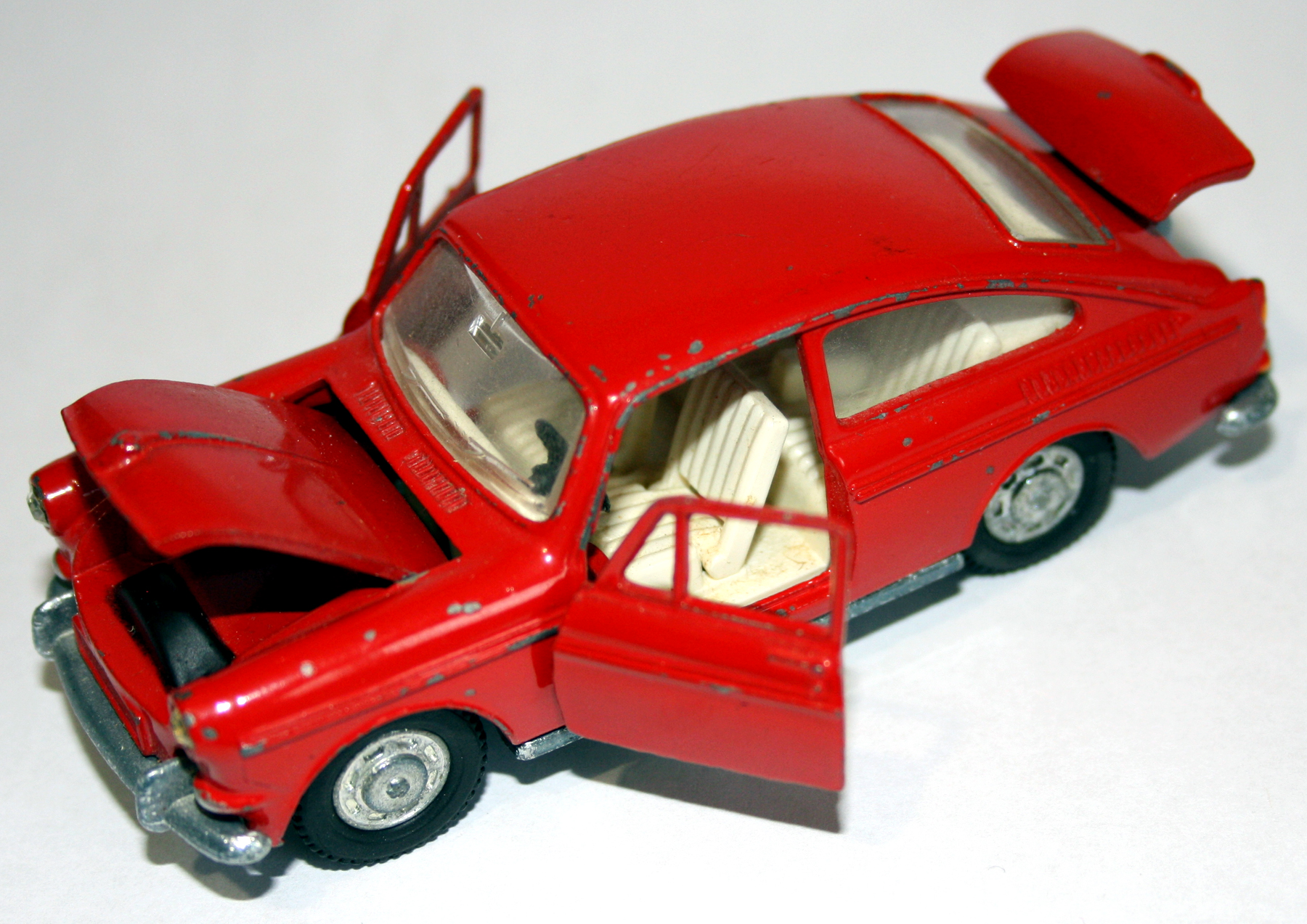
Dinky 163 Volkswagen 1600TL Fastback with opening doors, trunk, engine compartment hood and tipping front seat backs.
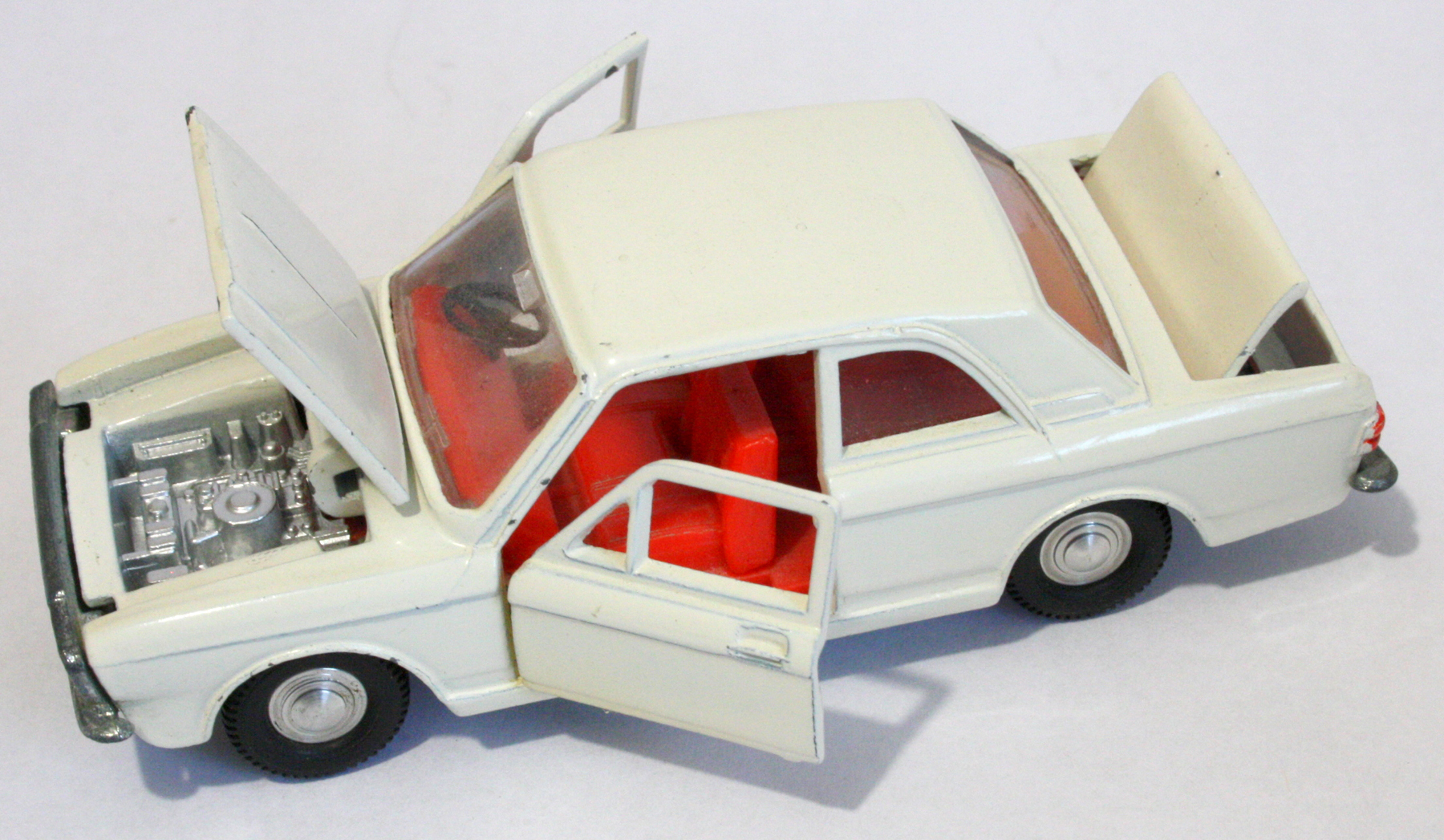
Dinky 159 Ford Cortina Mk II with opening doors, hood and trunk and tipping seat backs.
The Dinky 159 Ford Cortina Mk II model utilized the same window and seat unit as Dinky 154 Ford Taunus 17M. Managing director Joe Fallmann wasn’t impressed when he saw the first production samples of the Taunus. He didn’t like the complicated die split line around the air vent behind the rear side window and demanded that it be simplified. I don’t know if any of these examples were made available for sale.
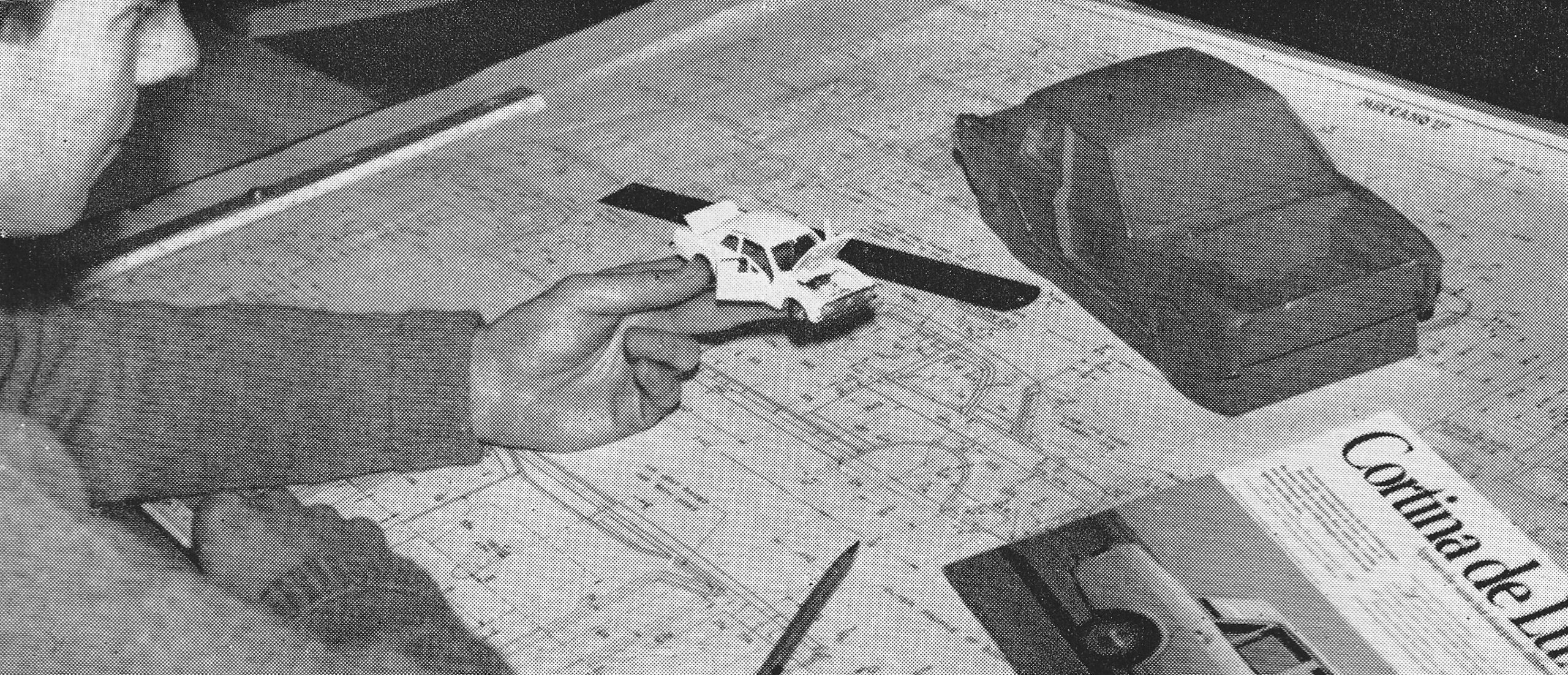
The author at work on the Dinky 159 Ford Cortina Mk II.
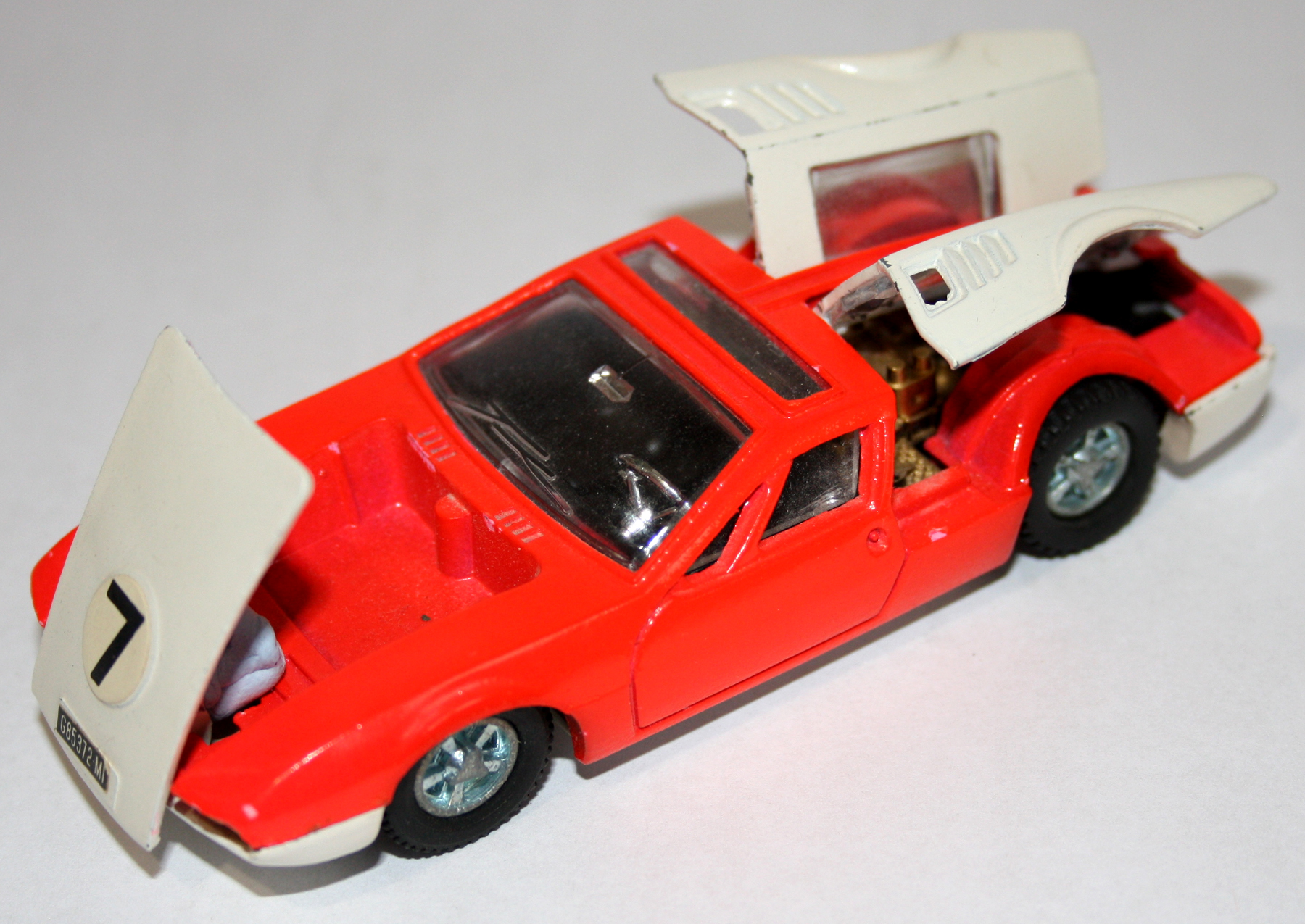
Dinky 187 De-Tomaso Mangusta 5000 with opening trunk and gull wing doors over the engine compartment.
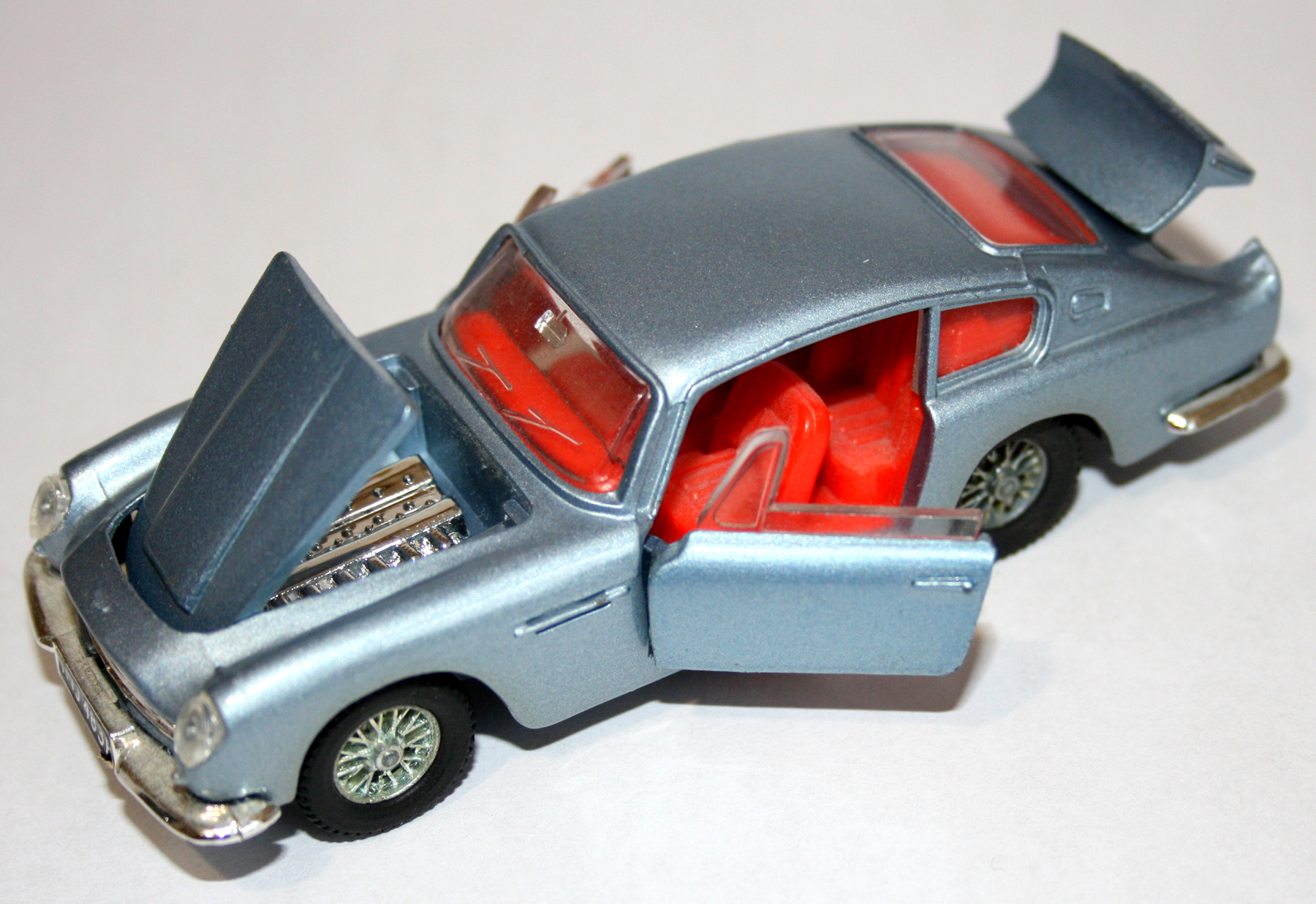
Dinky Aston Martin DB6 with opening doors, hood and trunk and tipping seat backs. A model that utilized many parts from the Aston Martin DB5.
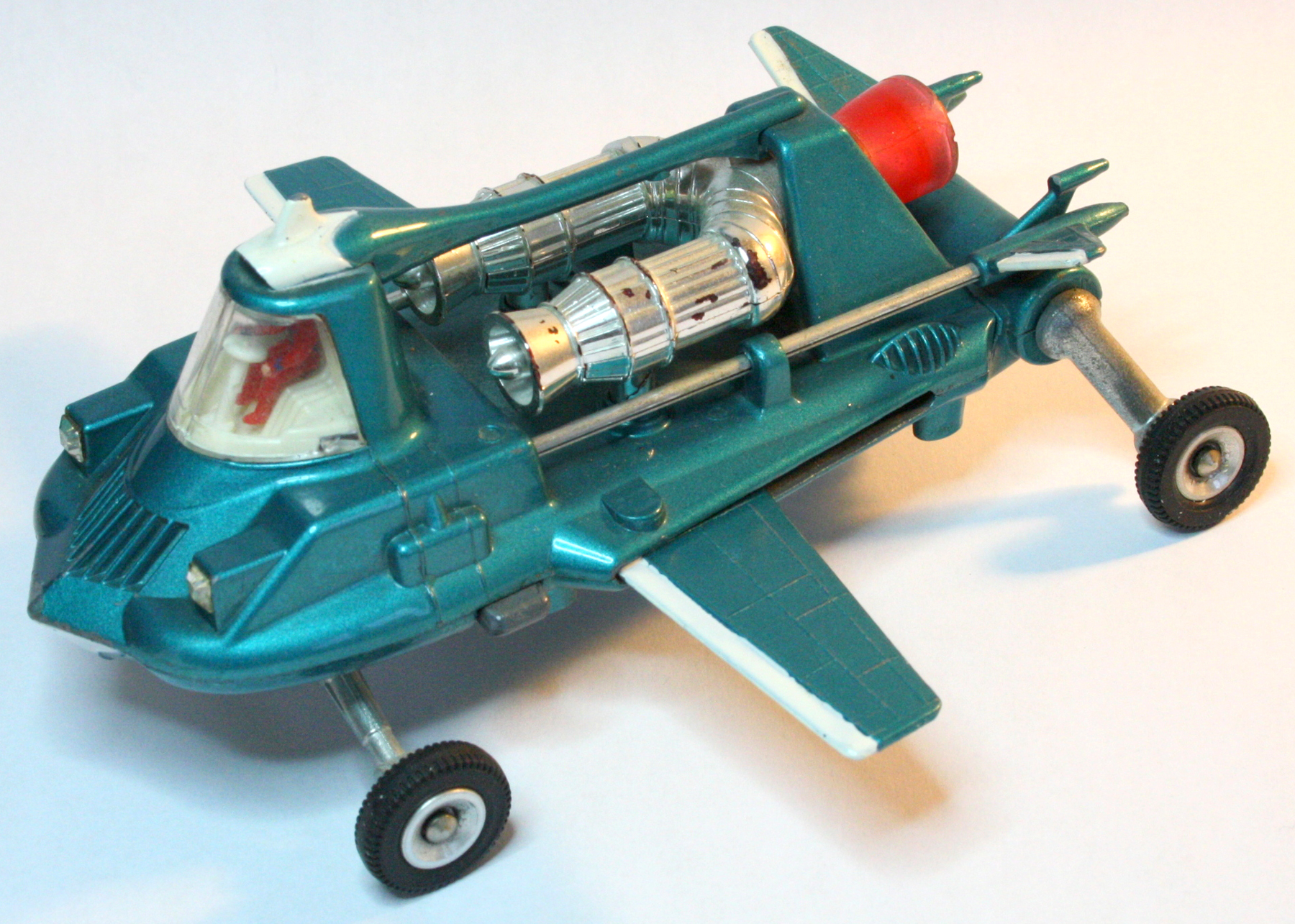
Dinky 102 Joe’s Car.
The original proposed layout of the Dinky 102 Joe’s Car was given to fellow designer Terry Boland, but he had hardly got started when he was promoted to New Products Manager and the work passed to me. Just before release for tooling, Managing Director Joe Fallman insisted on a flashing light within the engine cowl, requiring me to shoe horn a AAA battery, switch and bulb holder into a chassis that was already filled with several other mechanisms.
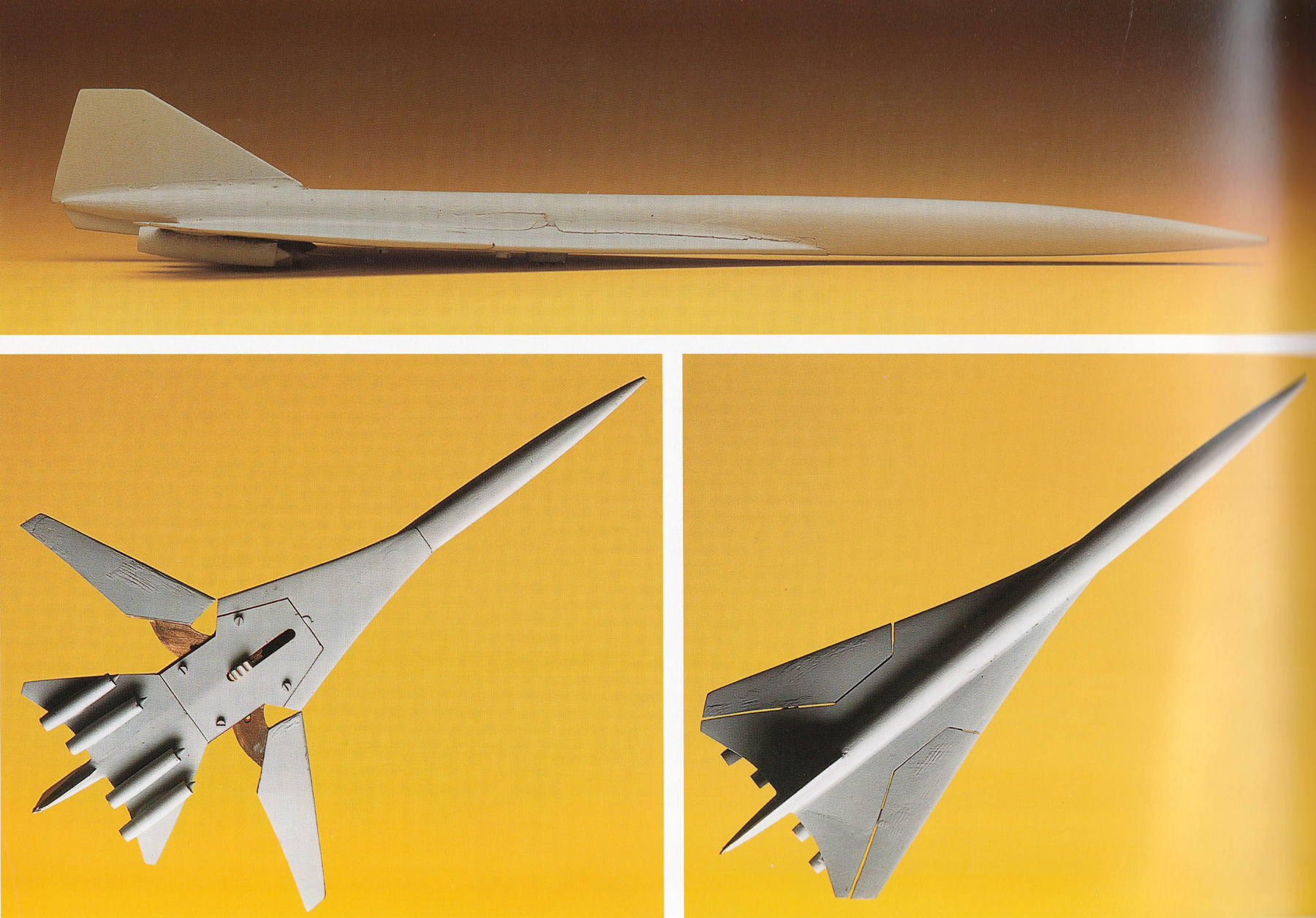
Dinky 995/996 Boeing 2707 SST with swing wings.
Image: The Great Book of Dinky Toys.
The Dinky 995/996 Boeing 2707 SST was taken right through to tooling with several tools half completed when Boeing announced the cancellation of the real aircraft, causing Meccano to follow suit. As a consolation, I was presented with the prototype model.
Another challenging product I worked on was an Electric Screwdriver for use with Meccano sets. It was to be driven by a 6 or 12 volt motor with power supplied by a separate mains transformer. Several obstacles became apparent, namely the unavailability of commercially produced compact 6–12 volt motors capable of delivering the necessary torque to sufficiently tighten the Meccano screws; further, any transformer would have to be capable of delivering a current of up to 2.5 amps at 6–12 volts. There was no question of producing a motor or transformer in-house as the necessary equipment had been sold or scrapped when Hornby Dublo ceased production in 1964/1965.
Joe Fallman was very keen to have this screwdriver and ruled like an iron hand and usually got what he wanted. He didn’t suffer fools or ditherers lightly, so you can imagine my horror when I was summoned to a new product meeting chaired by him to explain the technical difficulties that faced us.
I trotted in armed with performance graphs from various motor manufacturers to illustrate the problem. To my relief Joe understood immediately, thanked me for being so candid and I returned to my desk much relieved. Later, my boss returned and asked if I could introduce a reduction gear box to increase torque. This suggestion had initially been resisted due to the extra weight and cost. The use of normal reduction spur gearing took up too much space, so I hit upon the idea of using epicyclic gearing which is very compact. The design was completed but never tooled as the board felt the final cost was too steep.
My career in the 1970s
The following events occurred in my career in the 1970s:
- 1970
Moved from Product Design to the Tool Design Section. - 1973
There was a period of industrial unrest in the Design Office, so I left and spent 12 months as a Senior Tool Designer for Dunlop GRG Division based in Skelmersdale, Lancashire working on automotive products. - 1974
Rejoined Meccano Ltd. as Chief Draughtsman for Products. - 1976
Chief Draughtsman responsible for Products and Tooling
Although not commonly known, the self adhesive number plates fitted to Dinky Toys are the initials of staff within the Drawing Office including myself (VPM), also the year letter was regularly changed in line with the DVLA (Driver Vehicle Licensing Authority). This is a good indication of the age of many Dinky Toys although it can also be the subject of abuse.
Obviously, besides designing new products, much time had to be spent doing modifications, revising model issues and labels for different countries and changing the design of many common items such as axles, wheel centers and tires. A lot of effort was put into modifying a number of existing saloons to accommodate the first type of Speed Wheels which was only possible when the model’s chassis was diecast.
By modern standards the Binns Road factory didn’t have an ideal layout, having expanded organically as products diversified. Some areas were located appropriately, such as the diecast department which was adjacent to casting de-burring, casting cleaning and the paint shop, and the small parts stores that were located adjacent to the assembly room for ease of distribution. However, molding and some finished painted parts had to be moved by electric pallet truck. At one time an overhead conveyor system linked the paint shop to the assembly room. Basically, dirty processes were kept as far as possible from the clean assembly room.
Promotional models
There were three types of promotional models:
- The application of a different color scheme and/or transfers to an existing model. The cost of generating the transfers would be covered by the company requesting the advertising. Models would be freely available to all with possibly an early batch supplied to the advertiser.
- As above but with models supplied exclusively to the advertiser. Eventually examples of these models would filter back into the general second hand toy market, for example the Dinky 945 Lucas Oil Tanker.
- The tooling of a new promotional model, where some proportion of tooling costs and certainly labels and transfers would be funded by the advertiser. I know of only two such models: the Dinky 222 Hesketh 308E F1 racing car manufactured for Olympus Cameras and the Dinky 115 UB Taxi for United Biscuits.
I believe Olympus took 20,000 units after which it became available to the general public. To meet a very tight schedule, it was necessary to use and modify parts from the Dinky 225 Ferrari F1 tooling which effectively eliminated the Dinky 225 from the range.
The UB Taxi supplied to United Biscuits in a plain white box was available to customers who had collected sufficient tokens from biscuit packets.
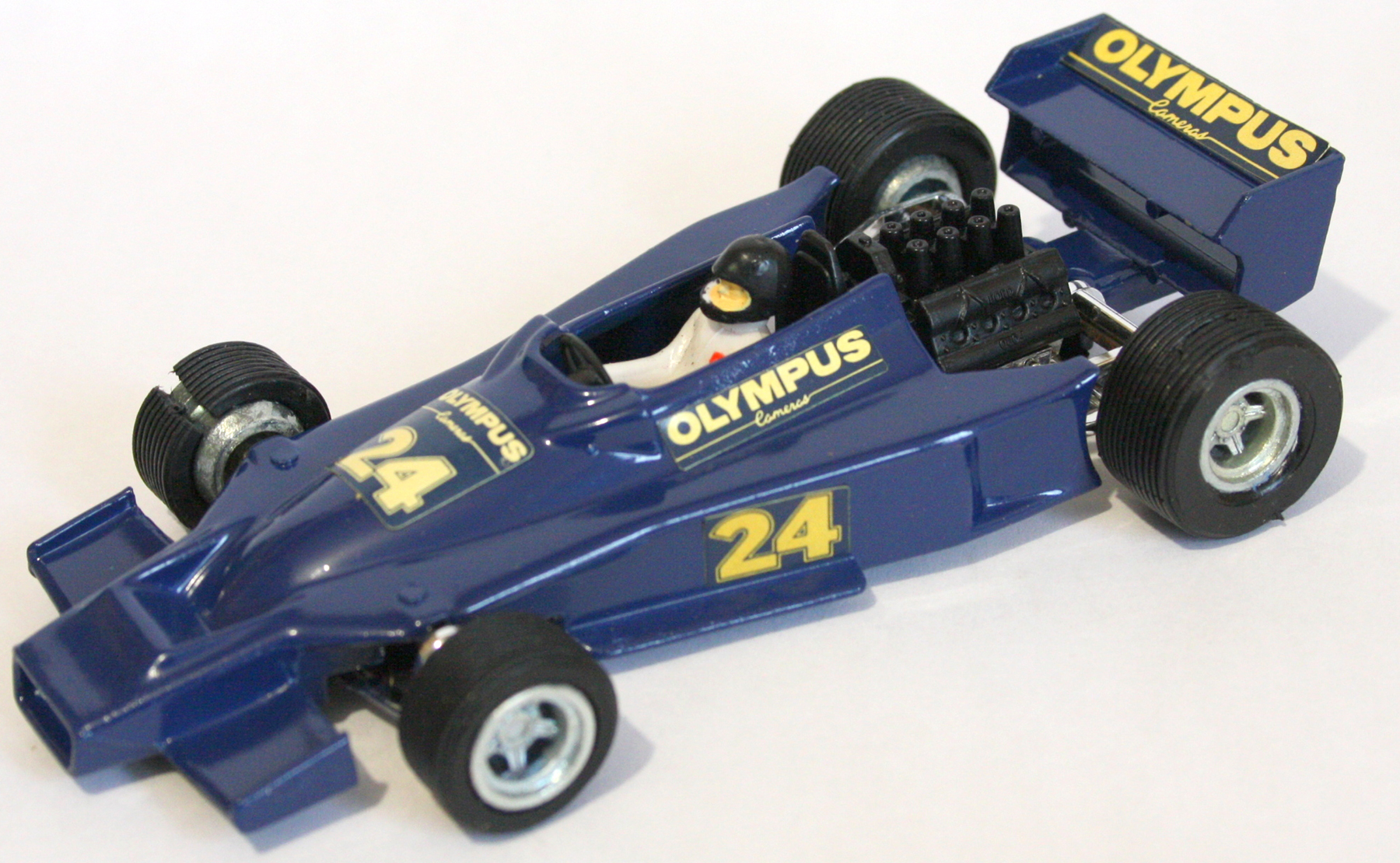
Dinky 222 Hesketh 308E F1.
It was very common for Meccano Ltd. to have the cost of producing labels and transfers covered by the producer of the article or the service being advertised, even though no special run of models would be specified. The advertiser would just be grateful that their product or service appeared for free on every toy sold. This is true for dozens of Dinky Toys manufactured over the years.
Many toys had their body experimentally molded in plastic. To my knowledge the only toy that was changed and made it to market was Dinky 354 The Pink Panther Car. This change was done before its public release because the diecast body didn’t travel far enough when propelled by its gyroscopic flywheel. Any other plastic body parts around today were possibly ‘appropriated’ after testing.
Only one Dinky, the 992 Avro Vulcan bomber was cast in aluminum at Binns Road. Tool life was very short so very few entered the market place.
Apart from Dinky Toys, the office designed a range of ‘MOGUL’ steel toys to compete with ‘TONKA’ and ‘PRIMA’ Meccano, a construction toy for the very young.
Post Meccano
In May 1979, the atmosphere at Meccano felt bad so I resigned and took up a post as Senior Tool Designer with a growing mold maker based in Dublin Street, close to the Liverpool docks. It turned out this was a fortuitous move as Meccano closed in October that year.
Meccano provided me a memorable and enjoyable first 17 years of employment, where the skills I learned proved invaluable for the remainder of my working career:
- 1981
Moved to Hampshire to join IBM UK Laboratories Ltd. as a Senior Mold Designer. - 1994
Took up the post of Senior Production Engineer at Kenwood Domestic Appliances in Havant. - 1998
Joined Nokia UK Development Laboratories in Farnborough as a Tooling Specialist, where I stayed until retiring in 2009.