In 1938, Meccano Ltd. was reveling in its rapid rise in popularity and success of its new line called Dinky Toys, conceived in 1934. There were many series of models, both automotive and commercial, that were quickly introduced over a short period of time, all using the relatively limited die-casting techniques then available.
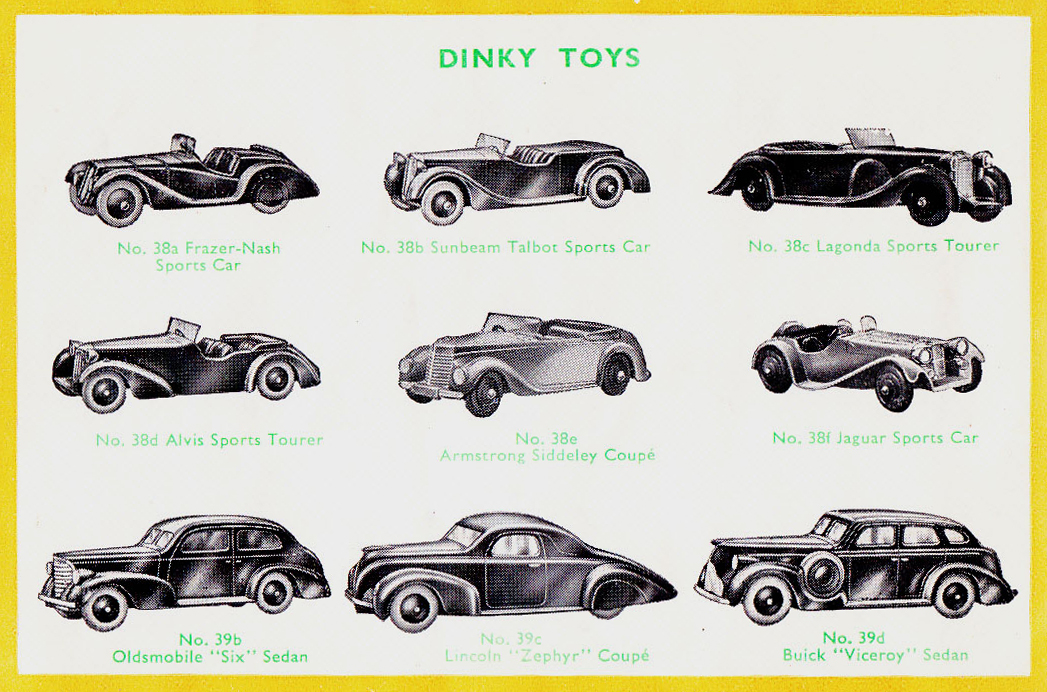
Sometime in 1938, a decision was made that would prove fateful: two new series of motorcars would be designed and produced for the burgeoning toy market, and they would be unlike anything that Meccano had previously produced. Thus was born the 38 Series of English Touring saloons, and the 39 Series of American sedans. This article will focus on the 38 Series.
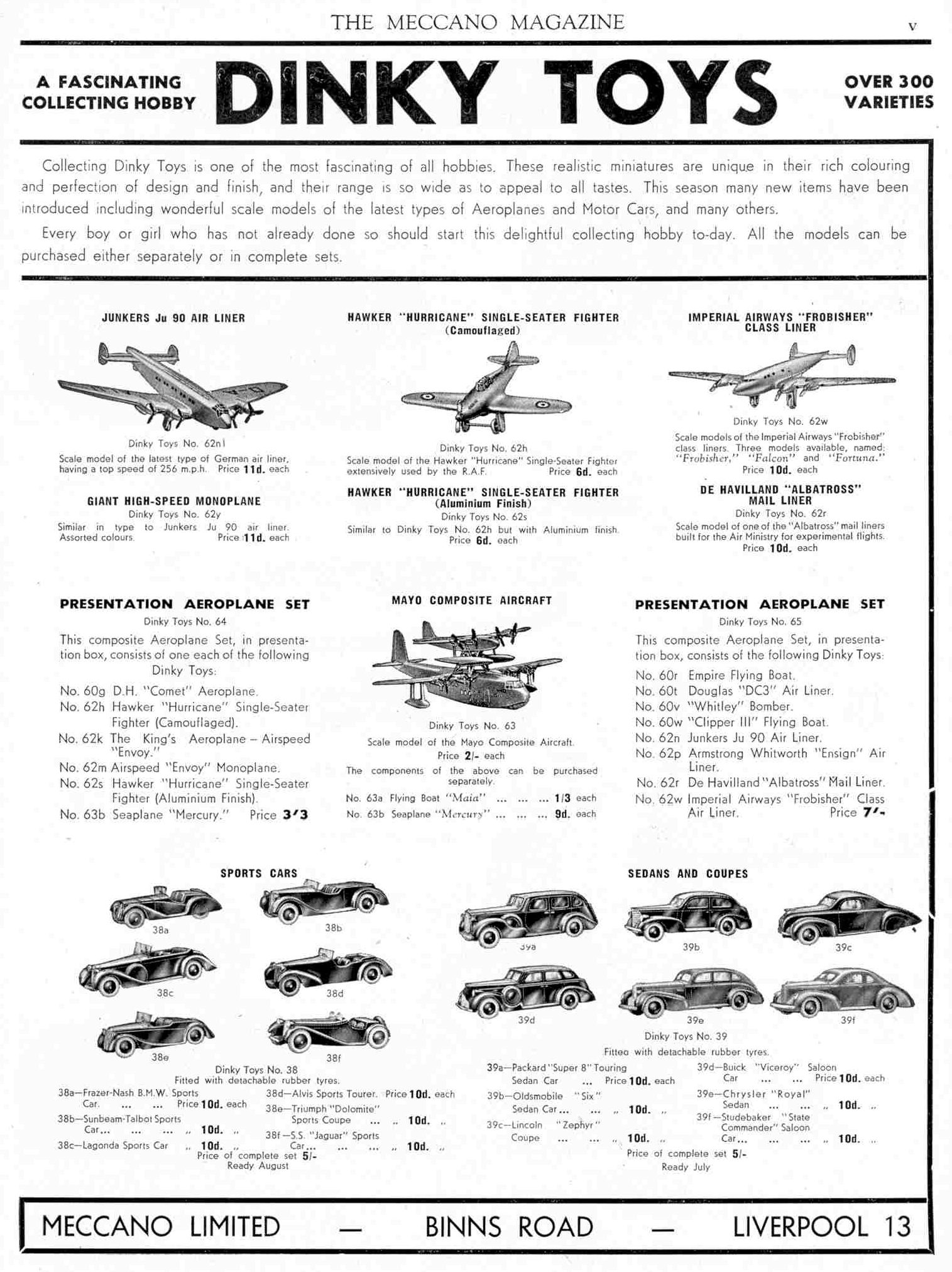
The first mention of the 38 Series was in the June 1939 issue of Meccano Magazine, which optimistically declared them to be “ready in August”. But that was not to be. The impending war and uncertainty of what lay ahead was partly to blame. But Meccano was also developing the sister 39 Series, which had been started earlier and was further along.
For some reason, only these three of the intended six Series 38 models were released in June 1940:
- 38A Frazer-Nash BMW Sports
- 38B Sunbeam Talbot Sports
- 38C Alvis Tourer
These three models were only made for a short time, and all production was halted in 1941. These pre-war models are distinguished by their lacquered, silver colored baseplates, thin pre-war axles, and solid steering wheels. Meanwhile, the entirety of the companion 39 series was released.
Following the war, the three were reintroduced, along with the remainder of the Series 38 models, all in 1946. The 38C Lagonda Coupe came first, followed by the 38F Jaguar Sports Car and finally the 38E Armstrong-Siddeley Coupe. The release of the Armstrong-Siddeley raises questions, as model number 38E was first assigned to the Triumph Dolomite Sport Coupe.
All that remains of the Triumph Dolomite is a factory drawing, complete with later modifications that were completed as late as 1946. But for some unknown reason, this model was shelved and there is no evidence that a die or mold was ever completed, let alone a prototype casting made. Since it was a very late replacement, the Armstrong-Siddeley was the only post-war designed automobile to be modeled in this series.
Post-war Dinky Toys all had thicker axles, black baseplates, smooth, then ridged black wheels, and thick celluloid windscreens, often with silver detailing around the edge, replicating a windshield frame. These were made in a variety of colors, with the body being of one color and the seats or tonneau covers in another contrasting color. The series remained in the UK catalogs until 1950, when it was dropped.
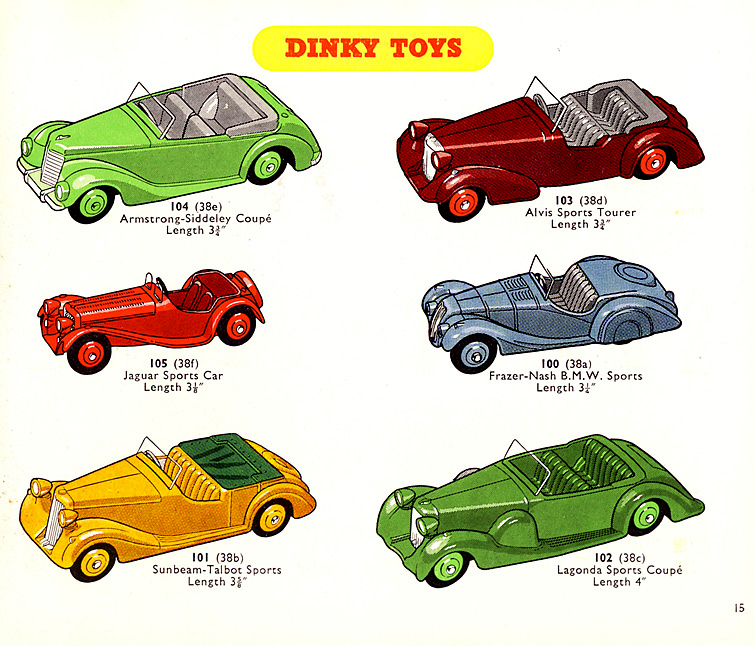
However, the series was continued for the export markets for several more years, last appearing in the US 1954/1955 catalog. These later export versions differed slightly: the nice, thicker windscreens were replaced by thin flexible versions that didn’t work as well. Over time, they would tend to bend downward, resulting in an unrealistic look. However, one nice touch to the models was the use of colored wheels, instead of the plain black variety.
Most Dinky reference books give the 38 and 39 Series lots of credit for being innovative in the late 1930’s. Prior to their release, most models were composed of at least two castings, sometimes more, as die casting for a one piece body was difficult. The prior Dinky Toys 30 Series and 36 Series demonstrate the use of two separate castings: one for the body proper and another for the chassis and fenders.
These new castings now featured one piece diecast bodies with flowing lines and were accurate models of the real cars, not just representations with vague recognition. These were also among the first to utilize tinplate baseplates holding the axles in place, as well as having the actual name of the car stamped there. It should be noted that in 1954 Dinky briefly renumbered these models to the 100 Series.
Although not completely accurate models of the real cars they represented, they are very close approximations, recognizable, and rather attractive. Over the years, much has been made about the lack of proper door lines on this series, and that is true. Not only were the doors absent, but the sides of the louvered hoods also went missing. No one has ever been able to determine why this was the case, but it is consistent with each of the six models. An explanation I heard years ago from someone familiar with die casting techniques was that it had to do with releasing the molds after casting. Whatever the reason, the series remains most attractive, and is a must for serious Dinky Toys collectors. The models are a lovely example of a bygone era, for both cars and the model hobby.
The real motor cars they replicated
Here I’ll offer a brief description of the actual English touring cars that served as models and inspiration for the 38 Series.
- Frazer-Nash BMW Sports Car
This was modeled after the famous and very successful BMW 328 Sports Car, that was produced during 1936–1940. These revolutionary cars utilized a 2.0 liter 6 cylinder engine and were very successful in various competitions, including many after the war. Sometimes they were re-bodied by different coach builders. In all, 426 were made. The Frazer-Nash connection is interesting, and results from them being licensed as the sole importers and sales agents for Great Britain in 1934. This lasted until 1939, when war with Germany changed everything. 328’s that were sold in England were sent there, converted to right hand drive, and re-badged as Frazer-Nash BMW’s. - Sunbeam Talbot Sports
This was modeled after the Sunbeam Talbot 3 liter Tourer made during 1938–1940. There were a total of 1266 chassis produced, but only 21 were built as a Sports Tourer. These were considered to be very nice cars and were quite desirable. - Lagonda Sports Coupe
This model has always been a bit difficult to properly identify as to which real car it was designed from. Some think it represents the storied Lagonda V‑12 from around 1938, while others suggest it is closer to the Lagonda LG 6 or LG 45, made during 1936–1940. Upon closer inspection, with both the Dinky Toys model and several period photos, I’m convinced that it’s modeled after the LG 45. Which makes sense, as it featured a nice 6 cylinder engine and was far less expensive than the vaulted V‑12. In any event, the Lagonda was close to the epitome of automotive excellence then, and made a most handsome model; one of the nicest in my eyes. - Alvis Tourer
This one is a little easier to identify after looking at several Alvis photos. The front fenders or “wings” as the English call them are quite distinctive, and it appears this was modeled after the Alvis 4.3 liter Short Chassis Vanden Plas Tourer. This was another very well regarded English touring car that performed well. It was produced during 1938–1939. - Armstrong-Siddeley Coupe
Another model that was quite easy to identify, this one replicates the Armstrong-Siddeley Hurricane Coupe that was made during 1946–1953. Originally equipped with a 2.0 liter 6 cylinder engine, it was later enlarged to 2.3 liters. Some Dinky collectors regard this as the least attractive of the 38 series, with not much of an endearing style. - Jaguar Sports Car
Another very recognizable car, this was modeled after the very iconic Jaguar SS100 Sports Car that was produced during 1936–1940. First built with a smaller 2.5 liter engine, and then equipped with the much more powerful 3.5 liter power plant in 1938, it was a formidable performer and was able to reach a speed of 100 mph, no small feat in 1938. It was a very popular rally and trial car and is very collectible today, commanding very high prices. The Dinky Toys model is a quite accurate representation and was very popular over the years.
My Dinky Toys 38 Series models
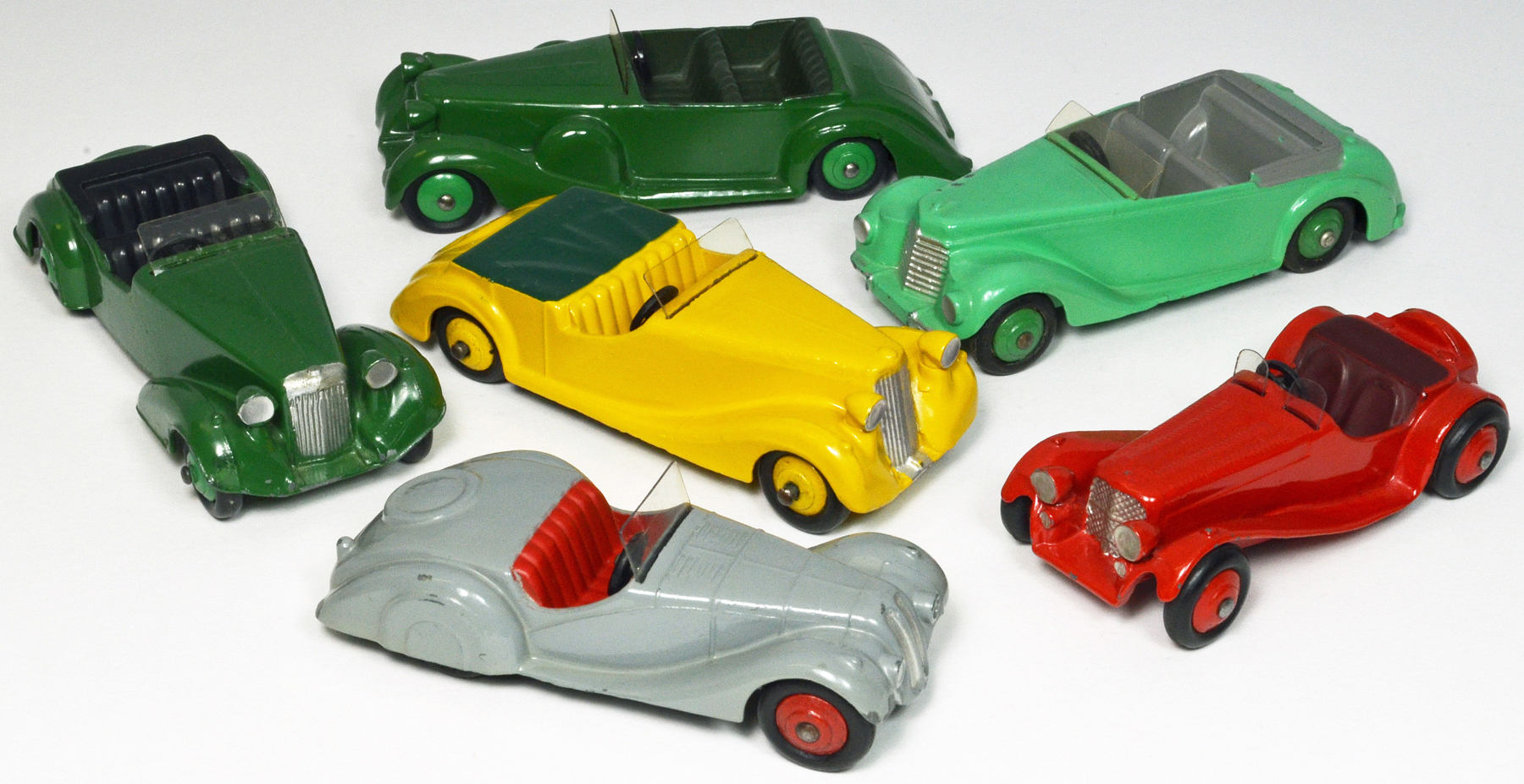
My 38 series collection are all later export versions, with colored wheels and the flimsy celluloid windscreens. These Dinky models received new 100 series numbers in 1954, when they were made for export only.
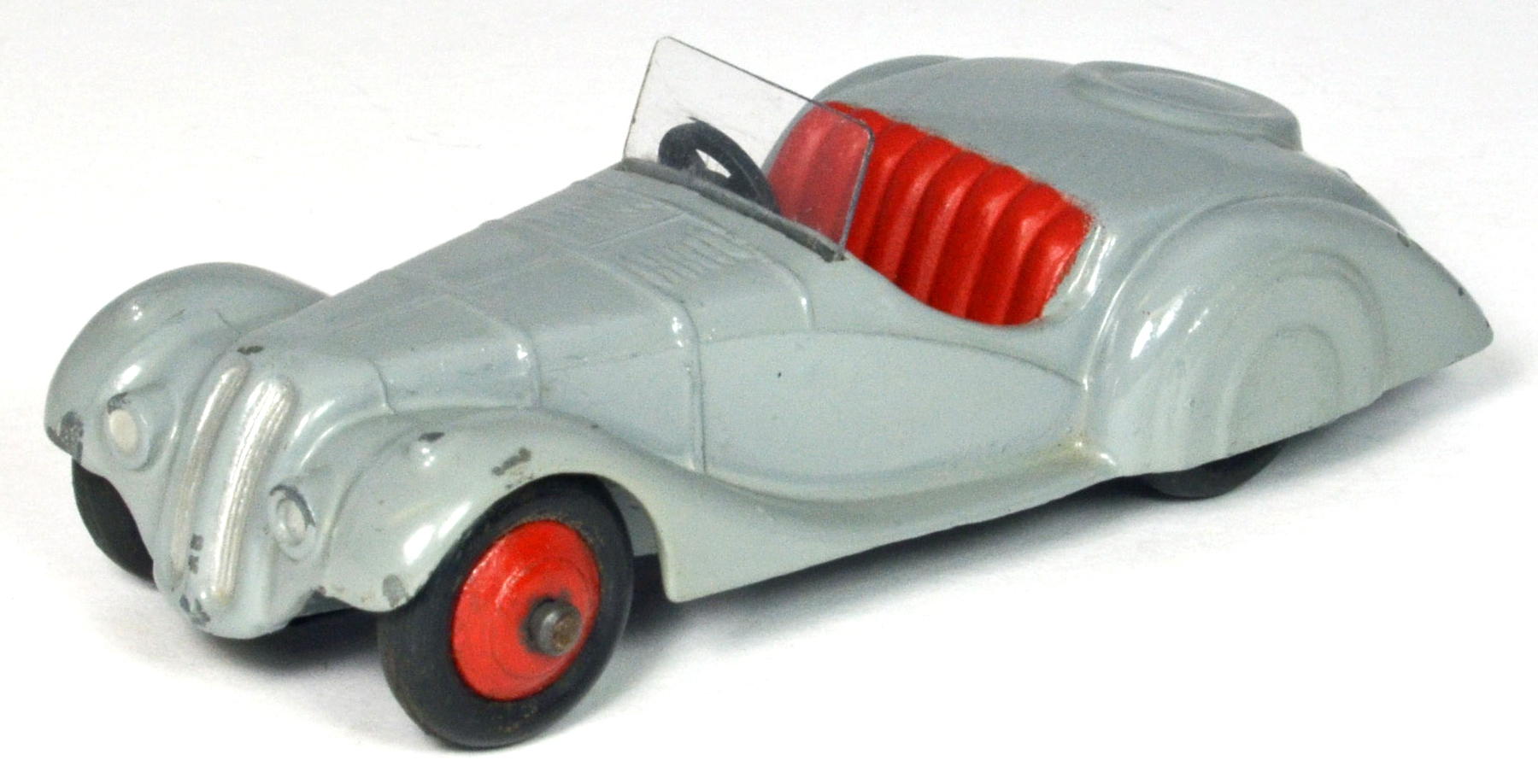
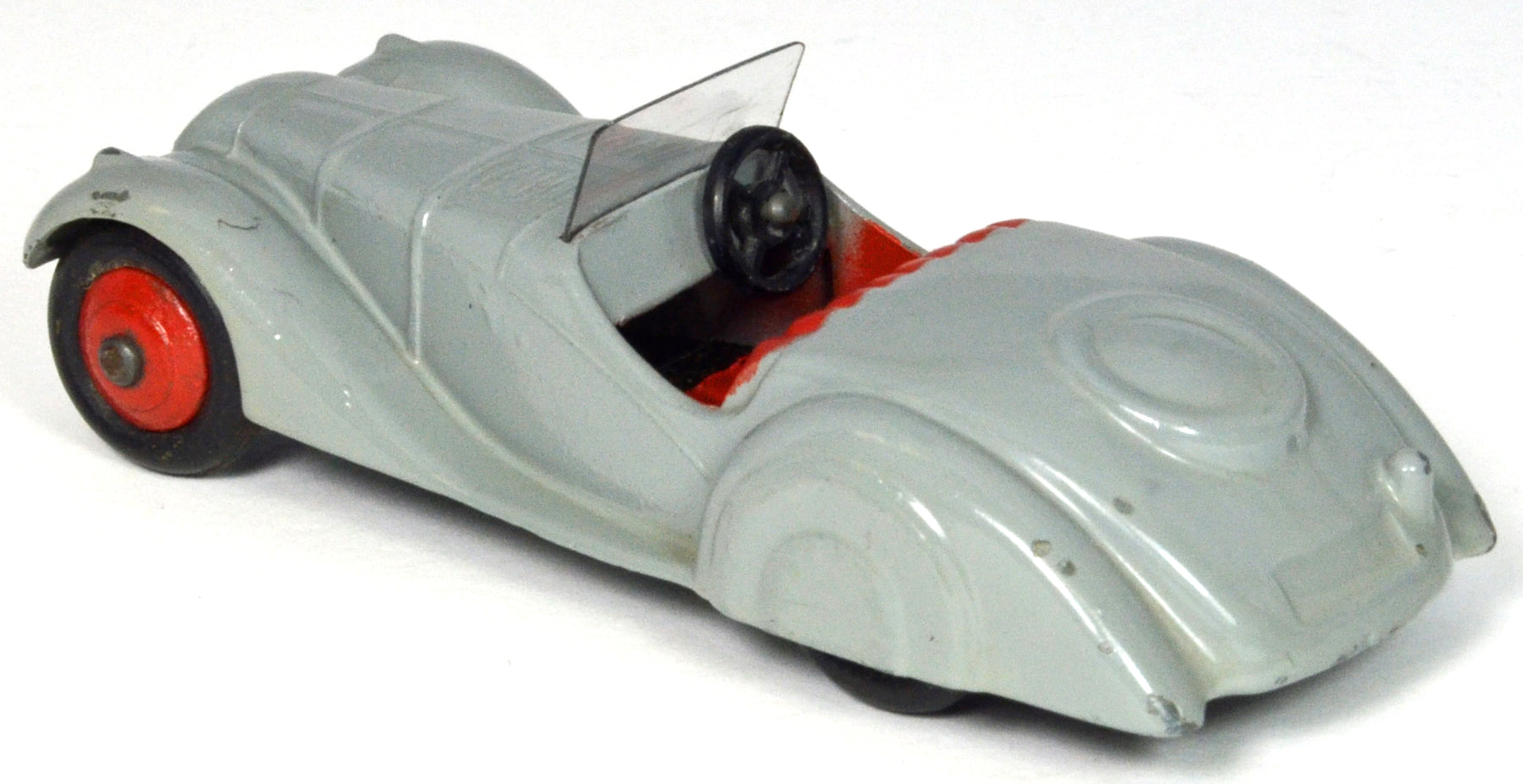
38A/100 Frazer-Nash BMW Sports
This is a nice attractive model, but not very accurate. It was finished in various shades of blue or grey, with seats in fawn and grey. Another variation appeared in grey with red seats and wheels.
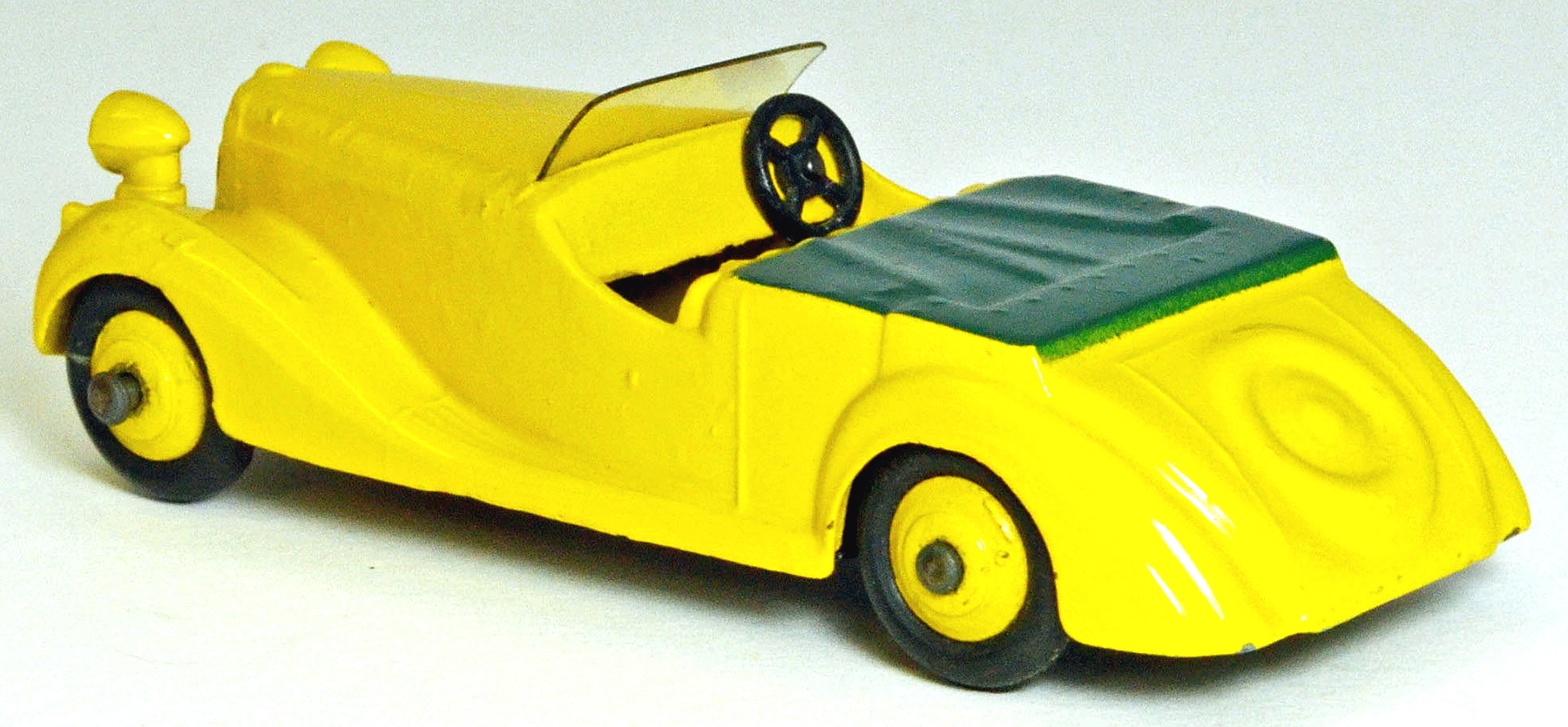
38B/101 Sunbeam Talbot Sports
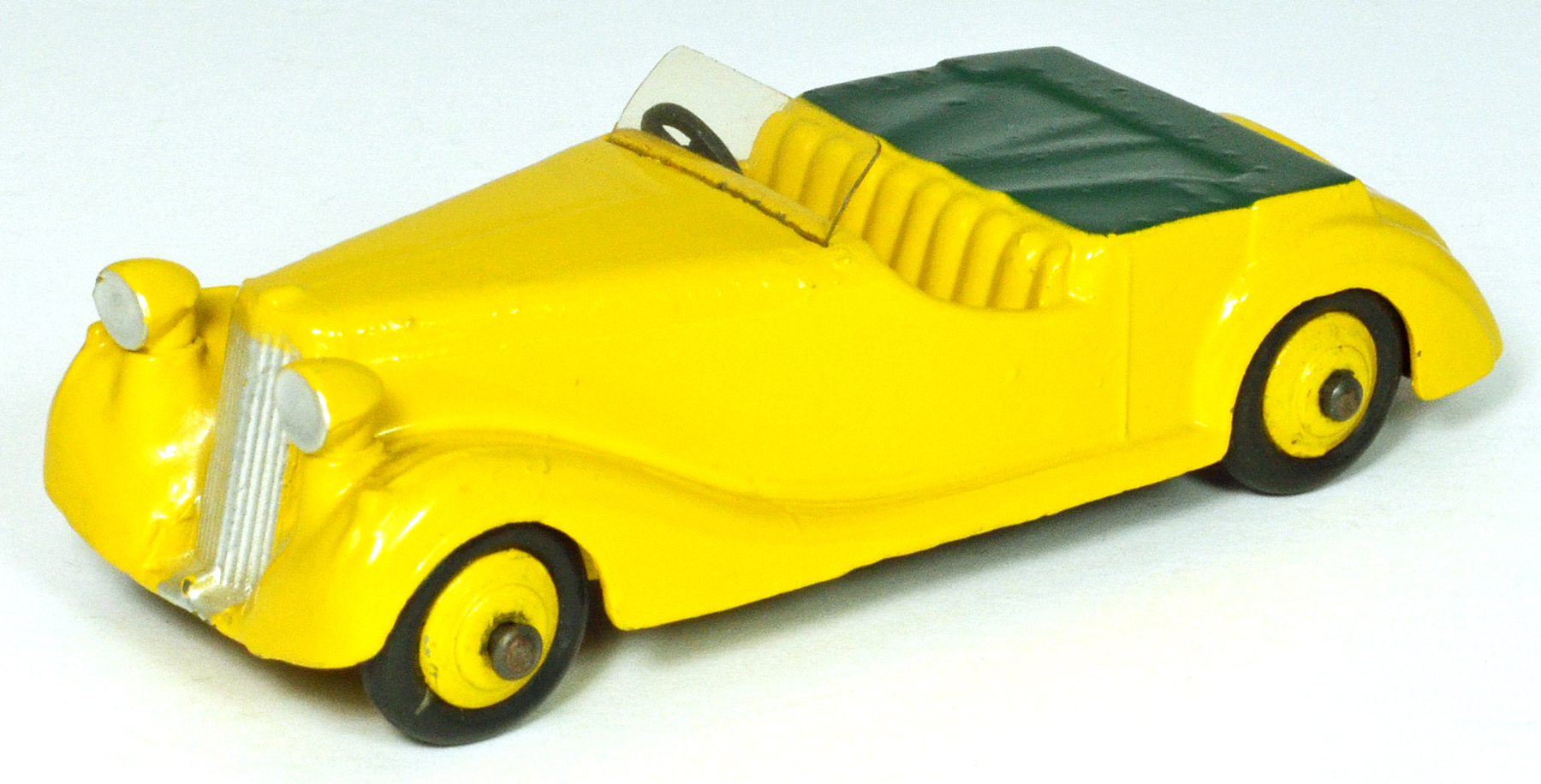
This is a very nice rendition of the actual car which was advertised as “one of the finest sports car on the road”. Dinky released this model in several different colors: blue, grey, red, brown, green, yellow and maroon. The tonneau cover was painted in matt grey, fawn, blue, green, or maroon. My particular model was purchased in downtown San Diego in 1958 at Marston’s Department store, and has remained remarkably mint all these years.
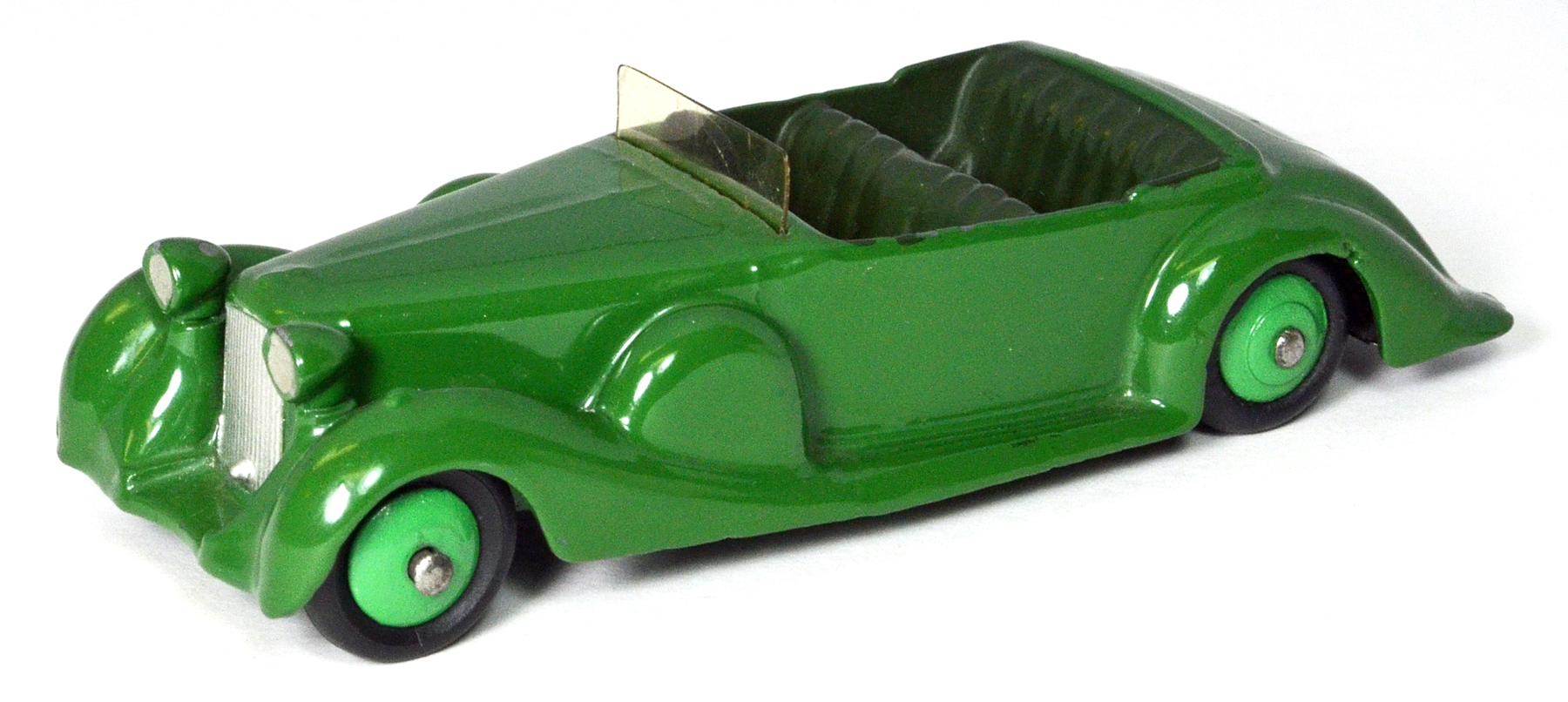
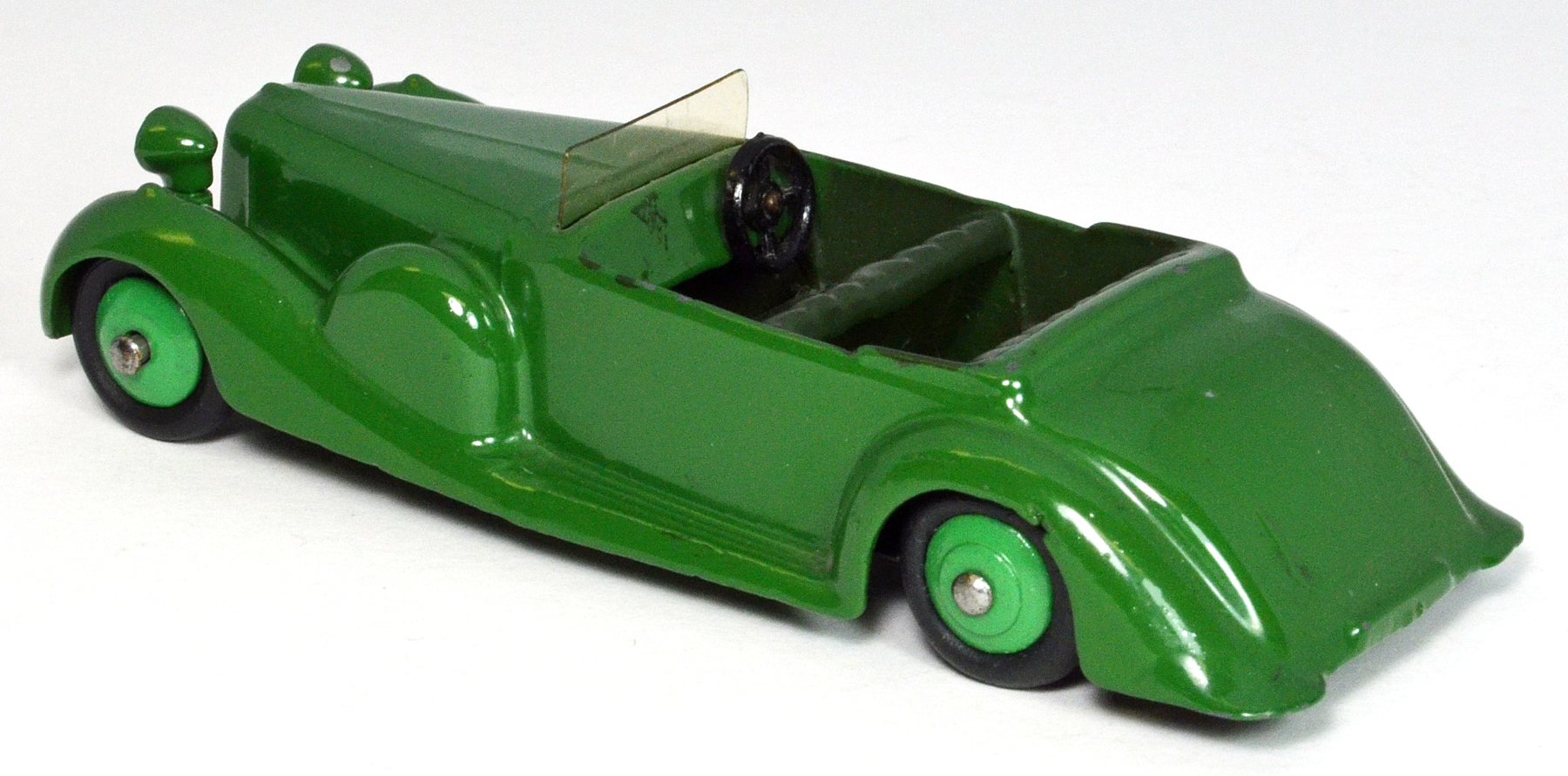
38C/102 Lagonda Sports Coupe
This is a beautiful although not entirely accurate model of a classic and very well known English touring car. The swooping lines and elegance of the fender mounter spares are just lovely. The model was finished in maroon, grey, or dark green, with seats in blue, green, grey, black or maroon.
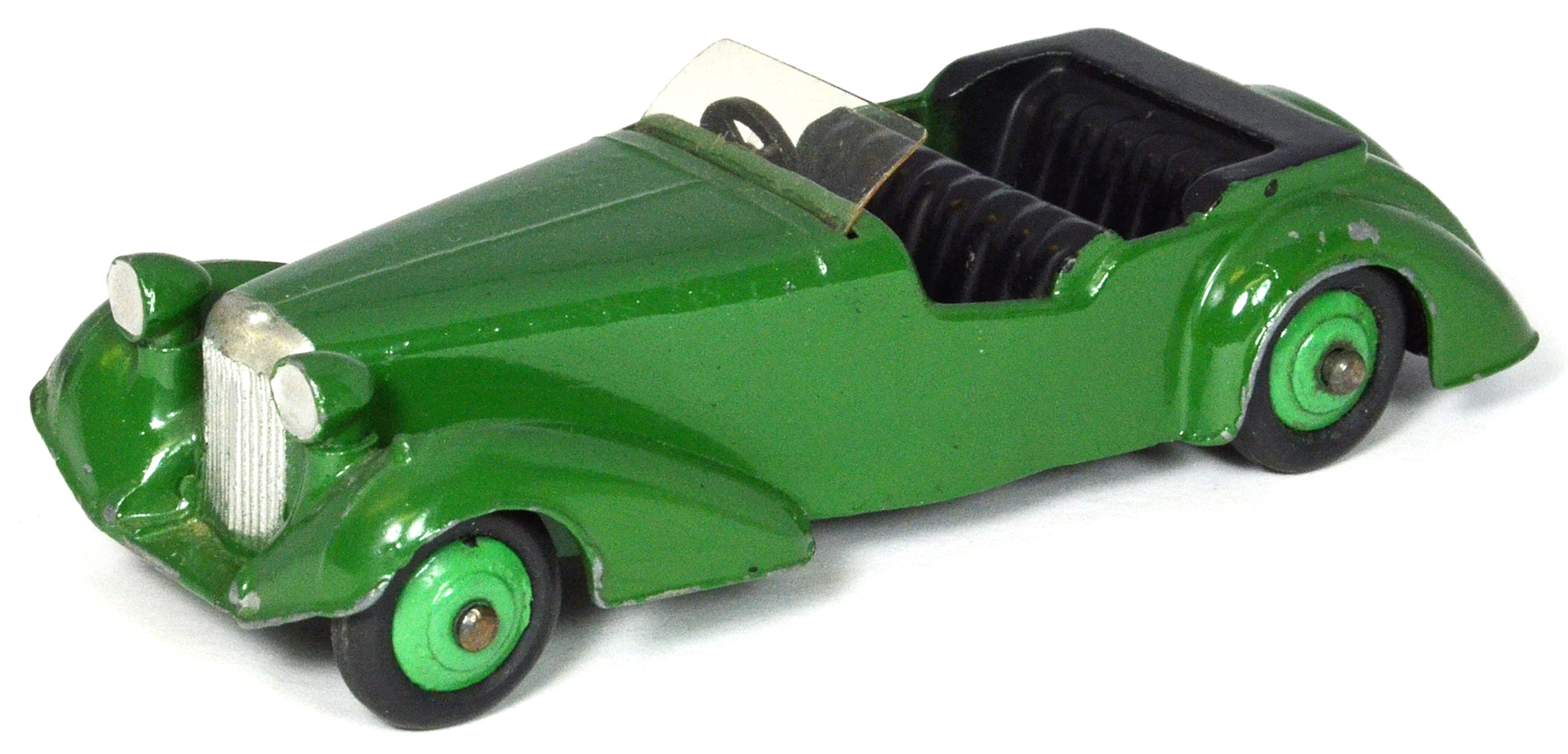
38D/103 Alvis Sports Tourer
Described as “a model of a popular luxury car of the sports type”, this another of the 38 Series that was done particularly well and is quite accurate. It was offered in green, maroon, or blue, with seats and folded hood in grey, red, brown, blue, green, or black.
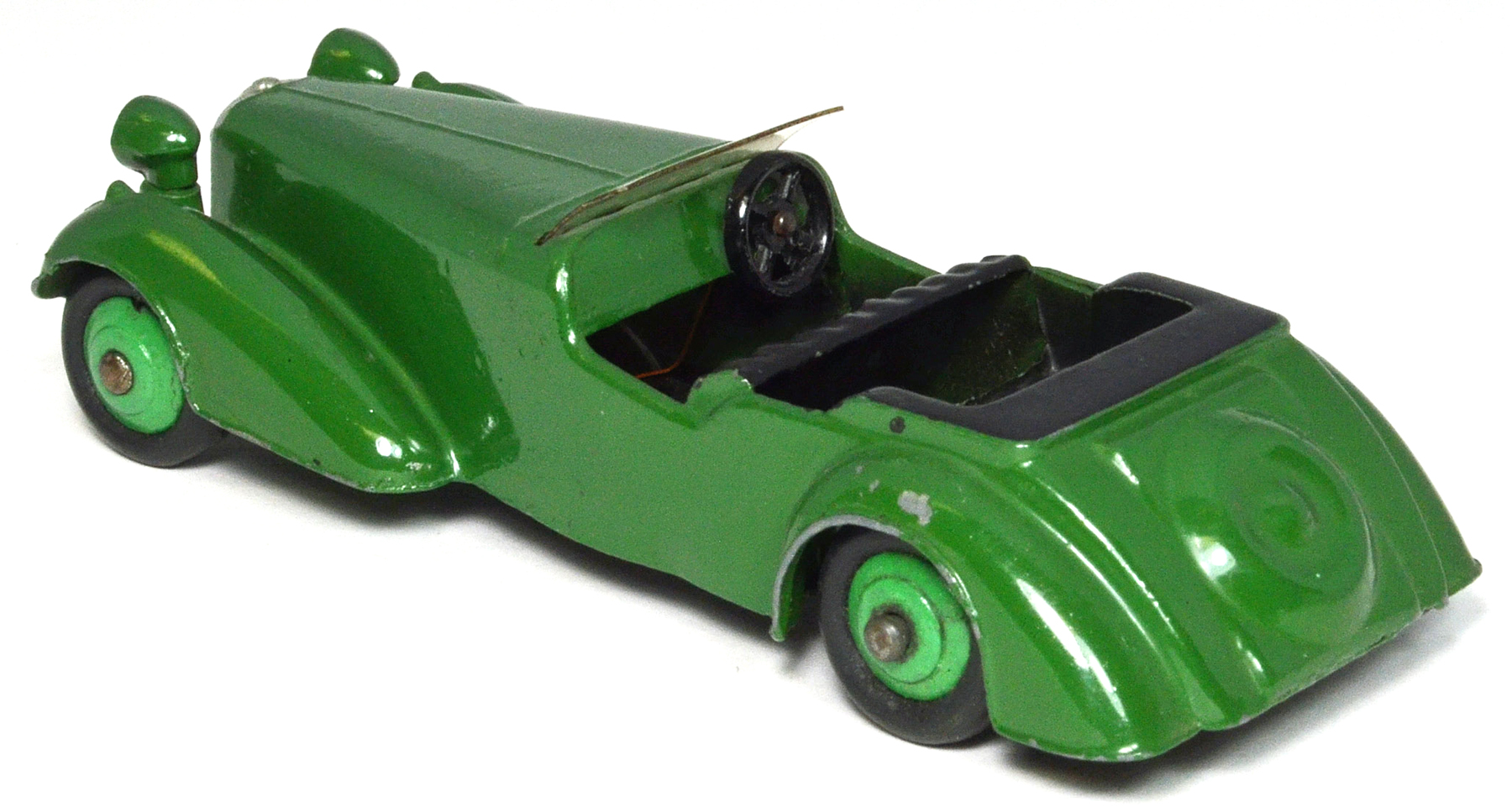
38E/104 Armstrong Siddeley Coupe
As mentioned earlier, this is the only car in the 38 Series that was modeled after a post war car, and many feel it is somewhat plain in comparison. But nonetheless it’s a nicely done model. It was available in cream, grey, green, or red body, with grey, green, maroon, or blue seats.
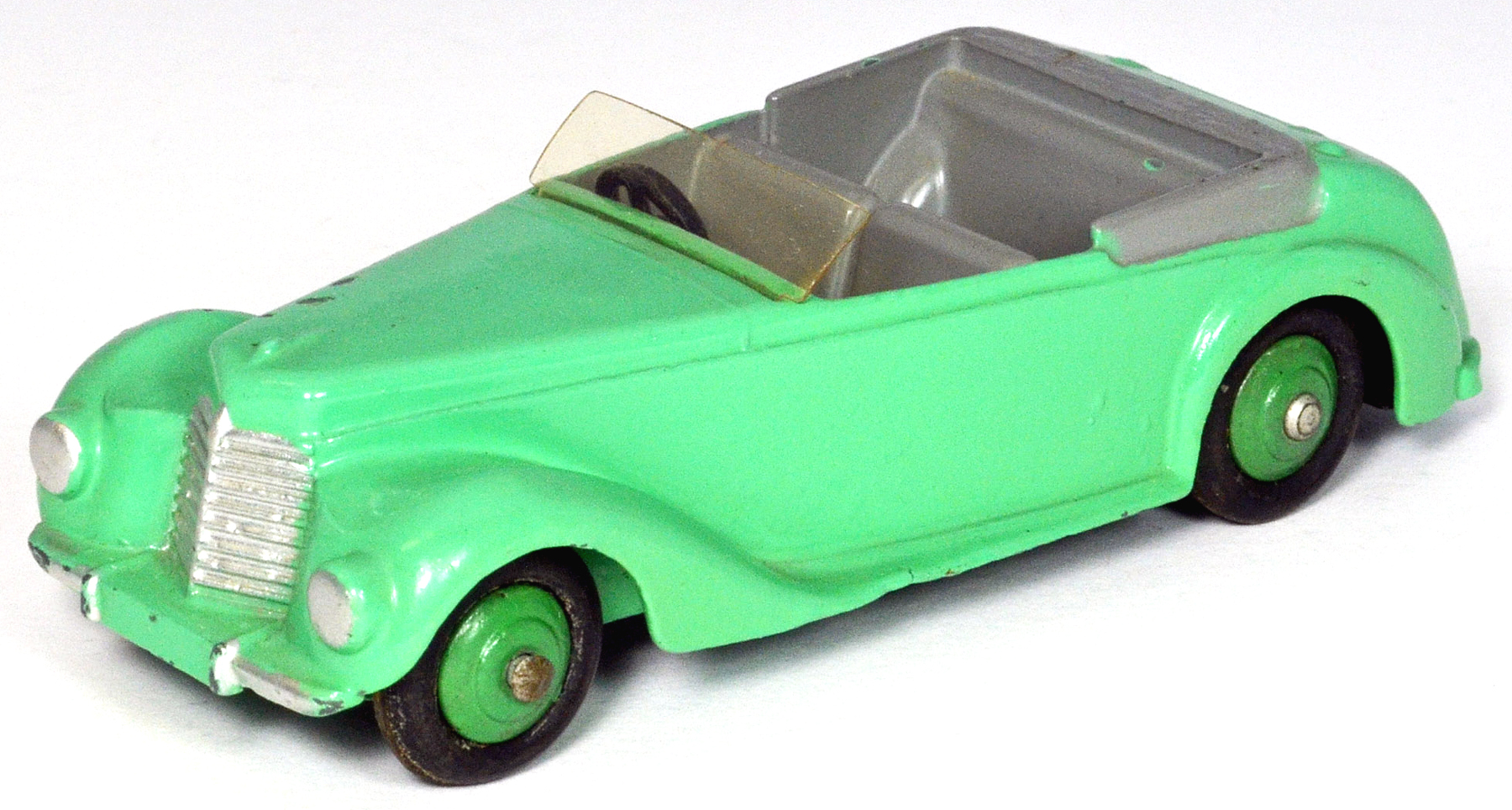
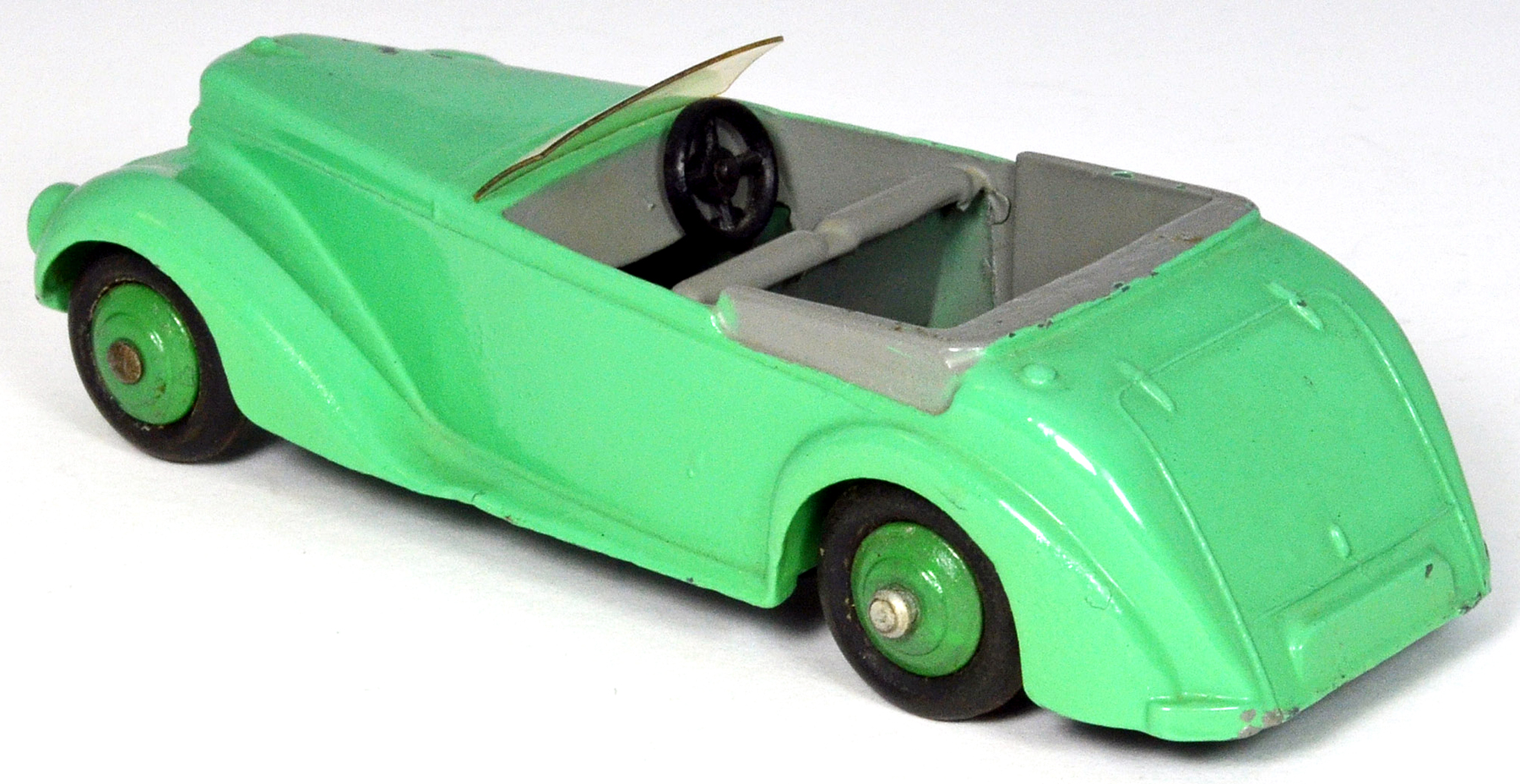
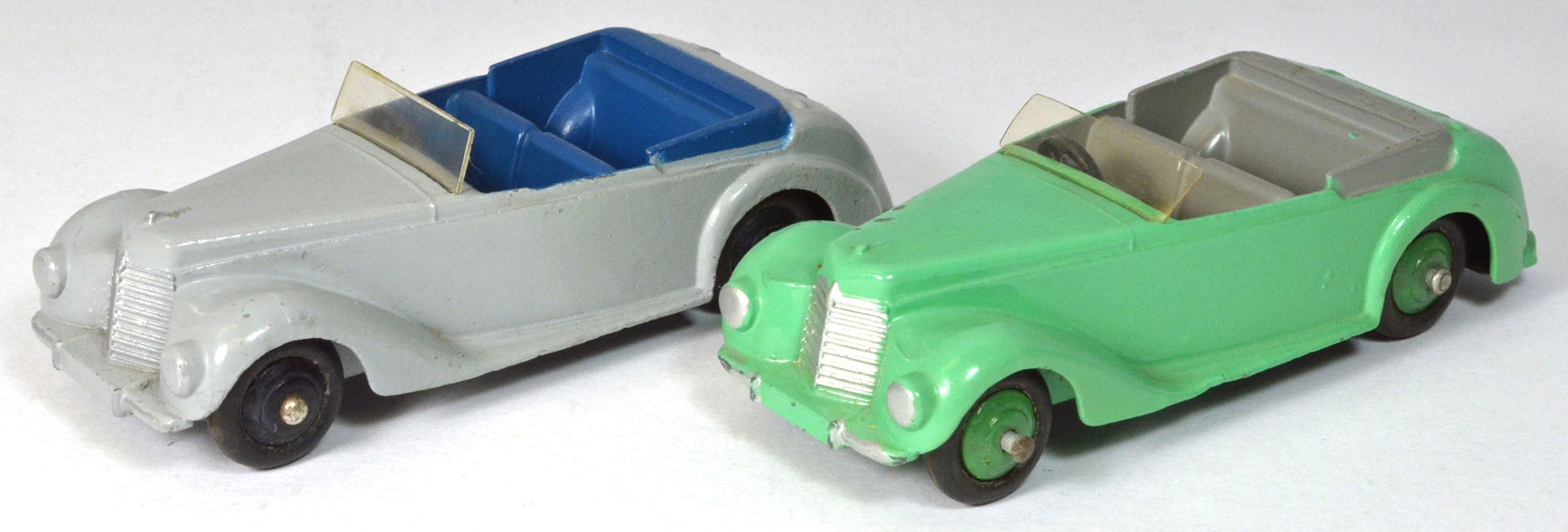
Here is another earlier version of the 38E Armstrong Siddeley Coupe, from around 1950. Notice that this earlier version shows the black wheels and thicker windscreen, with traces of silver paint to simulate a metal frame. As one can see, the earlier thicker celluloid windscreens are much more realistic. Shown below are the two versions in comparison.
38F/105 Jaguar Sports Car
Undoubtedly the most popular of the 38 Series, this is a very well done replica of the actual vehicle, capturing the rakish lines of this iconic sports car, complete with the twin aero windscreens. It was finished in blue, grey, red, and brown, with seats and tonneau in blue, grey, maroon, and black.

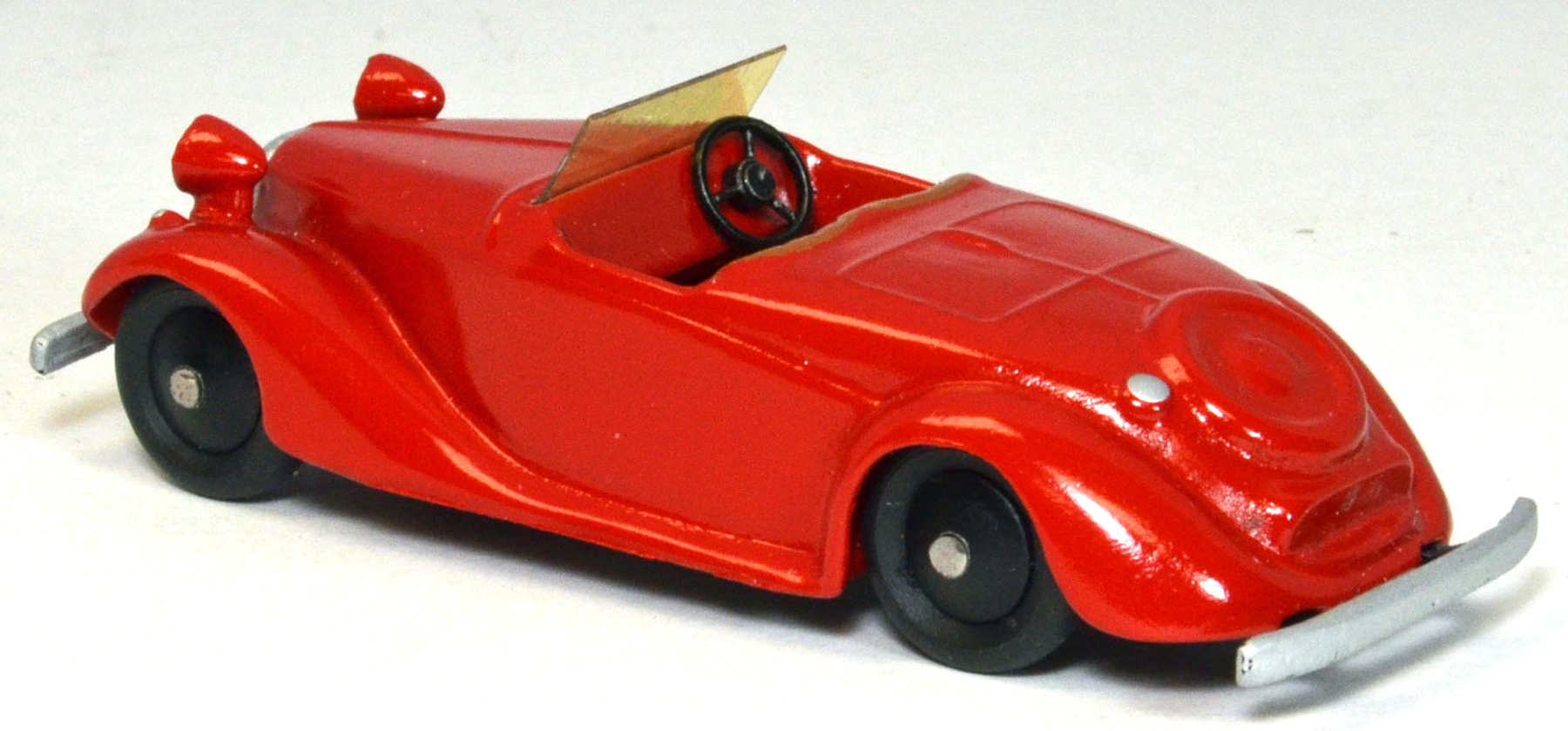
38E Triumph Dolomite
And finally, the 38 Series member that never was, the proposed 38E Triumph Dolomite which was considered for production but never materialized. Although a drawing of this model was commissioned in 1939, there is no evidence that a die was ever made or a model cast, and the reasons for abandoning it are not known.
Several model makers over the years have made likenesses of this car. Here is one that was issued by the Dinky Toys Collectors Association several years ago. It appears to blend well with the others, but this one has bumpers added, which the other members of the 38 Series lacked.