Rolls-Royce and Bentley cars are destined for the world’s wealthiest: multimillionaires, celebrities, royalty, and captains of industry. Although both brands are synonymous with ultimate luxury, Rolls-Royce traditionally focuses on pure status and ultimate comfort, while Bentley has a sportier character. Rolls-Royce presents itself in brochures and advertisements as the best car in the world and explains why in the advertisement below.
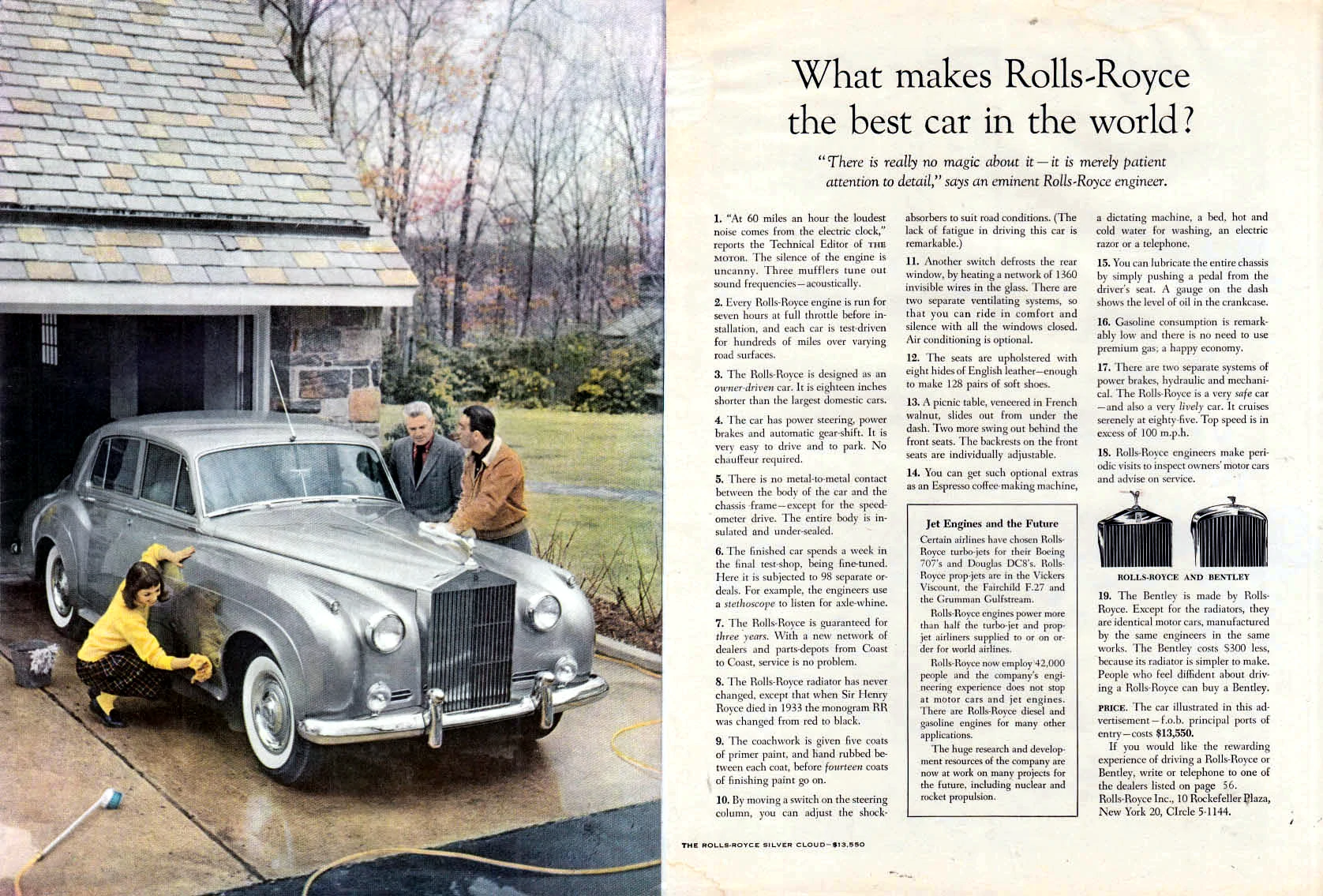
A 1958 U.S. advertisement of the Rolls-Royce Silver Cloud.
Although now BMW Group owns Rolls-Royce and Volkswagen Group owns Bentley, all Rolls-Royce vehicles are engineered, designed, and hand-built at the company’s administrative and production headquarters in Goodwood, West Sussex, England. Rolls-Royce cars are still profoundly British in their heritage, design, and craftsmanship. The vast majority of Bentley vehicles are assembled and handcrafted in Crewe, England, although some chassis and body parts are produced in Germany and Slovakia.
In this article, I discuss three such particularly luxurious cars whose Dinky Toys models I’ve collected in order of their release: the 150 Rolls-Royce Silver Wraith, the 194 Bentley S2 Coupe and the 198 Rolls-Royce Phantom V.
Rolls-Rolls Silver Wraith
The Silver Wraith was the first post-war Rolls-Royce. It was made from 1946 to 1958 as only a chassis at Rolls-Royce’s former Merlin engine plant, their Crewe factory, alongside the shorter Bentley Mark VI. The Bentley was also available as a chassis for coachbuilders but for the first time could also be bought with a Rolls-Royce built standard steel body.
Because only a chassis and engine were provided, buyers commissioned bespoke custom coachwork. The Silver Wraith was famously used as a state limousine by royalty and world leaders.
It was Royce’s meticulous nature and relentless pursuit of improvement that laid the groundwork for the brand’s enduring philosophy: “Seek perfection in everything. Take the best of what exists and make it better. And when nothing exists, design it.”
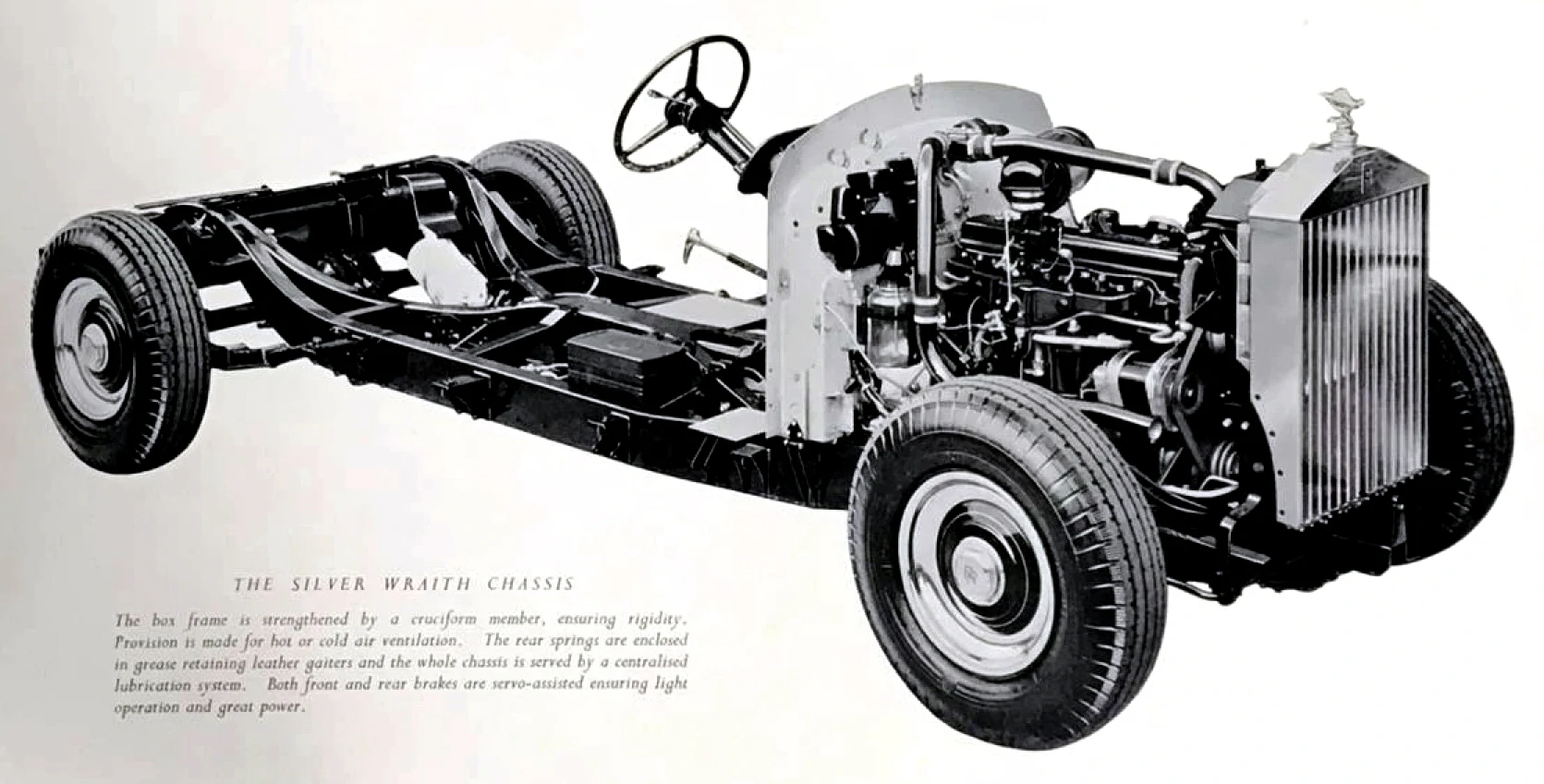
A 1950’s brochure of the Rolls-Royce Silver Wraith showing the chassis and the inline‑6 petrol engine.
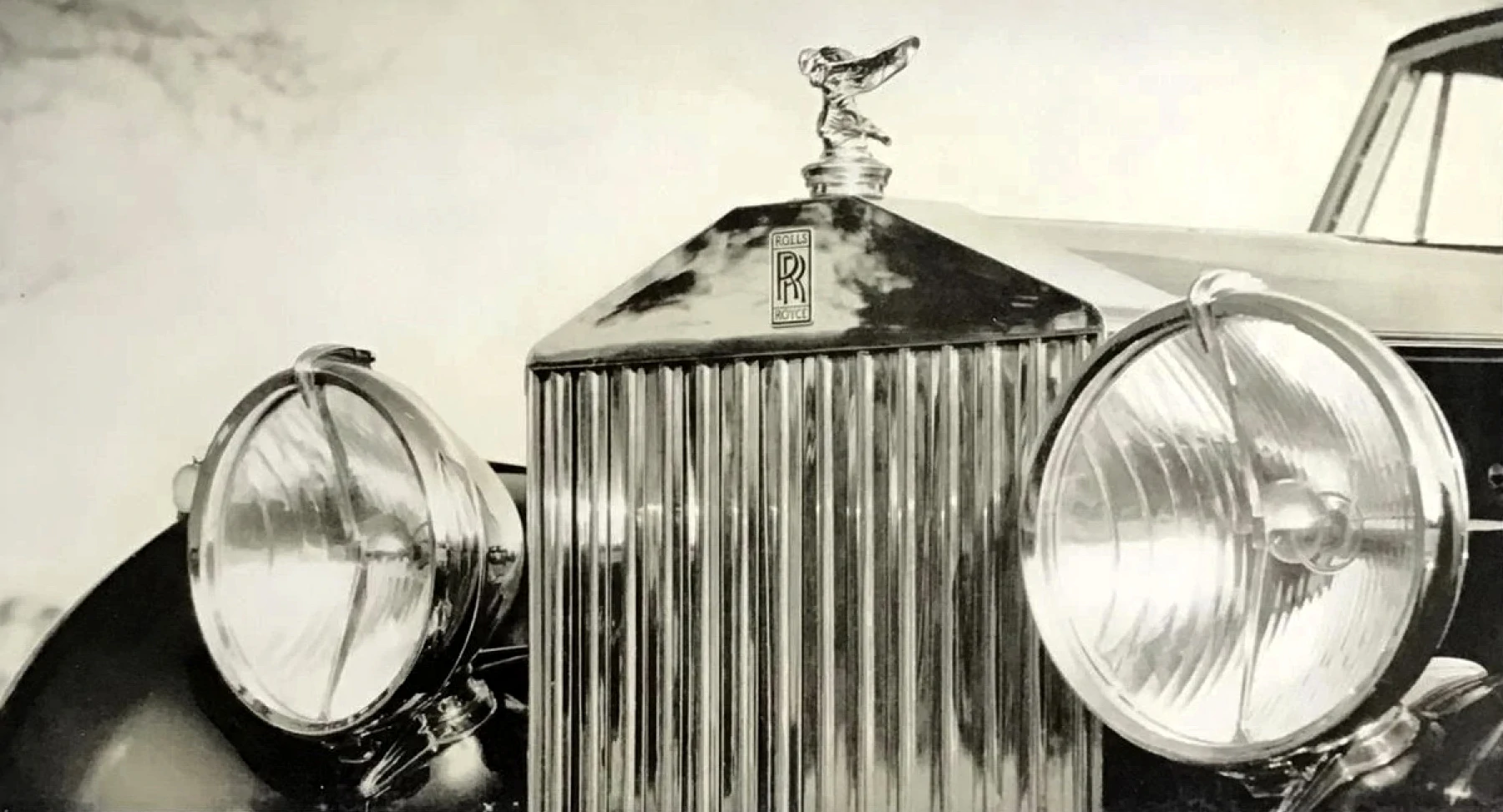
A 1950’s brochure of the Rolls Royce Silver Wraith showing the characteristic radiator grill with the RR logo and ornament the Spirit of Ecstasy on the top of the radiator.
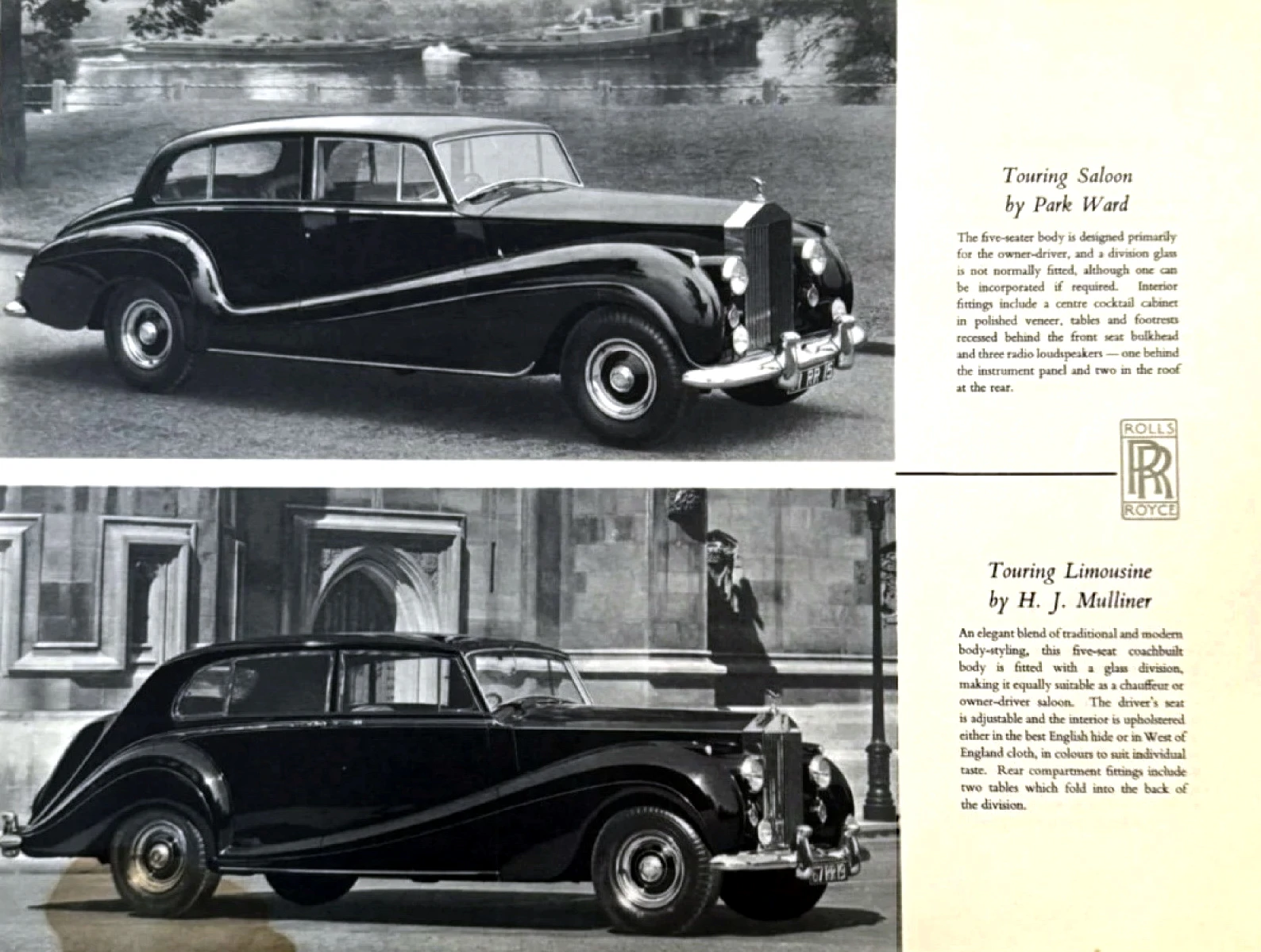
The bodywork of the Silver Wraith was made by coachbuilders Park Ward, H. J. Mulliner and Hooper. As shown in the brochure above, every coachbuilder had its own specific body characteristics for a Silver Wraith. The photo of the Touring Saloon by Park Ward matches the 1955 Silver Wraith Touring Limousine.
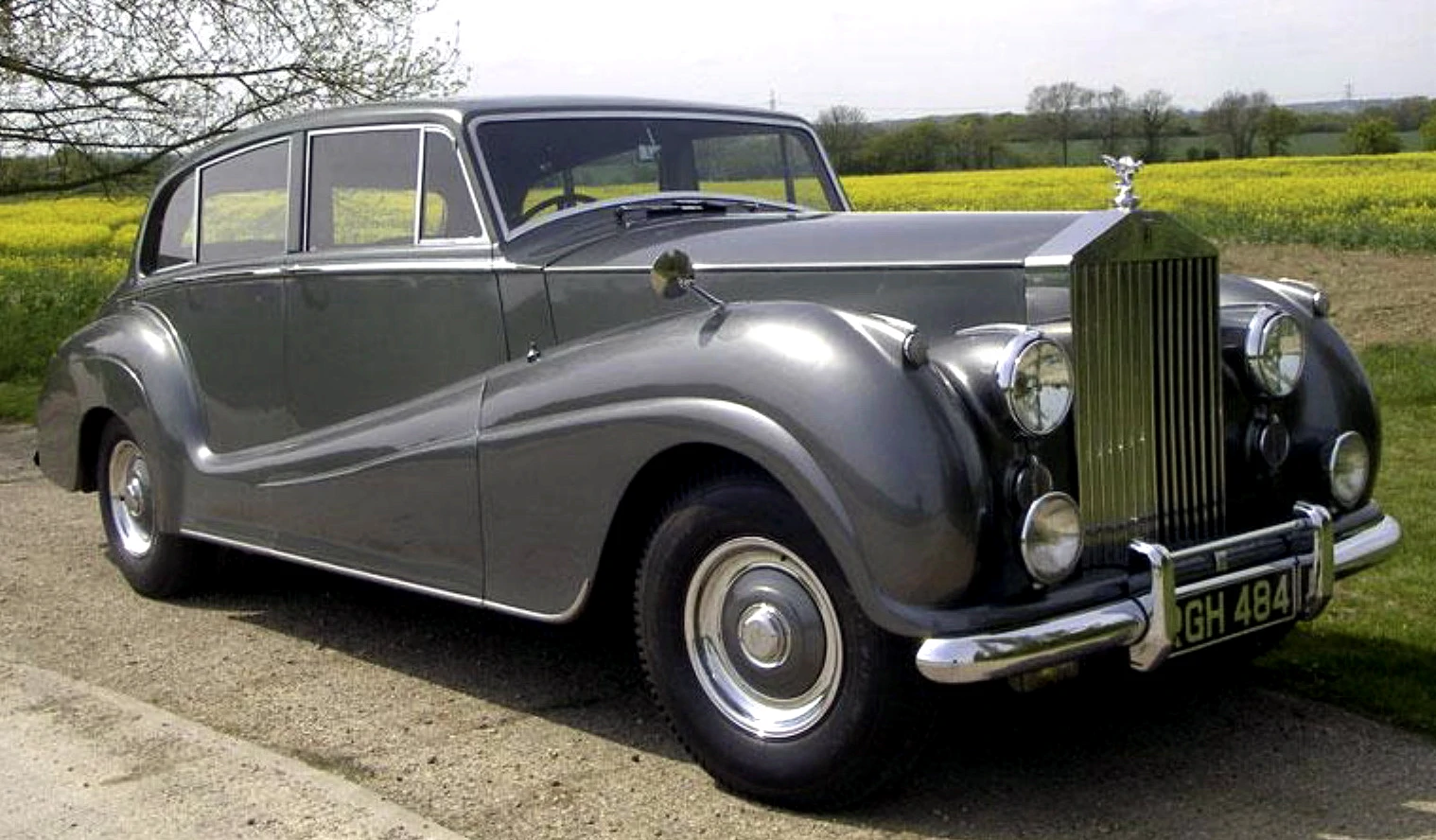
The 1955 Rolls-Royce Silver Wraith Six Light Touring Saloon by Park Ward.
Dinky Toys 150 Rolls-Royce Silver Wraith 1959–1963
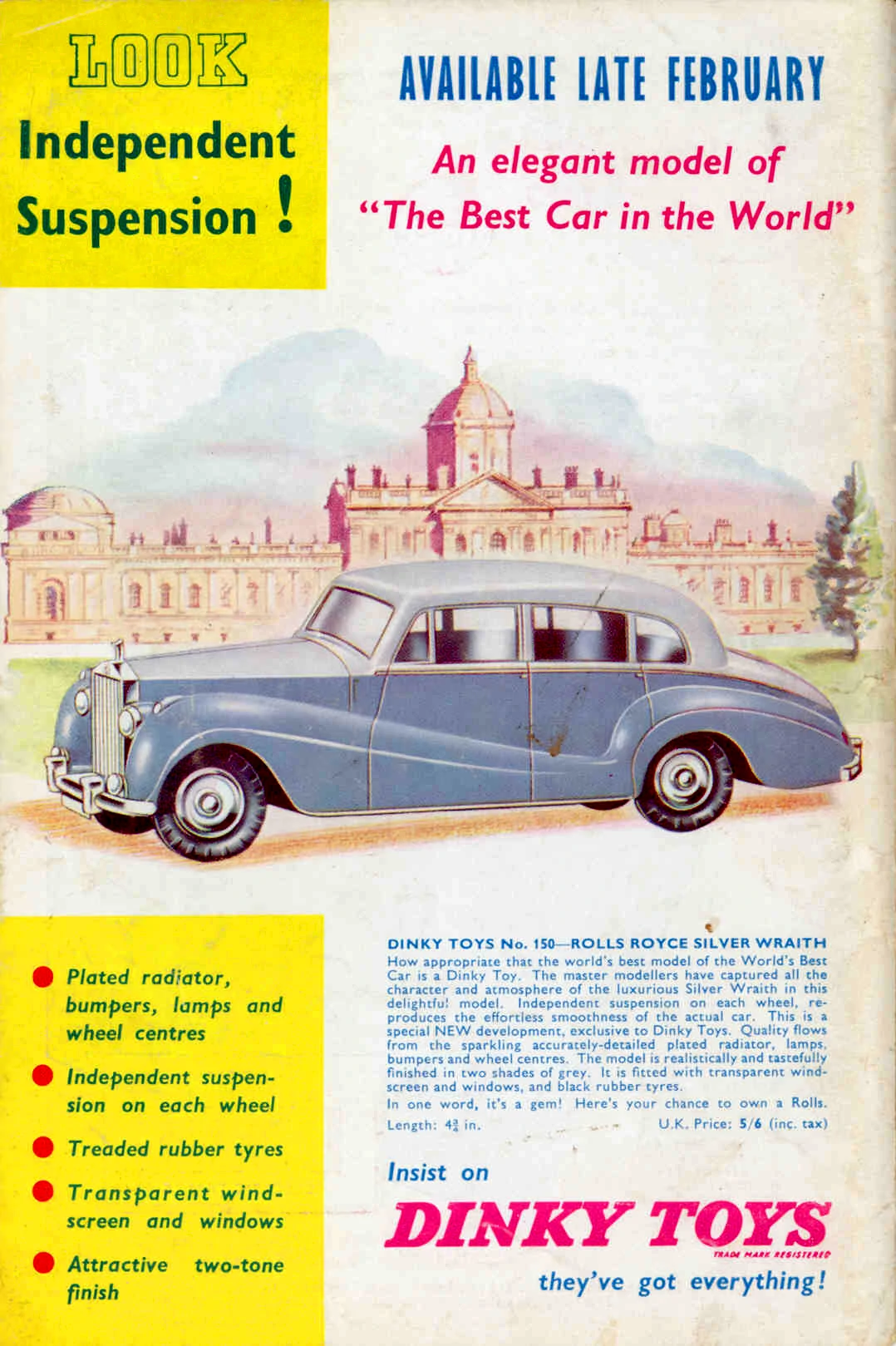
Introduced in the February 1959 issue of Meccano Magazine, the Dinky Toys 150 Rolls Royce Silver Wraith was described as “An elegant model of ‘The Best Car in the World’ ”. It featured Dinky’s new independent suspension, a sparkling plated radiator, bumpers, lamps and wheel hubs.
This was the first Dinky Toys model equipped with independent suspension and the patent number of this new feature is imprinted on the bottom of the base plates. From this model onward, Meccano Liverpool began to provide more new features in subsequent Dinky Toys.
As stated in Toyman’s introduction, the model is based on the real Silver Wraith made by coachbuilders Park Ward & Co. Ltd., Willesden.
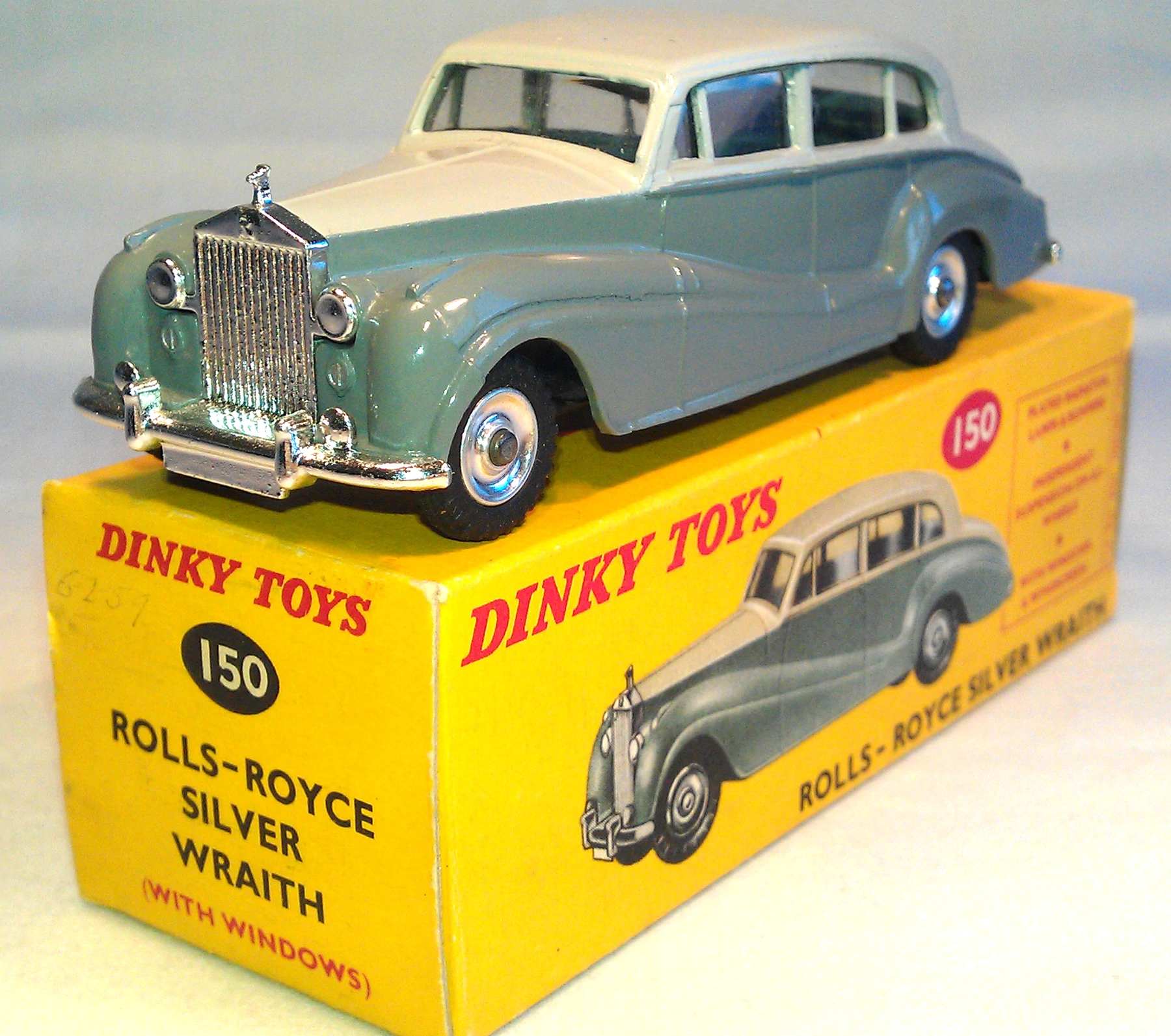
Front view of the Dinky 150 Rolls-Royce Silver Wraith produced from 1959 to 1962 in duotone grey, placed on its box. Note the accurately reproduced detailed front with the characteristic Rolls-Royce radiator grill with logo and ornament on top.
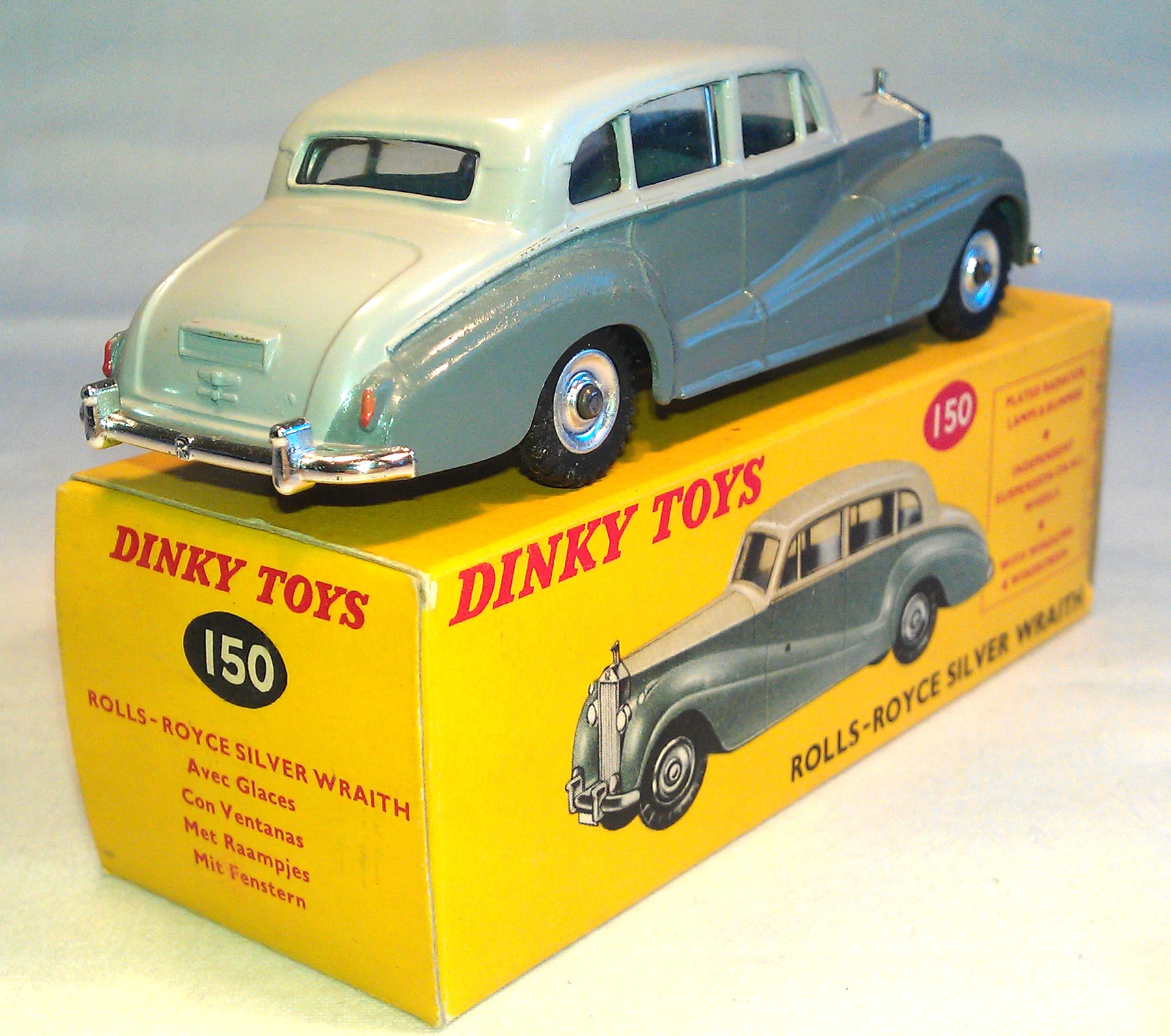
Rear view of the Dinky 150 Rolls-Royce Silver Wraith.
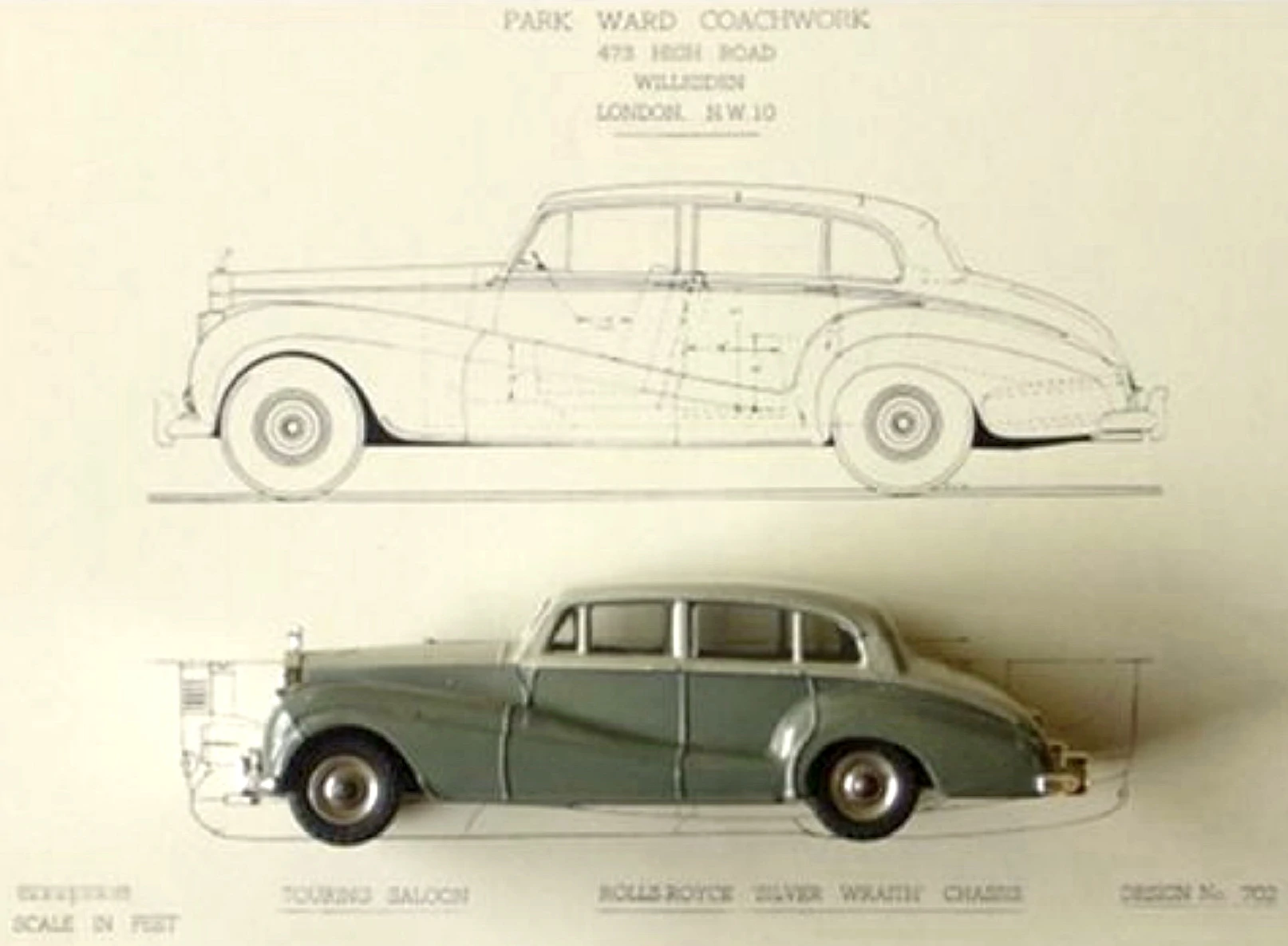
Shown above is the Dinky Toys 150 Rolls-Royce Silver Wraith placed on a matching design drawing brochure by Park Ward Coachbuilders.
It is immediately apparent how faithfully Meccano Liverpool reproduced the Dinky Toys 150 model. The body lines in the original design drawing correspond closely to those of the Dinky model, while the raised door lines on the model precisely match the door outlines in the drawing shown above. It is a striking testament to the skill and craftsmanship of the toolmakers.
In 1959, the Dinky Toy 150 model was also exported to France in component form and assembled by Meccano France. It was fitted with a French base plate bearing the sales number 551 and the inscription “Assemblé en France par Meccano”, and was sold in its own plain French box, also numbered 551. The model was subsequently included in the February 1959 French Dinky Toys catalog.
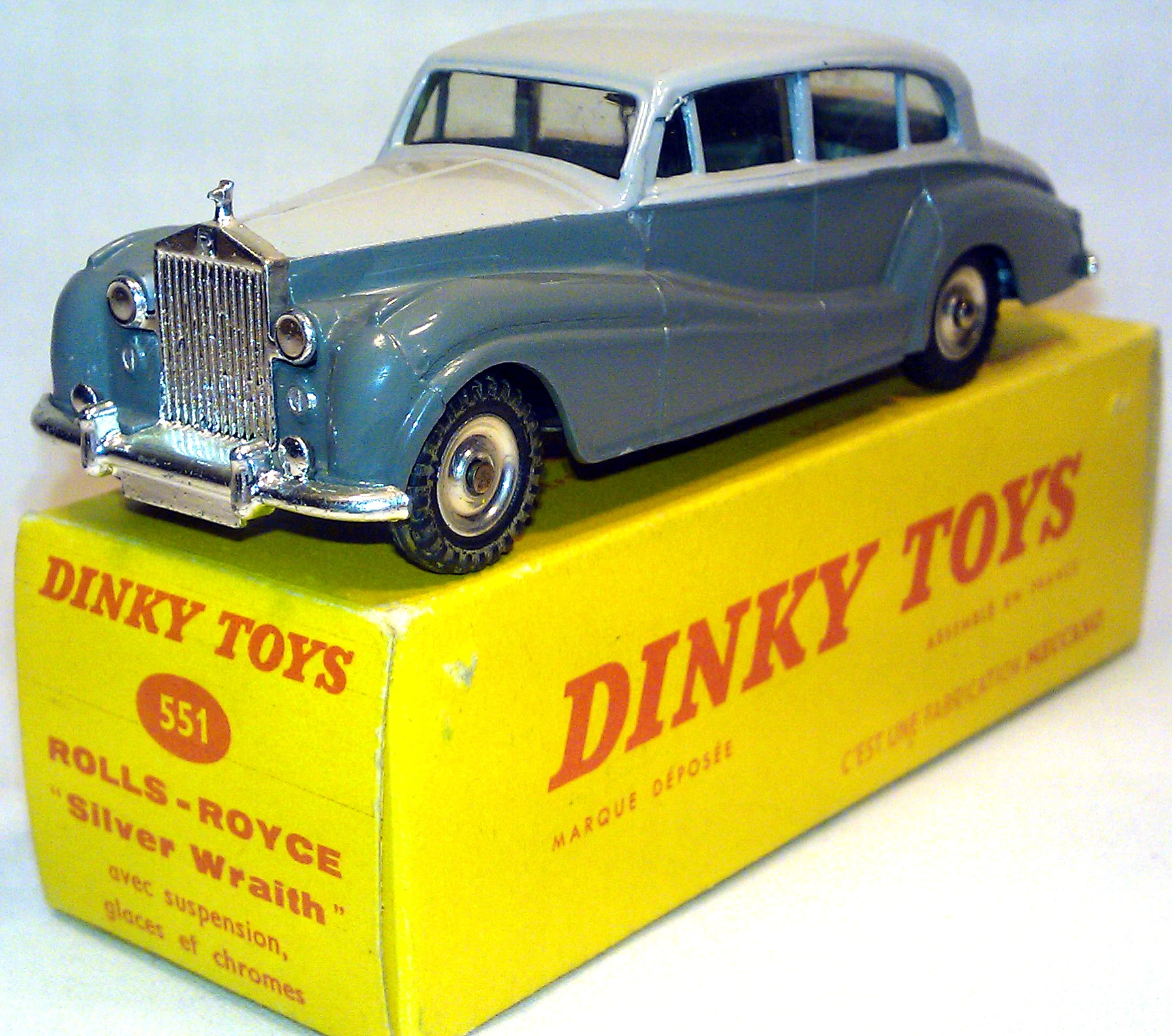
The Rolls-Royce Silver Wraith assembled in France placed on its box, released in France as Dinky 551.
Bentley S2 Drophead Convertible Coupe
The Bentley S2 is a luxury car that was produced by Bentley from 1959 until 1962. The successor to the S1, it featured the new 6.2‑liter (6.230 cc) Rolls-Royce/Bentley L‑series aluminum V8 engine and improved air conditioning made possible by the engine’s increased output. Power steering was also standard, and a new dashboard and steering wheel were introduced.
Of the 1,863 standard S2 models produced, 15 had H. J. Mulliner & Co. drophead coupe bodies. Of the 57 long-wheelbase cars, five had James Young bodies and one had a Mercedes-Bentley yachting station-wagon body by Wendler.
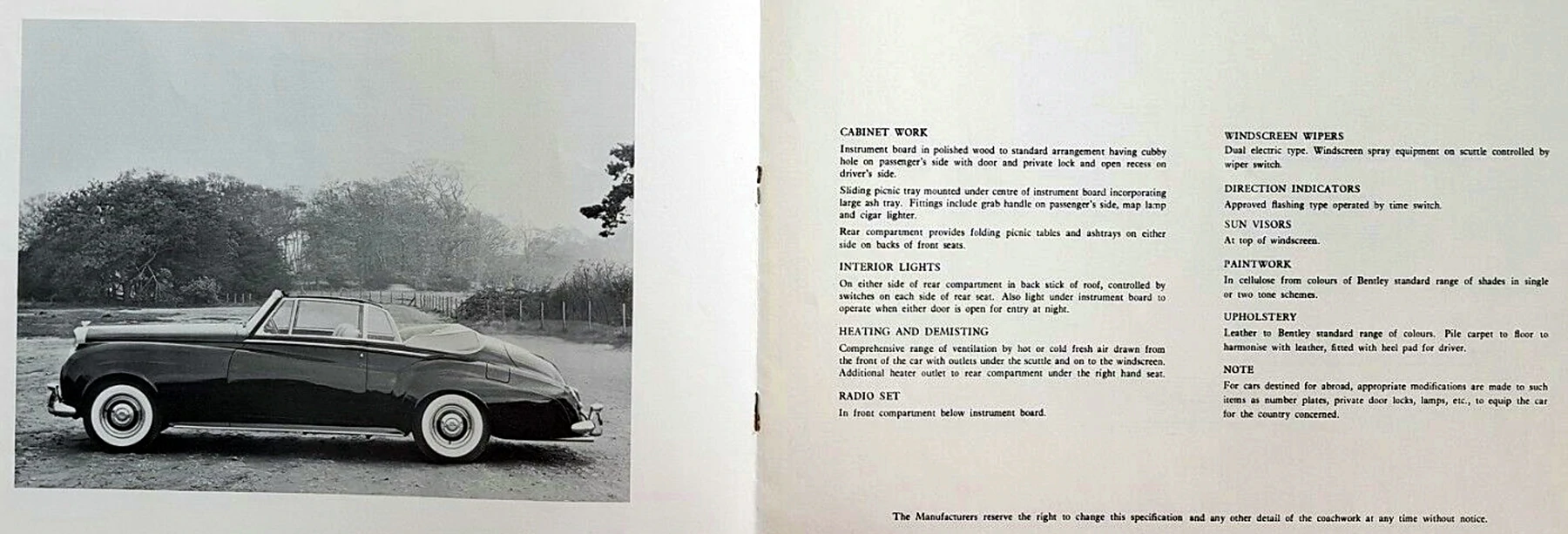
A brochure of the Bentley S2 Convertible Drophead Coupe by H. J. Mulliner & Co Ltd.
This model isn’t found in standard Bentley brochures. A separate brochure was produced for this model by coachbuilder H. J. Mulliner. Several years ago, I came across pictures of a reprinted 1961 brochure on eBay for the Bentley Series 2 Convertible Drophead Coupe by coachbuilder H. J. Mulliner & Co. Ltd. It contains photos, drawings, and a description of the features of this specially built Bentley model. Only 15 such models were produced by H. J. Mulliner & Co., making it one of the rarest cars of the world. Seven of them were left hand drive (export) vehicles.
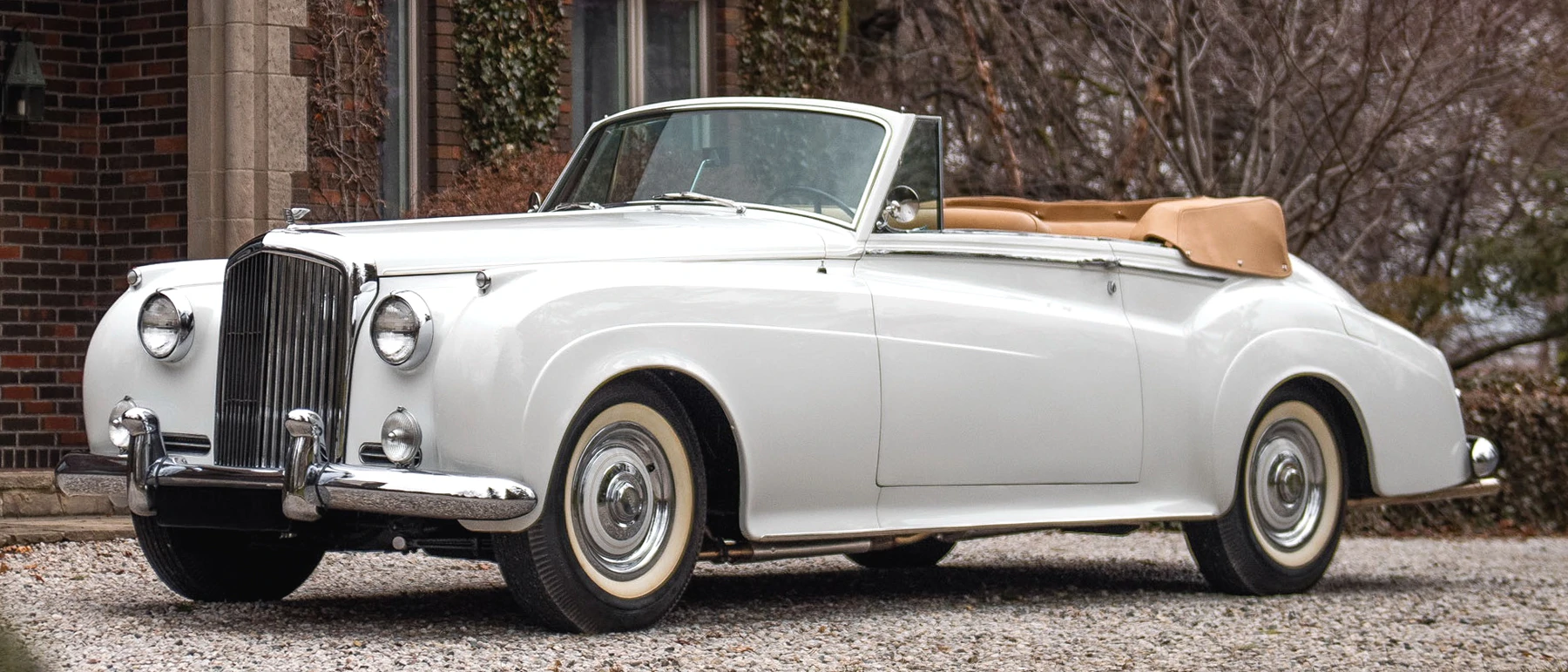
A 1960 Bentley S2 Drophead Coupe with folded roof by H. J. Mulliner & Co Ltd. It is a left-hand drive US export model. The car has the clear body lines of the Rolls-Royce Silver Cloud, as seen in the advertisement at the start of this article.
Image: amazingclassiccars.com
Dinky Toys 194 Bentley S2 Coupe (1961–1966)
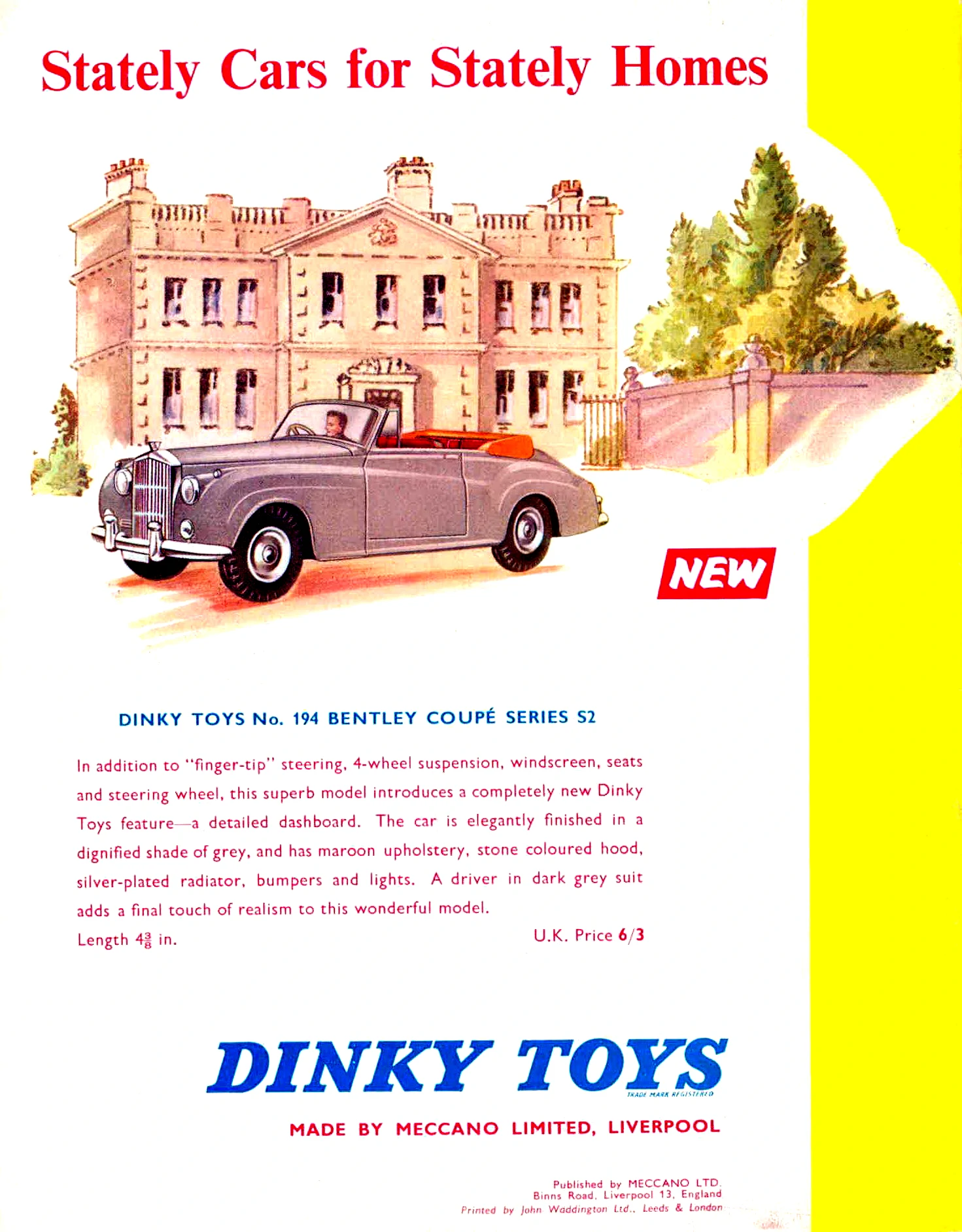
The Dinky 194 Bentley S2 Coupe was advertised on the back cover of the March 1961 issue of Meccano Magazine. I love this beautiful typically British convertible model with its detailed interior and a driver behind the steering wheel. Indeed a stately car for stately homes as announced in the advertisement in Meccano Magazine!
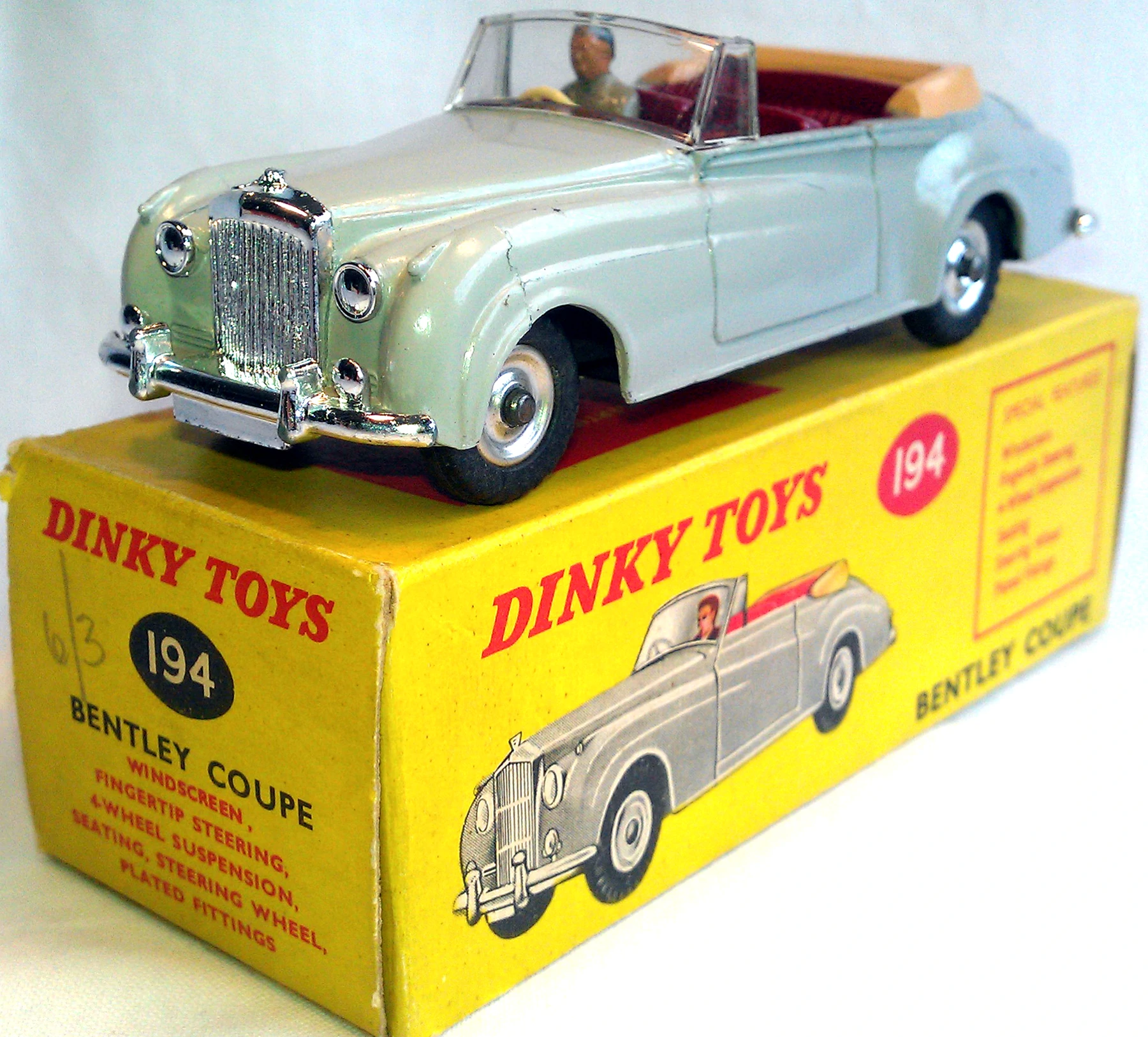
Front view of the Dinky 194 Bentley S2 Coupe with the typical Bentley radiator grill with ornament on a first issue 1961–1966 box showing the penciled period price of 6/3.
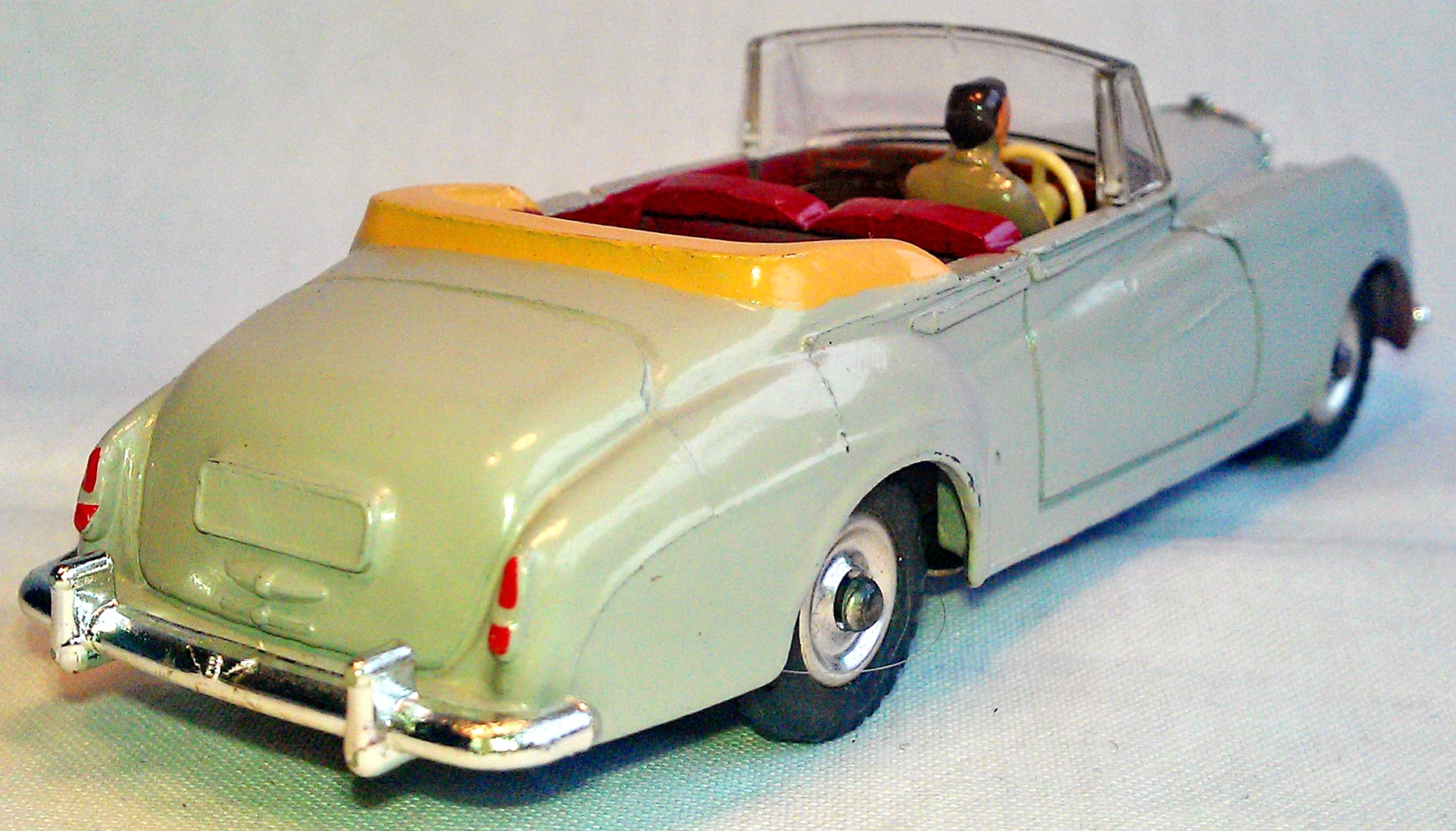
Rear view of the Dinky 194 Bentley S2 Coupe. The driver with brown hair in a dark grey suit is clearly visible and the model has a beautiful, glossy paint finish.
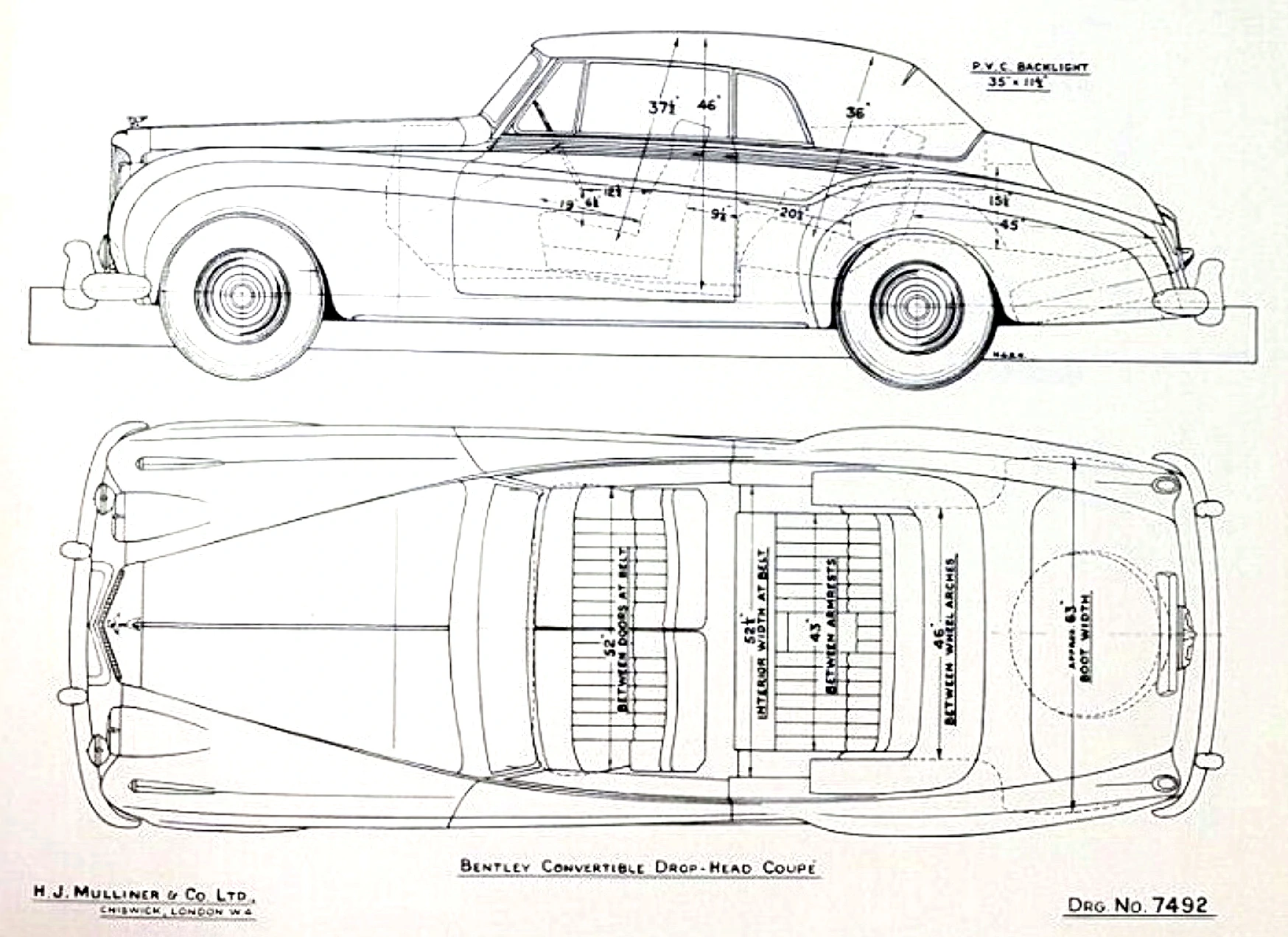
A brochure drawing of the Bentley S2 Convertible Drophead Coupe, H. J. Mulliner & Co Ltd, design No. 7492.
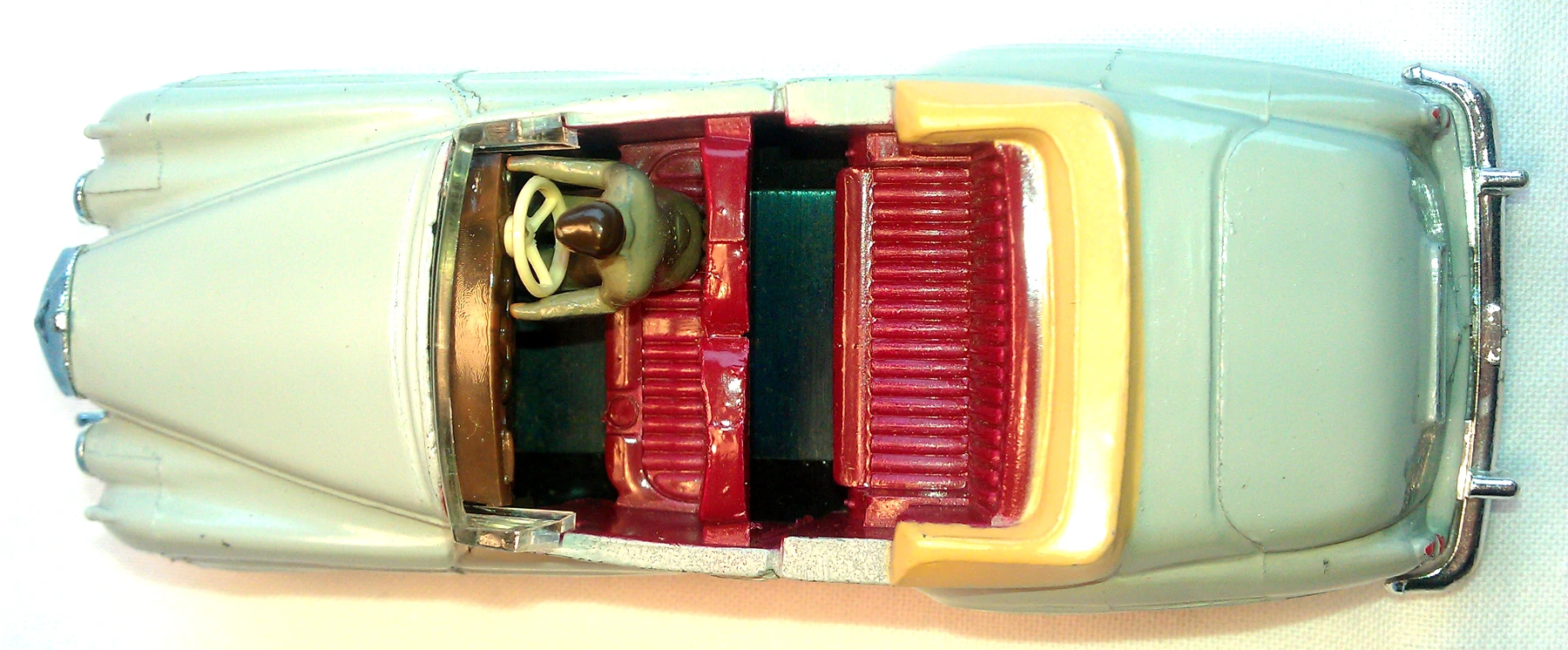
The interior of the Dinky 194 Bentley S2 Coupe was accurately reproduced by Meccano Liverpool as can be seen by a comparison with the brochure drawing shown above. The model includes beautiful maroon bench seats with a folded tan colored hood and a walnut dashboard.
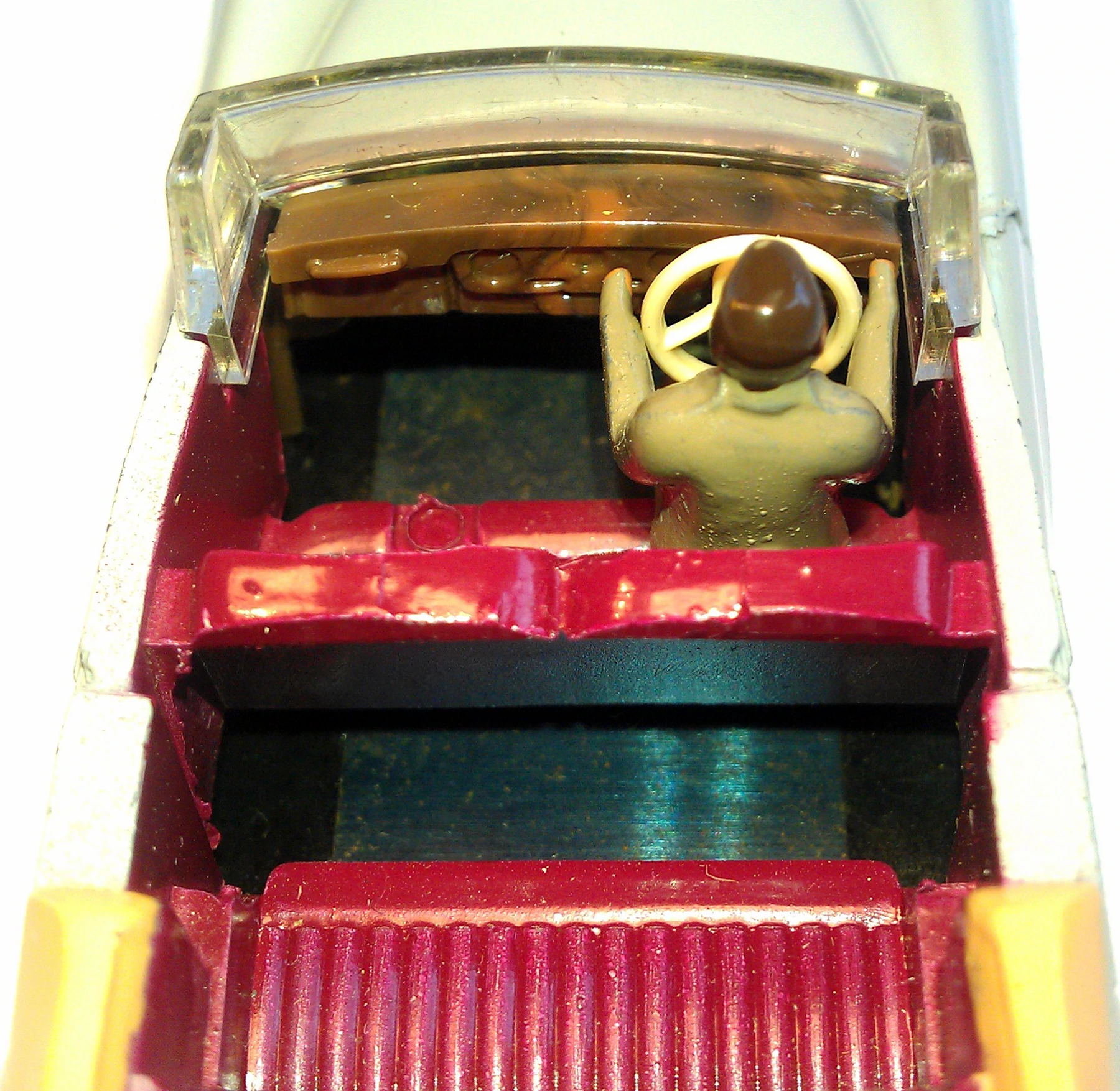
In the March 1961 issue of Meccano Magazine, Dinky Toys announced a new feature, the detailed dashboard, which can clearly be seen in the close-up image above.
Rolls-Royce Phantom V
The Rolls-Royce Phantom V is a large four-door limousine that was produced by Rolls-Royce from 1959 to 1968. Based on the Silver Cloud II, it shared a V8 engine and Rolls-Royce Hydramatic automatic gearbox (manufactured under license from General Motors by Rolls-Royce) with that model.
Rolls-Royce built the cars’ chassis and drivetrains, with bodies mainly made to standard designs by coachbuilders Park Ward, Mulliner Park Ward and James Young, former vendors that were subsequently absorbed by Rolls-Royce. Other coachbuilders, including Hooper, Henri Chapron and Woodall Nicholson built one or two bodies each on the Phantom V chassis.
The engine of this model is a 6,230 cc 90-degree V8 with twin SU carburetors, coupled with a 4‑speed automatic transmission. The car had massive drum brakes and a wheelbase of 3,683 mm. Power assisted steering was standard. In total, only 518 Phantom Vs were built by various coachbuilders between 1959 and 1968, making it a fairly exclusive automobile.
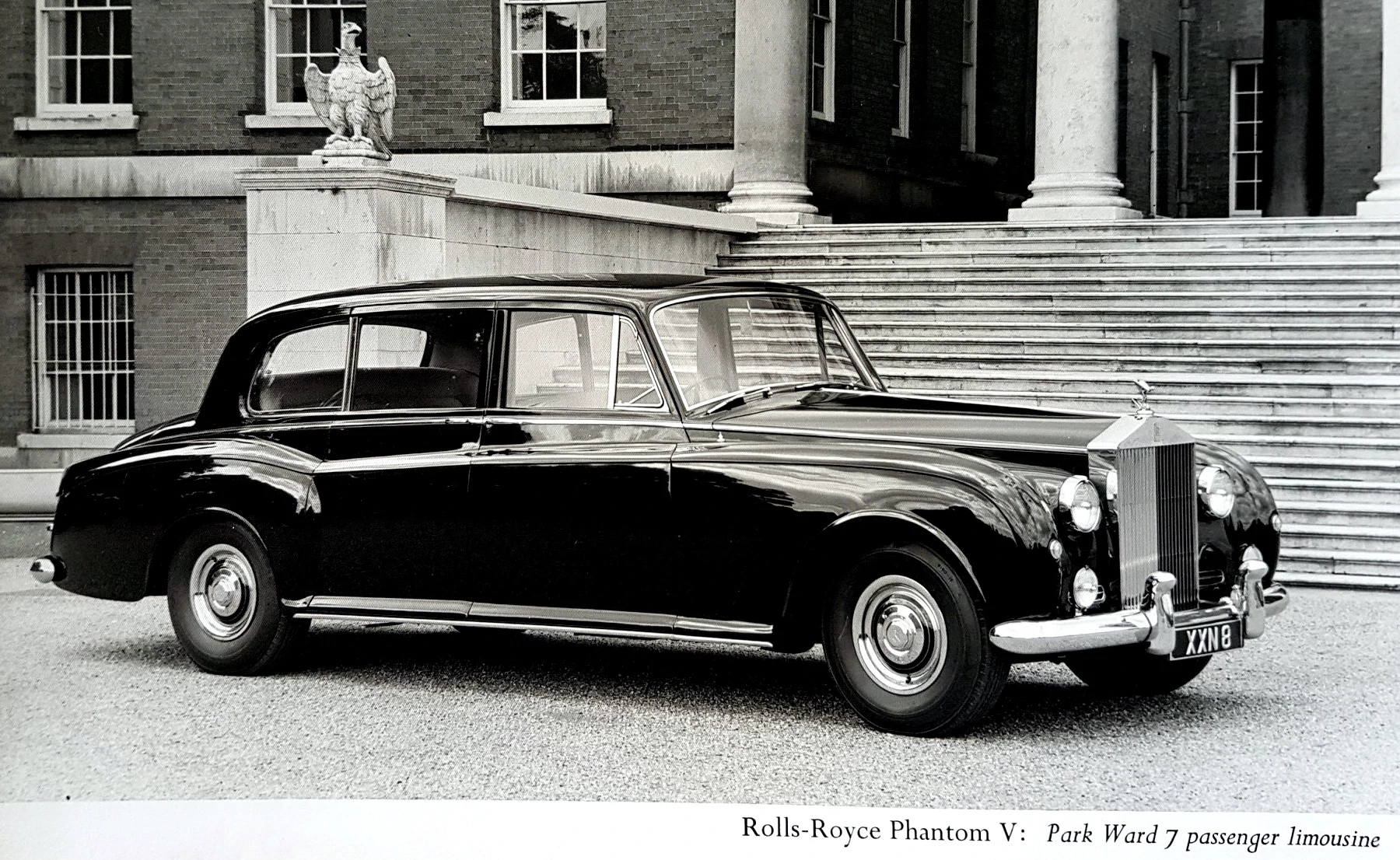
A picture from a brochure of the Rolls-Royce Phantom V Park Ward 7 passenger limousine.
Image: Facebook.
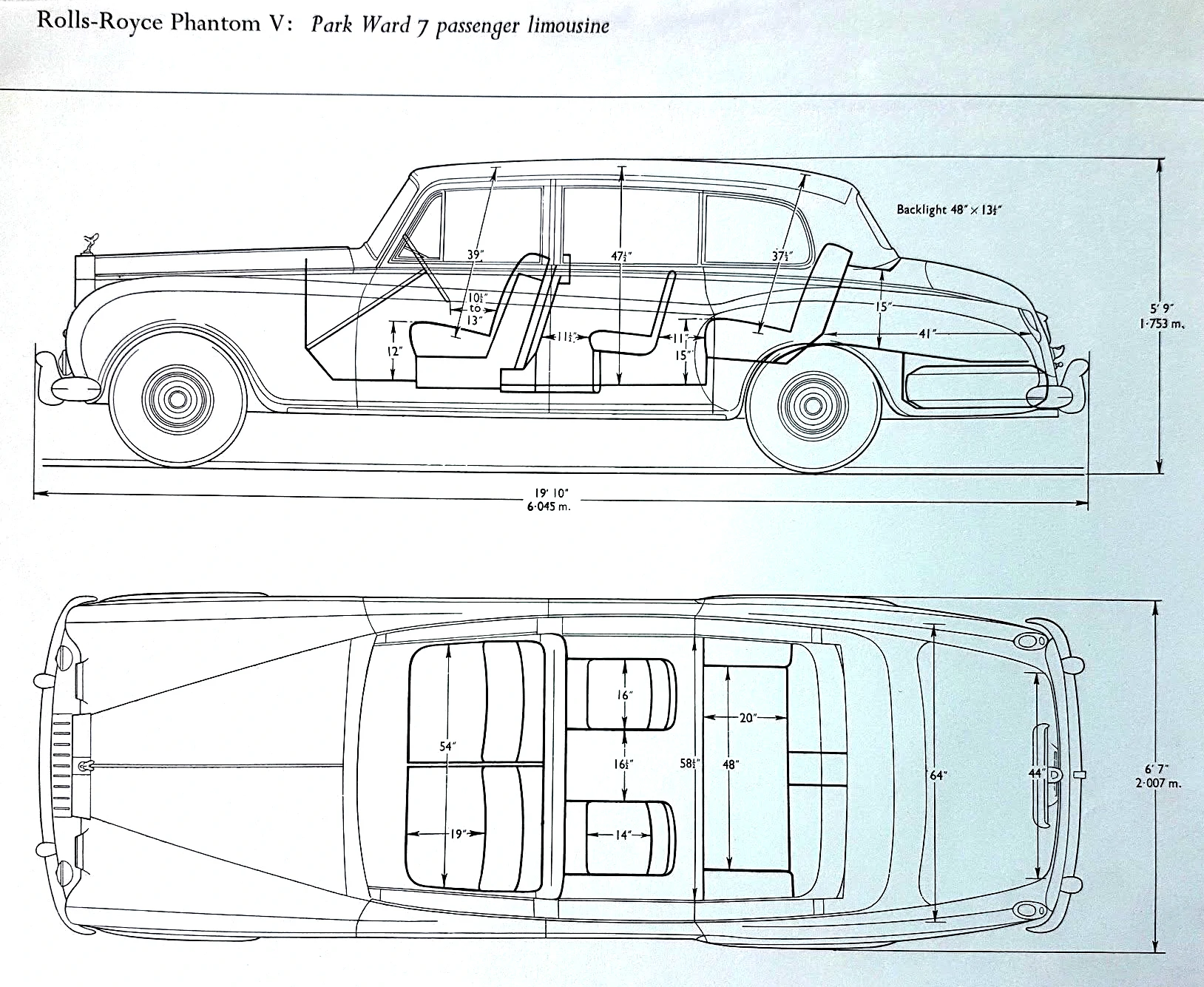
A drawing of the Rolls-Royce Phantom V Park Ward 7 passenger limousine. Note the overall length of 19’ 10’’ (6.045 meters).
Image: Facebook.
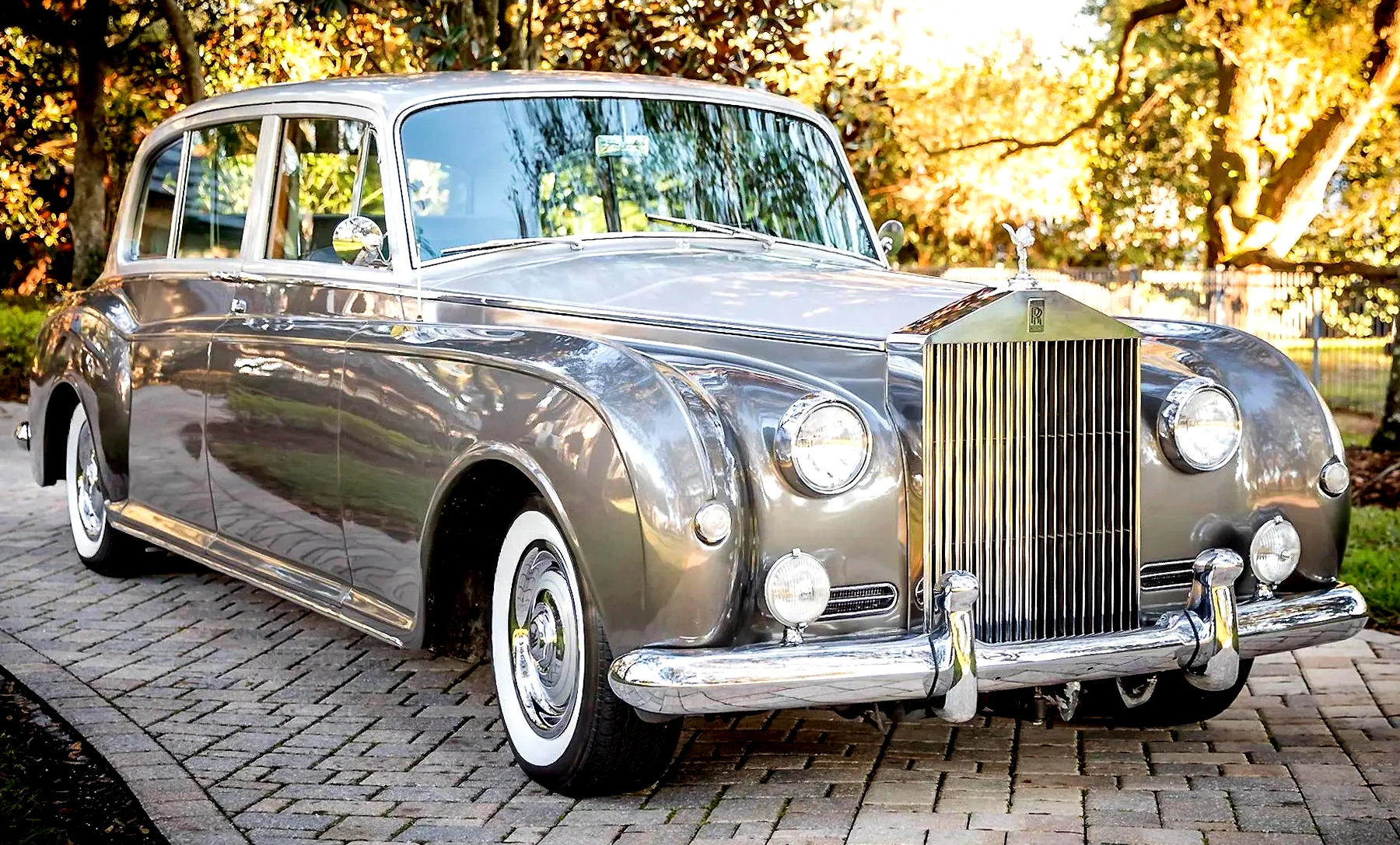
A left hand drive US export model of a 1961 Rolls-Royce Phantom V limousine by Park Ward coachbuilders in two-tone grey.
Image: BringATrailer.com
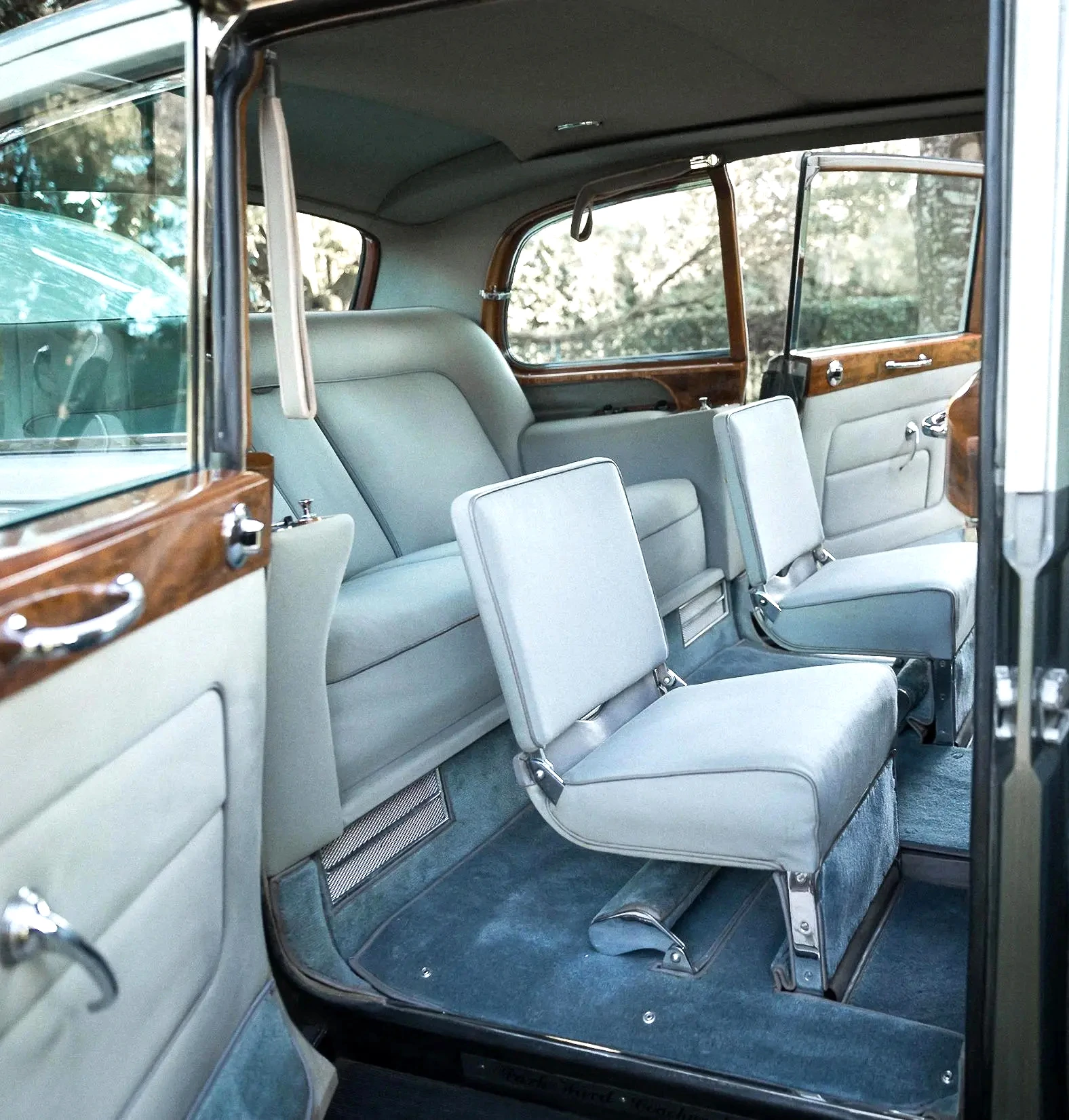
The Rolls-Royce Phantom V by Park Ward showing the rear compartment with 2 extra folding seats, providing space for 7 passengers. Note the luxurious leather upholstery with walnut trim.
Dinky Toys 198 Rolls-Royce Phantom V (1962–1968)
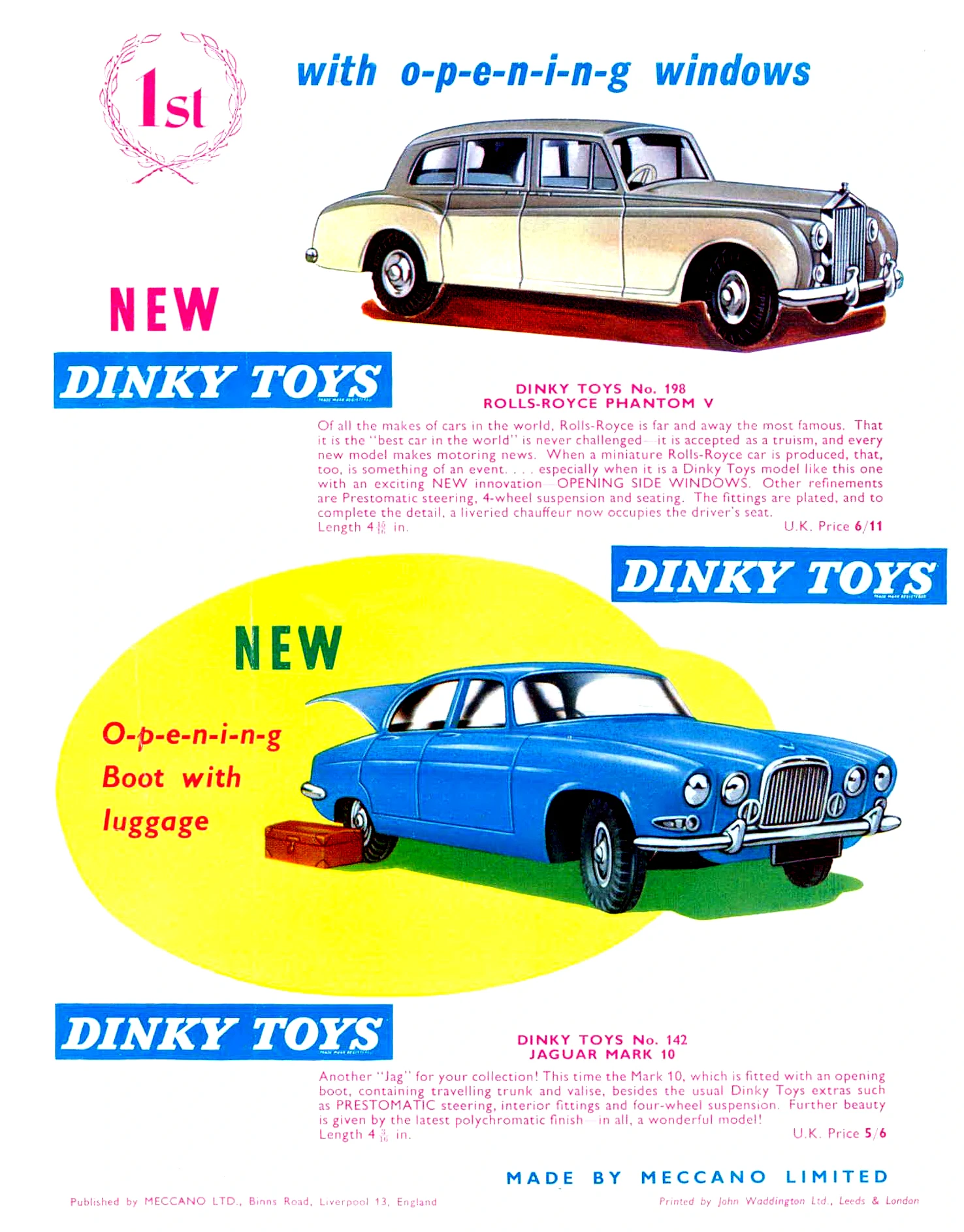
Dinky introduced the 198 Rolls-Royce Phantom V on the back cover of the November 1962 issue of Meccano Magazine that advertised a new feature: opening side windows! It was also equipped with a liveried chauffeur, who is inexplicably not depicted in the advertisement. More new features started appearing in Dinky models.
The Toyman wrote, “The actual Phantom V is manufactured by the Motor Car Division of Rolls-Royce Limited, London W.1, with coachwork by Park Ward and James Young, who are among the best known coachbuilders in the world.”
As is clearly visible in the image and drawing above, the Dinky 198 is an unmistakable reproduction of the Park Ward design. James Young employed a completely different design for the sides and the rear of the vehicle.
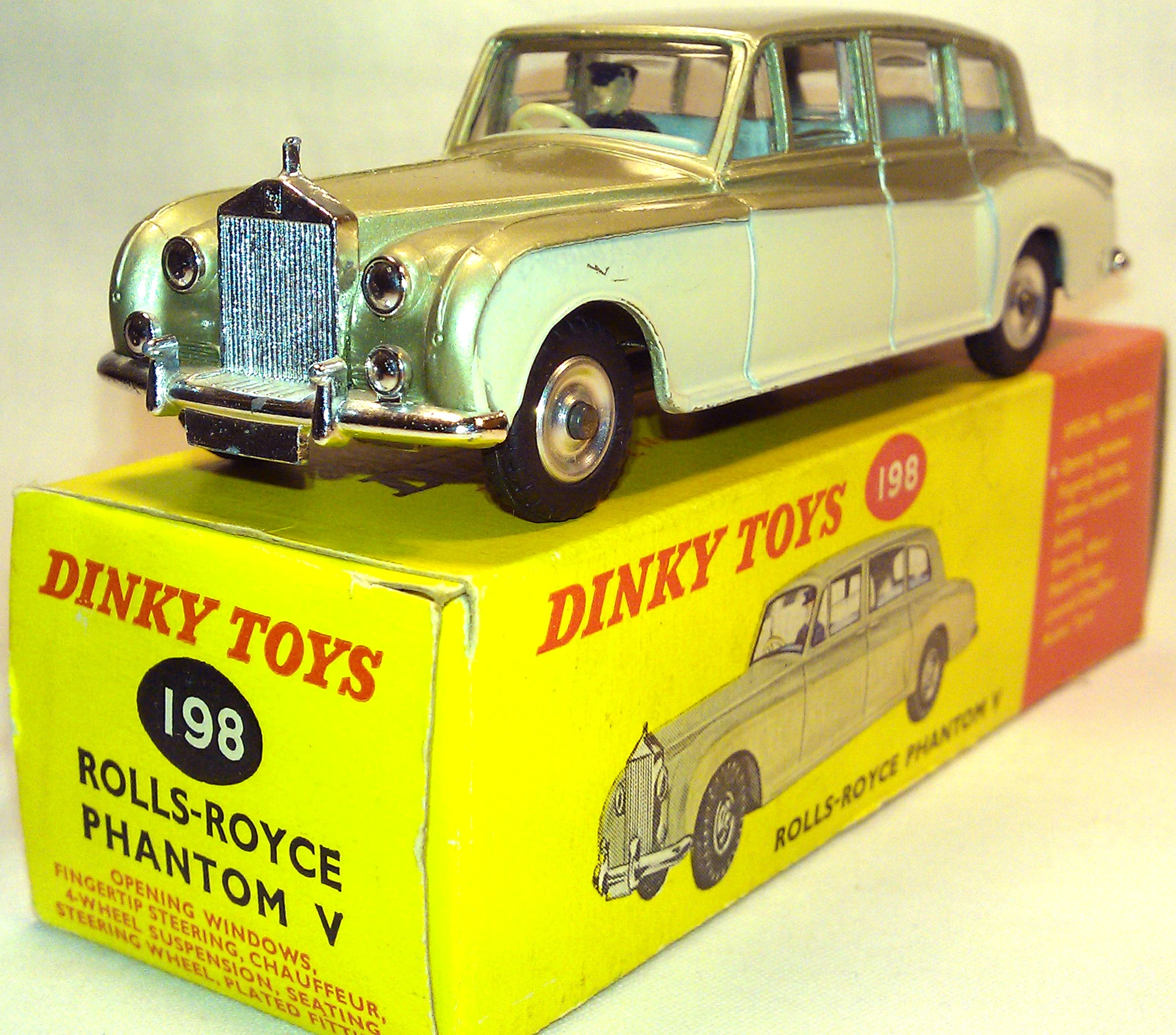
Front view of the Dinky 198 Rolls-Royce Phantom V with liveried chauffeur, placed on its box. The model is finished in a two-tone green upper and ivory on the lower sides and was produced during 1962–1968.
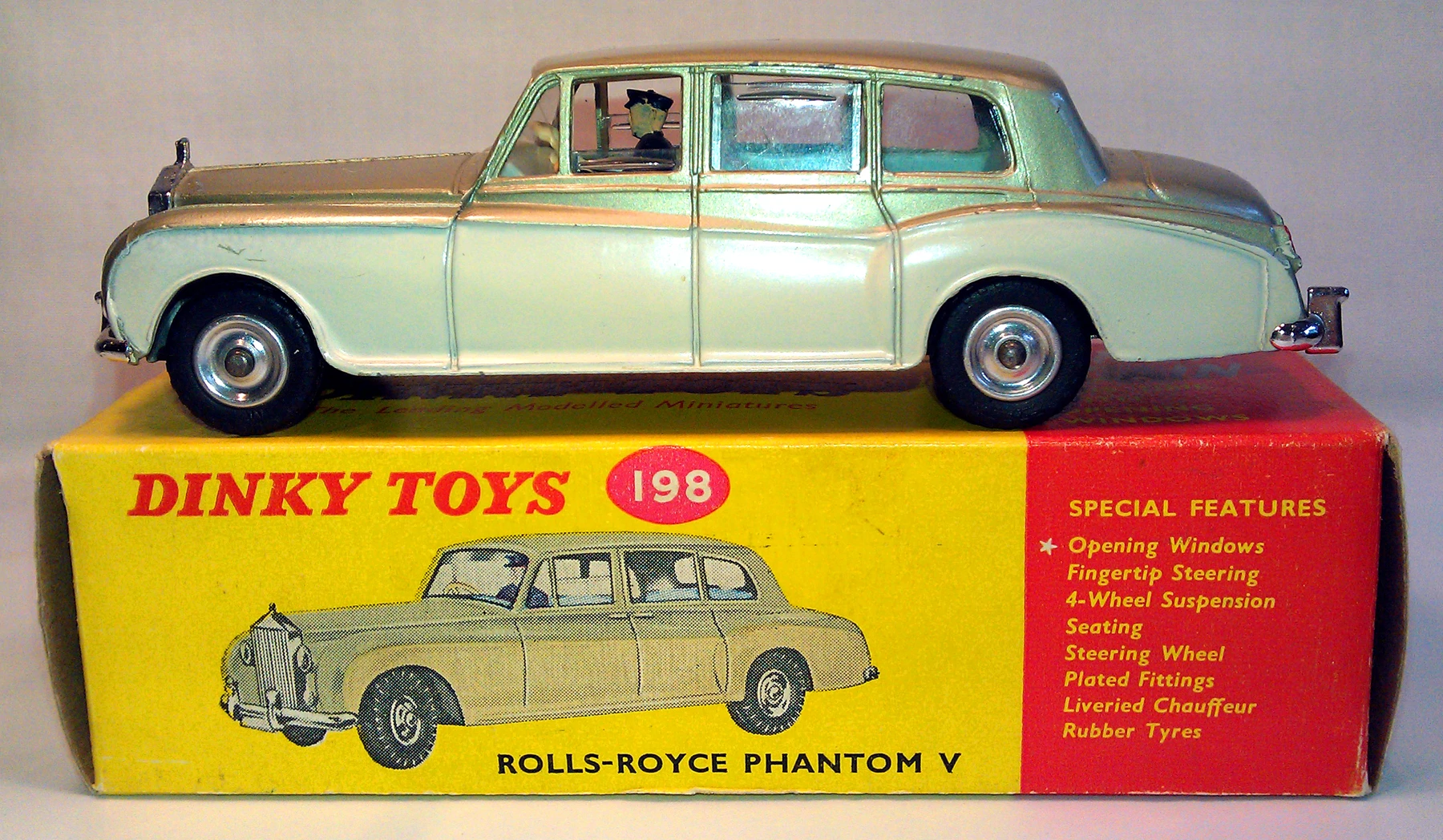
Side view of the Dinky 198 Rolls-Royce Phantom V with open side window and liveried chauffeur in blue. The model’s special features are identified on the box.
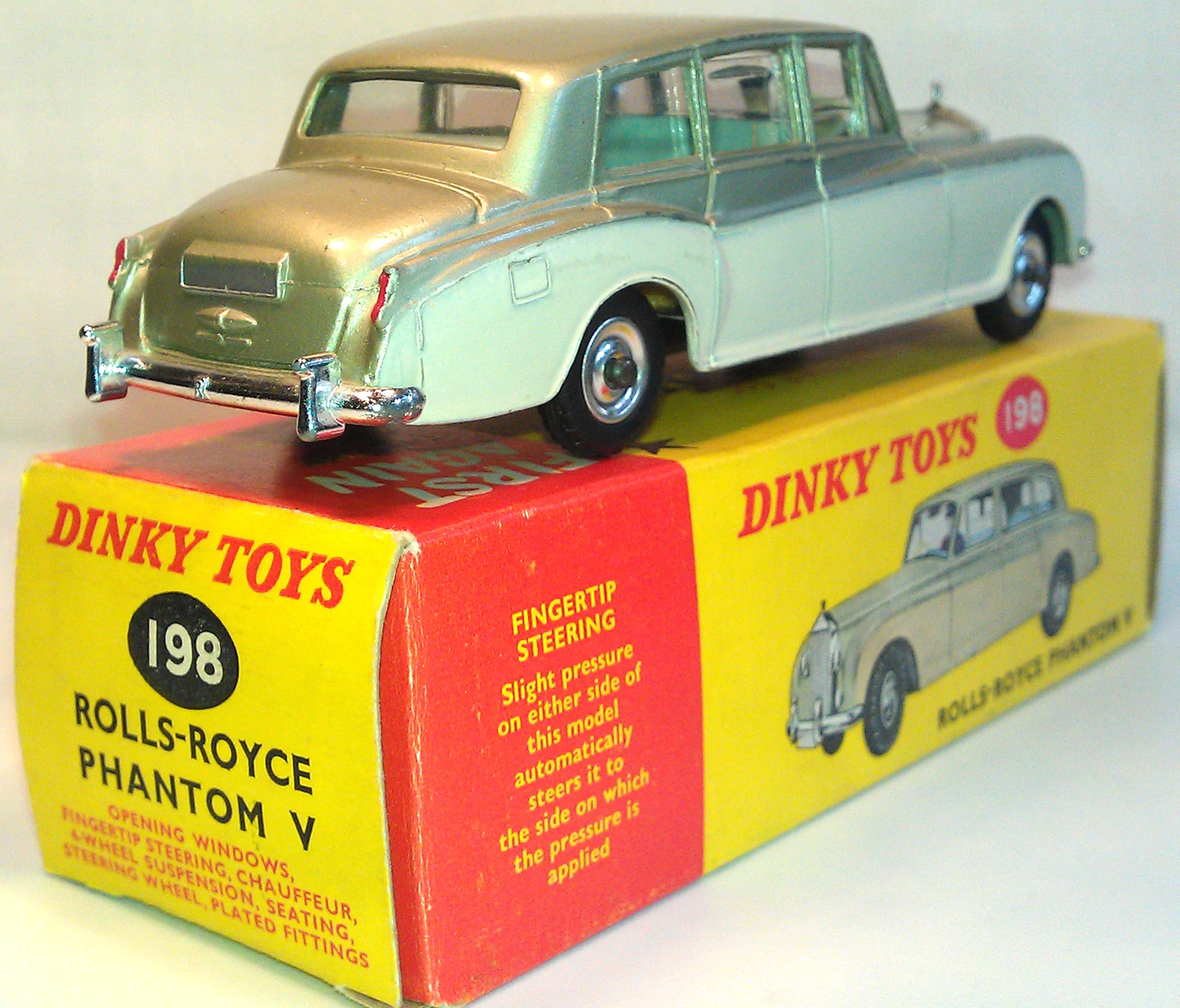
Rear view of the Dinky 198 Rolls-Royce Phantom V on its box. An explanation of how to use the fingertip steering mechanism is printed on the box.
As can be seen in the photos of Dinky model 198, it’s an accurate reproduction of the Park Ward design.
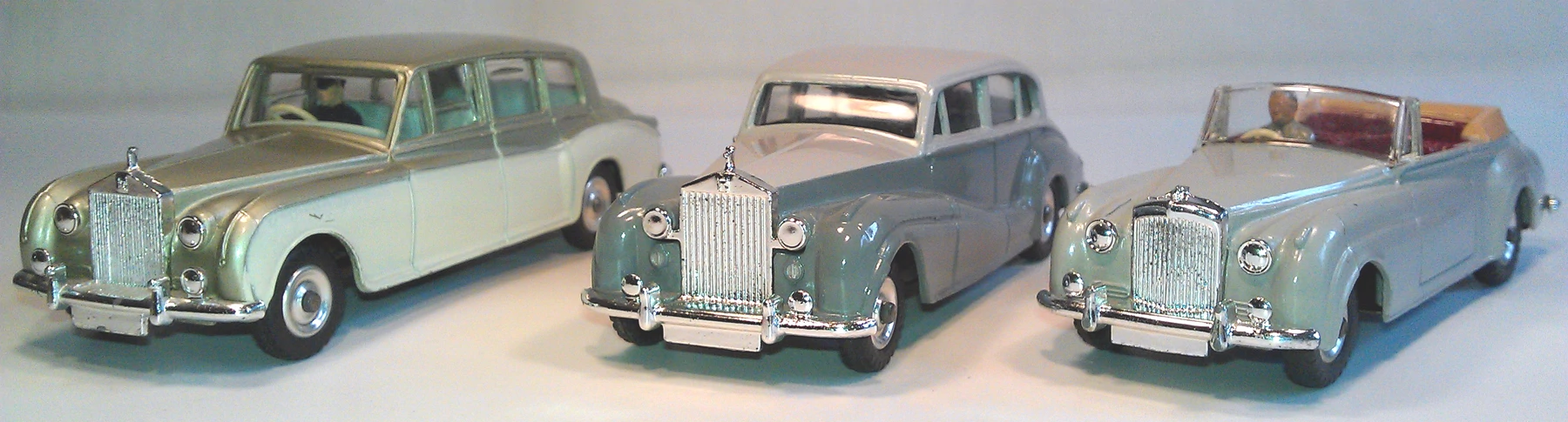
My trio of Dinky Toys Rolls-Royce and Bentley miniatures.
Note
The most prominent exterior body change of the Phantom V was in 1963, with the transition from single round headlights to the distinctive twin-headlamp setup, a signature of later Phantom V and Silver Cloud models.
In December 1964, Beatle John Lennon bought a new Mulliner Park Ward Phantom V finished in Valentine Black and later repainted in the style of a Romany gypsy wagon. It is undoubtedly the most well known Rolls-Royce Phantom V in the world.
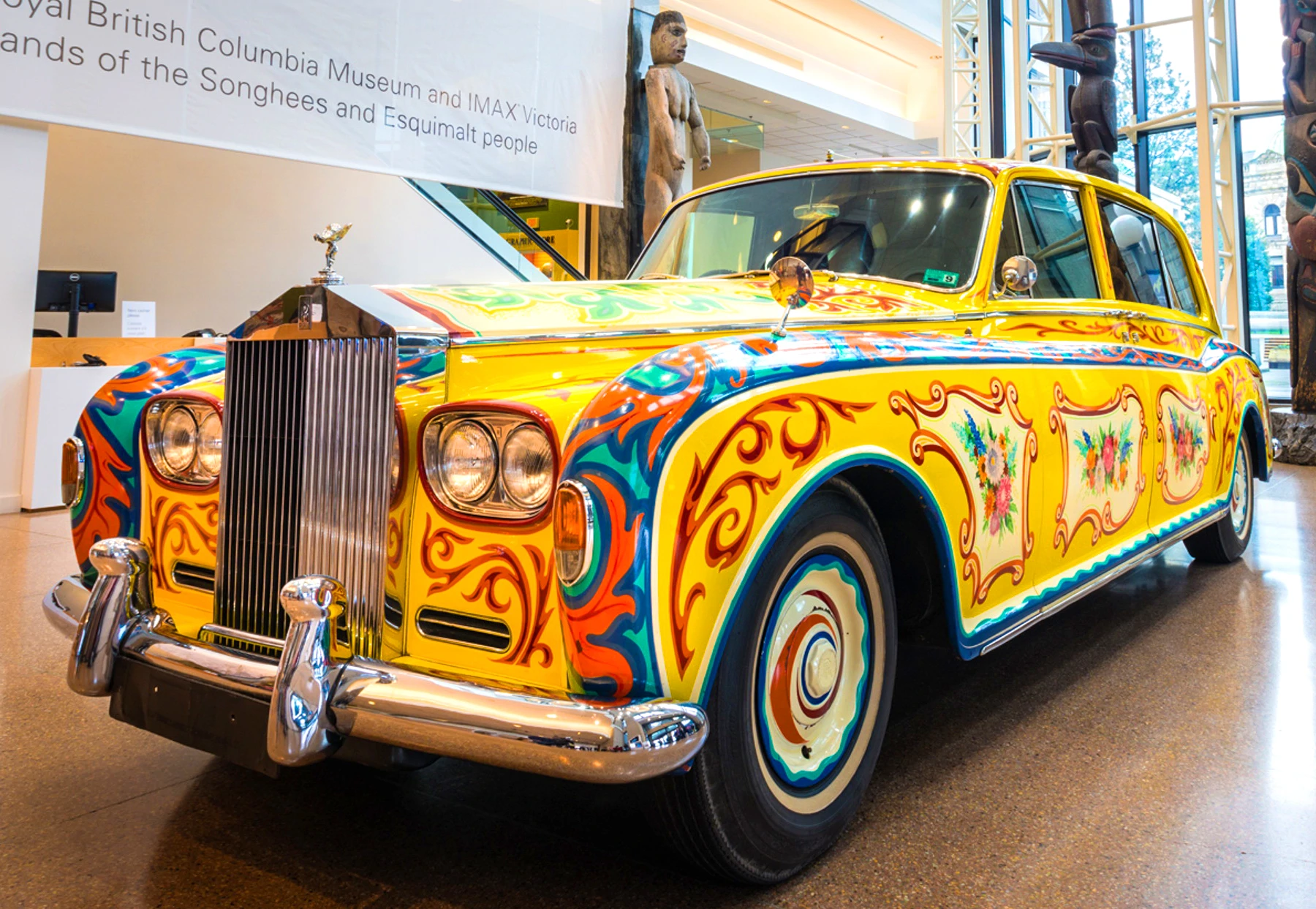
John Lennon’s Psychedelic Rolls-Royce Phantom V exhibited at the Royal British Columbia Museum in Victoria, B.C., Canada.
Image: Monte Cristo Magazine.
Finally, here is a comprehensive list of all Dinky Toys Rolls-Royce and Bentley miniatures made by Meccano Liverpool:
- 30B Rolls Royce car 1935–1950
- 150 Rolls Royce Silver Wraith 1959–1964
- 198 Rolls Royce Phantom V 1962–1969
- 127 Rolls Royce Silver Cloud III 1964–1972
- 152 Rolls Royce Phantom V Limousine 1965–1977
- 158 Rolls Royce Silver Shadow 1967–1973
- 1001 Rolls Royce Phantom V Limousine 1971–1977
- 124 Rolls Royce Phantom V Limousine 1977–1979
- 36B Bentley (Two-seater sports coupe with driver and passenger) 1937–1941
- 36B Bentley 1946–1950
- 194 Bentley S Series Coupe 1961–1967