I acquired the hard-to-find metallic green first version of the Dinky 24R Peugeot 203, complete with very nice creamy-yellow ridged hubs. It’s a fine model from the French Series 24 and features some interesting casting details.
The first version of the real Peugeot 203, the “A”, can be recognized by its small oval rear window, the absence of rear lights on the side flanks, the protruding fuel cap on the right rear fender and the fold-out direction indicators on each side. Very early examples of this model included a pair of handles used to open the trunk. Meccano Bobigny chose to reproduce this first post-war version of the Peugeot 203 as model Dinky 24R.
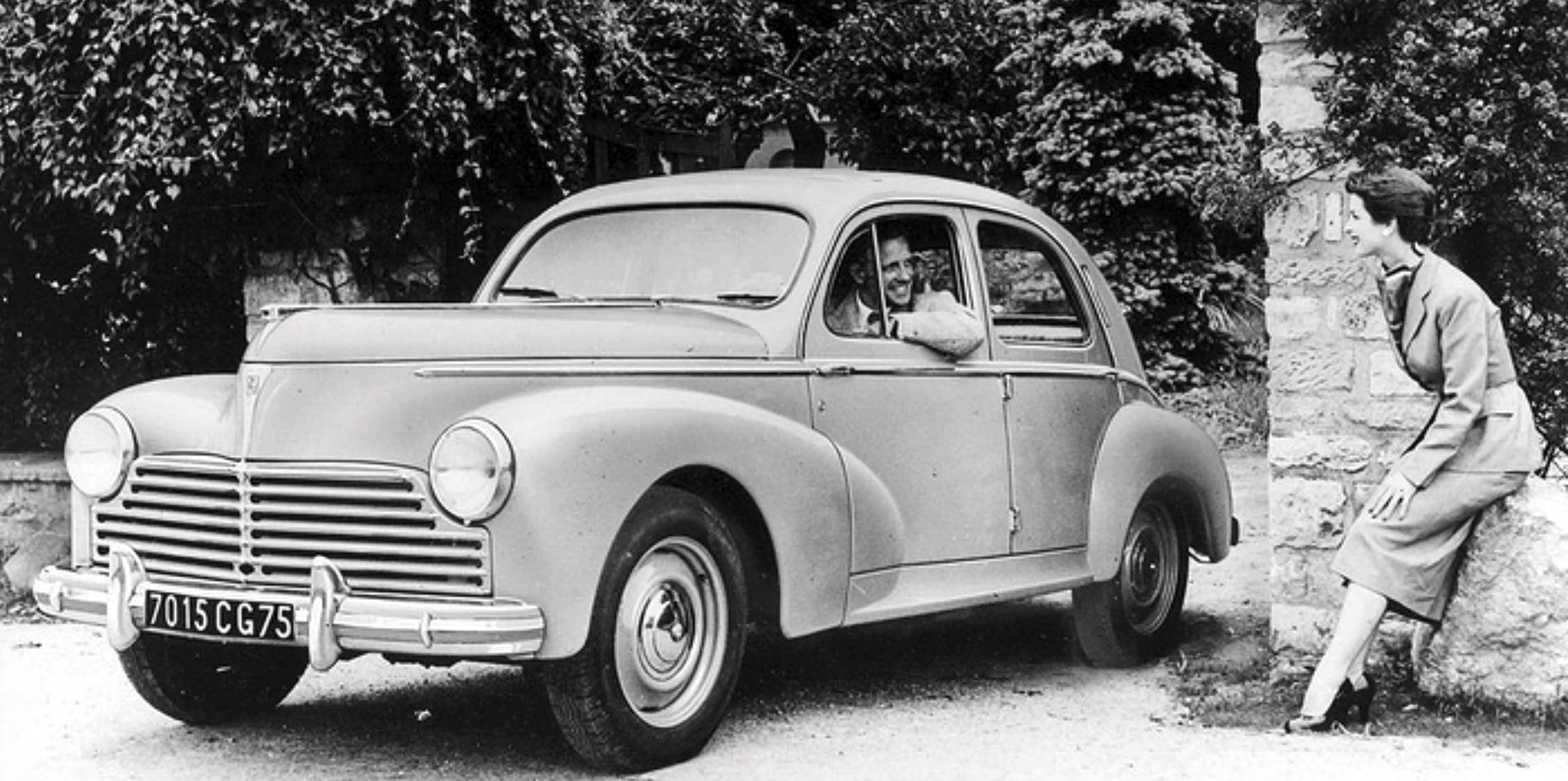
Publication photo of the Peugeot 203, with vent windows since October 1952.
The Peugeot 203 was the first all-new post-war model from the French car manufacturer. Development of the 203 began in secret as early as 1943. From 1949, when production of the pre-war 202 ended, until 1955, when the 403 was launched, it was Peugeot’s only model. The first examples were presented to the press in late 1947, and the car was officially launched at the Paris Motor Show in October 1948, alongside the Citroën 2CV and Renault 4CV. Strikes and material shortages initially hampered mass production, but manufacturing got underway in late 1948, with customers taking delivery of their 203s from early 1949.
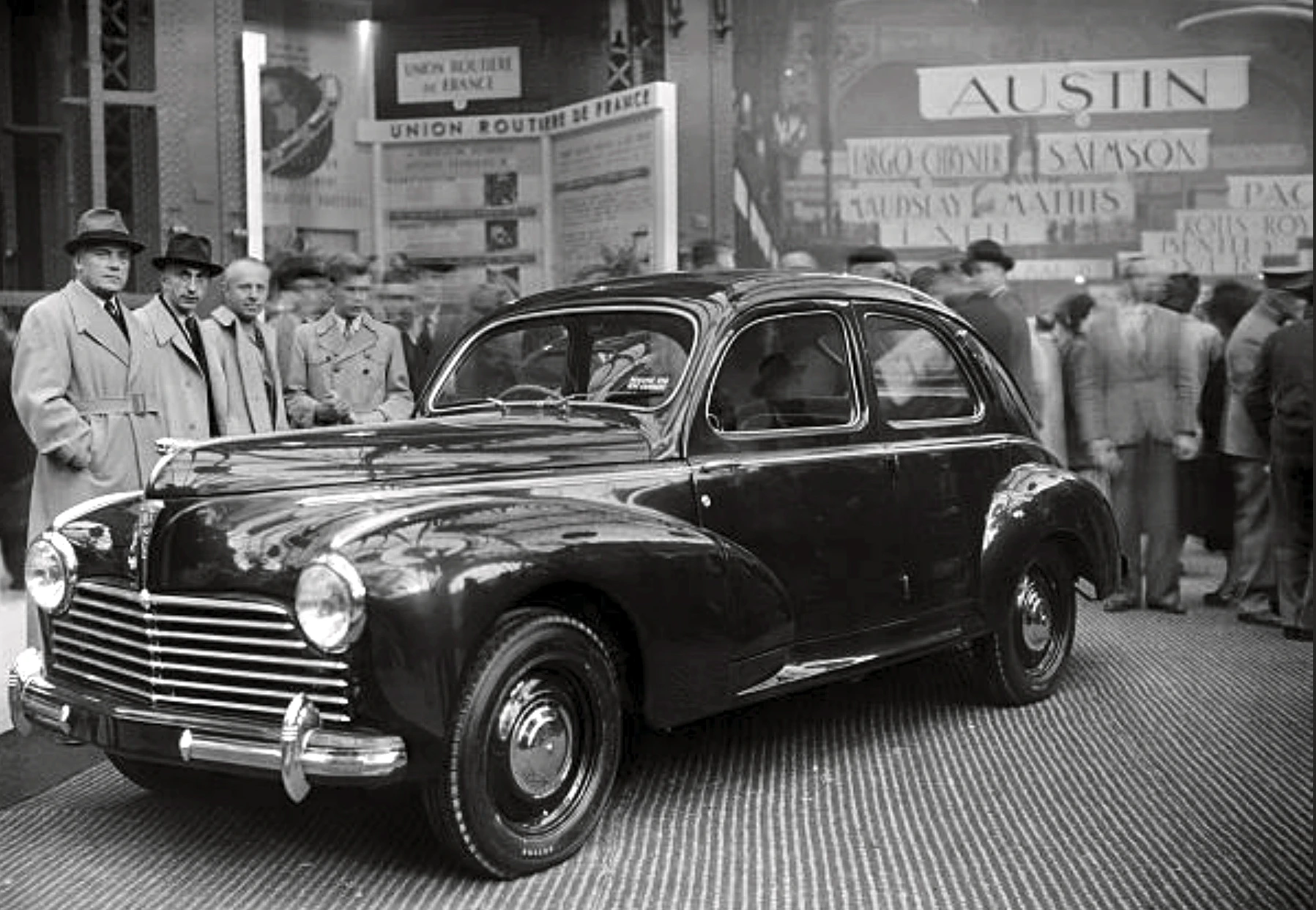
The Peugeot 203 was introduced to the public at the Paris Motor Show in October 1948.
The 203 was a strikingly modern, streamlined car and the first Peugeot to feature monocoque construction. Its newly designed 1,290 cc four-cylinder super-carré engine produced 42 hp. In a later version, output was increased to 45 hp, enabling the car to reach a top speed of 120 kph. Other innovations included kingpin steering, a synchronized four-speed gearbox, and independent suspension.
The 203 also enjoyed considerable success in endurance rallies. In 1953, André Mercier and Charles de Cortanze won the 15,000 km race from Paris to Cape Town in just 17 days. Their achievement also highlighted the car’s fuel efficiency: a full tank could cover 900 km. That same year, the 203 triumphed in Australia’s Redex Trial. All eleven Peugeot 203s that started the event finished it, helping to establish Peugeot’s reputation on the continent.
When production ended after nearly twelve years, a total of 685,825 vehicles had rolled out of Peugeot’s factories.
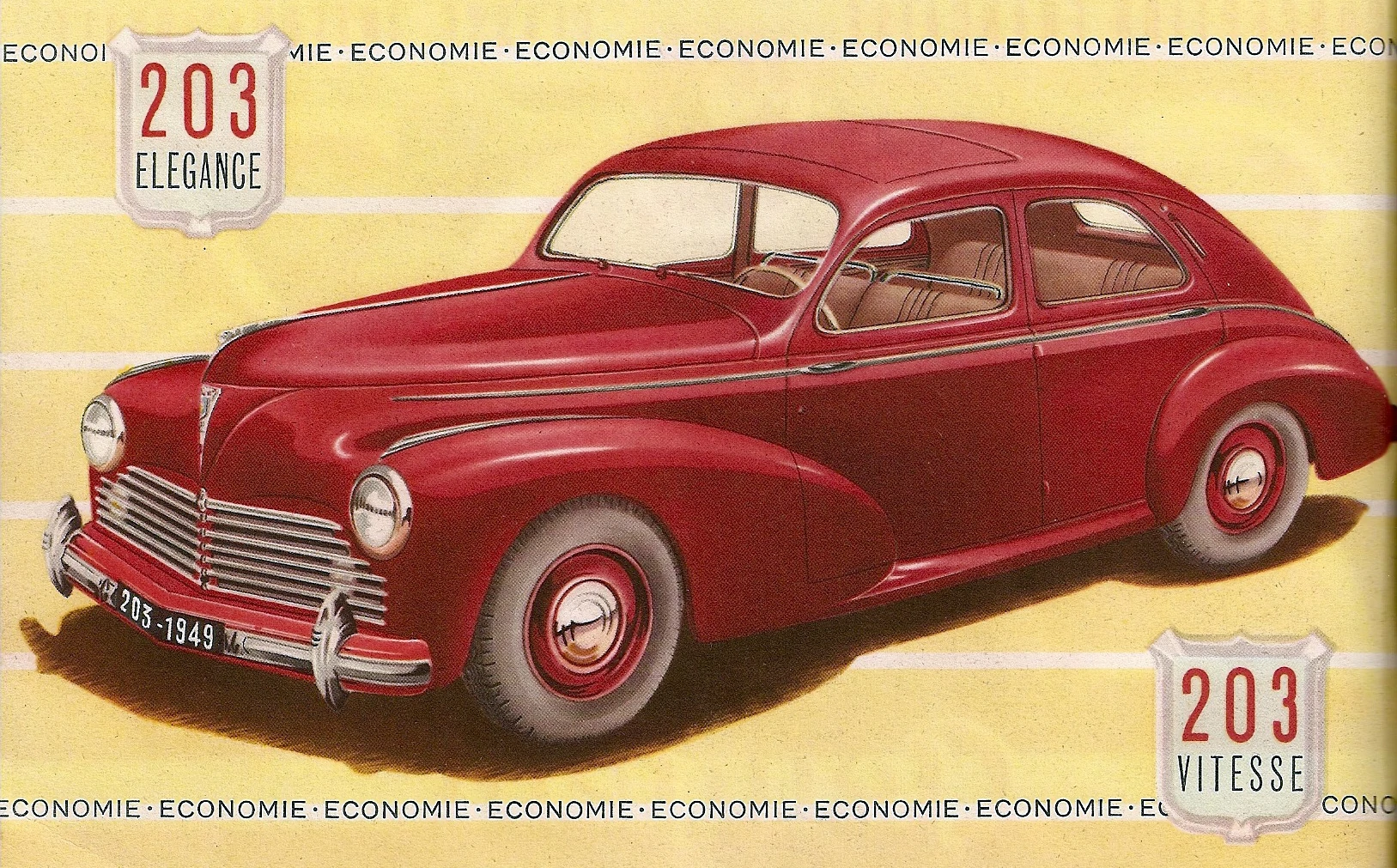
1949 brochure of the Peugeot 203.
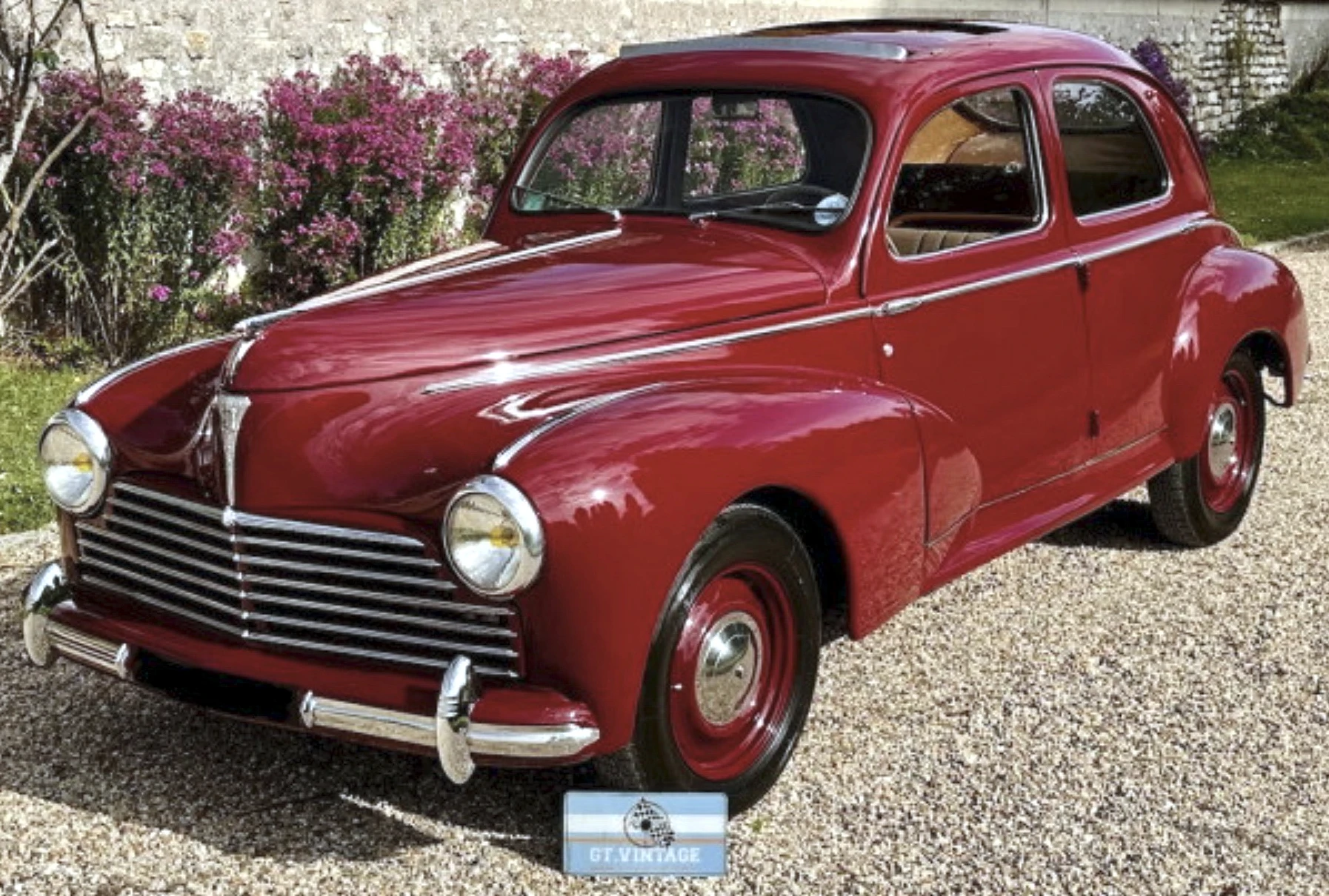
1949 Peugeot 203 Berline
Image: Gt Vintage Classic Cars
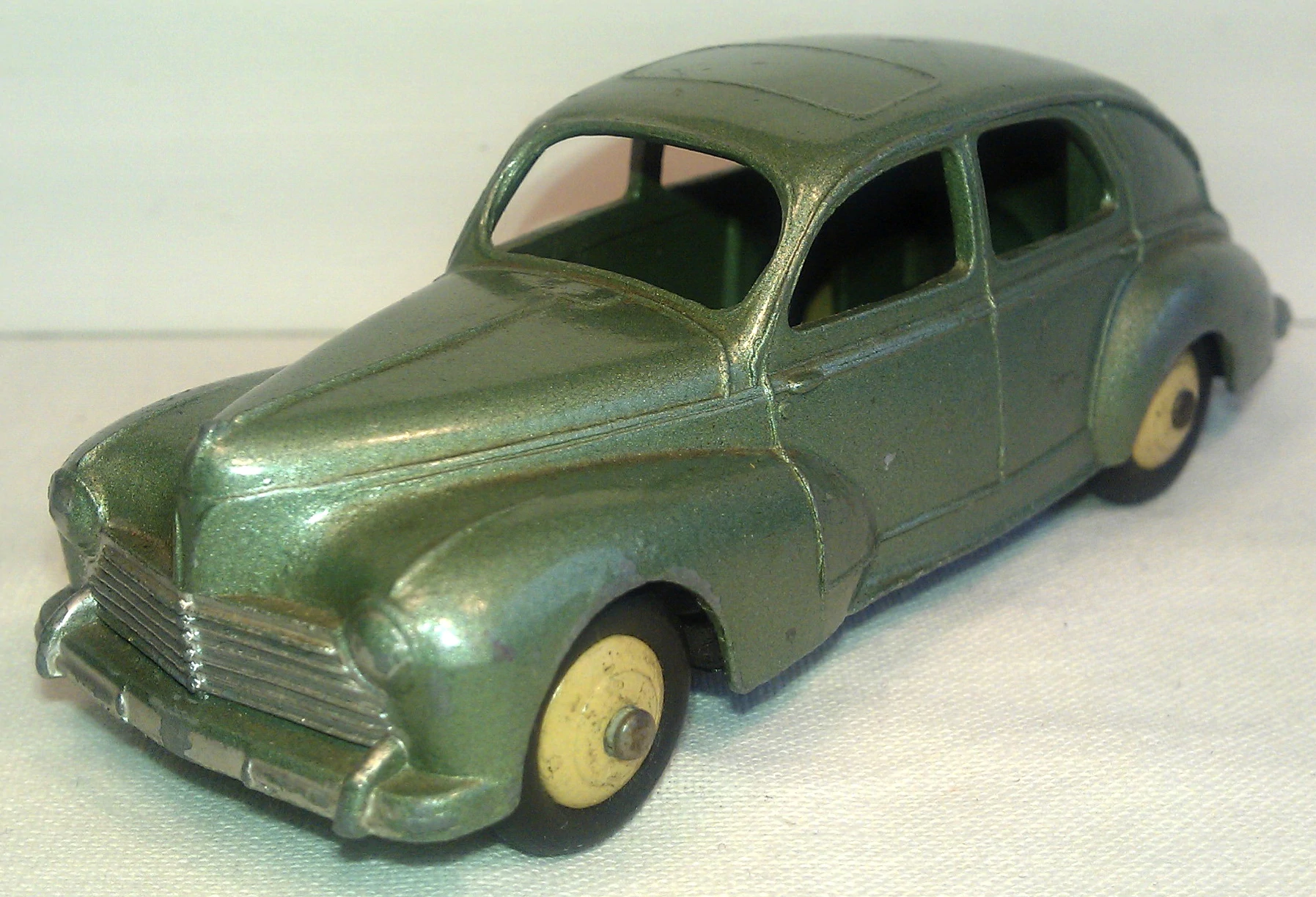
My 1st version Dinky 24R Peugeot 203 Berline in metallic green with creamy-yellow ridged hubs.
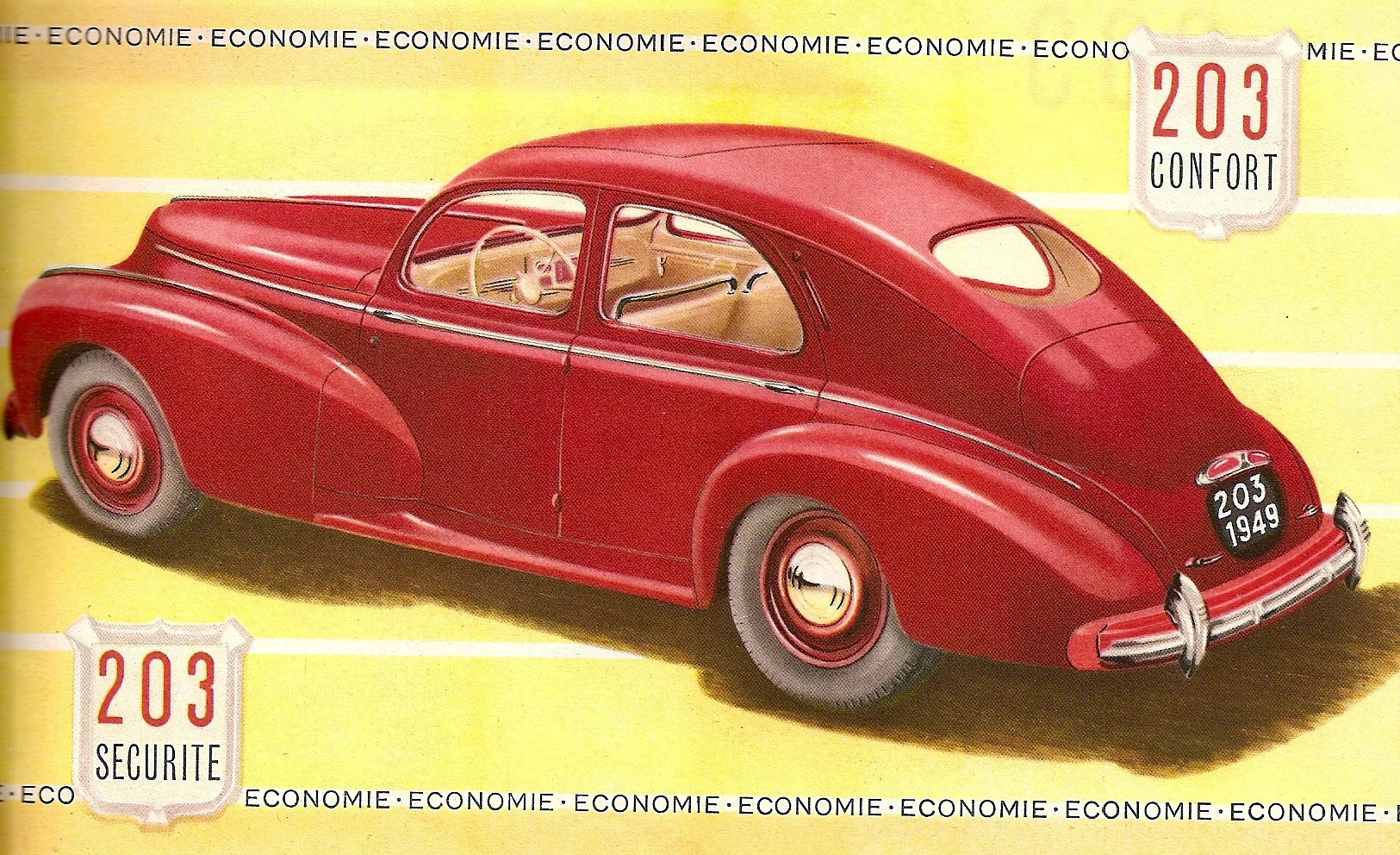
1949 brochure of the Peugeot 203. showing the two trunk handles at the rear.
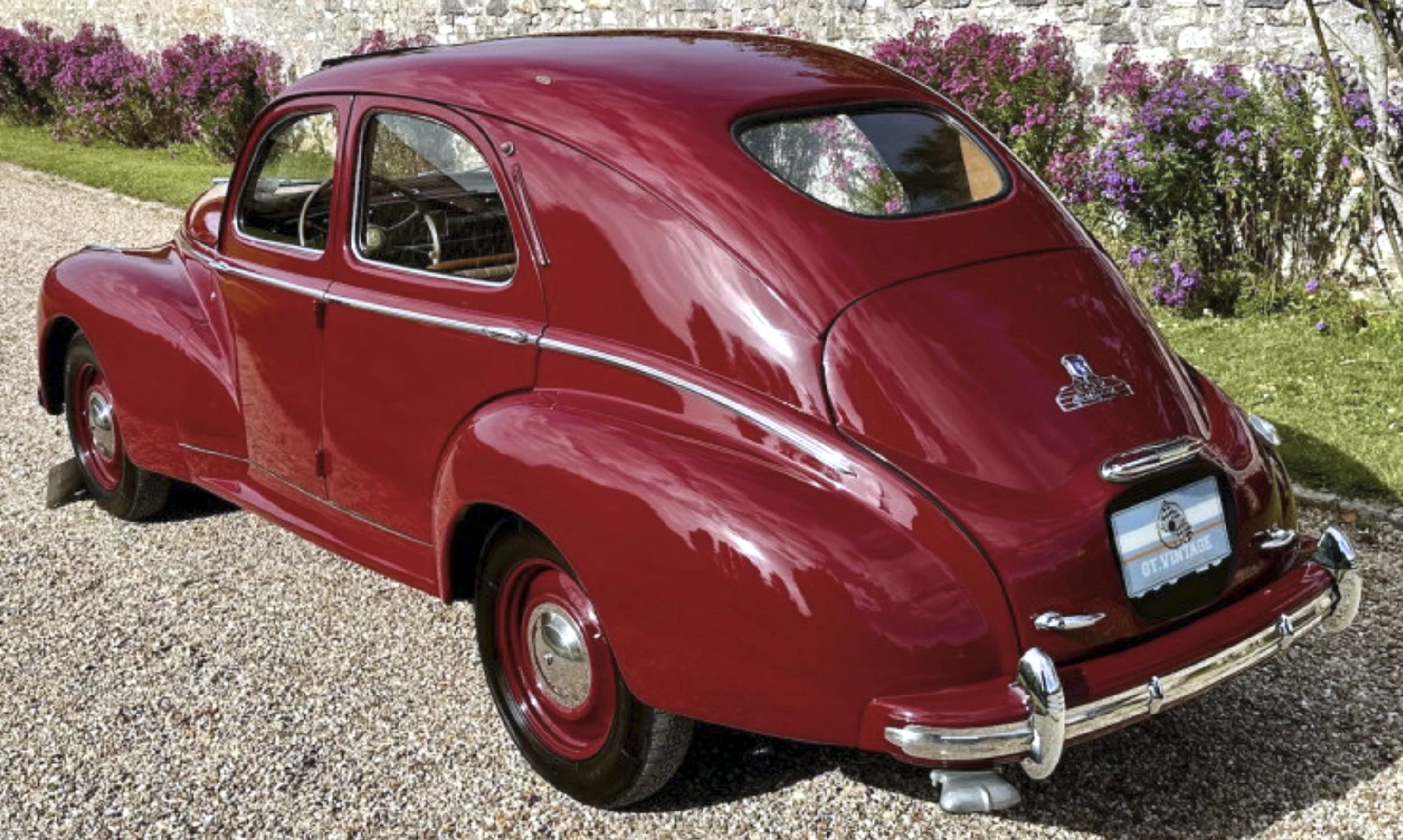
Rear view of the first type 1949 Peugeot 203 “A” showing the two trunk handles.
Image: Gt Vintage Classic Cars
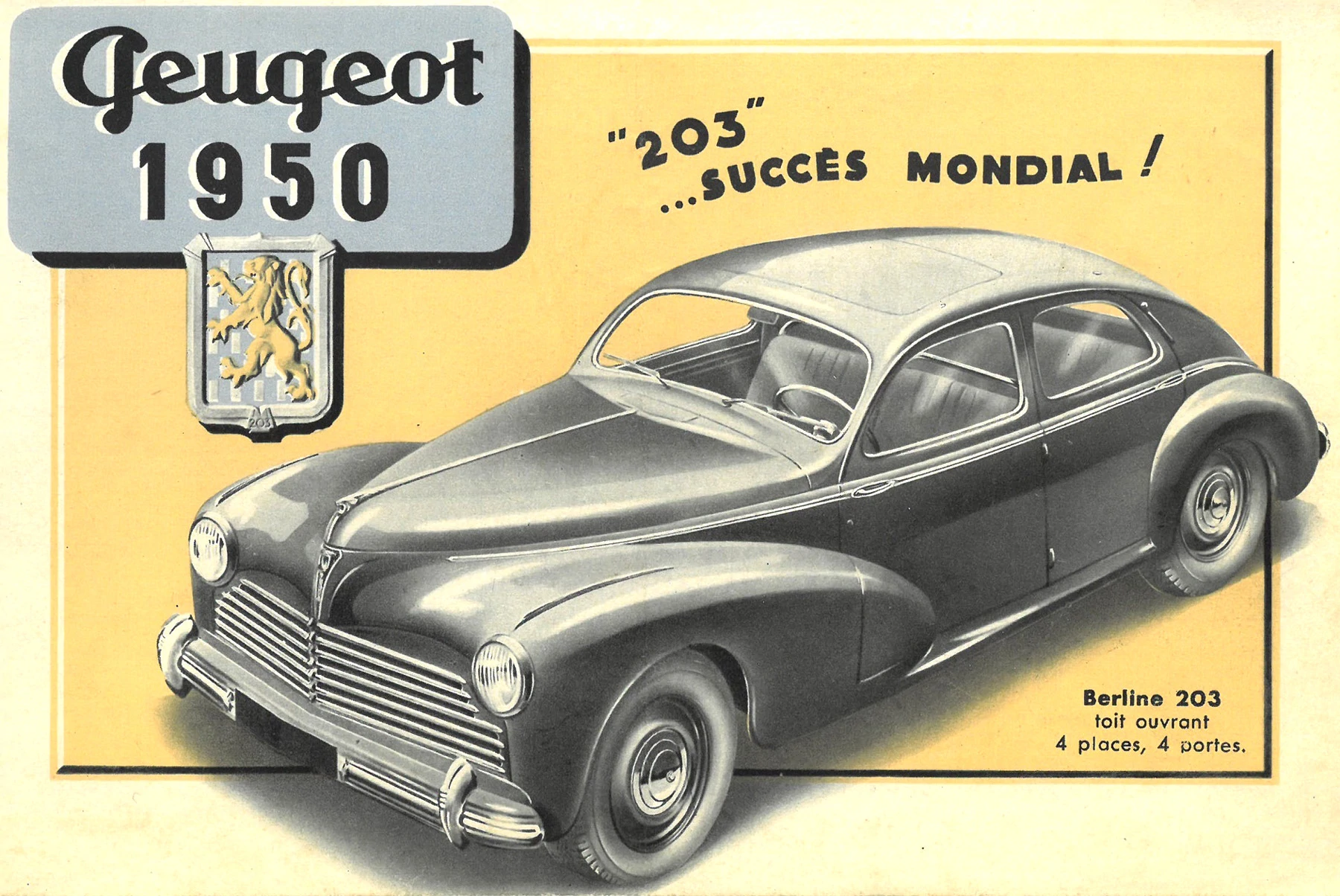
1949 brochure of the Peugeot 203 Berline.
Dinky 24R Peugeot 203 Berline (1951–1959)
The 24R first appeared in the 1951 French Dinky catalog as a nouveauté (new model). It continued to appear in catalogs until 1959, when it was renumbered 533, although this renumbering applied only to the catalogs. The model was sold in trade boxes containing six examples and was never issued in an individual box, despite what Atlas Editions suggest.
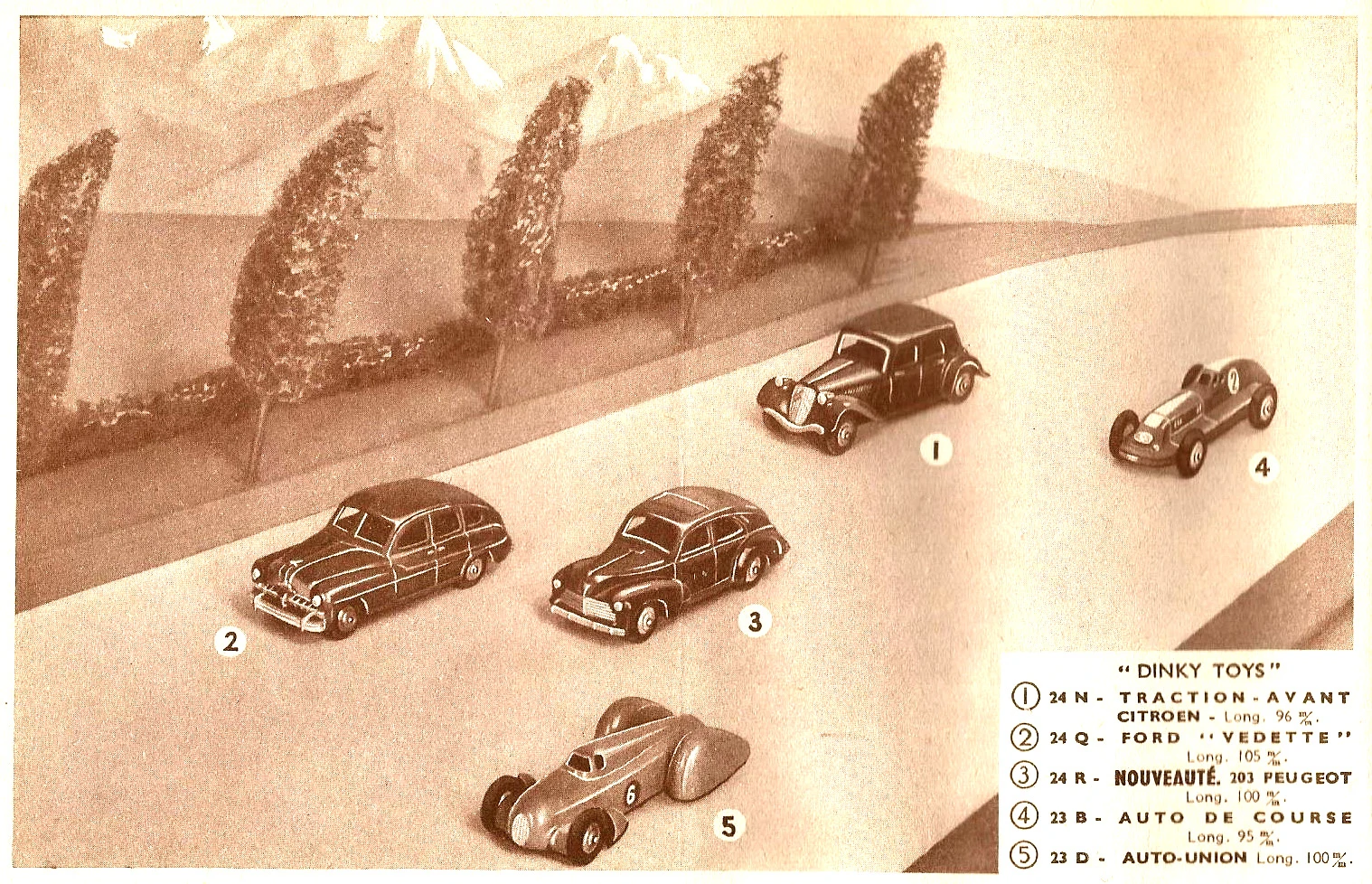
The Dinky 24R Peugeot 203 listed as a “nouveauté” in the 1951 French Dinky catalog .
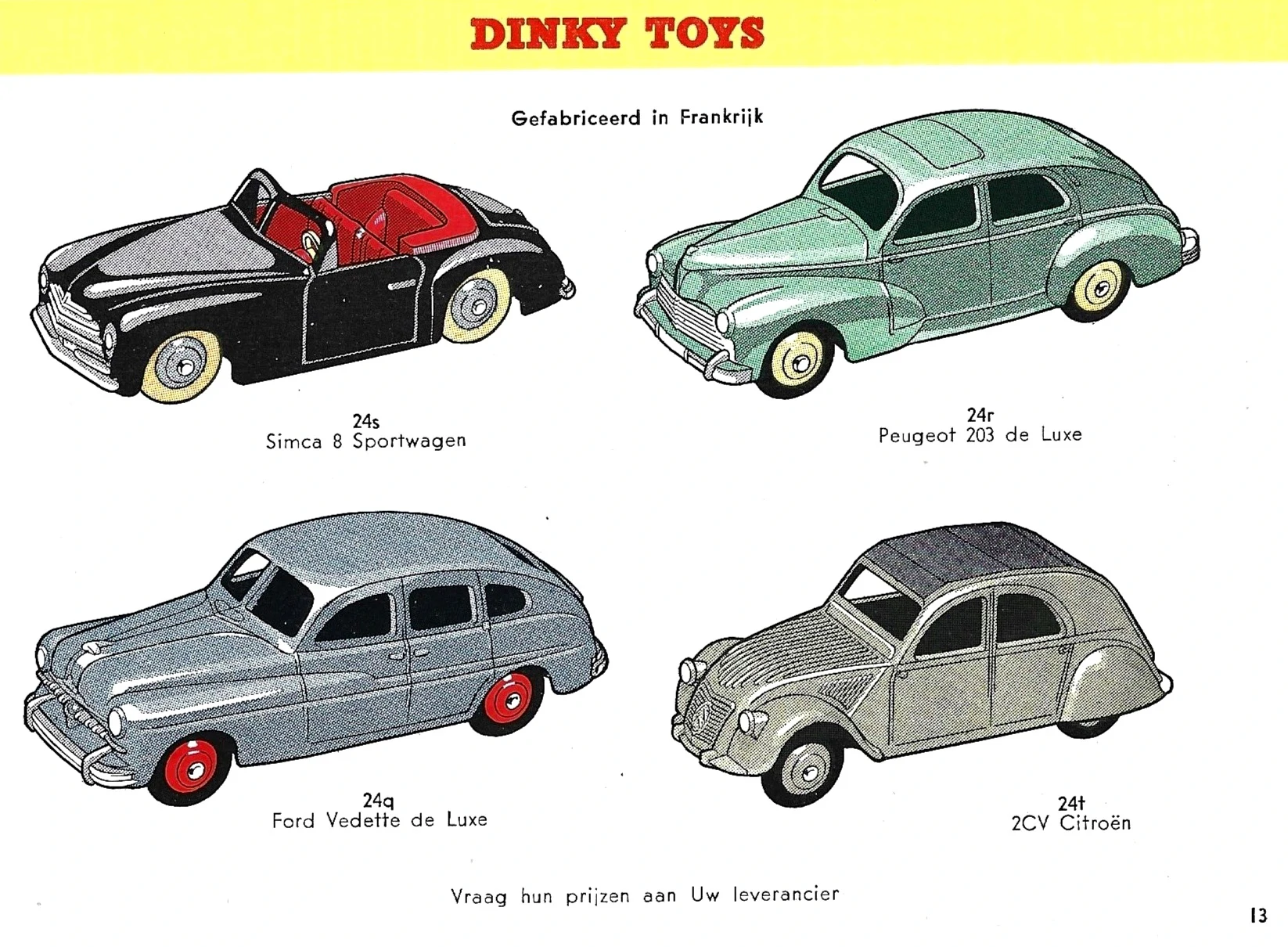
The Dinky 24R Peugeot 203 de Luxe shown in the 1953 Dutch Dinky catalog in metallic green with creamy-yellow ridged hubs.
After the war, exporting models was very important for Meccano France. Just as for Meccano Liverpool, the slogan “Export or die“applied to Meccano France.
Main versions of the Dinky 24R
The Dinky 24R Peugeot 203 is a sought after French Dinky Toys that was released in 3 main versions with several color and shade variants.
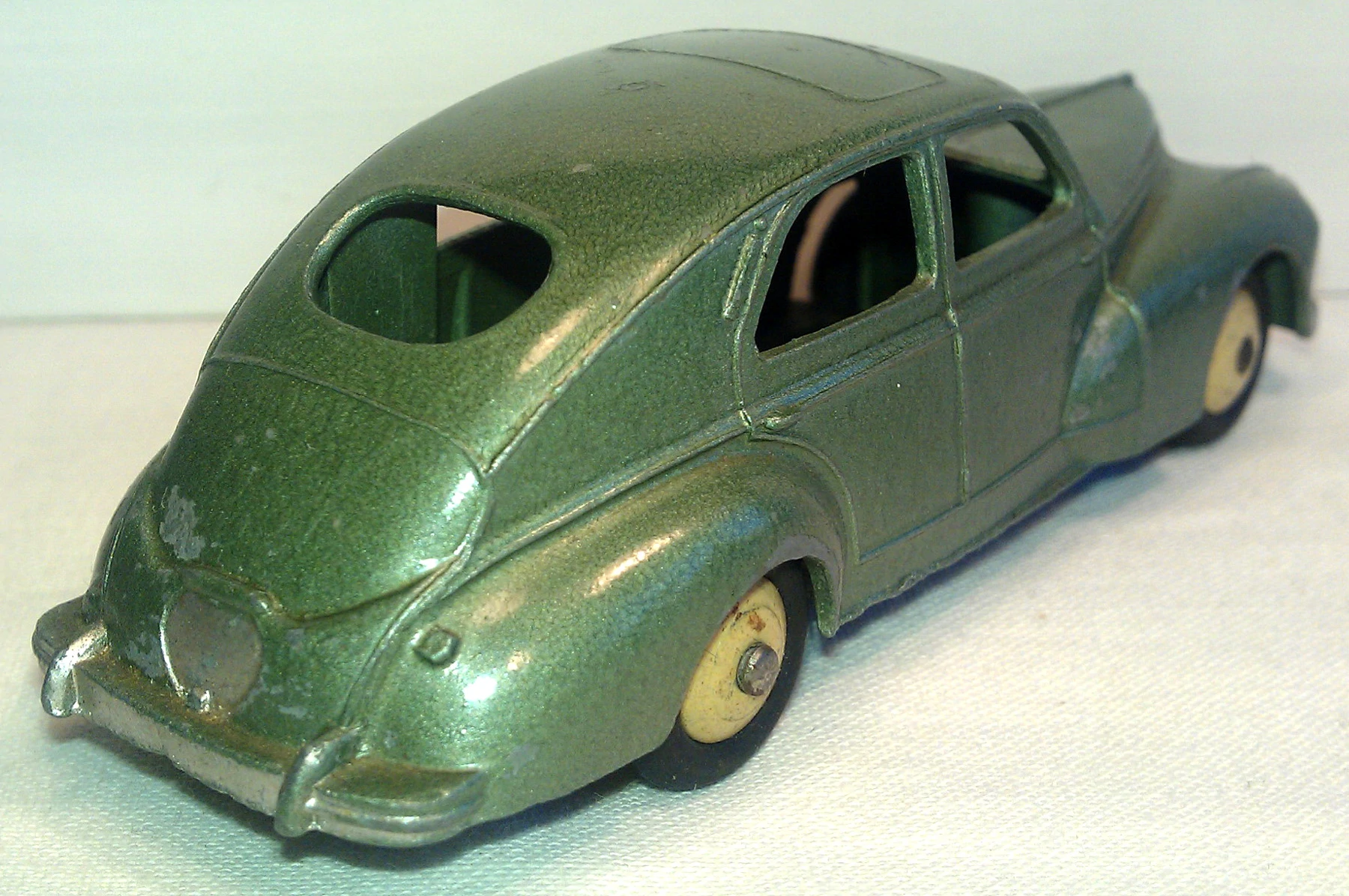
The 1st version of the Dinky 24R Peugeot 203.
The first version of the 24R can be recognized by a small oval rear window, protruding fuel cap on the right rear fender, smooth inside roof, painted ridged hubs, black “M” tires and the bulge of a brake light in the left rear fender above the bumper.
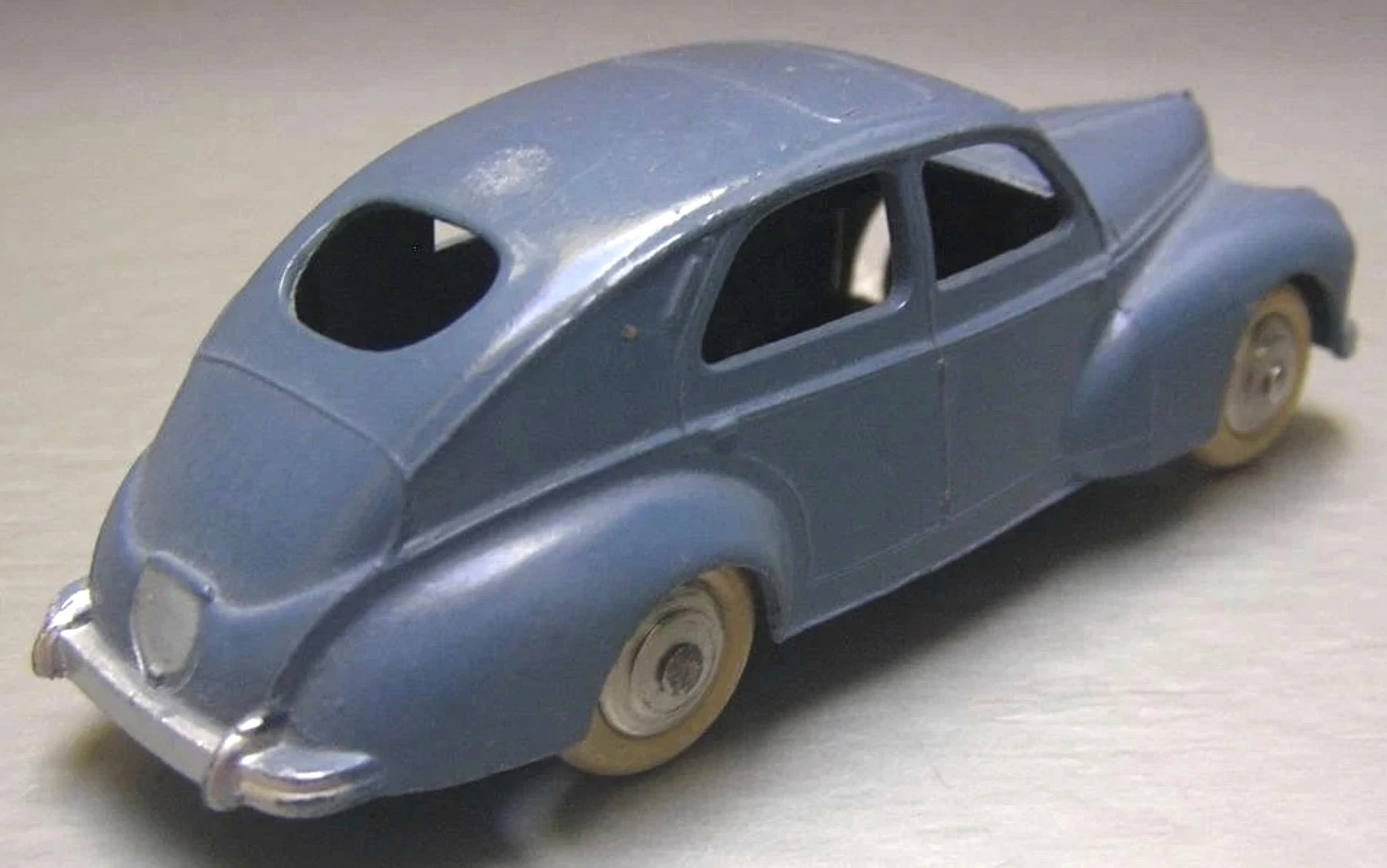
The 2nd version of the Dinky 24R Peugeot 203.
Image: eBay
The second version can be recognized by a small oval rear window and smooth right rear fender that lacks a fuel cap. The inside of the roof was initially smooth (variant 2A), then checkered (variant 2B). The ridged hubs were originally painted (variant 2A) and chromed on the last variant 2B with the checkered roof. It was then fitted with white tires. There is no no brake light on the left side.
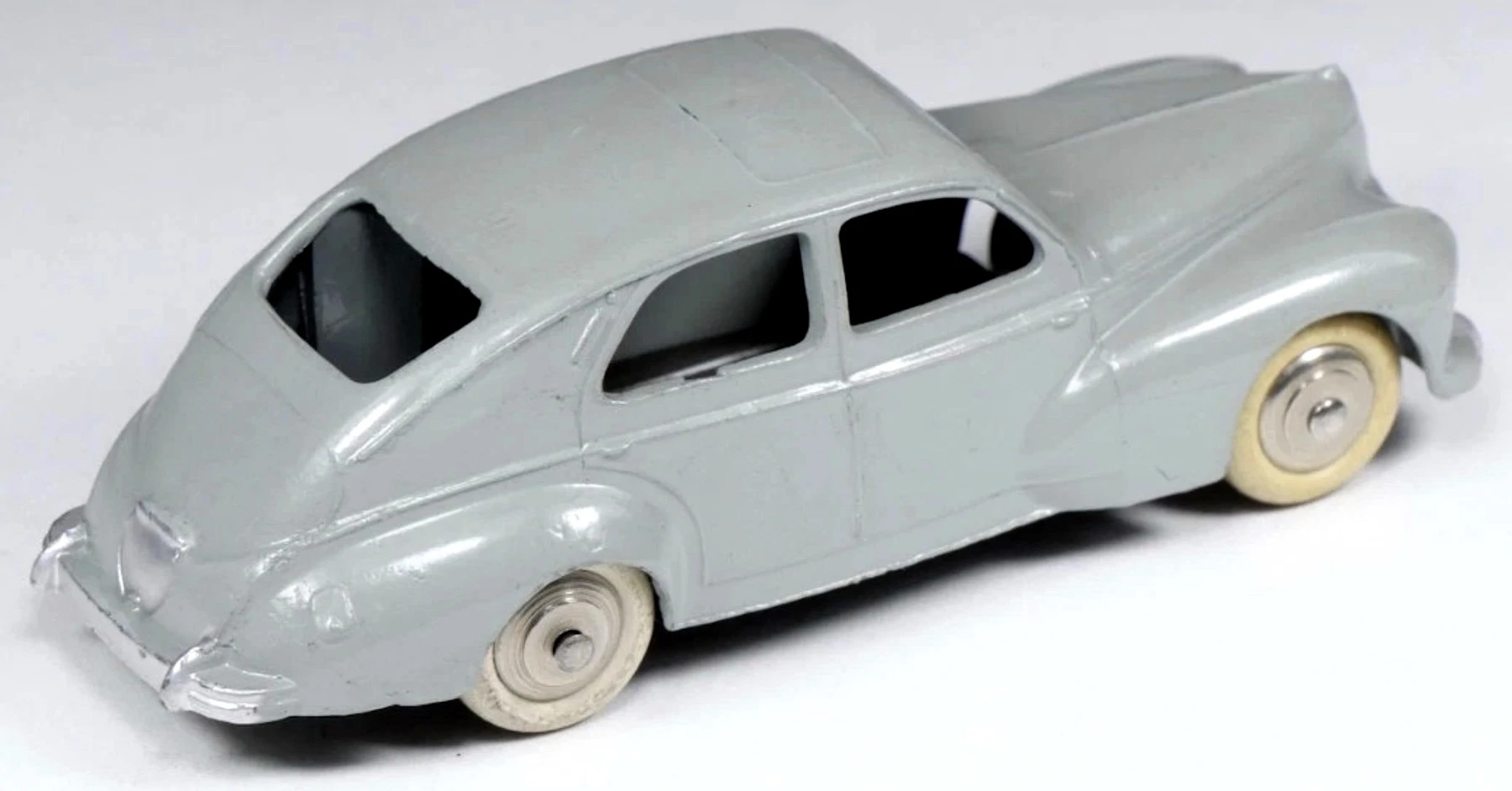
The 3rd version of the Dinky 24R Peugeot 203.
Image: eBay
The third version can be recognized by a large rectangular rear window like the real 1953 Peugeot 203. The outlines of a flat fuel tank flap are located on the right rear fender and the inside of the roof is checkered. This version was fitted with chromed ridged hubs and white tires.
Comparison with the real 1949 Peugeot 203
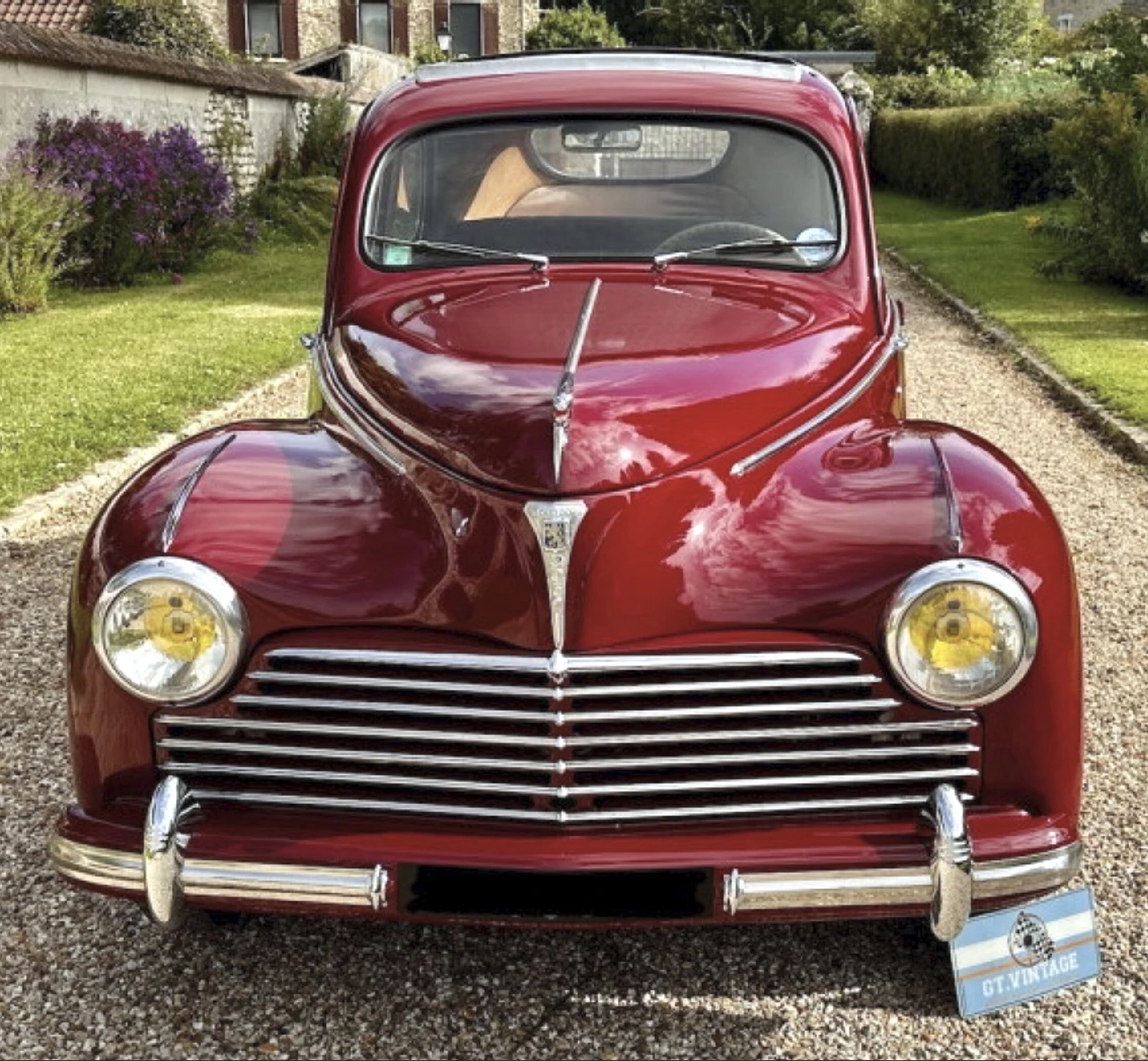
Front view of the 1949 Peugeot 203 Berline.
Image: Gt Vintage Classic Cars
The front grill of the real Peugeot 203 has 7 chrome moldings, while the Dinky Toys 24R has only 6 fitted. Note the hood with the very nice Peugeot Lion’s head and Peugeot badge on the front. It has the typical French yellow colored headlights that were mandatory in France until 1992.
Dinky Toys Encyclopaedia
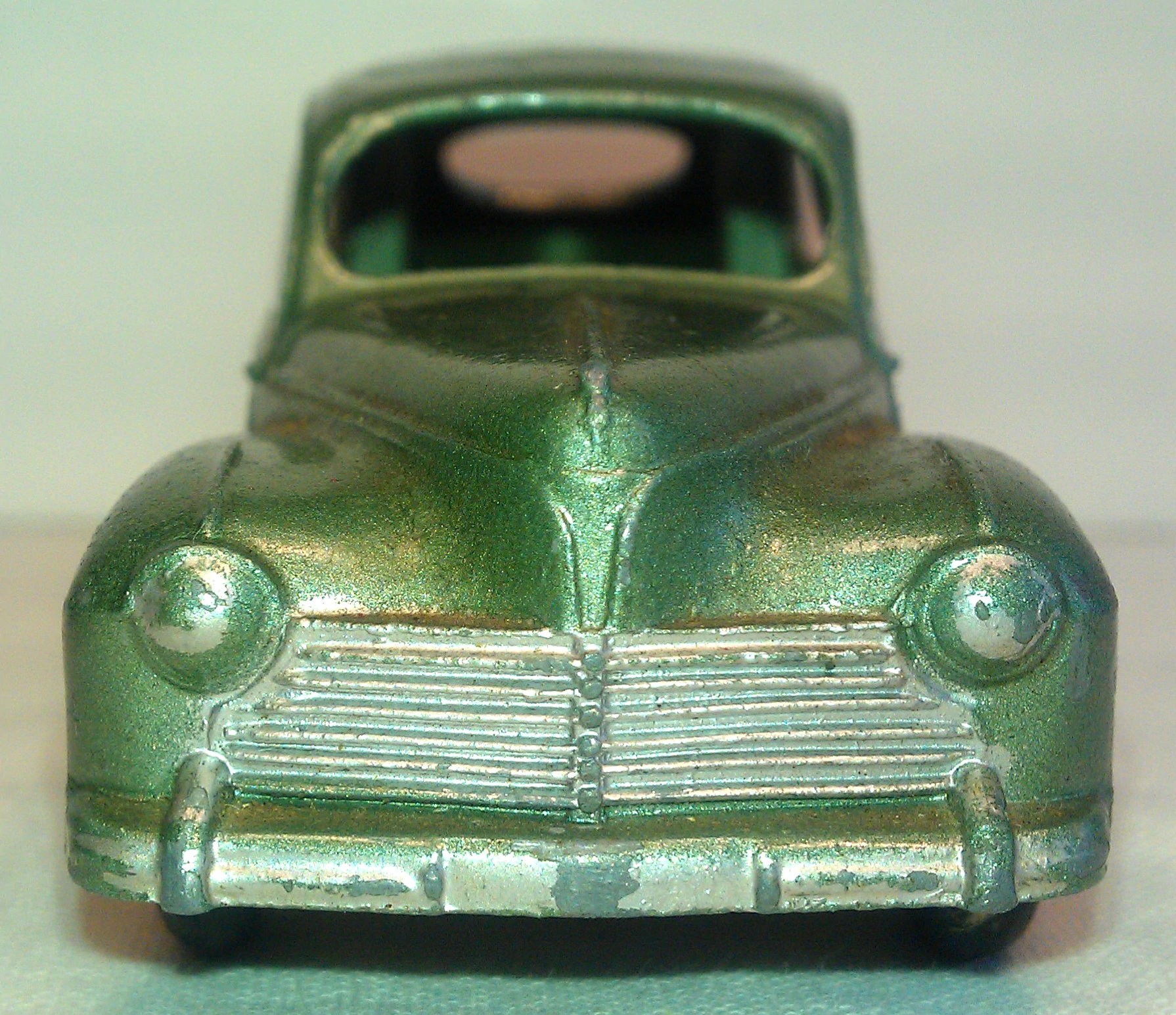
Front view of the Dinky 24R.
The front grill of the Dinky 24R has six chrome moldings instead of the seven in the real car as shown in the preceding picture. Although Meccano Liverpool usually reproduces details accurately, I think that for technical production reasons only six decorative moldings were reproduced. The raised lines of the ornament and moldings on the hood and the front fenders are clearly visible.
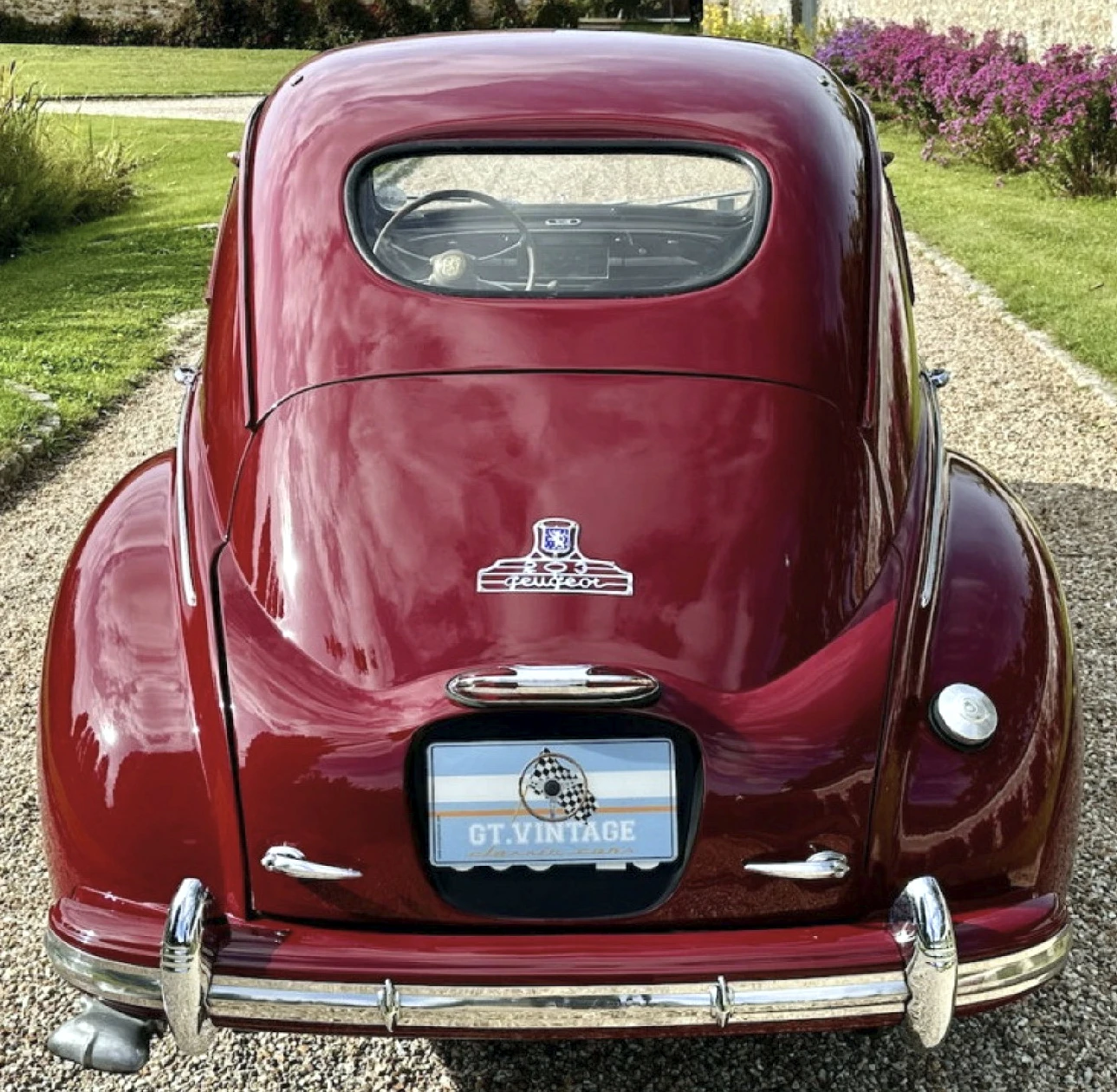
Rear view of the 1949 Peugeot 203 Berline.
Image: Gt Vintage Classic Cars
The 1949 Peugeot 203 Berline had two tail lights above the oval license plate and a protruding fuel cap which was later recessed in 1953. The two handles used to open the trunk were deleted in 1950.
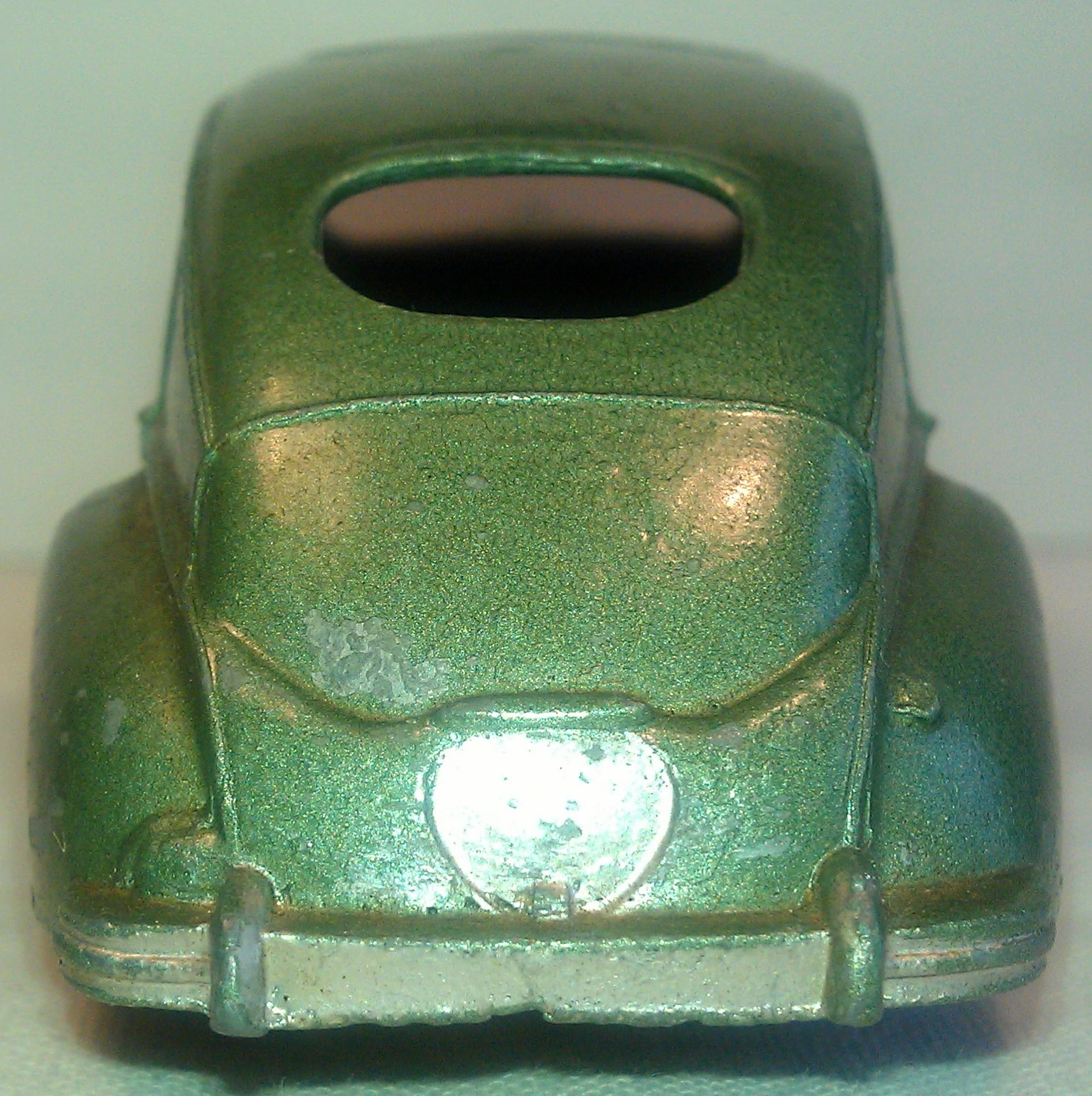
Rear view of the first version Dinky 24R.
The Dinky 24R has a trunk with an oval license plate with taillights above it, a protruding fuel cap on the right rear fender and a small oval rear window like the real car shown in the preceding picture.
There’s a “mysterious” bulge on the left rear fender above the bumper, which according to Roulet is a brake light. However, Thierry Redempt and Claude Wagner don’t mention it. The model lacks the two handles used to open the trunk which indicates it doesn’t represent the very first type of the real Peugeot 203 Berline.
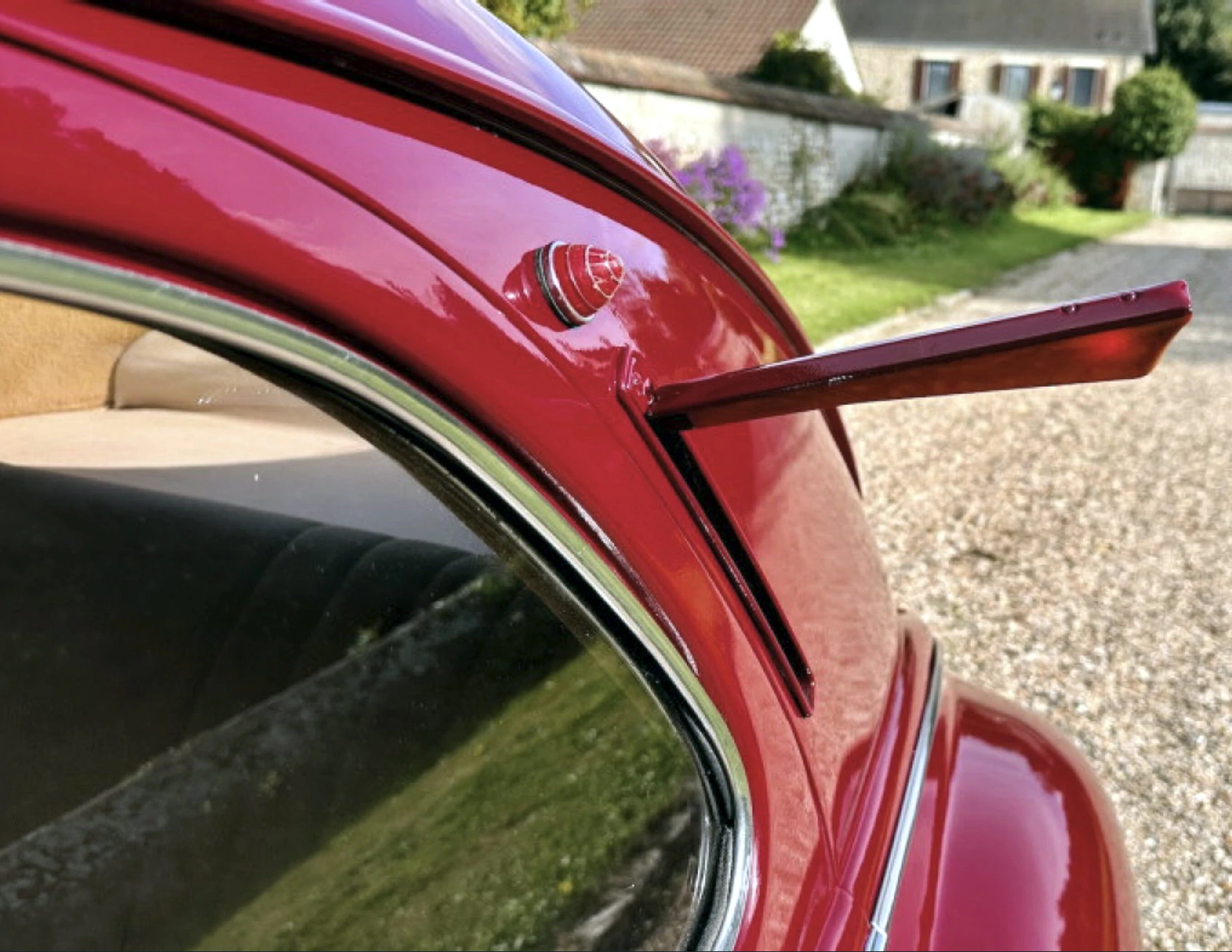
The left side of the 1949 Peugeot 203 Berline showing the illuminated fold-out turn signal and a small parking light above it.
Image: Gt Vintage Classic Cars
The real Peugeot 203 Berline has fold-out turn signals on each side, with a a small parking light above them, which can also be seen on the Dinky 24R shown below. The fold-out turn signals were removed in September 1956 and replaced by modern turn signals on the front, sides and rear of the car.
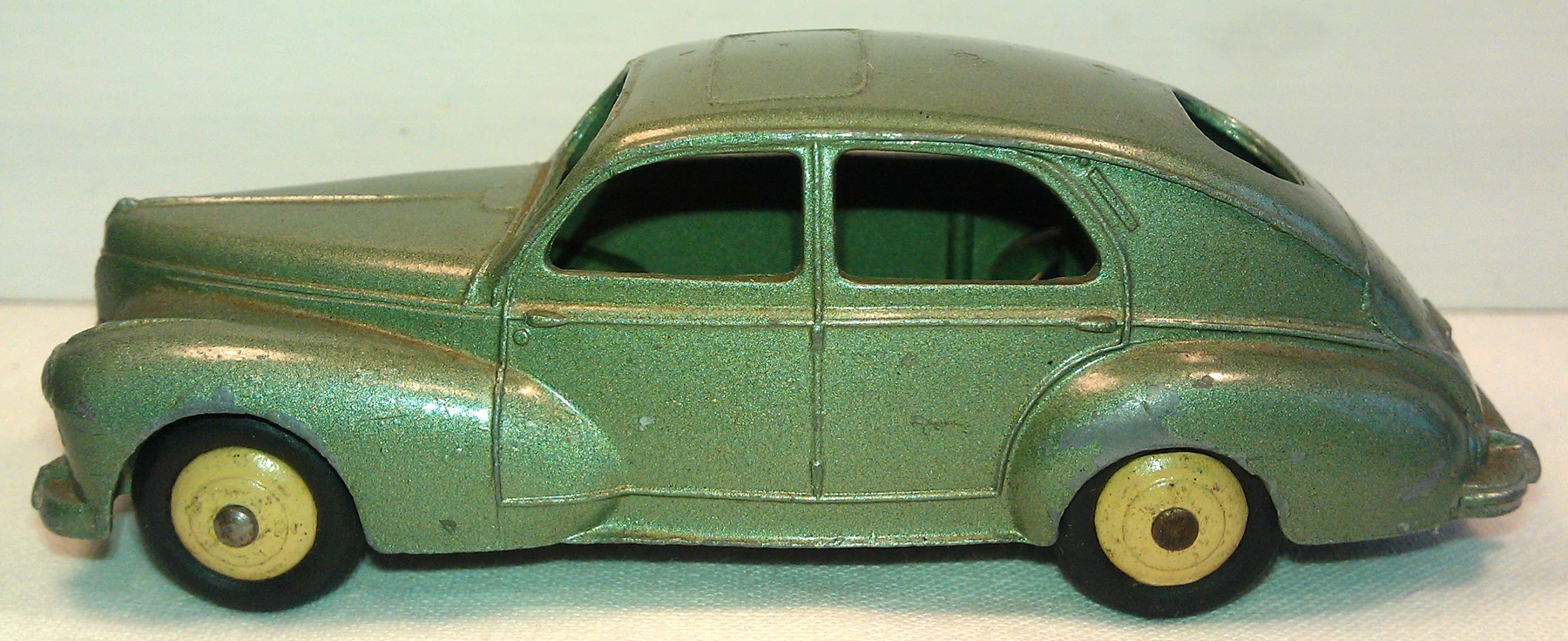
Left side of the Dinky 24R.
The Dinky 24R has raised contour lines for the doors, moldings, ventilation flap and sunroof. A raised fold-out direction indicator with a little parking light above it behind the left back door is visible in the picture above. Even the raised door hinges, door handles and the door key lock are accurately reproduced from the real automobile. This attention to detail make the Dinky 24R a very attractive model and show that Meccano France reproduced these details very accurately.
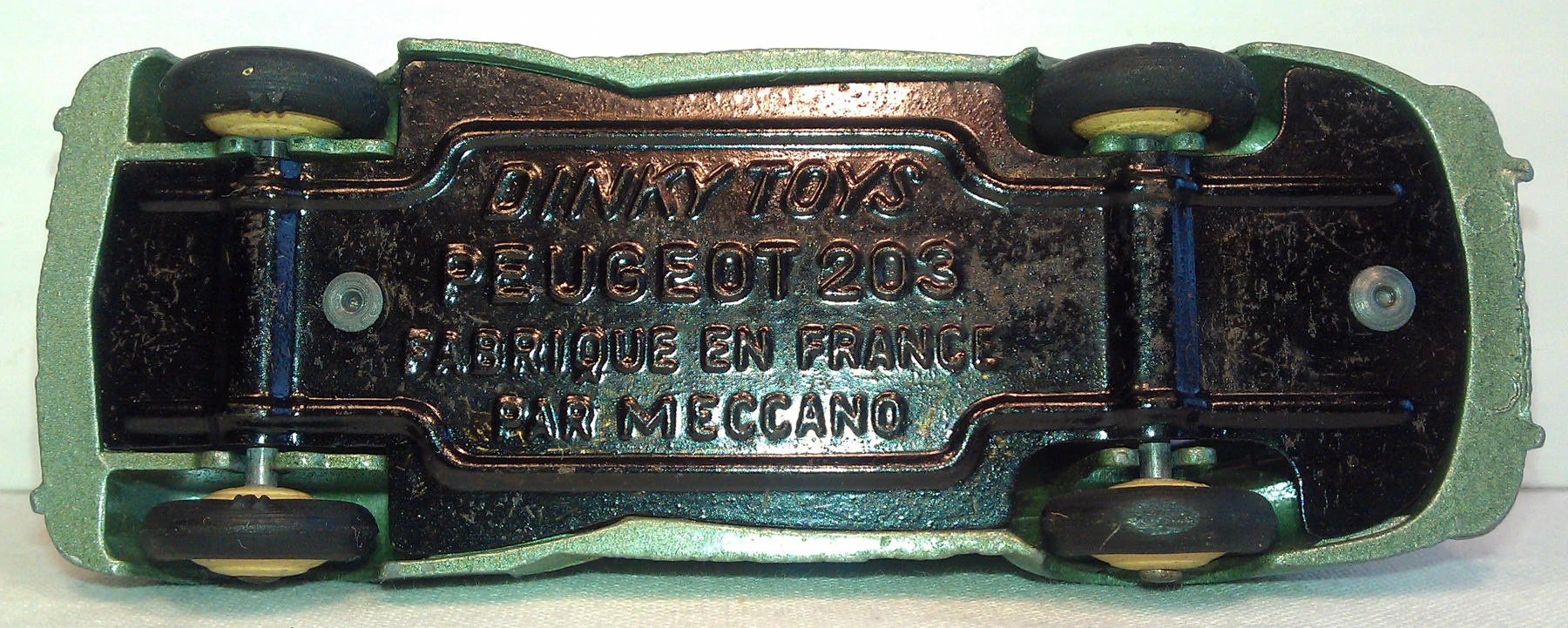
The baseplate of the Dinky 24R wasn’t adorned with a model number.
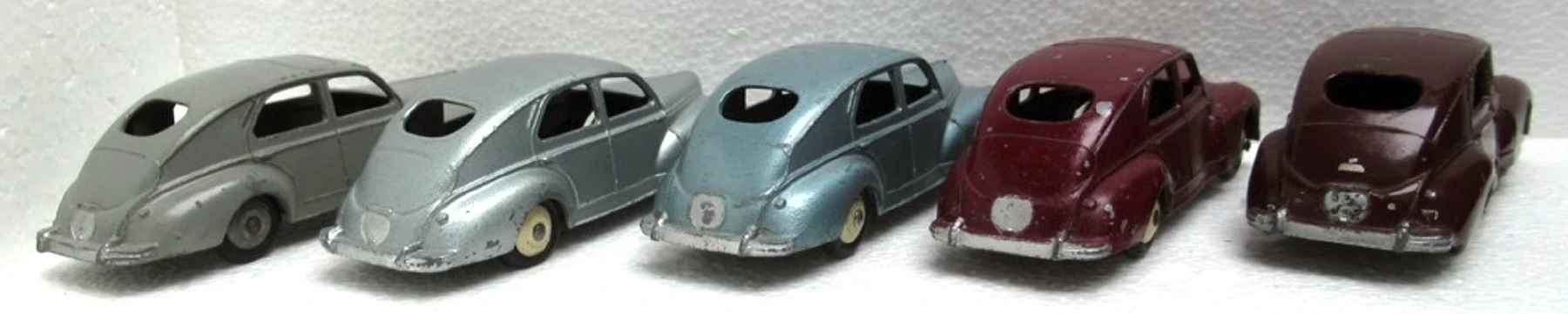
Several color variants of the first type of the Dinky 24R.
Image: Richard Hennequin (DTCA)
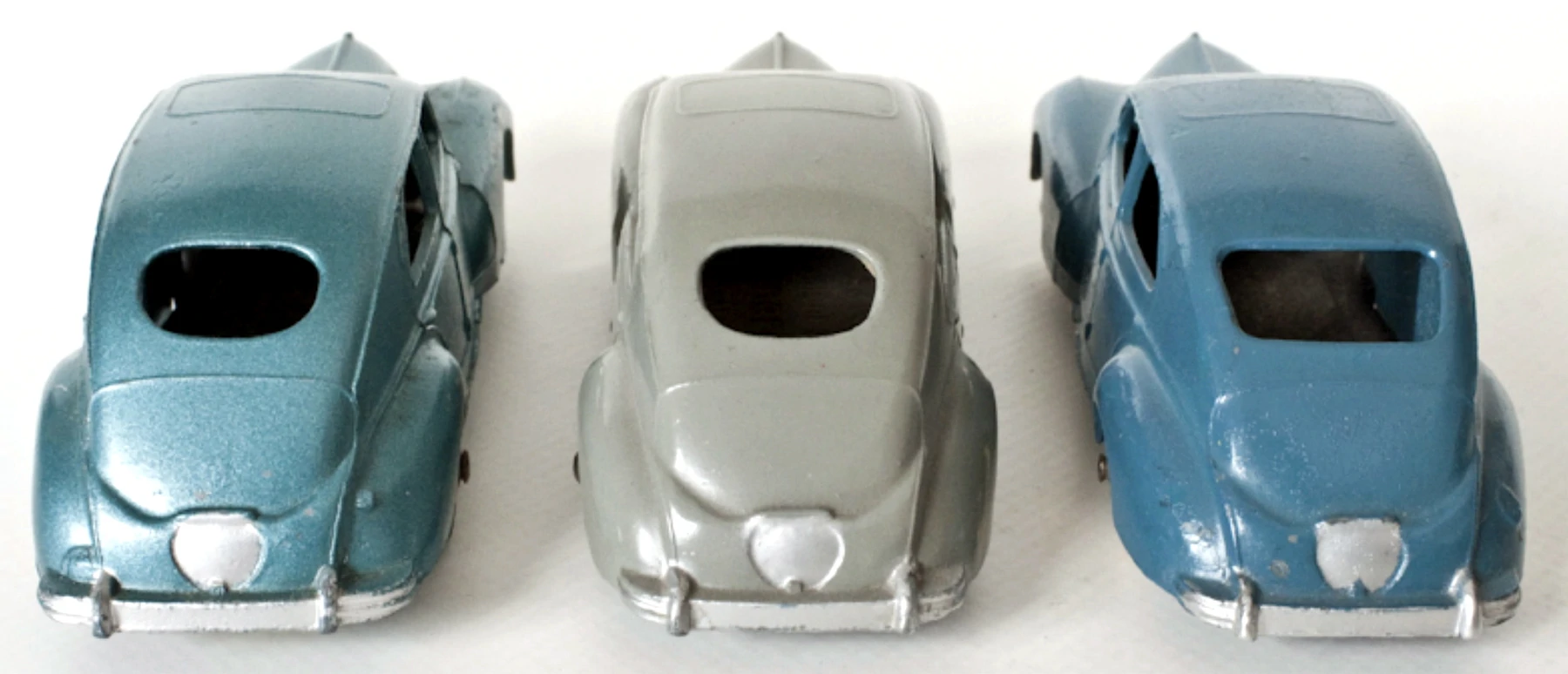
The three main versions of the Dinky 24R Peugeot 203, in order from left to right.
Image: filrouge-automobile.fr
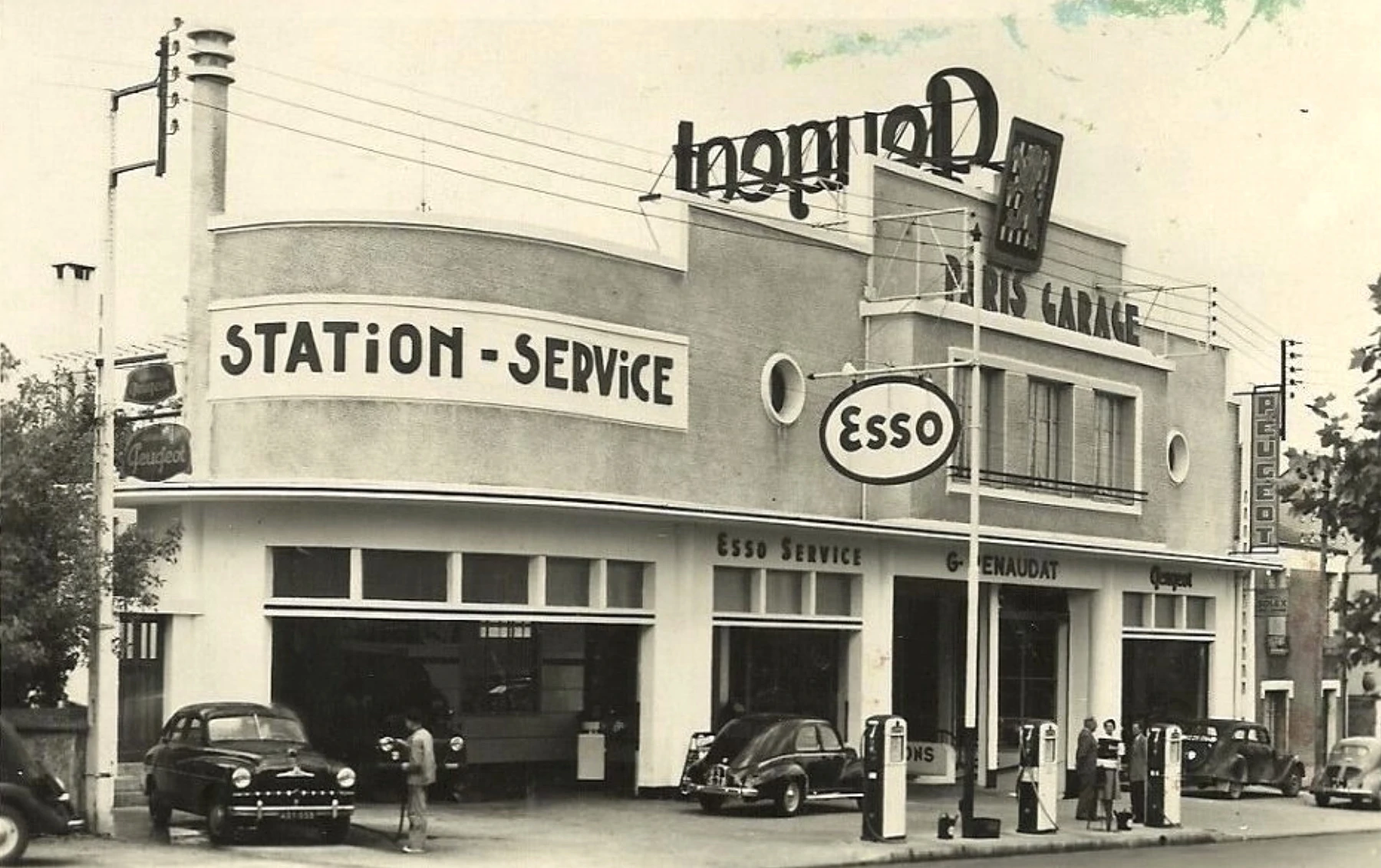
A Peugeot garage on the way from Paris to Vierzon.
Image: Facebook
The picture of the French Peugeot garage shown above includes a Ford Vedette, Peugeot 203, Peugeot 202 and a Renault 4CV. It’s also an Esso service station with Esso petrol pumps and a high pole with an Esso signboard like that of the French Dinky 49D.