The Dinky Toys 36 series of motorcars was introduced in 1937 and was the direct successor of the 24 series introduced in 1934. Although very similar in appearance, the 36 series featured individually styled radiator shells that closely resembled the real cars, whereas the 24 series used a single surround for each model.
Further, the 24 series models had only generic names such as Limousine, Town Sedan, Super Streamlined Saloon, Sportsman’s Coupe, and Sports Tourer, while the new 36 series were assigned the following names:
- 36a Armstrong-Siddeley Limousine
- 36b Bentley Two Seater Sports Coupe
- 36c Humber Vogue Saloon
- 36d Rover Streamlined Saloon
- 36e Salmson Two Seater Sports
- 36f Salmson Four Seater Sports
- 36g Taxi with Driver (a new offering)
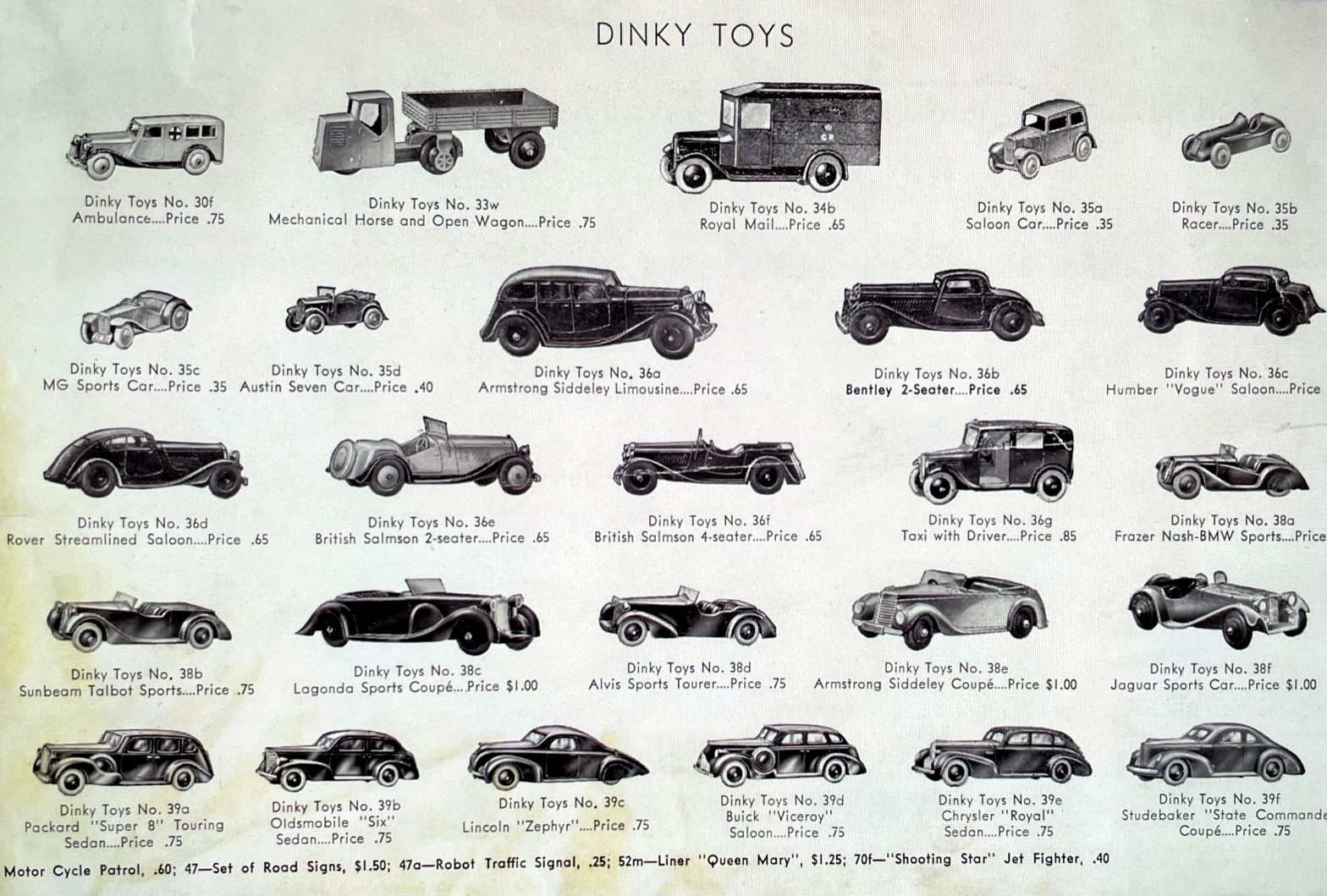
Dinky Toys 1947 USA catalog
The evolution from the earlier 24 series to the 36 series marked a small but important trend for Meccano Ltd. and Dinky Toys: the beginning of striving to make more accurate and recognizable models. The pre-war 36 series models differed from the post-war releases in one important way: the earlier versions featured drivers and passengers or footmen inserted via a clip attached to the baseplate. Sadly these were dropped when post-war production resumed.
Pre-war production of all Dinky Toys was halted in 1941 due to the onset of WWII. When the war ended in 1945, Meccano was anxious to resume production. Many existing dies were therefore immediately pressed into service and the 36 series models were re-released in early 1946, now without those earlier drivers.
Another change involved colors. The pre-war issues had the chassis and fenders painted in a variety of bright colors, while the post-war models only had black chassis and fenders.
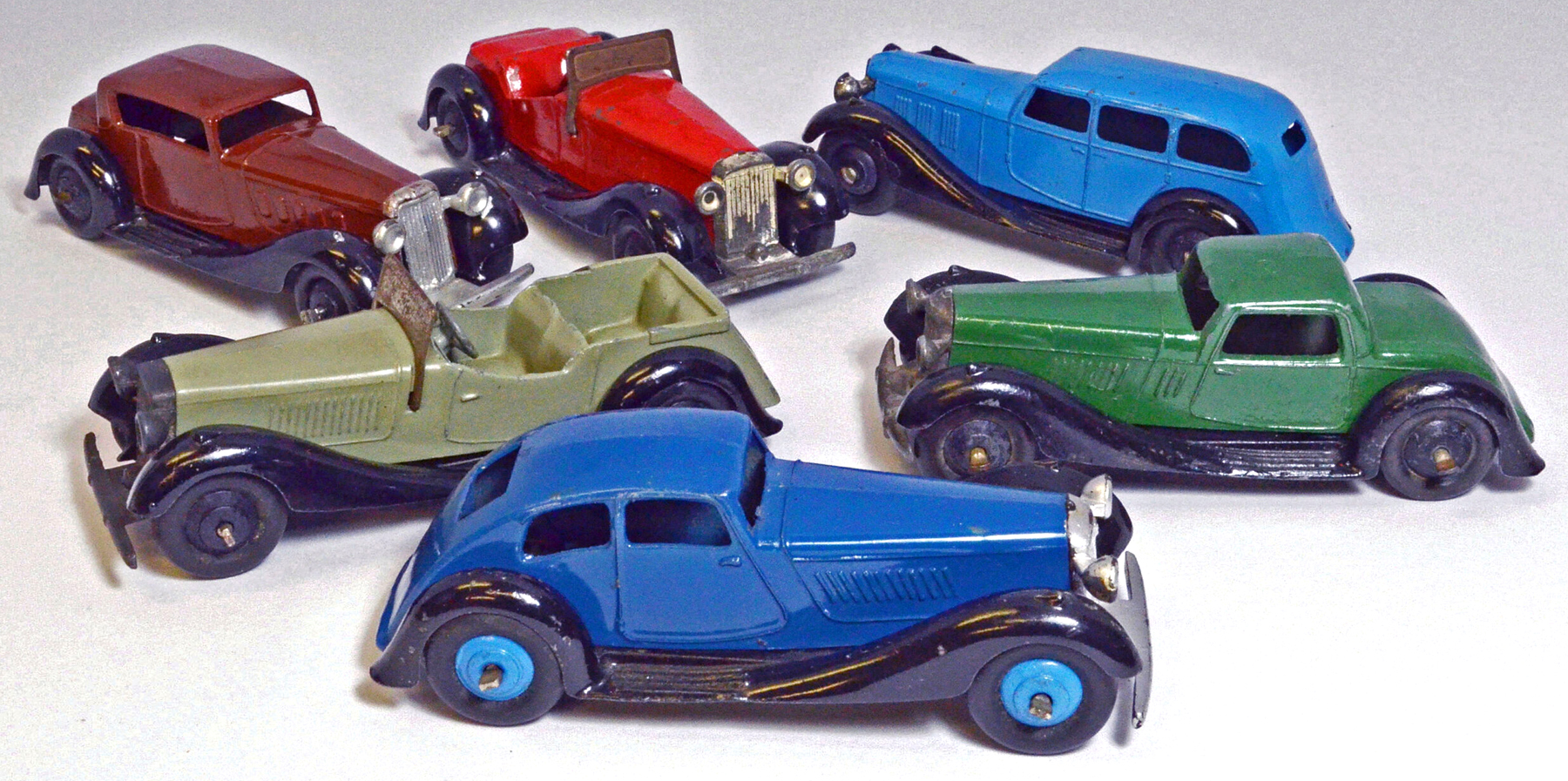
In addition, the pre-war cars had thinner axles, smooth wheels, white tires and plain baseplates. Later, during 1946–1950, they had molded baseplates showing a drivetrain, ridged wheels, and sported black tires.
All of these models shared the same chassis and fenders, with only different bodies to differentiate them. The very different bodies and radiator shells certainly give each car a distinctive look, with some being sedans, coupes and open cars. They are attractive models that were produced in a wide variety of colors. The ones shown in the pictures below are all post-war versions.
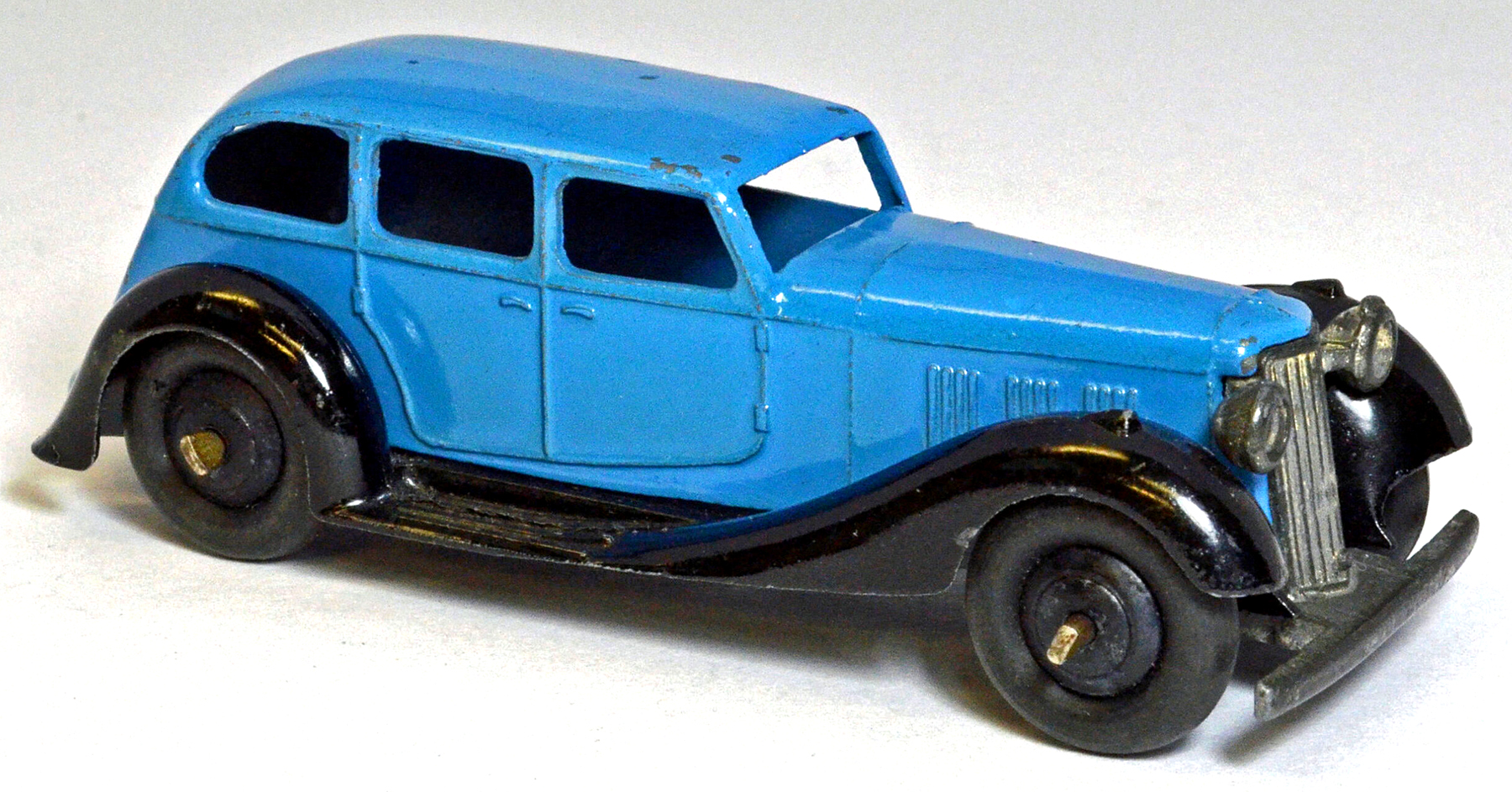
36A Armstrong Siddeley Limousine
Only one sedan was featured in this series, and I always liked it: the Armstrong Siddeley Limousine. Oddly enough, it was one of the last of the 36 series that I acquired. Mine is a decent example with a few nicks, but it’s still a lovely model representing a bygone era!
36B Bentley Two Seater Sports Coupe
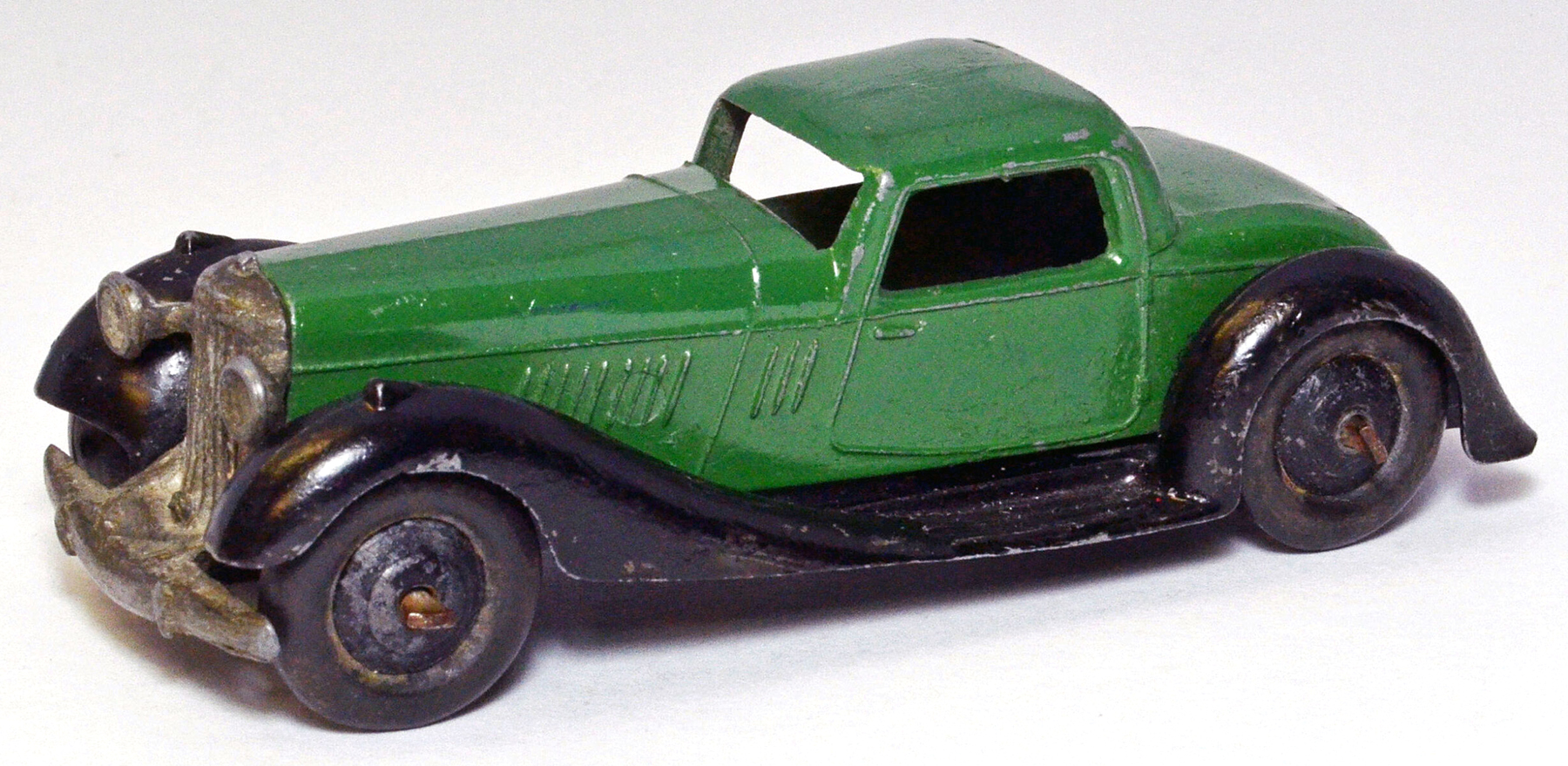
The Bentley Coupe was another pre-war design, reissued for a short time after the war.
36C Humber Vogue Saloon
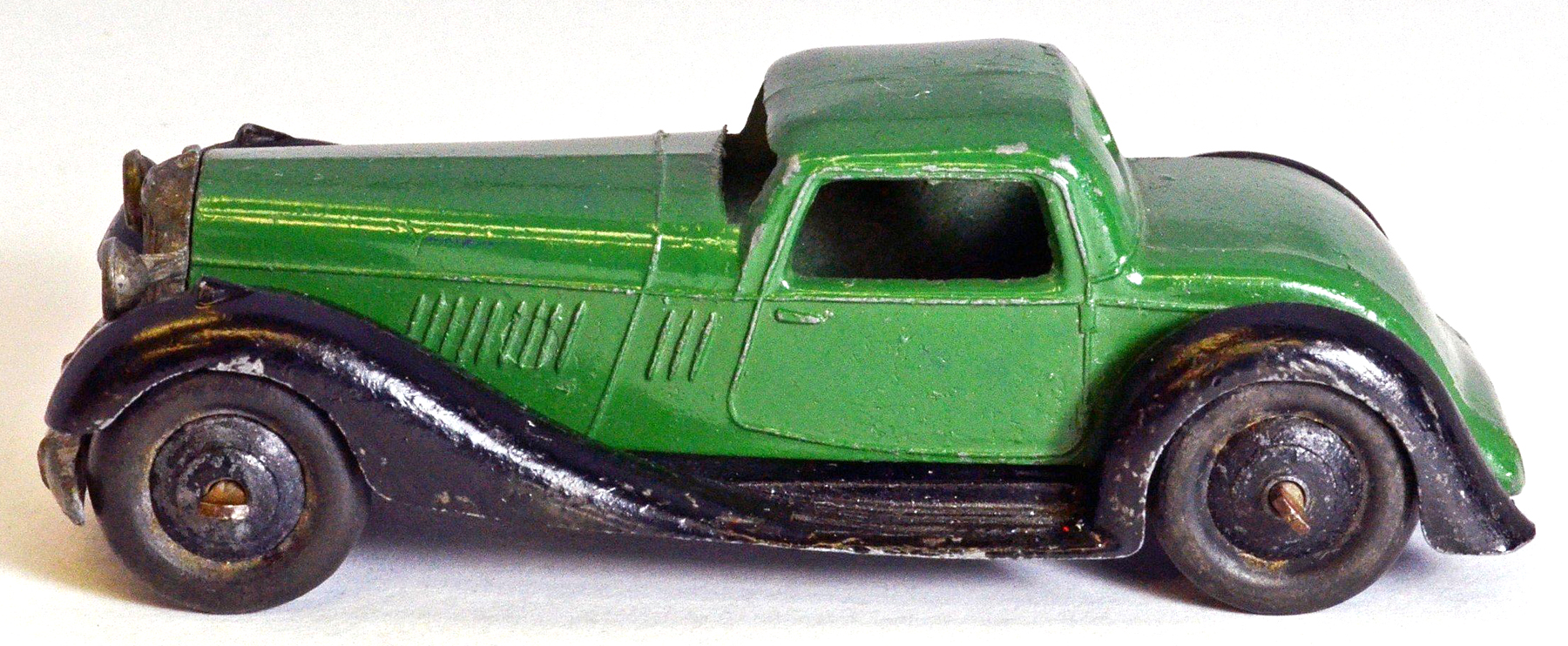
The 36 series Humber Vogue complements the next model in the series, the Rover Saloon well and was made around the same time. I was able to buy this model from H. Hudson Dobson in 1959. I really like the style and color of this Humber, and the paint is still glossy more than 60 years later.
36D Rover Streamlined Saloon
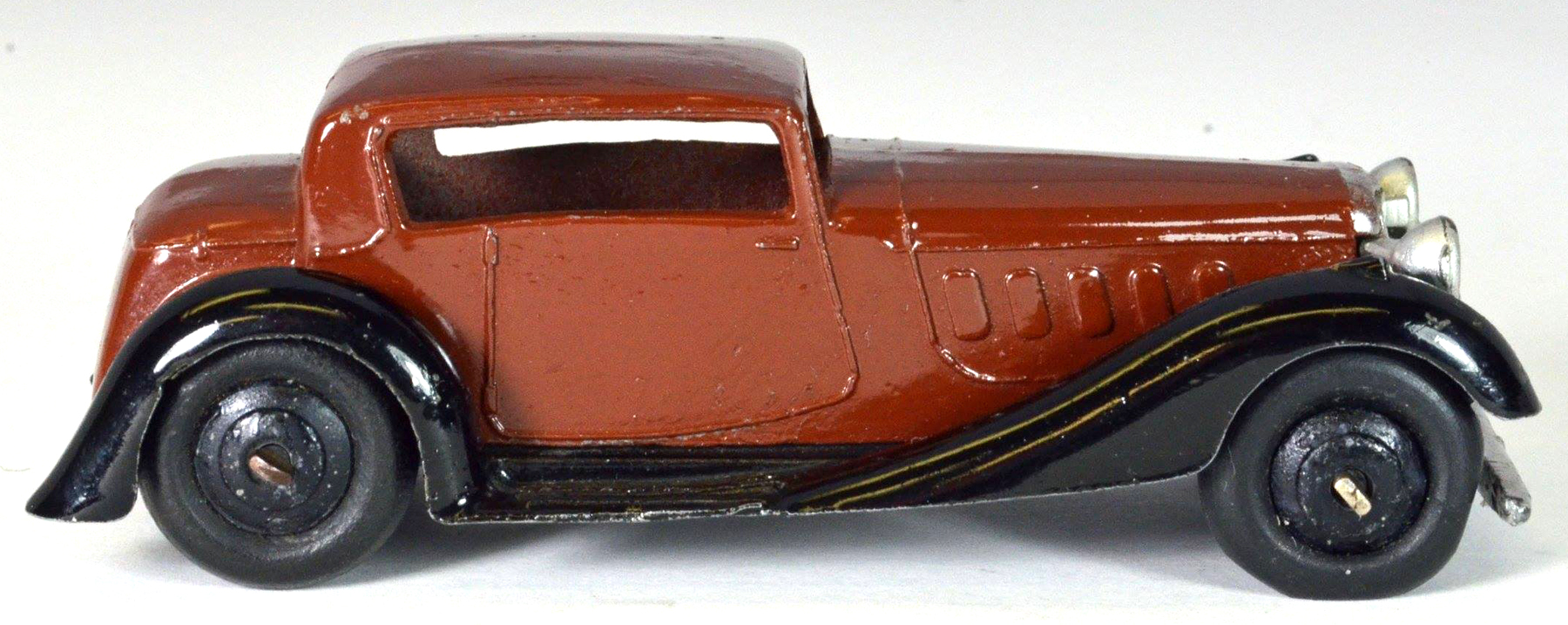
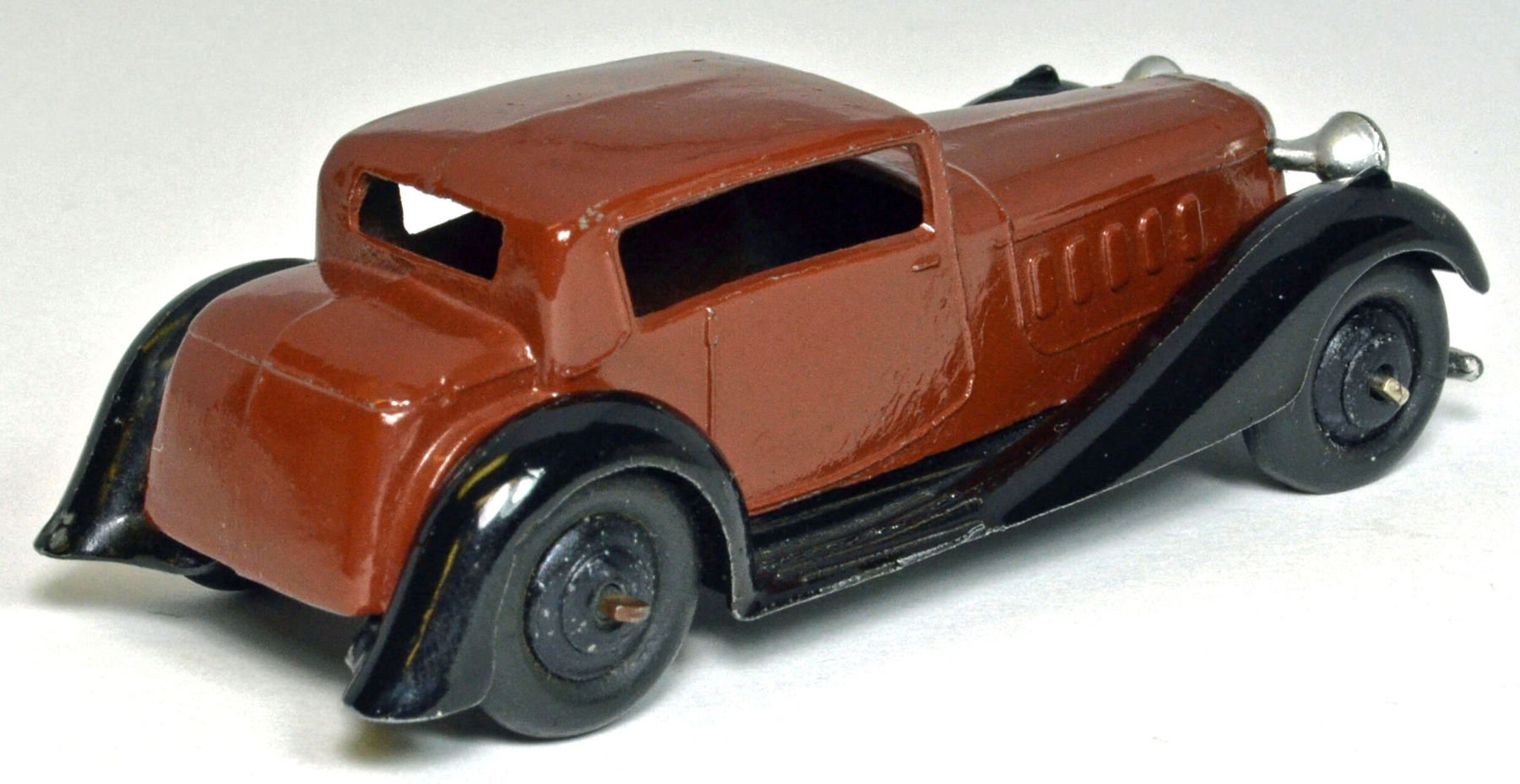
Another blue 36 series model I’ve always admired is the Rover Streamlined Saloon, produced in my favorite shade of blue, a wonderful darker blue. This model also happens to be a later version, with light blue wheels instead of the usual black.
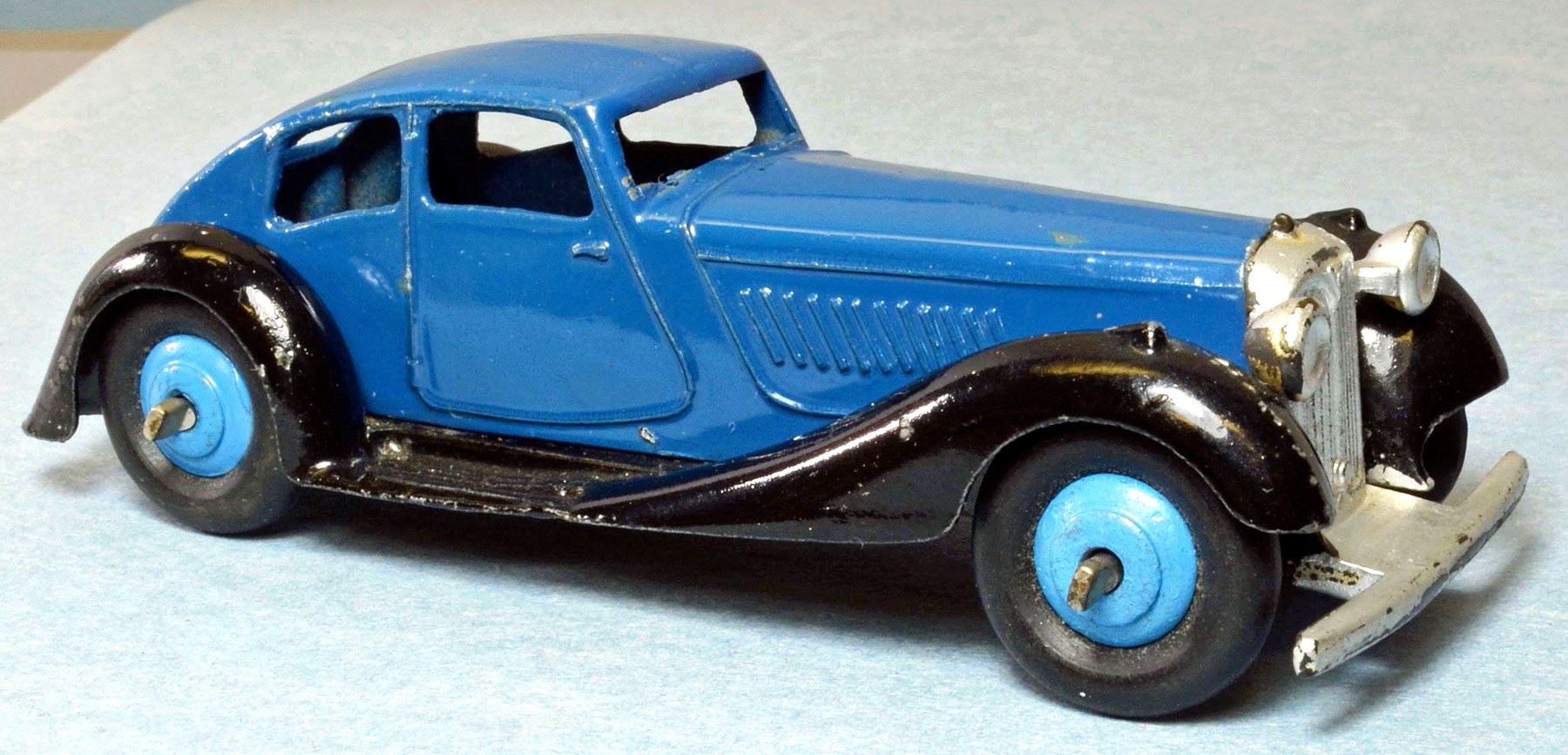
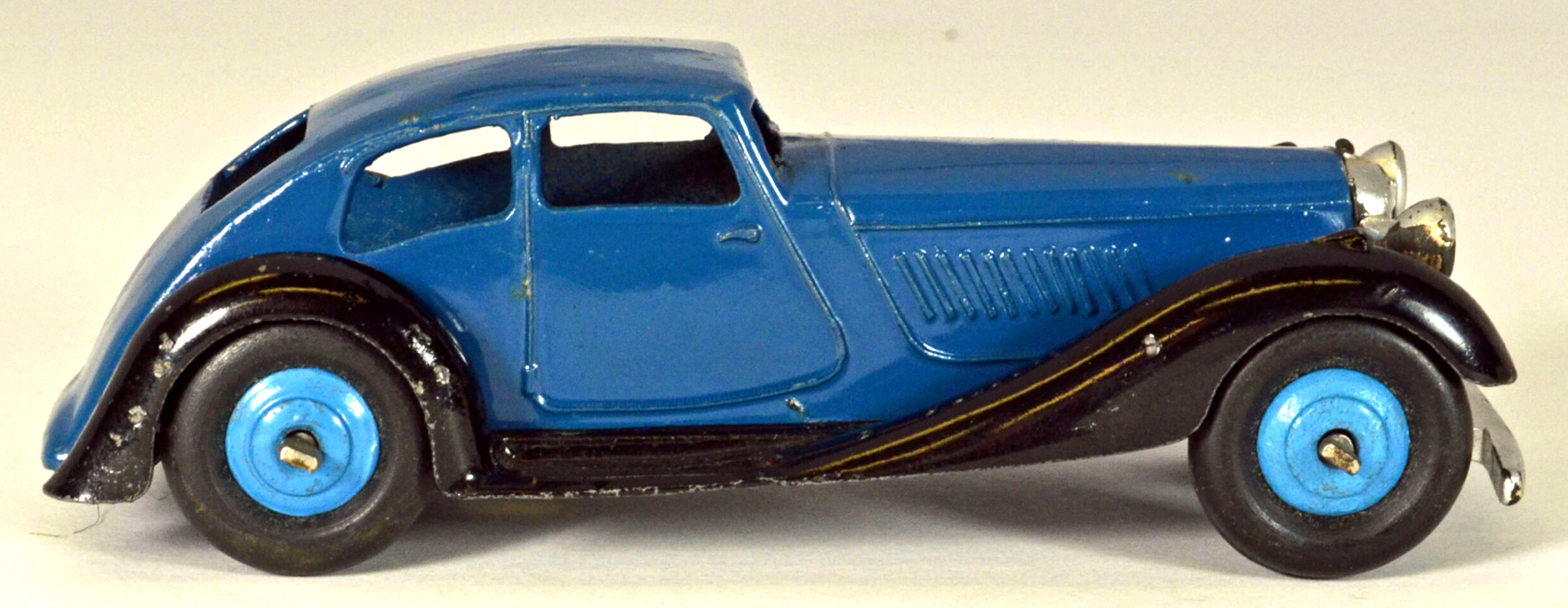
This was also one of my first purchases from the US distributor, H. Hudson Dobson, in New Jersey, who in 1958 still had some NOS (new old stock) versions available. One mistake I made then, when I was 13, was to repaint the silver paint on the grill.
36D Salmson Two Seater Sports
Although I usually think of the Rover or Humber Vogue as being my favorites, a case can also be made for the Salmson 2‑Seat Roadster. Like the other 36 series cars, this was first made during the pre-war years from 1937 to 1940, and then reintroduced after the war from 1946 to 1950.
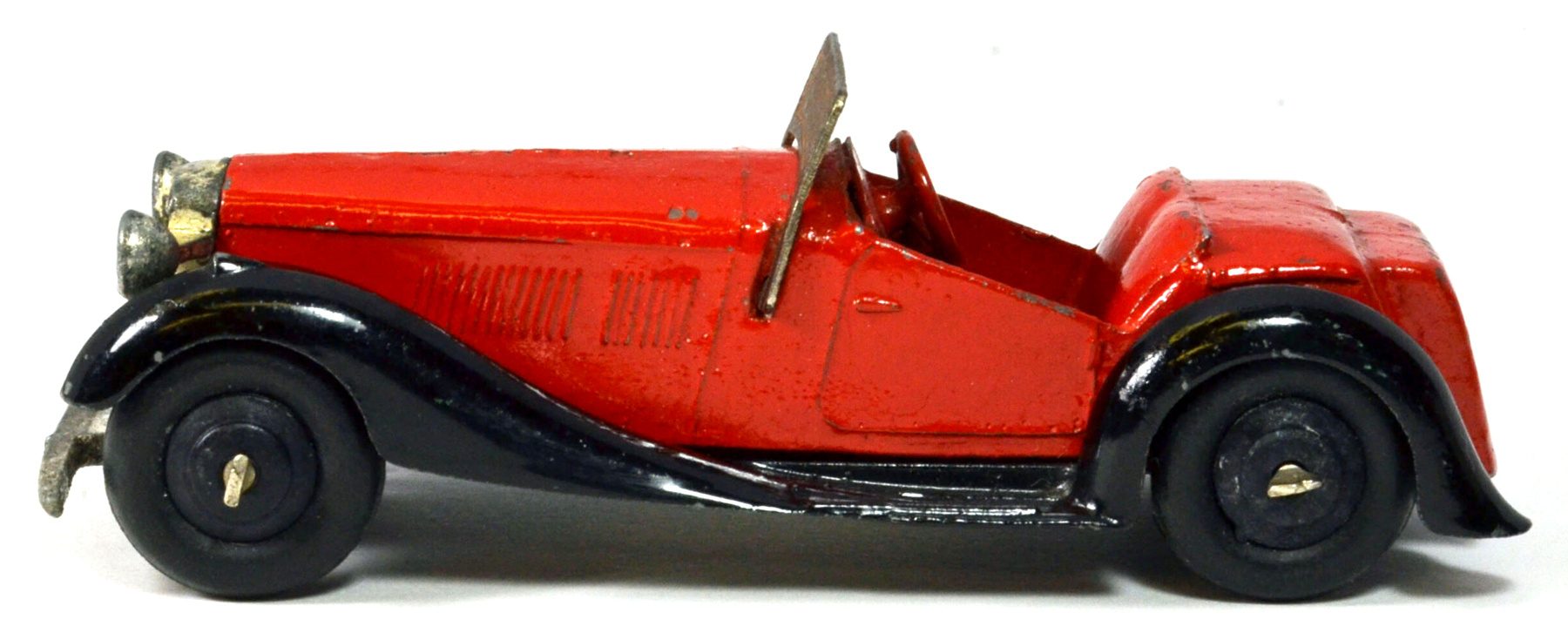
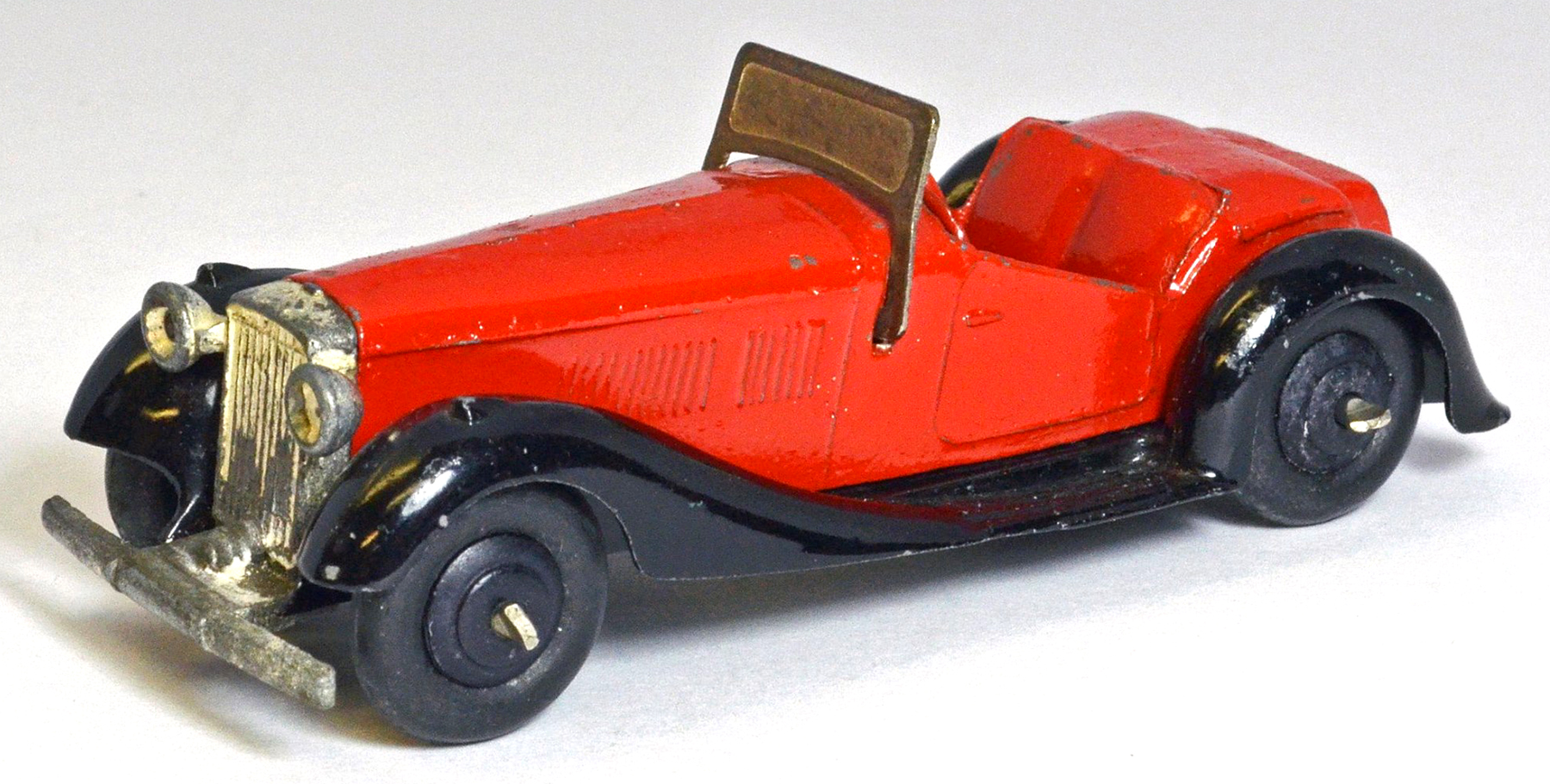
I particularly like this side view that shows off the rakish angle of the door and the sporting overall lines of the car. And its red color certainly suits it well. Like most vintage Dinkys, these seem to have a certain charm all their own.
36F Salmson Four Seater Sports
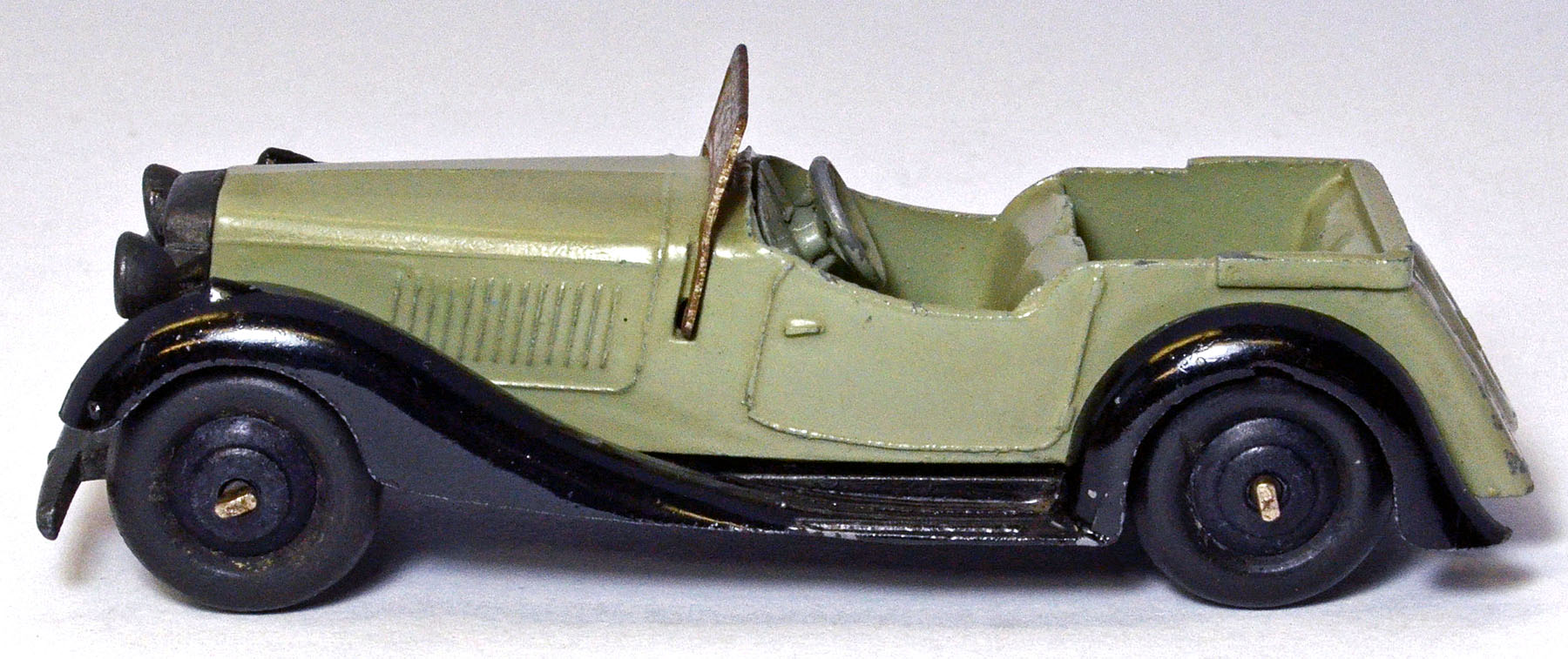
Strangely, the very similar Four Seater Salmson was also made in the 36 series. It has a nice color, but not as striking as other models in the post-war series.
36G Taxi with Driver
The very first Dinky Toys taxi was the 36g Taxi with Driver, first introduced in 1937 and produced until 1950–52. Based on the pre-war Austin Taxi that was in common use at the time, the Dinky model had an open rear window until the early post-war period, when it was closed. Made in a wide variety of colors, it’s another representation of a classic British vehicle, with lots of vintage charm. I bought this one many years ago from well known collector Keith Harvie, and it continues to be in excellent condition for a 80+ year old toy. Mine is a later post-war model, made around 1950.
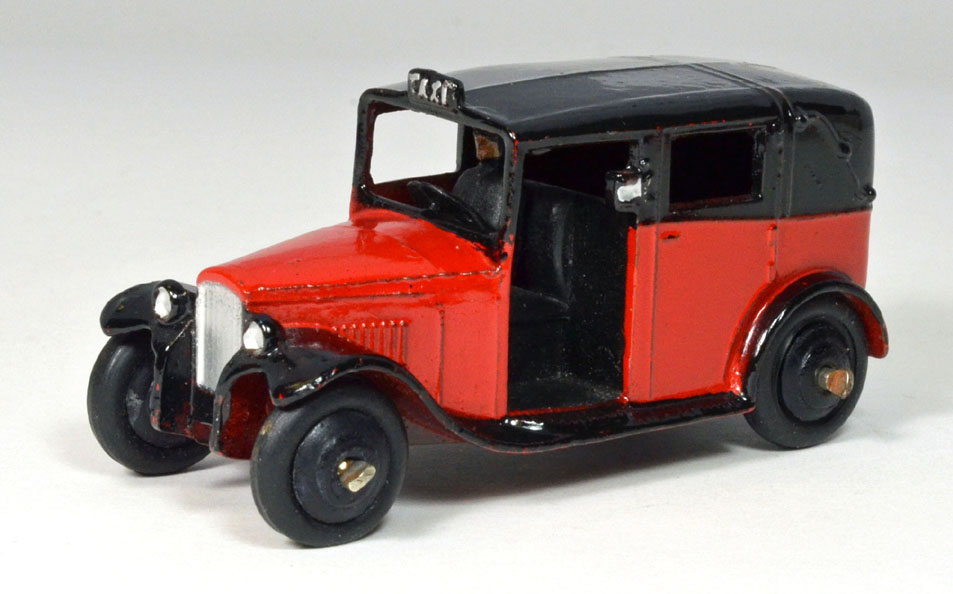
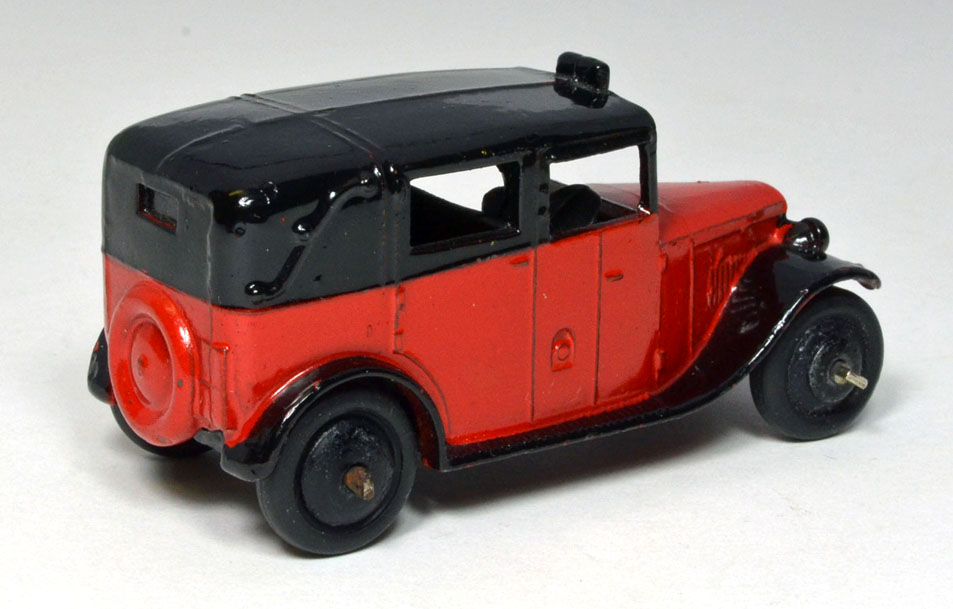
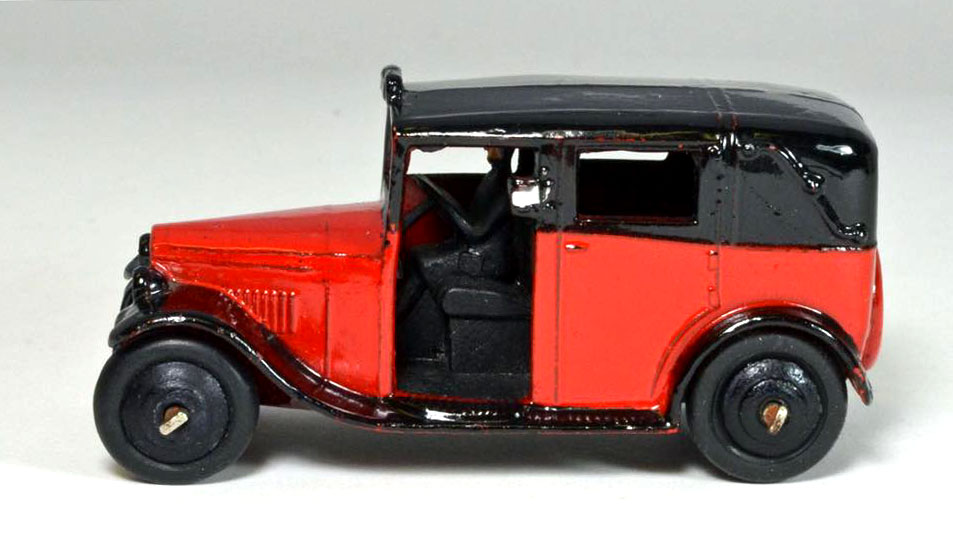
By 1950, these models began to show their age and looked quite obsolete with new motorcars quickly appearing on the roads. As a result, the 36 series made its last appearance that year in the US catalog.
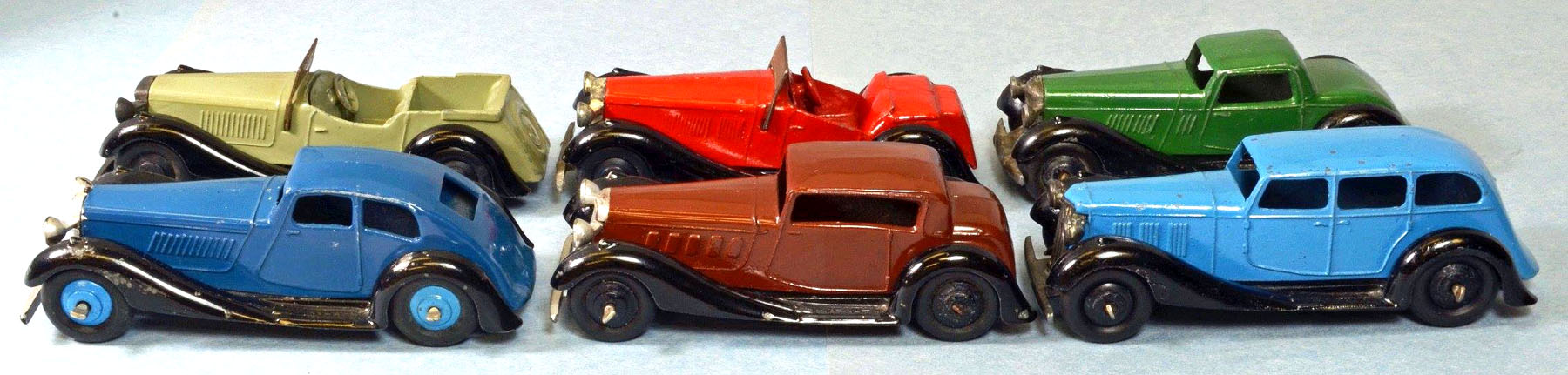
The 36 series range was produced in great numbers, and good examples can still be found despite their age. All in all, they are a very important and long lived series of Dinky Toys, and still popular today.