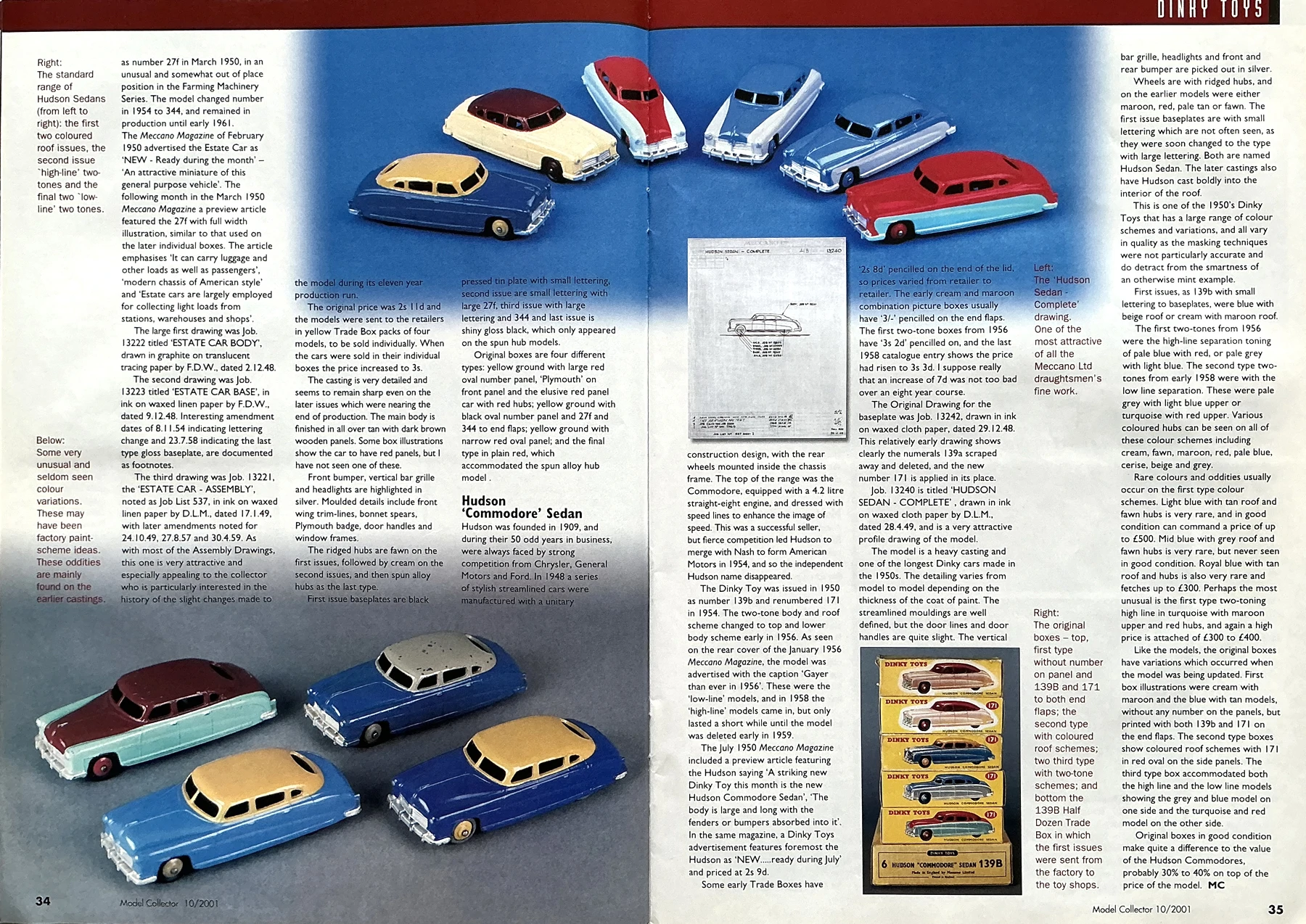
The 1948 new Hudson Commodore Sedan was a revolutionary design when it was introduced. The construction of this car was entirely new and very surprising. Meccano Liverpool reproduced the American Hudson Commodore Sedan in 1950 as model 139B. Compared to other Dinky models of that period, the streamlined, aerodynamic lines of this model are immediately striking.
Hudson’s new Monobilt construction with step down design
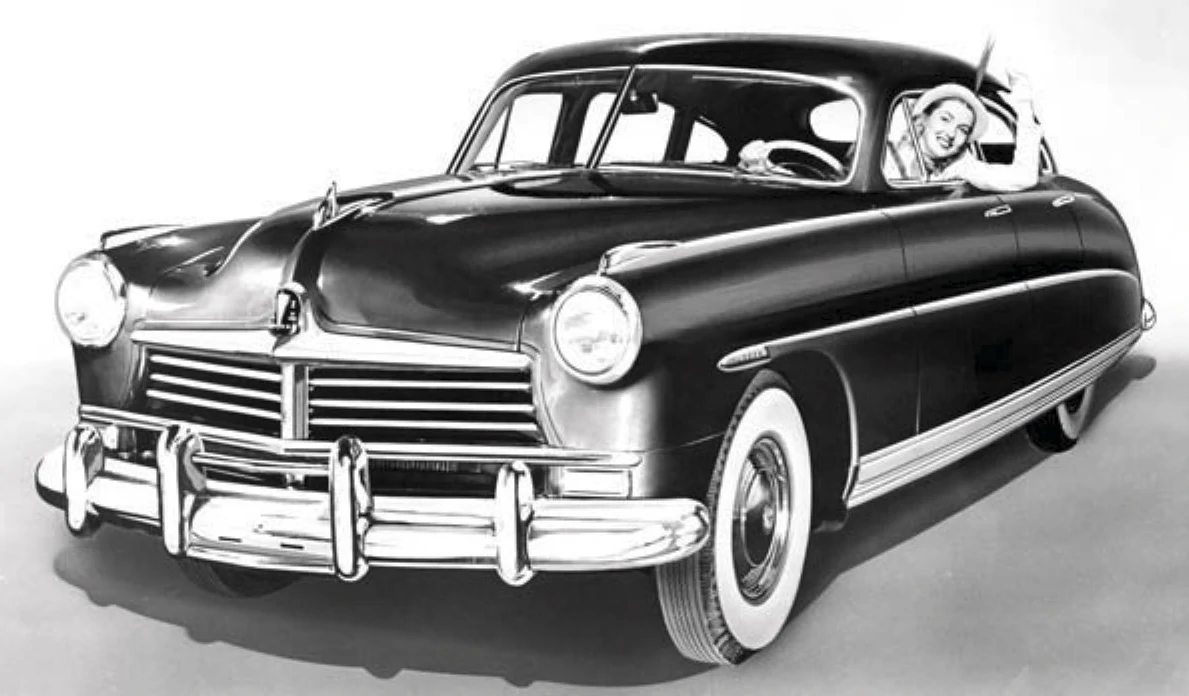
1947 Hudson Commodore Sedan original factory press photo
Image: eBay
The Hudson Monobilt was a revolutionary “step-down” unit-body construction introduced by the Hudson Motor Car Company in 1948. It integrated the body and frame into one welded structure, lowering the floor pan, and giving cars like the legendary Hudson Commodore an incredibly low center of gravity and unmatched handling
The result was a car that was only 158 cm. (62 in.) high. This was low compared to Ford, Chevrolet, and Chrysler, whose cars had heights of 180 (71 in.), 170 (67 in.) and 171 cm (67.3 in.) respectively. In 1948, Hudson surprised the car world with the new Step-Down design. Compared to these cars, those of the competition seemed distinctly old fashioned. The Hudson was a hit with the public. The total production of the Commodore for 1948 was 62,474 of which 35,315 were I8 units.
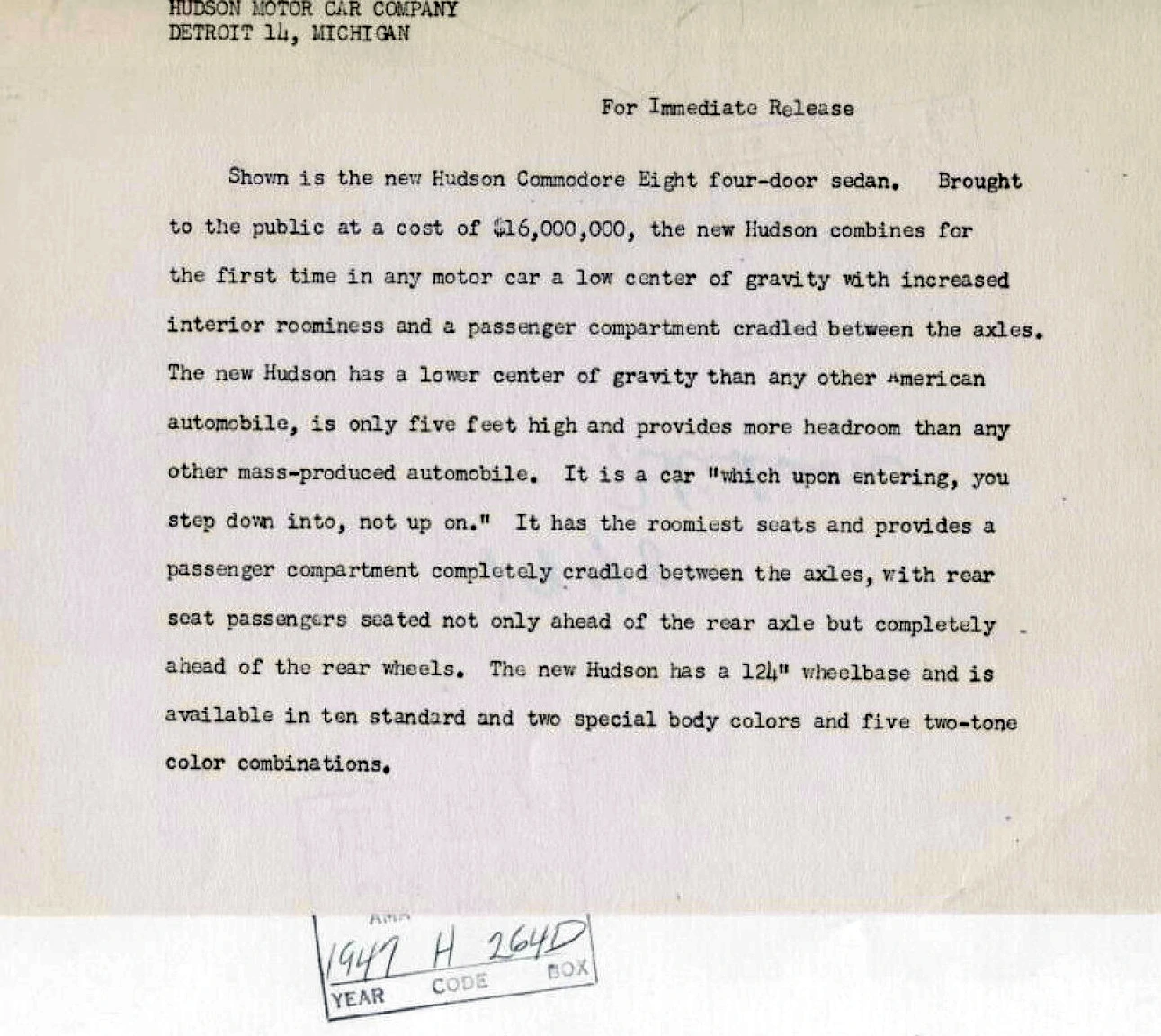
Shown above is typewritten press release from 1947 on the reverse of the factory photo of the Hudson Commodore Eight Sedan. As stated in the release, Hudson Motor Car Company invested $16,000,000 in the new 1948 Hudson.
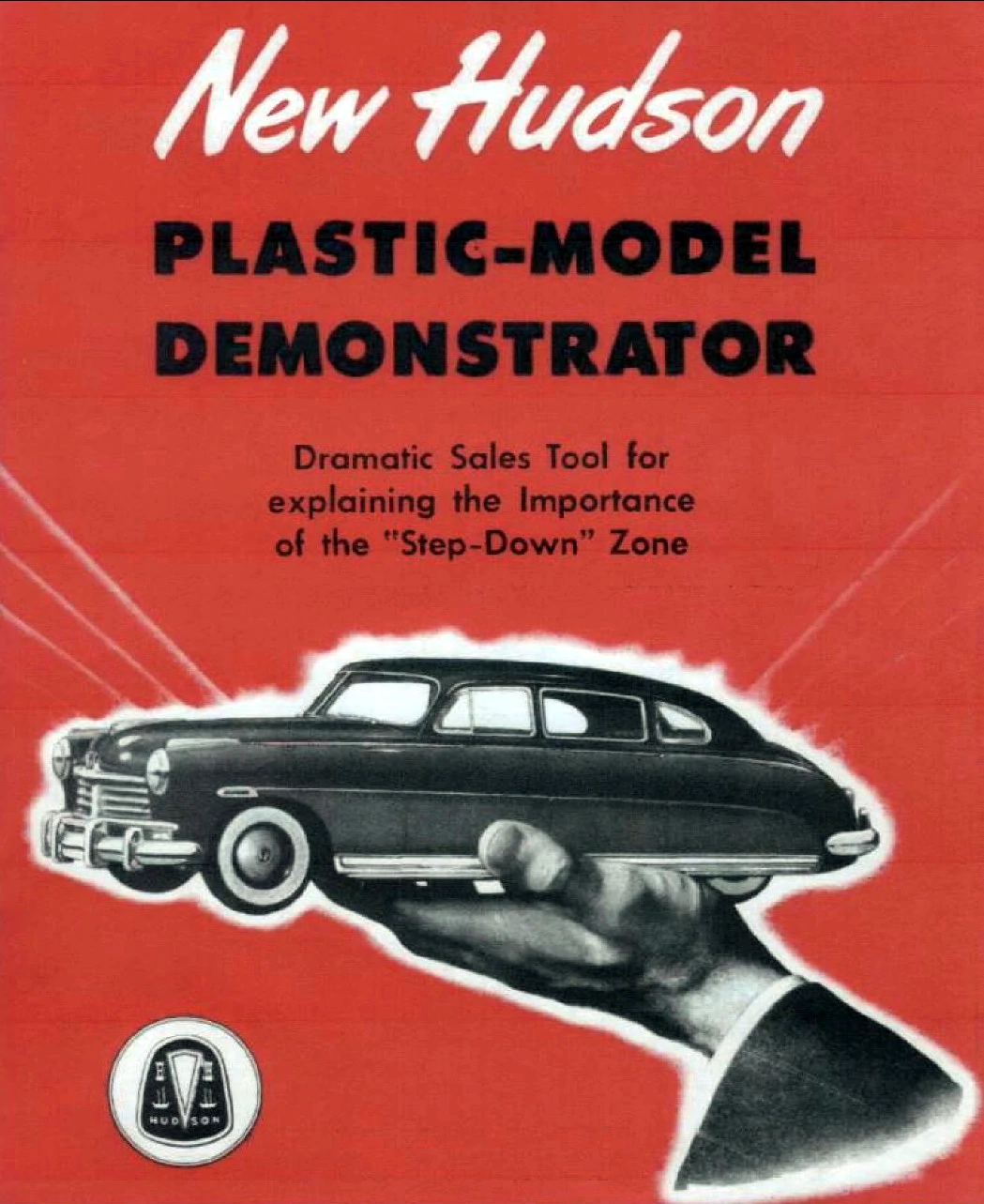
1:16 plastic model of the Hudson Commodore Sedan
Image: MAR Online
To promote the new Hudson “Step-Down” design, 1:16 plastic scale models were made by plastic specialists. They were intended for shipment to Hudson dealers to demonstrate the car’s step-down and Monobilt design to customers. The dies alone cost $35,000. About 20,000 were produced by Hudson itself on a separate assembly line built specifically for this purpose in the Hudson factory.
Third generation 1948 Hudson Commodore
The Hudson Commodore was produced by the Hudson Motor Car Company of Detroit, Michigan between 1941 and 1952. During its production, the Commodore was the largest and most luxurious Hudson model.
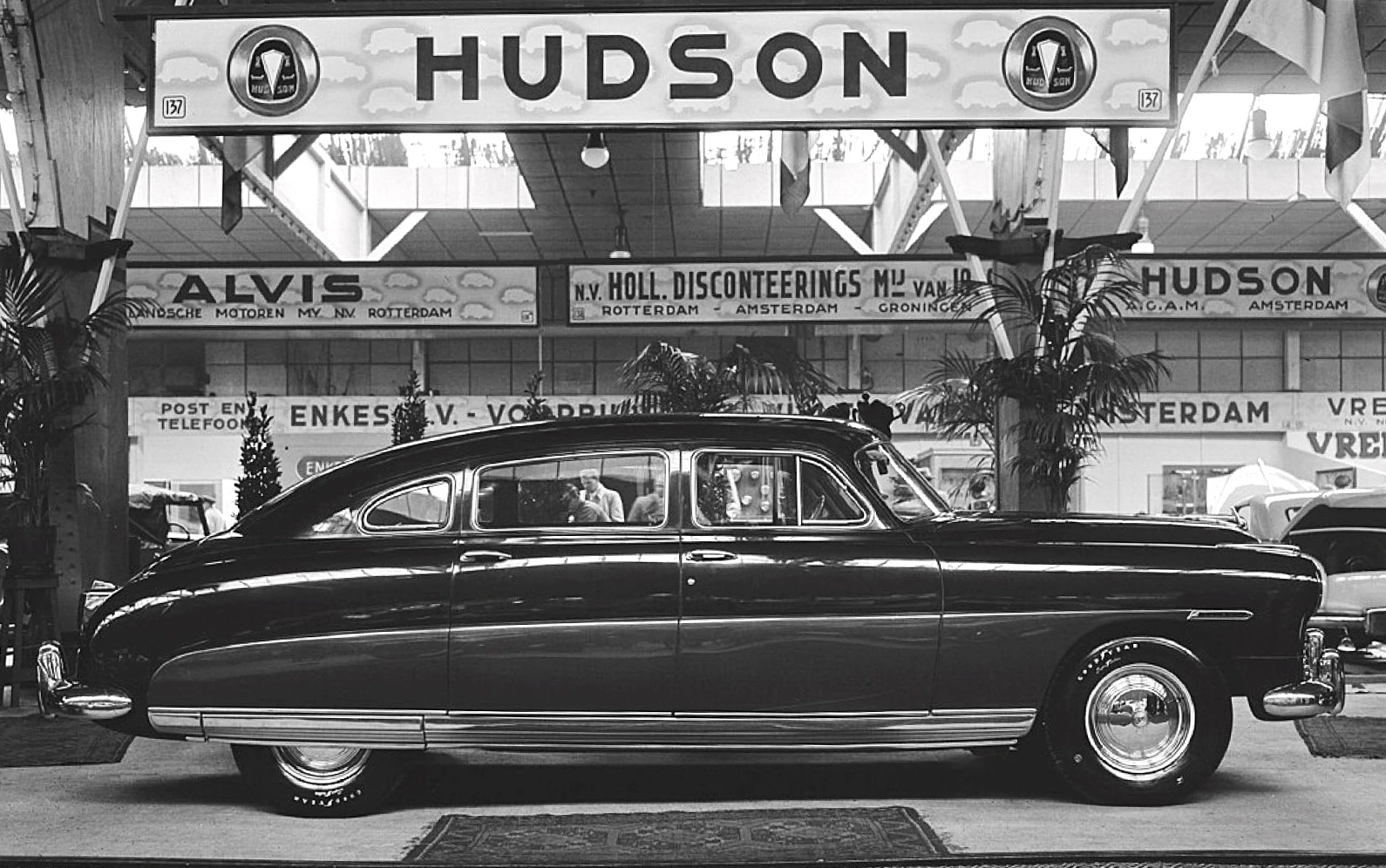
3rd generation Hudson Commodore sedan exhibited at the 1948 Amsterdam AutoRAI
Hudson had developed a new and radical car design. Production of the 1948 Hudsons began on 12 October 1947. Introduced on 7 December 1947 to dealers, the Hudson Commodore was one of the first newly designed postwar cars made. The 1948 model year inaugurated Hudson’s trademarked “Monobilt” construction or “step-down” automobile. The new cars were designed by Frank Spring and in part by Betty Thatcher, the first female designer to be employed by a car manufacturer. The marketing tagline for the innovative Hudsons was “Now… you’re face to face with Tomorrow!”
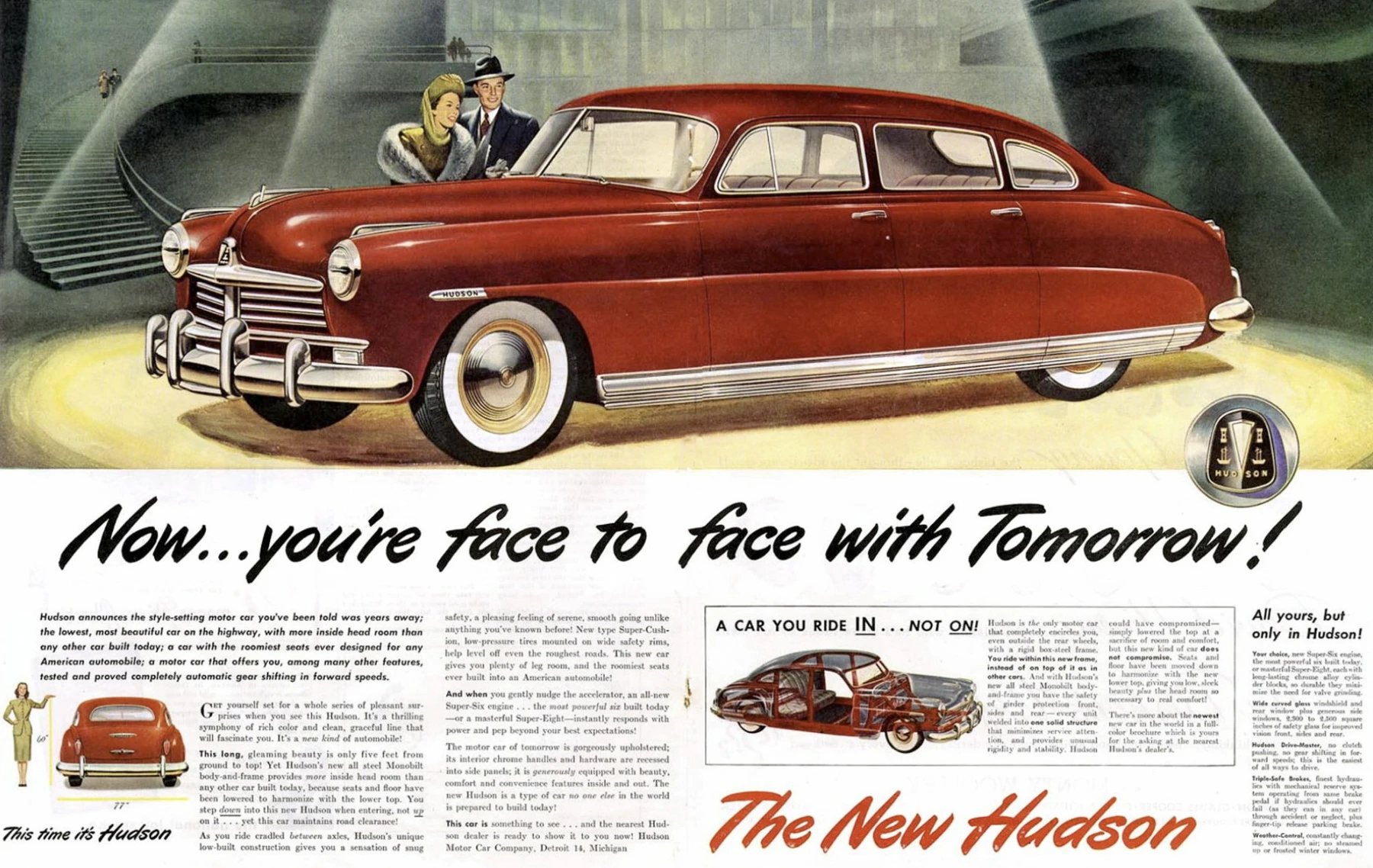
1948 Hudson advertisement “Now… you’re face to face with Tomorrow!”.
Image: eBay
The cars had a light and strong semi-unit body with a perimeter frame. Because of the encircling frame, passengers stepped down into the vehicles. Hudson’s step-down design made the body lower than contemporary cars. It offered passengers the protection of being surrounded by the car’s chassis with a lower center of gravity. In addition to the safety of being surrounded by the car’s chassis, the step-down design also allowed Hudson to achieve a weight savings through the unibody construction, making for a well performing automobile. The “Monobilt” or “step-down” design also required less steel for its production.
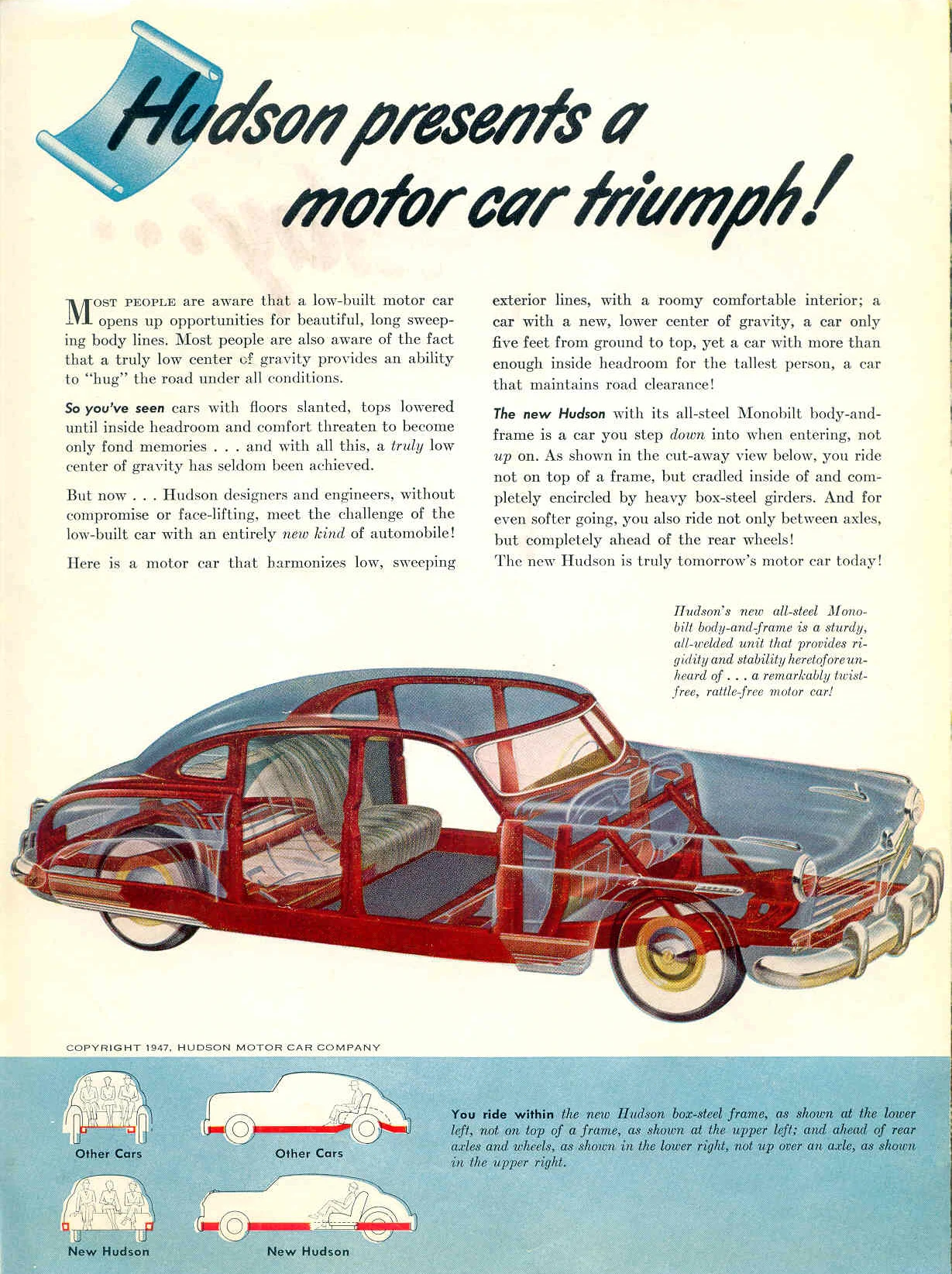
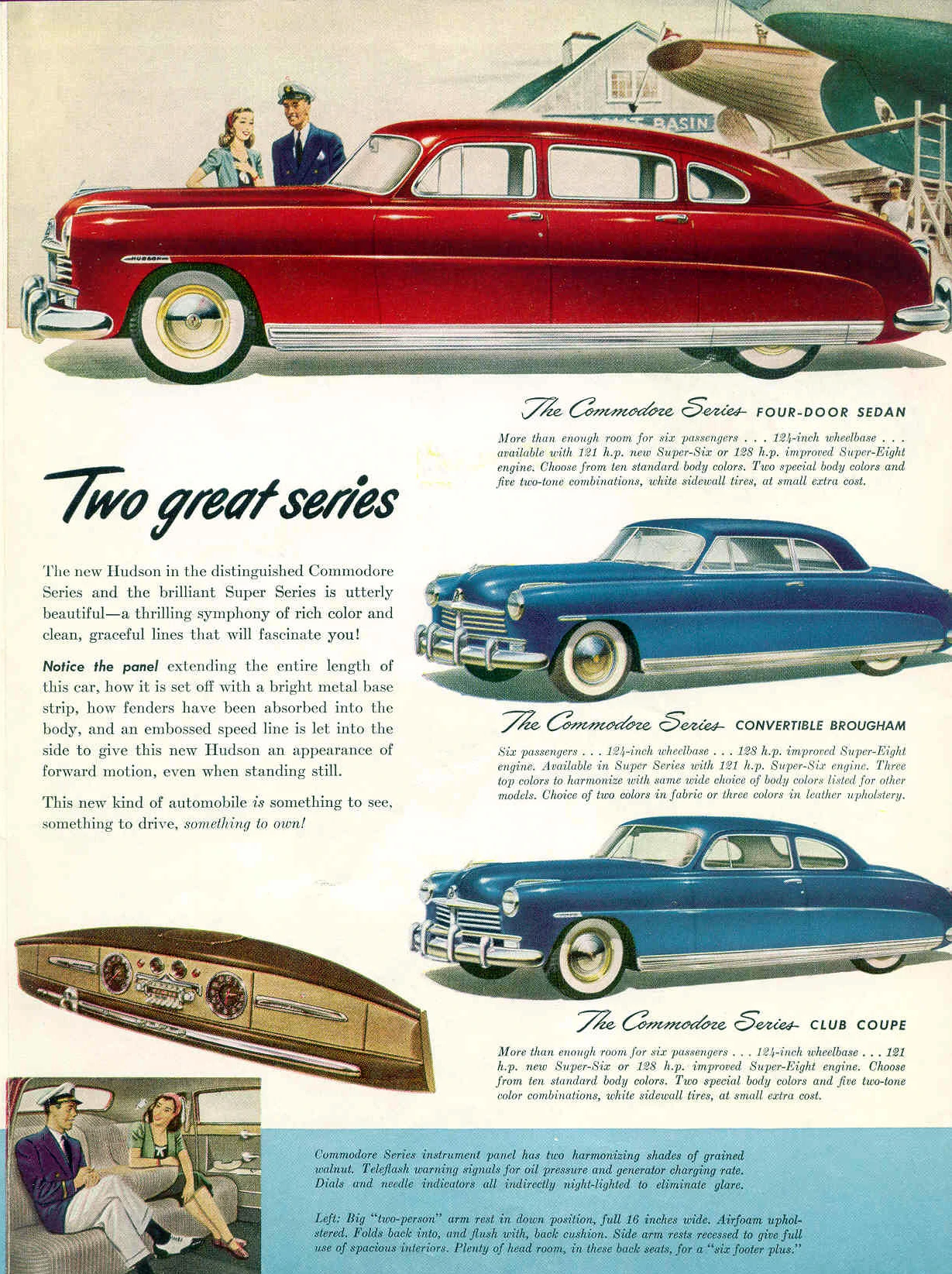
1948 Hudson brochure describing the Commodore series
Image: Old Car Brochures
Hudson ceased operation of the Hudson automobile brand in 1957 after the parent company merged with Nash-Kelvinator in 1954 to form American Motors Corporation (AMC).
The “Monobilt” construction no longer exists in modern vehicle manufacturing. True “Monobilt” cars featured a perimeter frame welded directly to the body. Modern unibody construction integrates the floor pan, pillars, roof, and crumple zones into a single engineered shell, eliminating the need for a separate frame.
The Meccano Liverpool model
Meccano Liverpool chose to reproduce this attractive modern car, together with 139A Ford Fordor sedan, as one of the first new post-war Dinky Toys models of American closed passengers cars of the early 1950’s. The time had come to leave the outdated pre-war reissues behind and produce new models. The production of practically all older reissues ended in 1950.
Meccano Liverpool reproduced this car as the 139B Hudson Commodore Sedan (assembly drawing 28–4‑49). It was first advertised in the July 1950 issue of Meccano Magazine which also included a separate description of the Hudson Commodore. In 1954 it was renumbered to Dinky 171 and was produced until 1959.
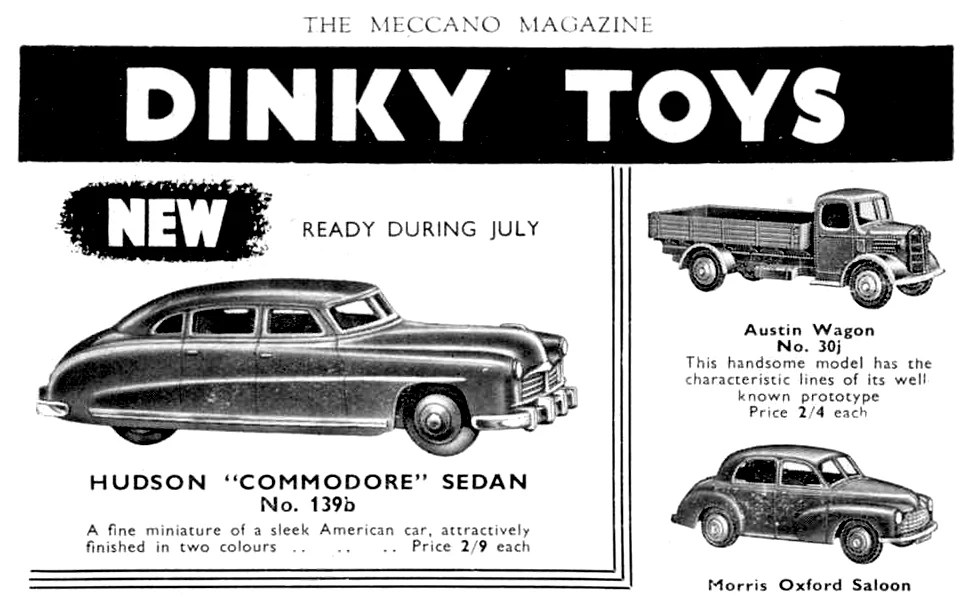
Advertisement of the Dinky Toys 139B Hudson Commodore Sedan in the June 1960 issue of Meccano Magazine, with the description: “A fine miniature of a sleek American car, attractively finished in two colors ..”.
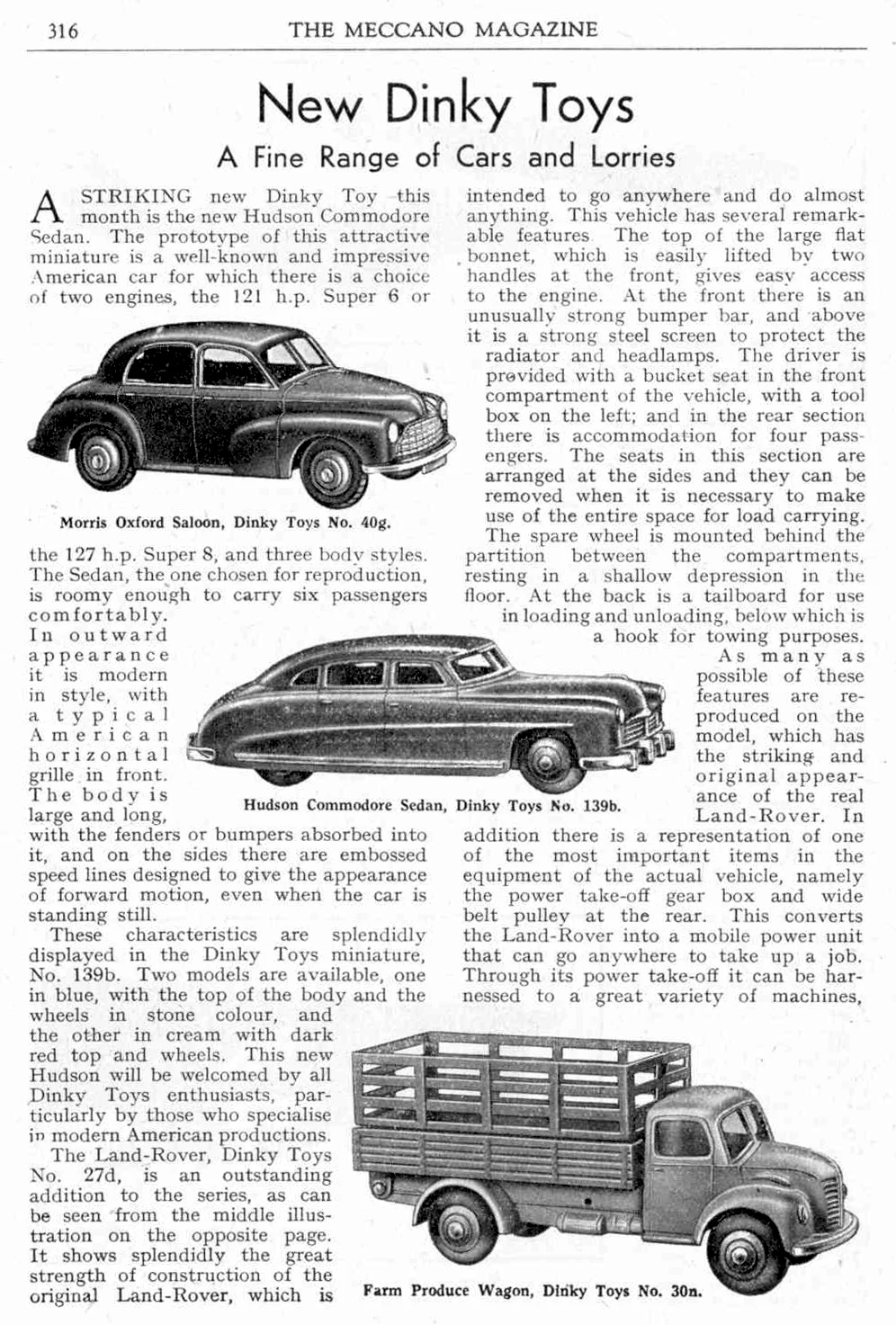
Introducing the Dinky 139b Hudson Commodore Sedan in the July 1950 issue of Meccano Magazine
The Dinky Hudson Commodore was described in Meccano Magazine as “The body is large and long, with the fenders or bumpers absorbed into it, and on the sides there are embossed speed lines designed to give the appearance of forward motion, even when the car is standing still”. This alludes to the beautiful raised decorative speed line with a second color on the sides of the original car that gives it a very nice look.
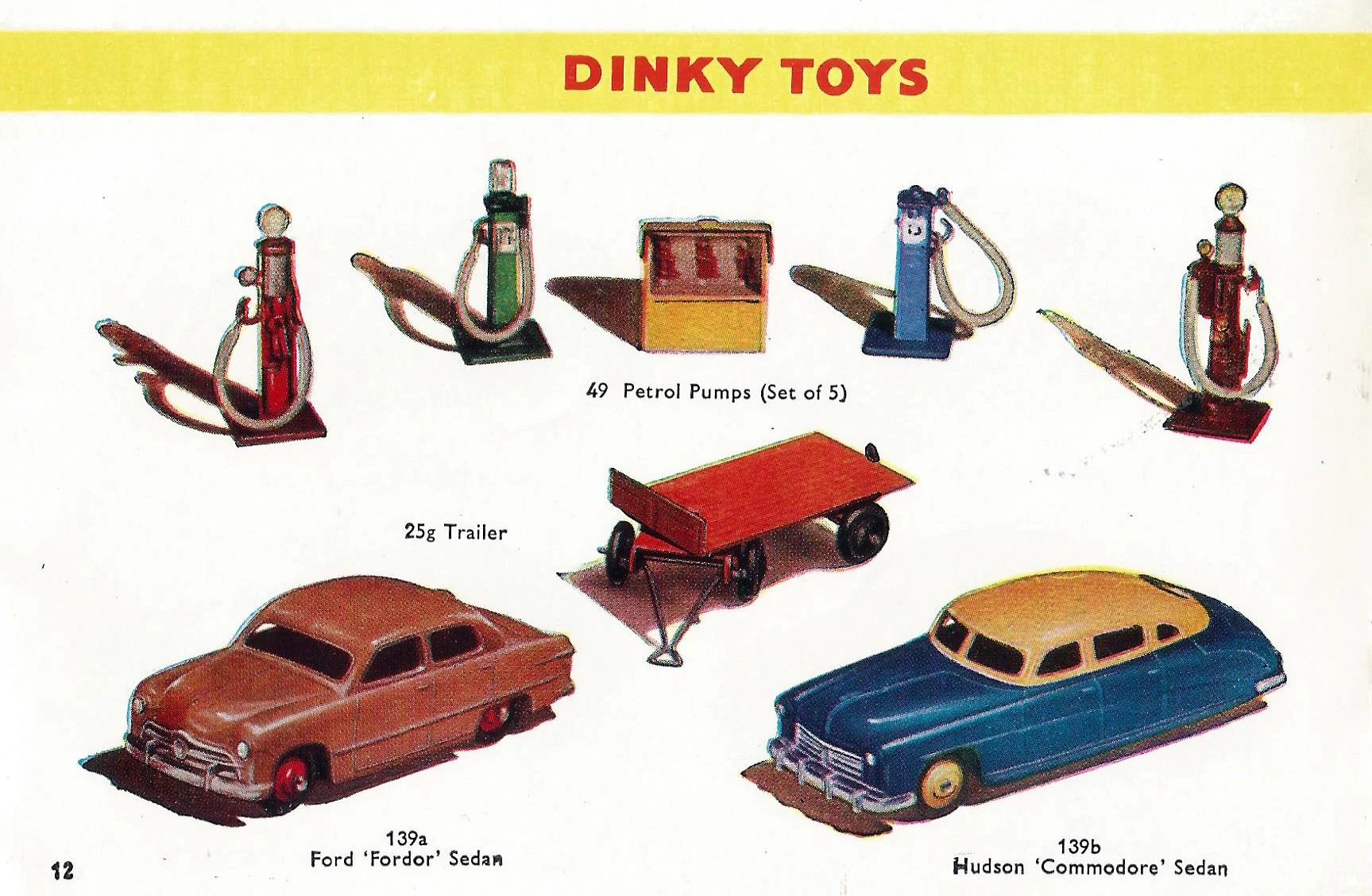
Dinky 139B Hudson Commodore Sedan in the 1952 UK catalog along with the Dinky139A Ford Fordor Sedan.
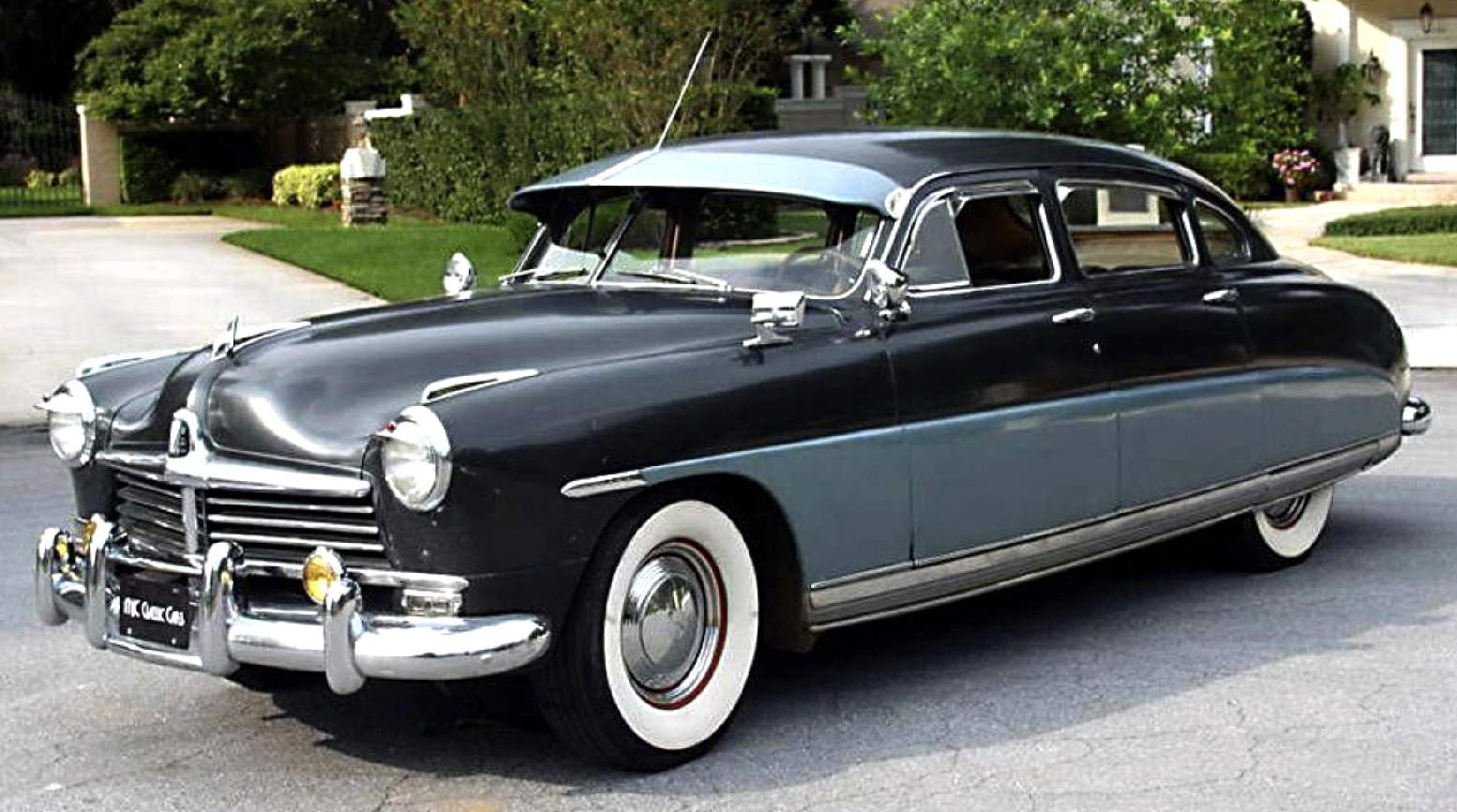
1948 Hudson Commodore sedan in two-tone blue with a second color on the raised lower sides.
Image: ClassicCars
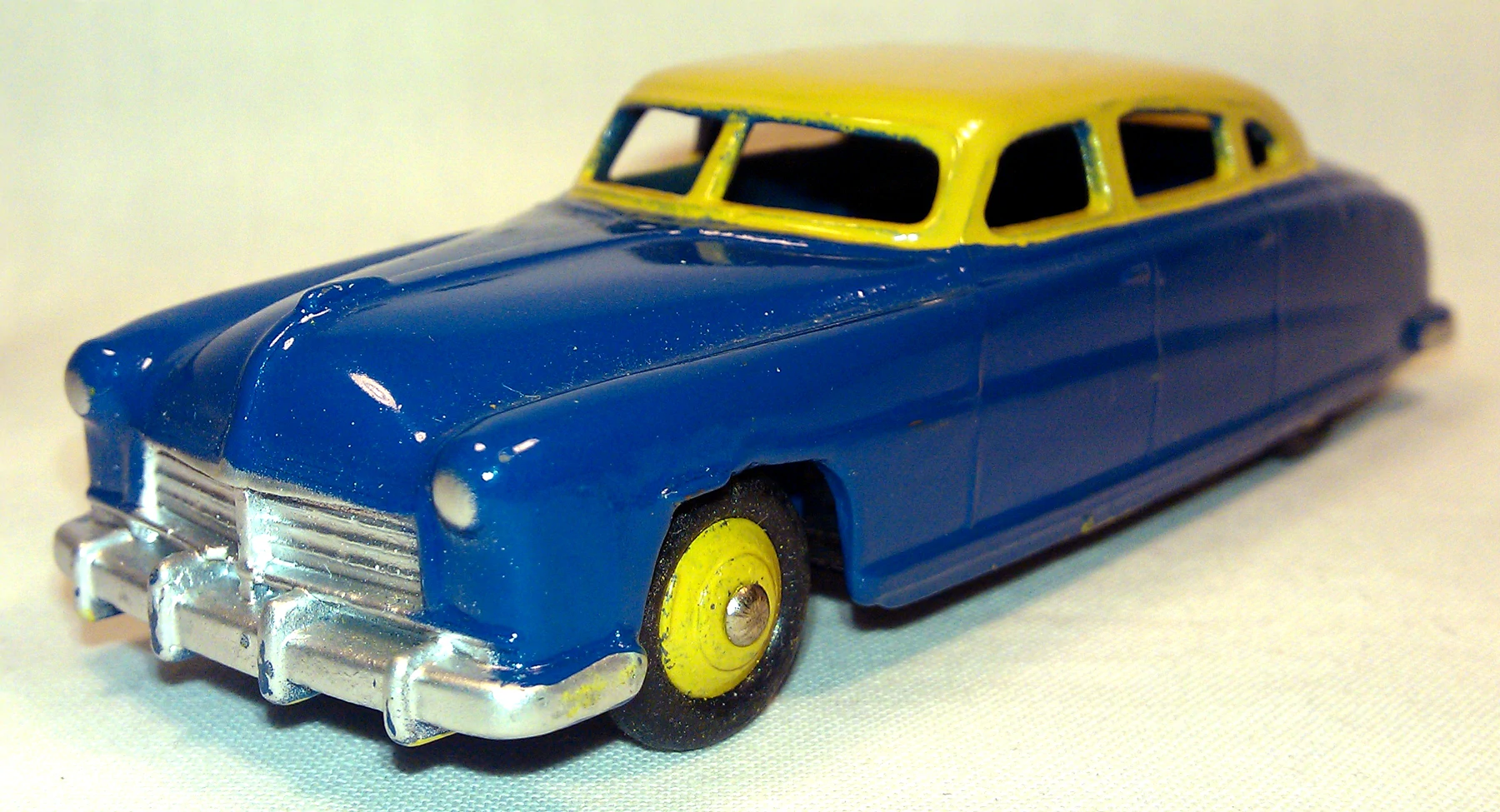
Dinky 139B Hudson Commodore Sedan first issue with two tone color scheme. This early model wasn’t individually boxed but instead offered in a trade box of six units.
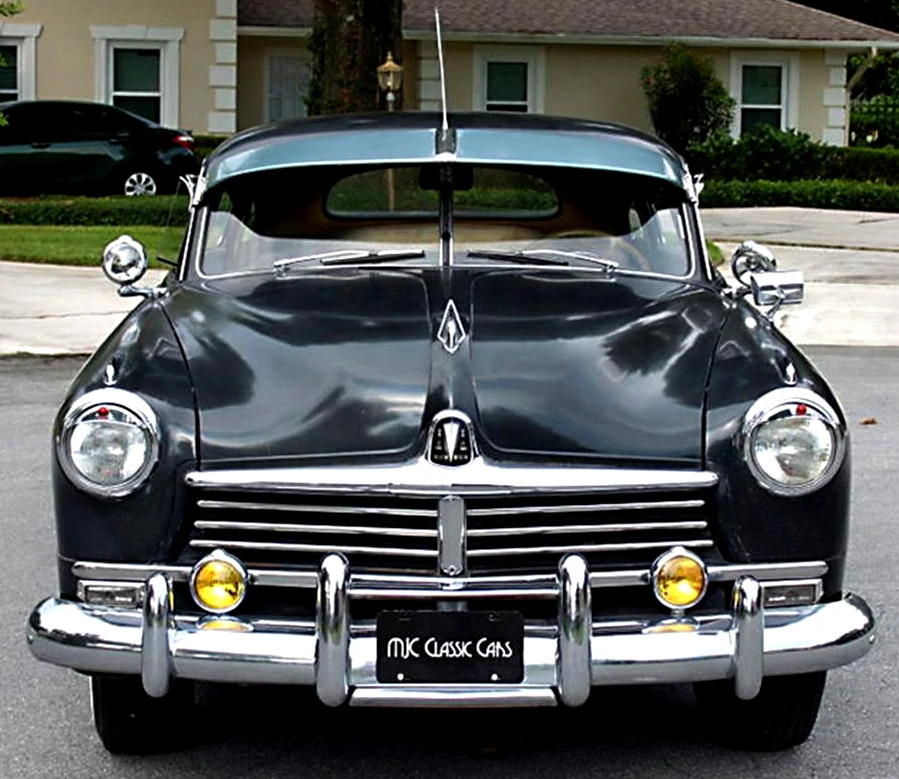
Front view of the 1948 Hudson Commodore sedan showing the Hudson badge and ornament on the hood. The car is luxuriously equipped with several useful accessories.
Image: ClassicCars
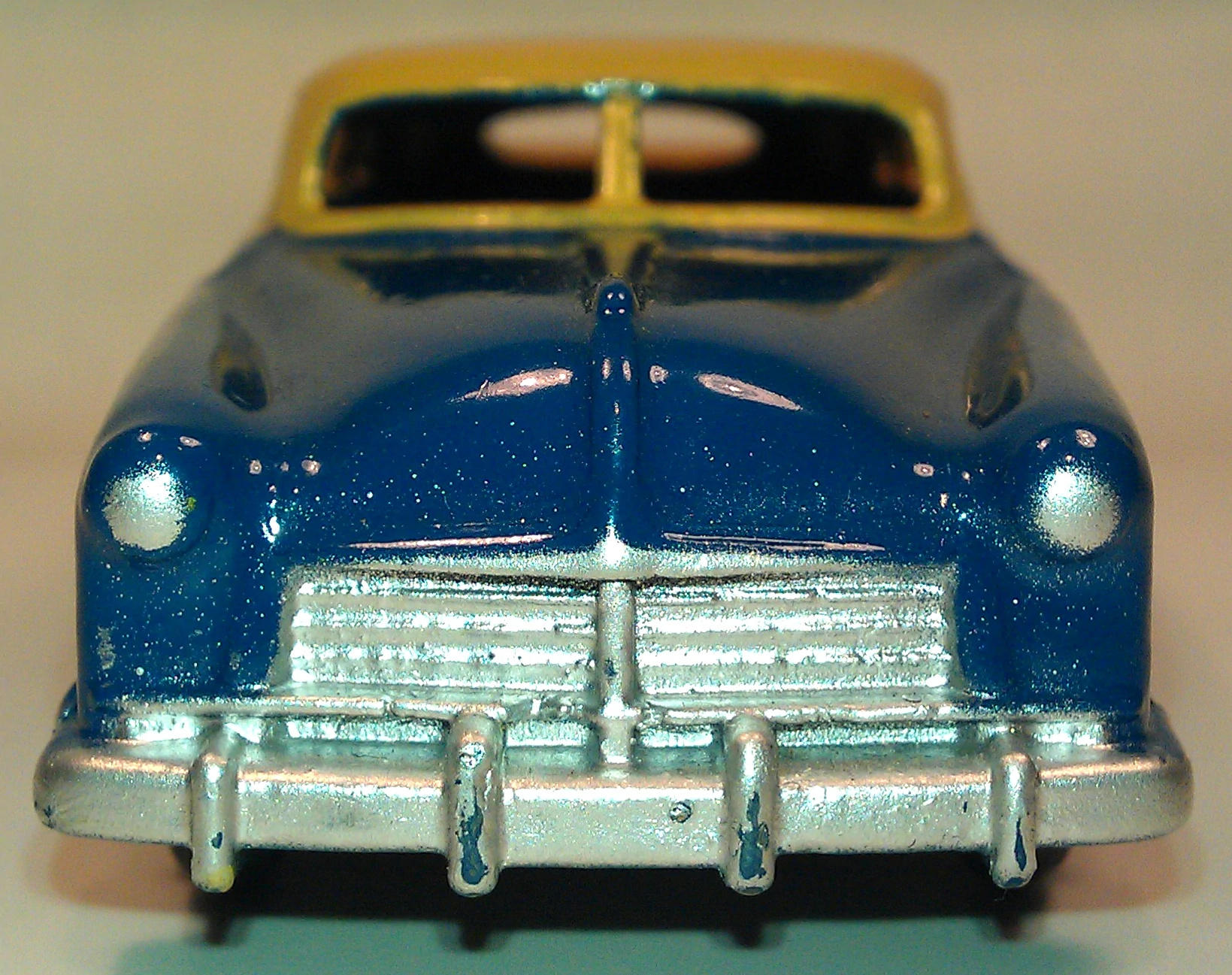
Front view of the Dinky 139B with chrome grill, bumper and headlights. The low roofline is striking.
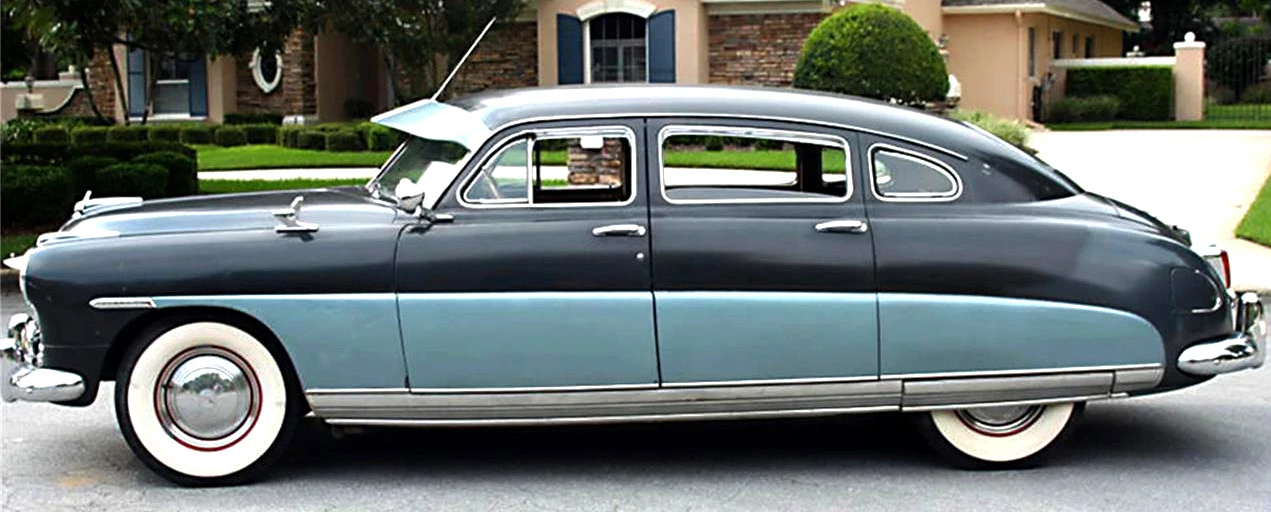
Left view of the 1948 Hudson Commodore Sedan. Note the second color on the attractive raised lower sidewall, rising from rear to front.
Image: ClassicCars
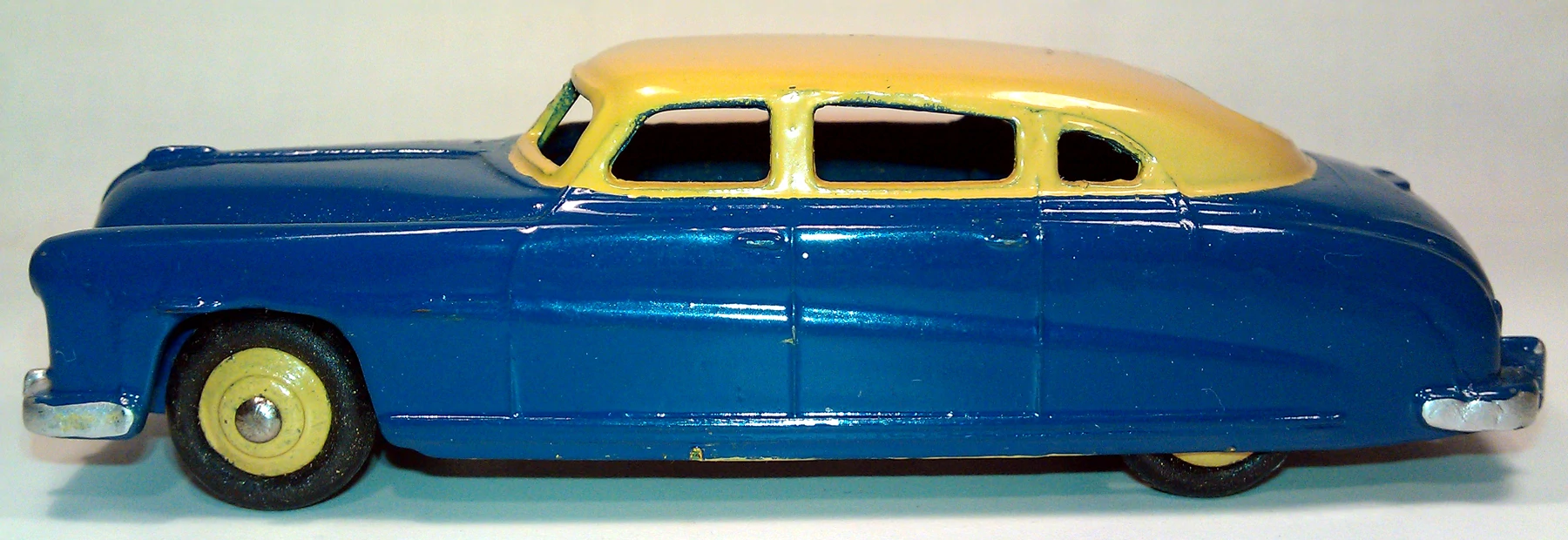
Shown above is the left profile view of the Dinky 139B Hudson Commodore Sedan with “embossed speed lines on the side, designed to give the appearance of forward motion, even when the car is standing still”, as described in the article introducing the model in Meccano Magazine. Unfortunately Meccano Liverpool chose to not highlight the raised speed lines on the sides by mask spraying a second color like the real car above. Instead, a two tone paint scheme was used to accentuate the roof.
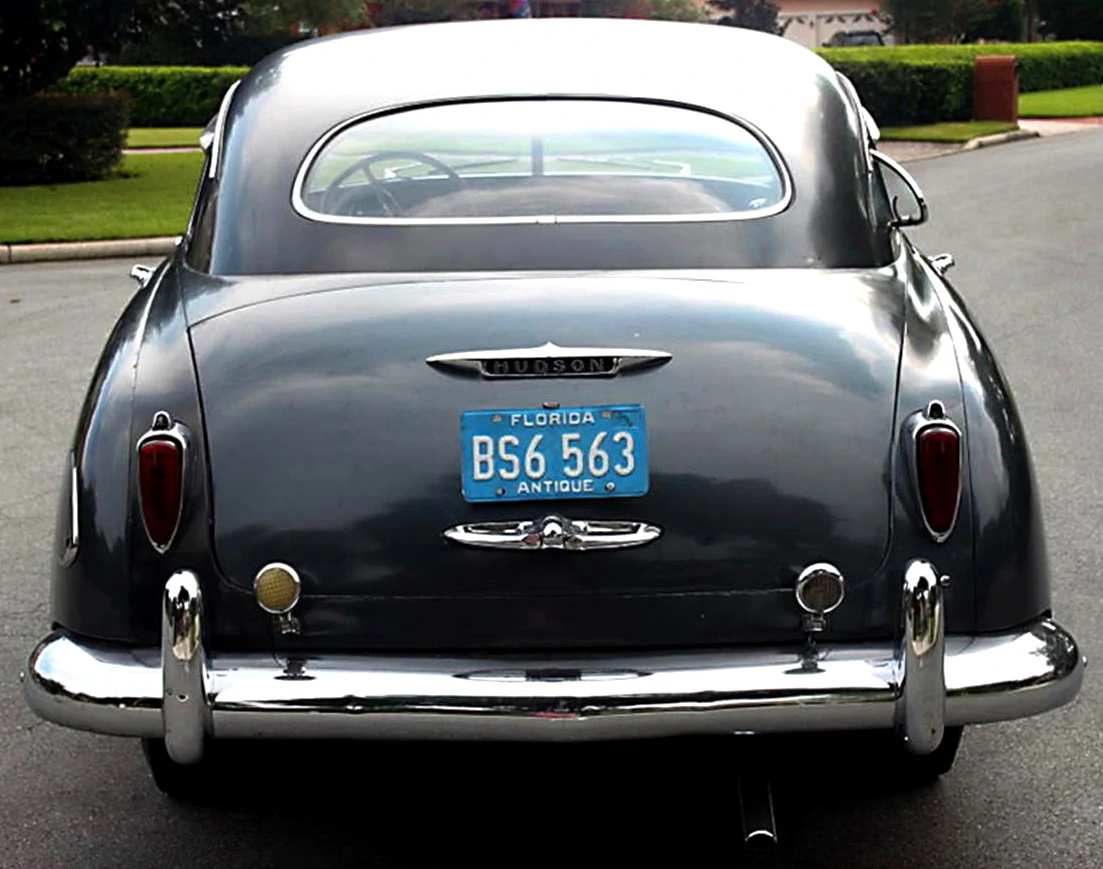
Rear view of the 1948 Hudson Commodore sedan.
Image: ClassicCars
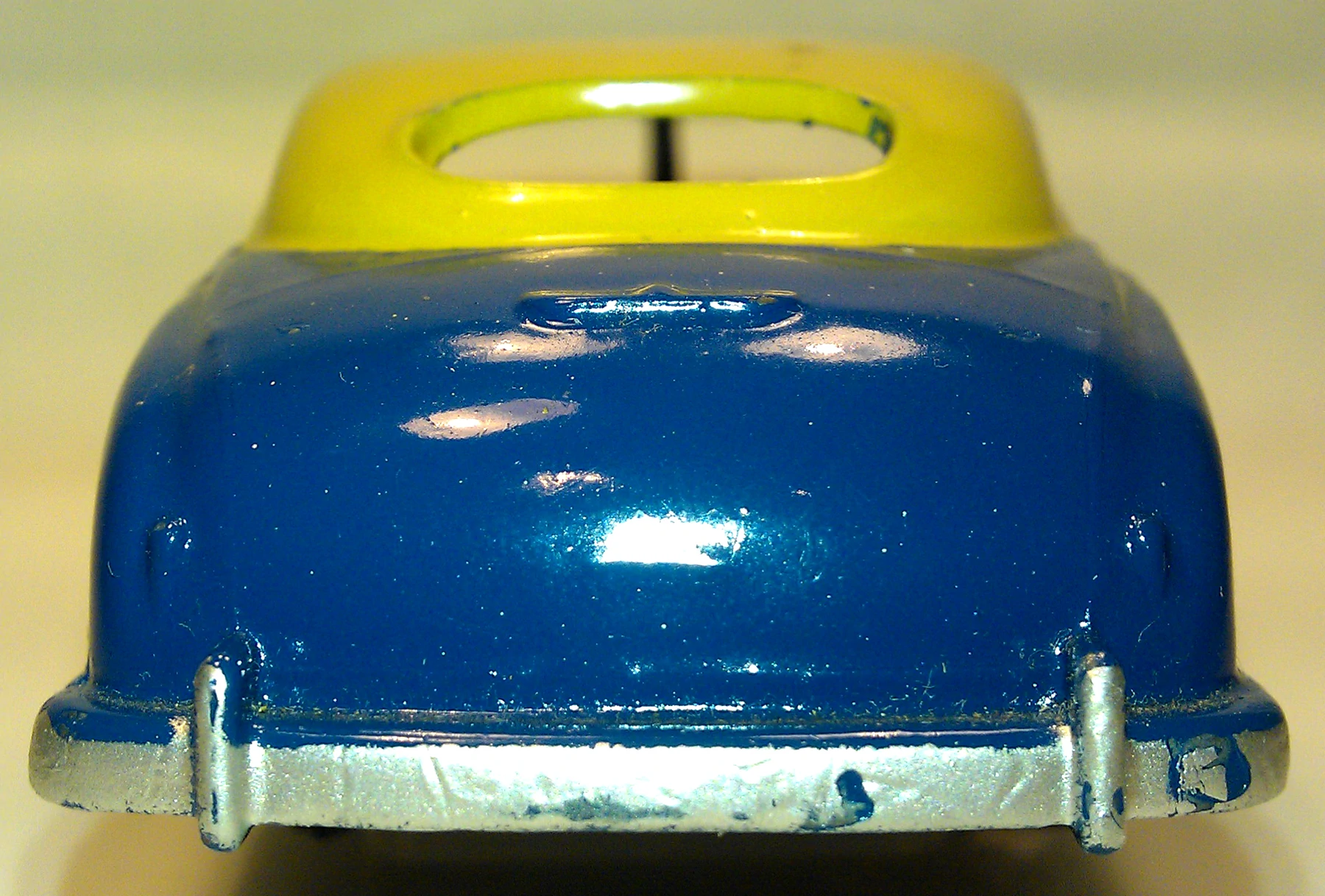
Shown above is the rear view of the Dinky 139B Hudson Commodore Sedan with a chrome bumper. It’s a pity the taillights aren’t painted red (although this was done on some later models) and the Hudson emblem on the tailgate isn’t painted in chrome. That would have given the model a nicer appearance.
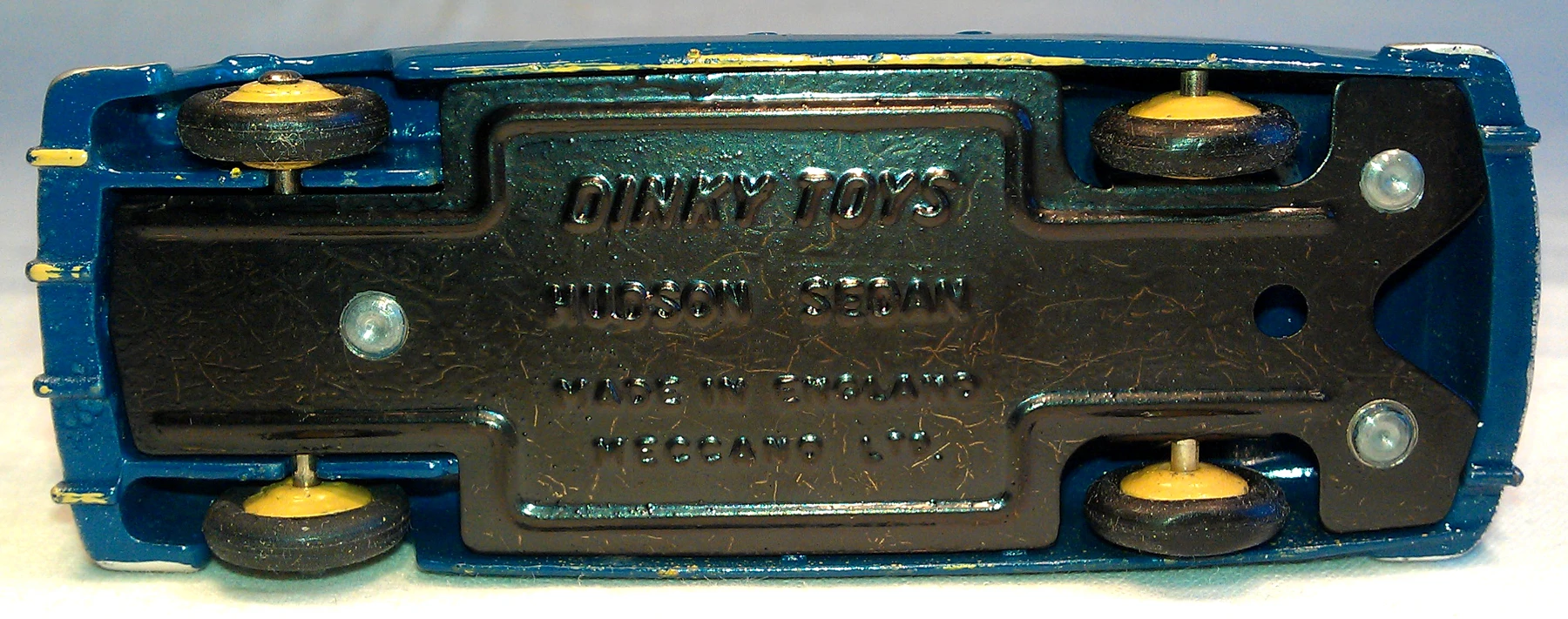
Shown above is the early Dinky 139B with small lettering on its mottled base. Later models used large lettering. In The Great Book of Dinky Toys by Mike & Sue Richardson, the authors indicate that on 27 August 1952 the model number 139B was added, and on 11 August 1954 the model was renumbered to 171, but not marked on the baseplate.
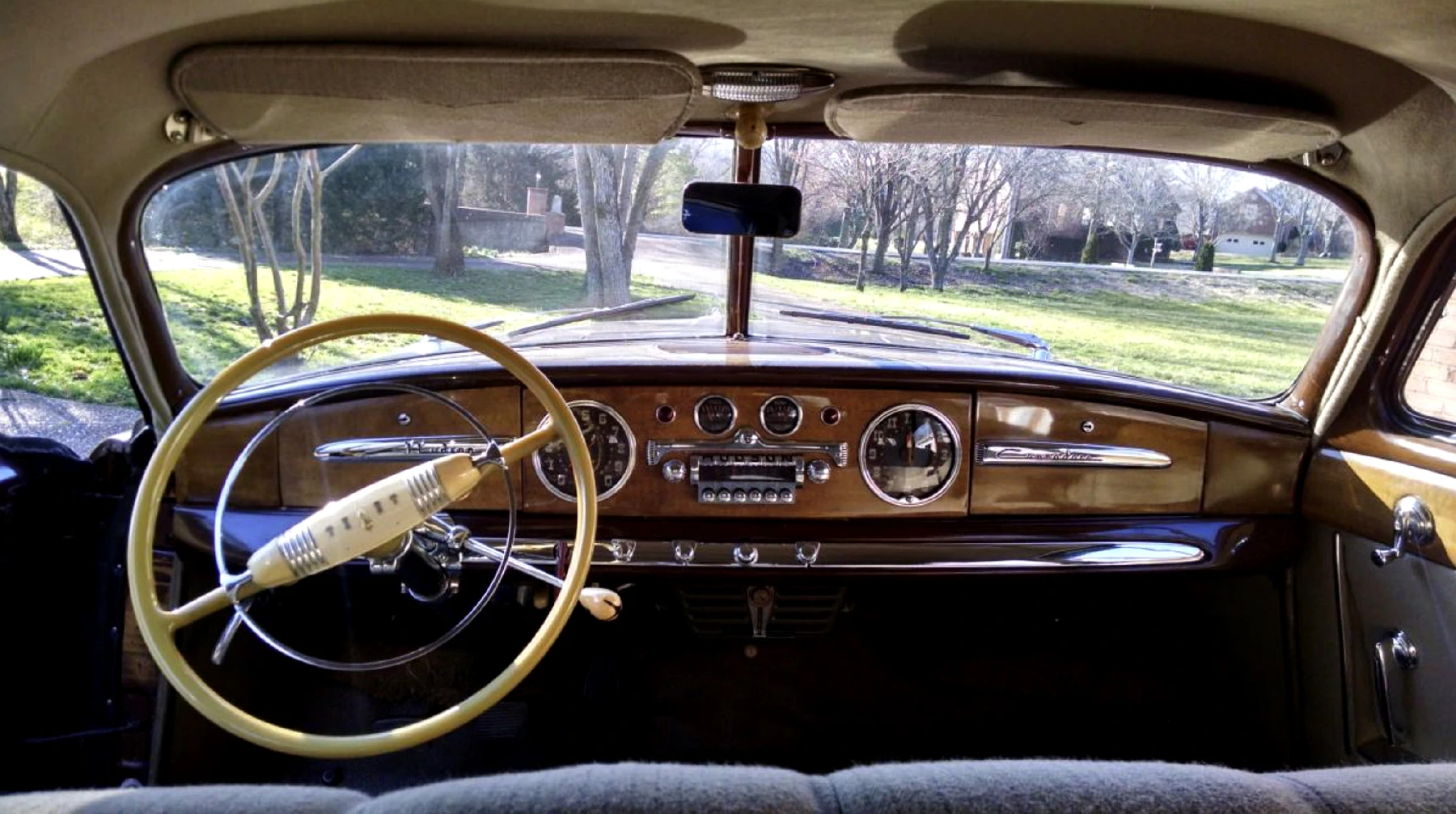
The luxurious dashboard of the real Hudson Commodore Sedan.
Image: ClassicCars
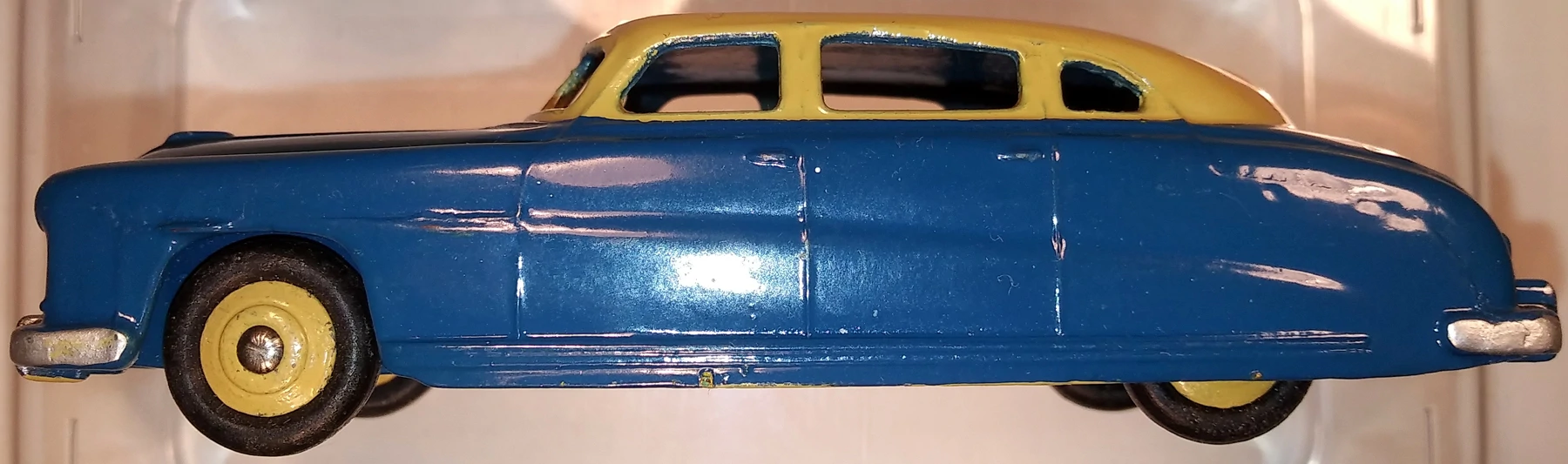
My early Dinky Hudson Commodore has a smooth inner roof. Later models had “Hudson Sedan” cast into the roof
Two tone color schemes
The Hudson Commodore was, in fact, the first post-war Dinky Toys model issued with a two-tone finish, which Meccano Liverpool then applied to other car models from 1956 onwards. Six different two-tone schemes were used on the Hudson Commodore Sedan, some of which are shown below.
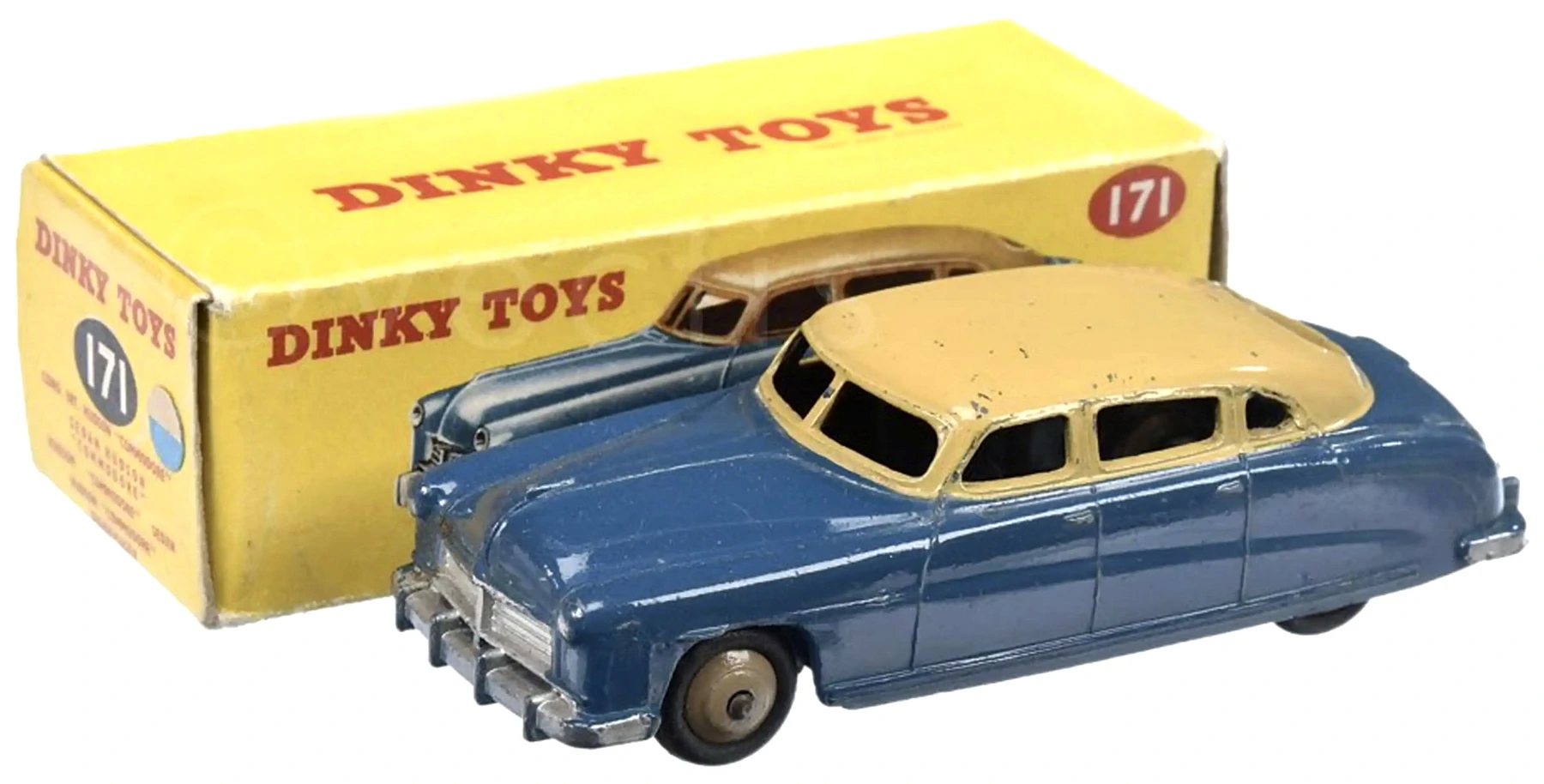
Fawn on mid-blue two-tone color scheme used during 1950–1956.
Image: Vectis Auctions
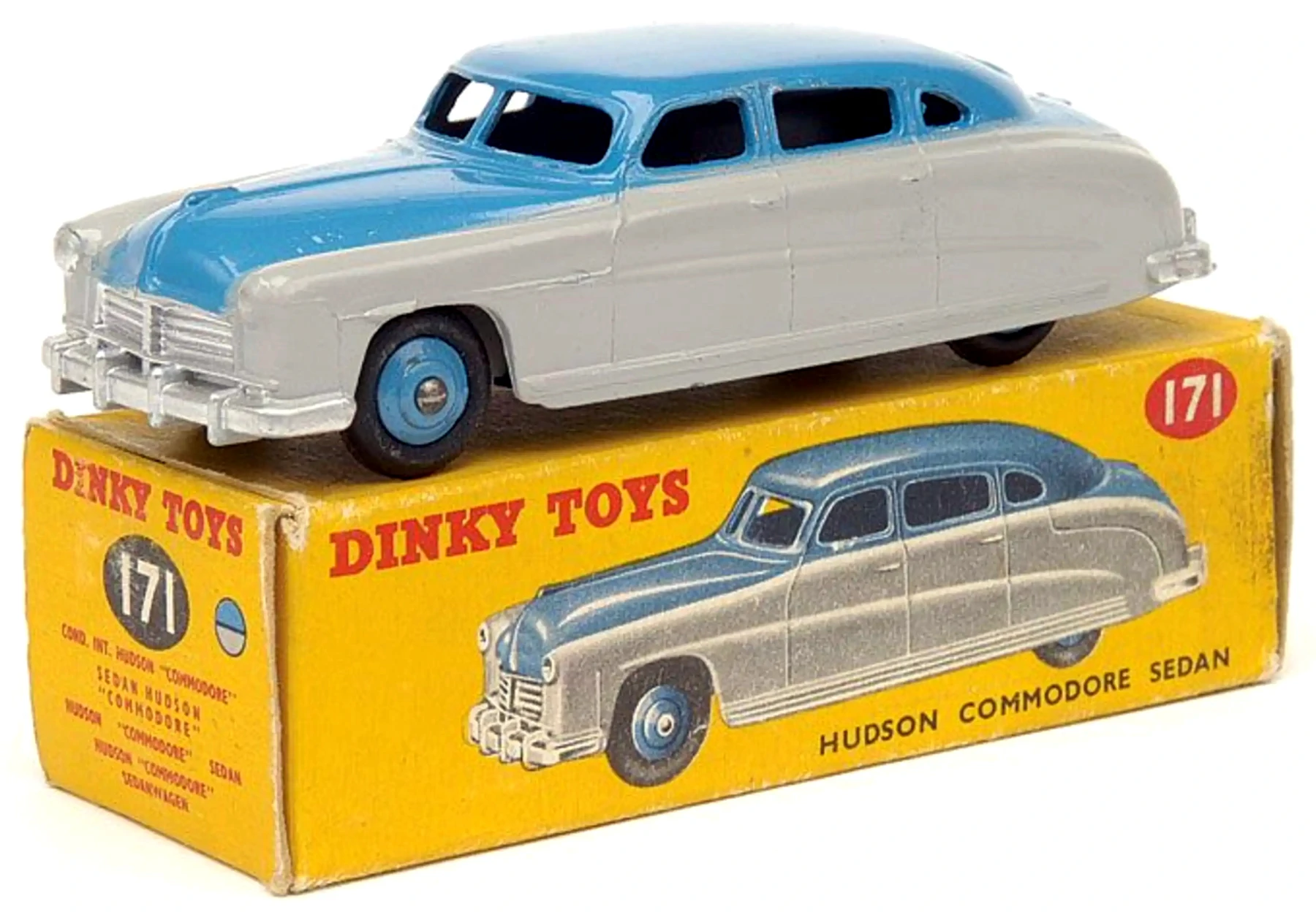
Light blue on grey “hi line” two-tone color scheme used during 1956–1958.
Image: Vectis Auctions
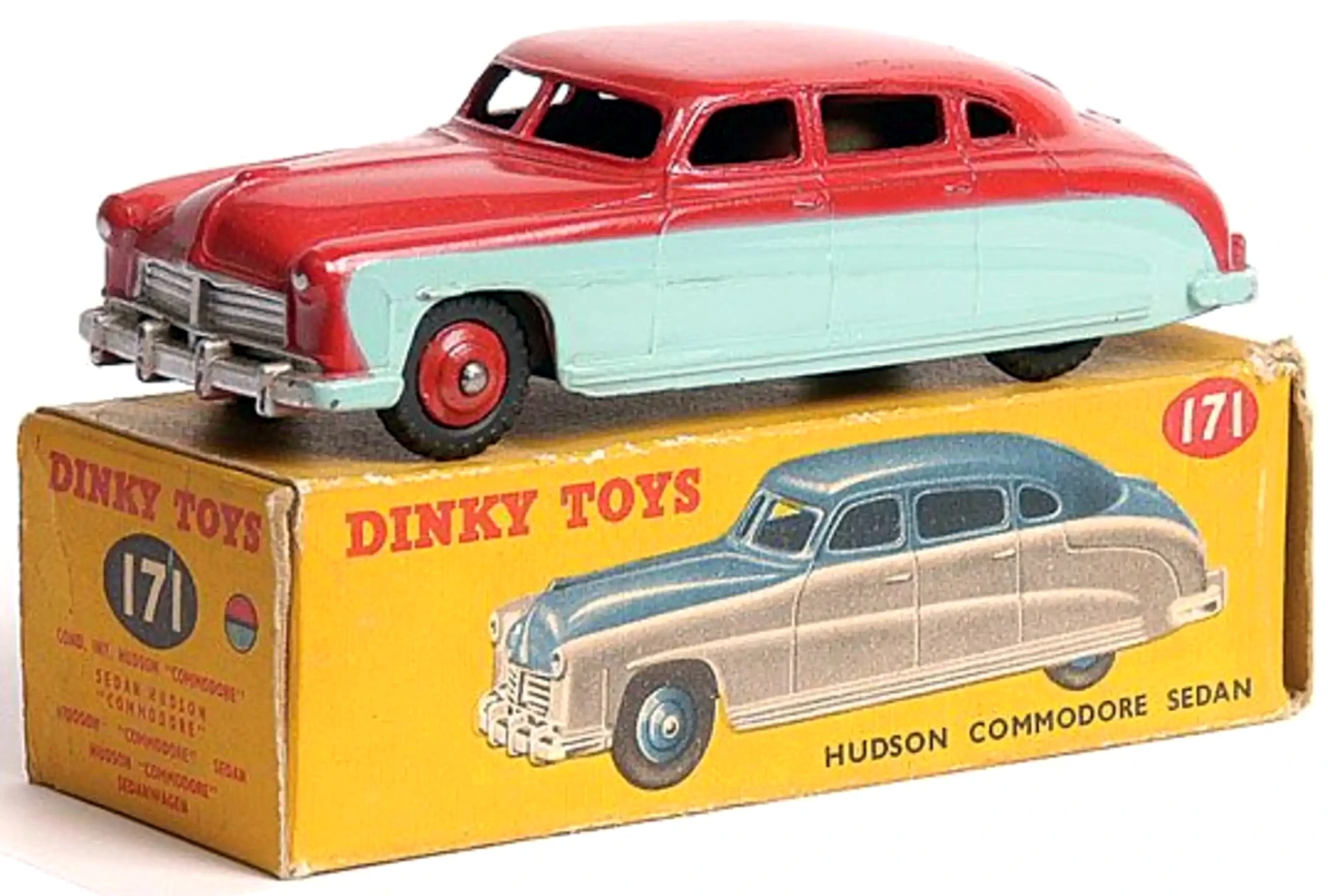
Dark cerise on light blue “lo line” two-tone color scheme used during 1958–1959.
Image: Vectis Auctions
It’s unfortunate that Meccano Liverpool didn’t highlight the attractive speed lines on the sides of the model by mask spraying them in a second color. The model’s speed lines don’t stand out like those of the real car.
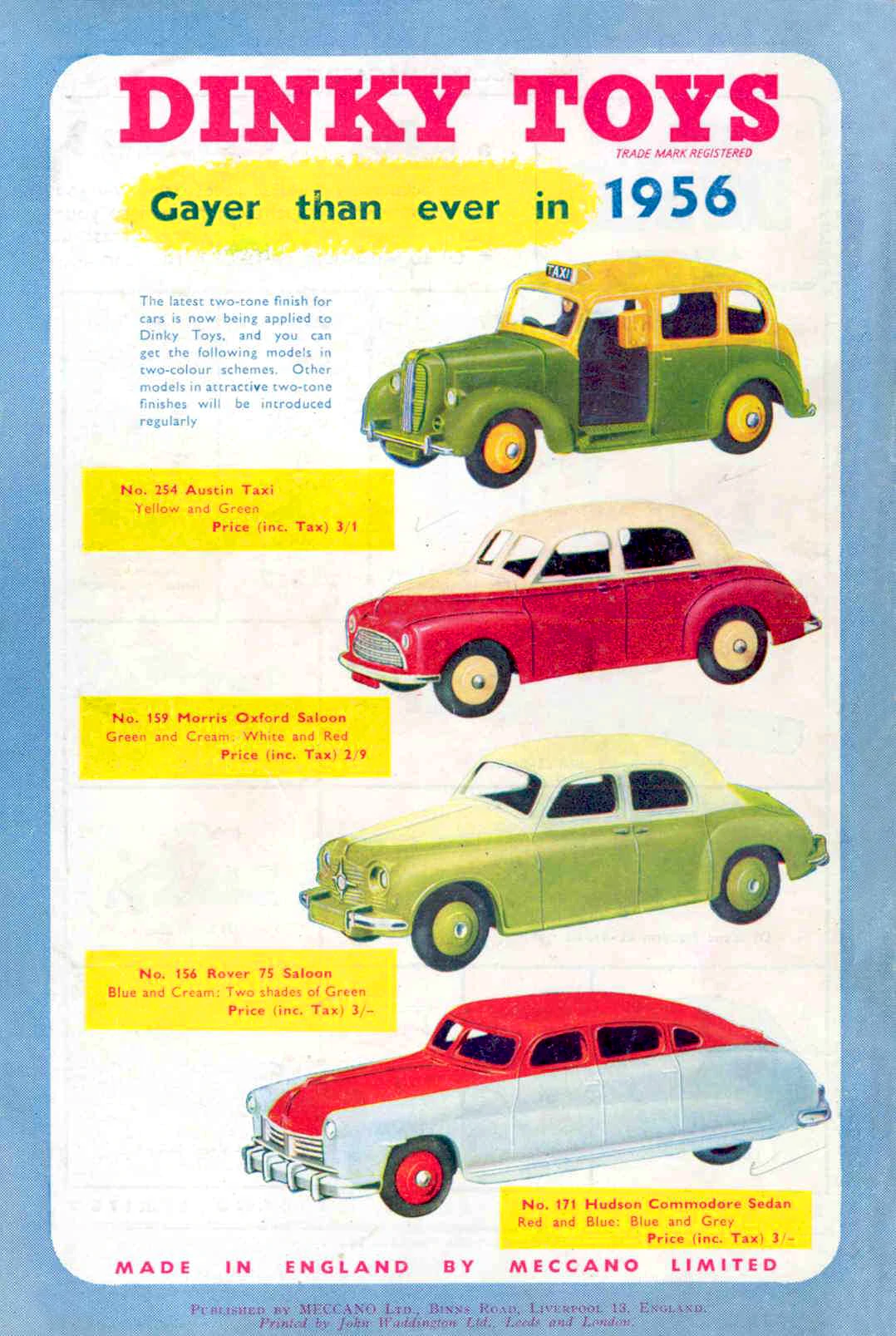
From January 1956 onwards, many Dinky Toys models were issued in a two-tone finish, as shown on the back cover of the January 1956 issue of Meccano Magazine, with the slogan “Dinky Toys Gayer than ever in 1956”. Compared with the color schemes used on the real cars, these two-tone schemes are more fantastic than realistic.
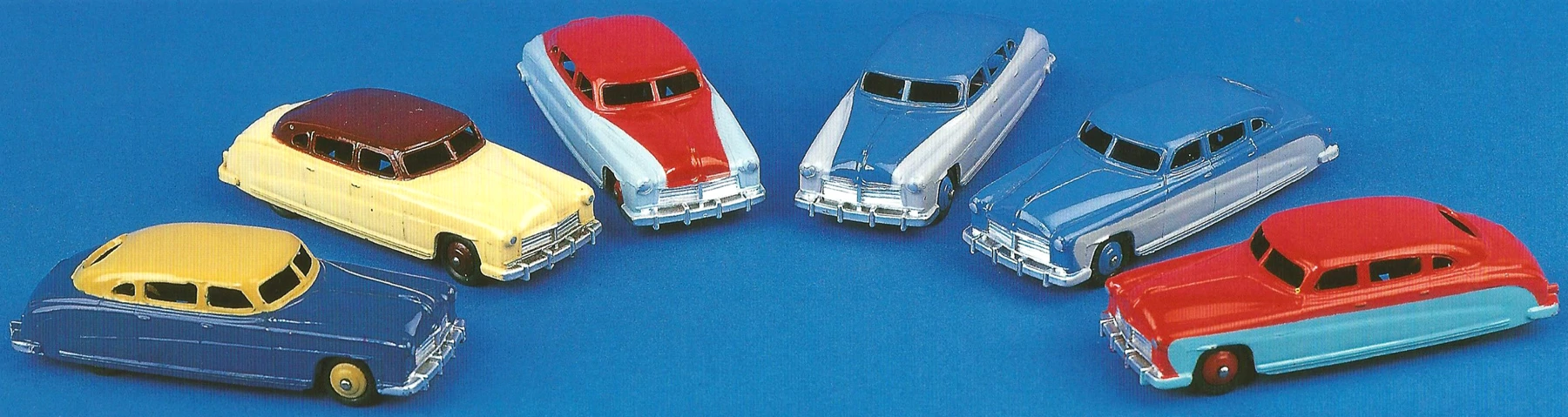
Some two-tone variations of the Dinky Hudson Commodore Sedan.
Image: The Great Book of Dinky Toys by Mike & Sue Richardson
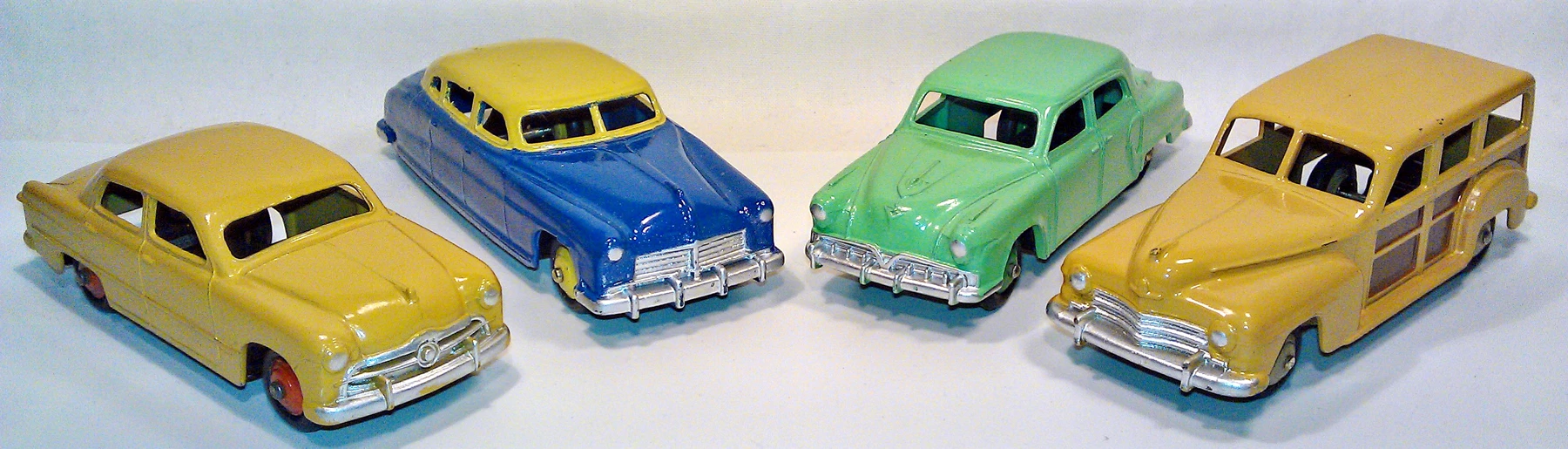
Shown above are my Dinky Toys hard top American cars of the early 1950’s. From left to right:
- Dinky 139A/170 Ford Fordor Sedan (1949)
- Dinky 139B/171 Hudson Commodore Sedan (1950)
- Dinky 139C/172 Studebaker Land Cruiser (1954)
- Dinky 27F/344 Plymouth Estate Car (1950)
The streamlined design and two-tone finish of the Hudson Commodore immediately stand out!
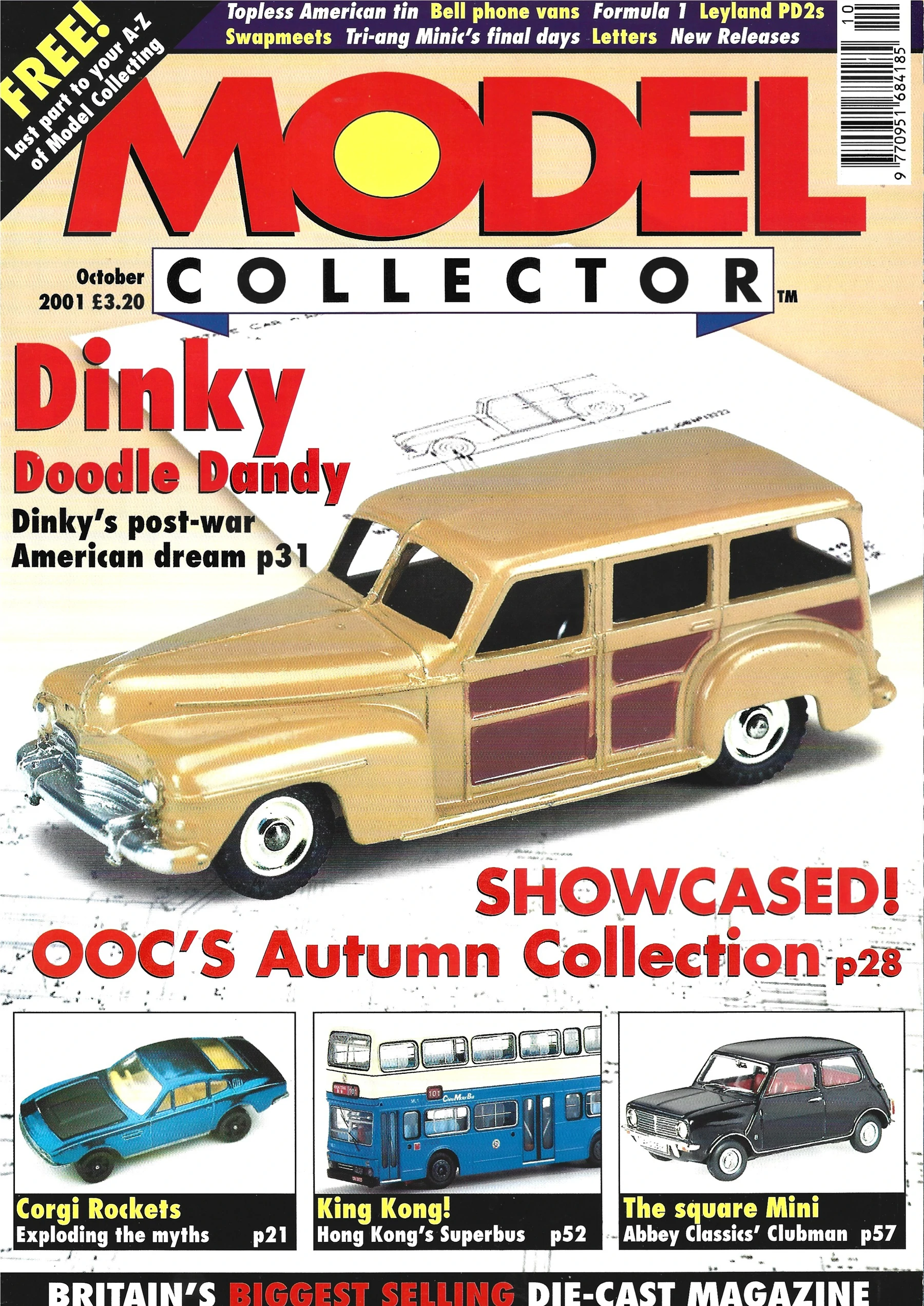
Nigel Mynheer wrote a very interesting article “Dinky’s American dream” about Dinky’s glamorous early 1950’s American cars, in the October 2001 issue of Model Collector. The article covers the Ford Fordor Sedan, the Plymouth Estate Car and the Hudson Commodore Sedan.