Here’s a look back at some truly vintage British Dinky Toys, some of the wonderful 30 Series models that were first made pre-war, then reintroduced again for a few years post-war. Cecil Gibson (History of British Dinky Toys 1934–1964) reports that the 30A — 30F models were introduced in 1935. Gibson states that this is the first time that Dinky used proper names for the vehicles instead of generic references to “sedans” and “saloons”.
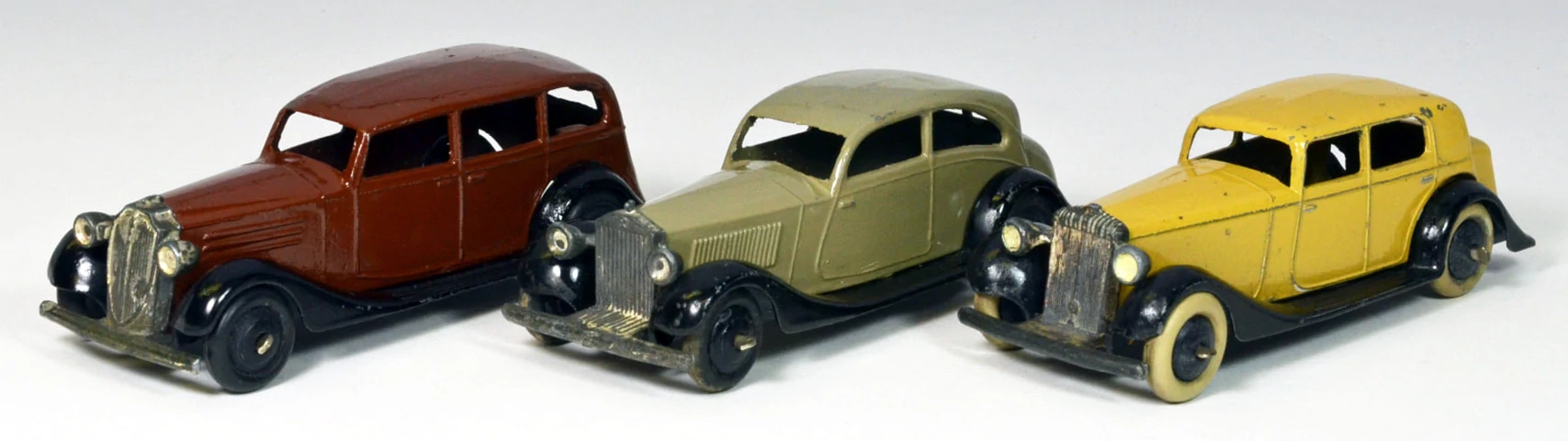
Shown above from left to right are the Vauxhall, Rolls-Royce, and Daimler, all of which happen to be post-war issues. Like the 36 Series that followed, the three models in the picture shared a common chassis and fender unit, with only the radiator and body being different.
30B Rolls-Royce
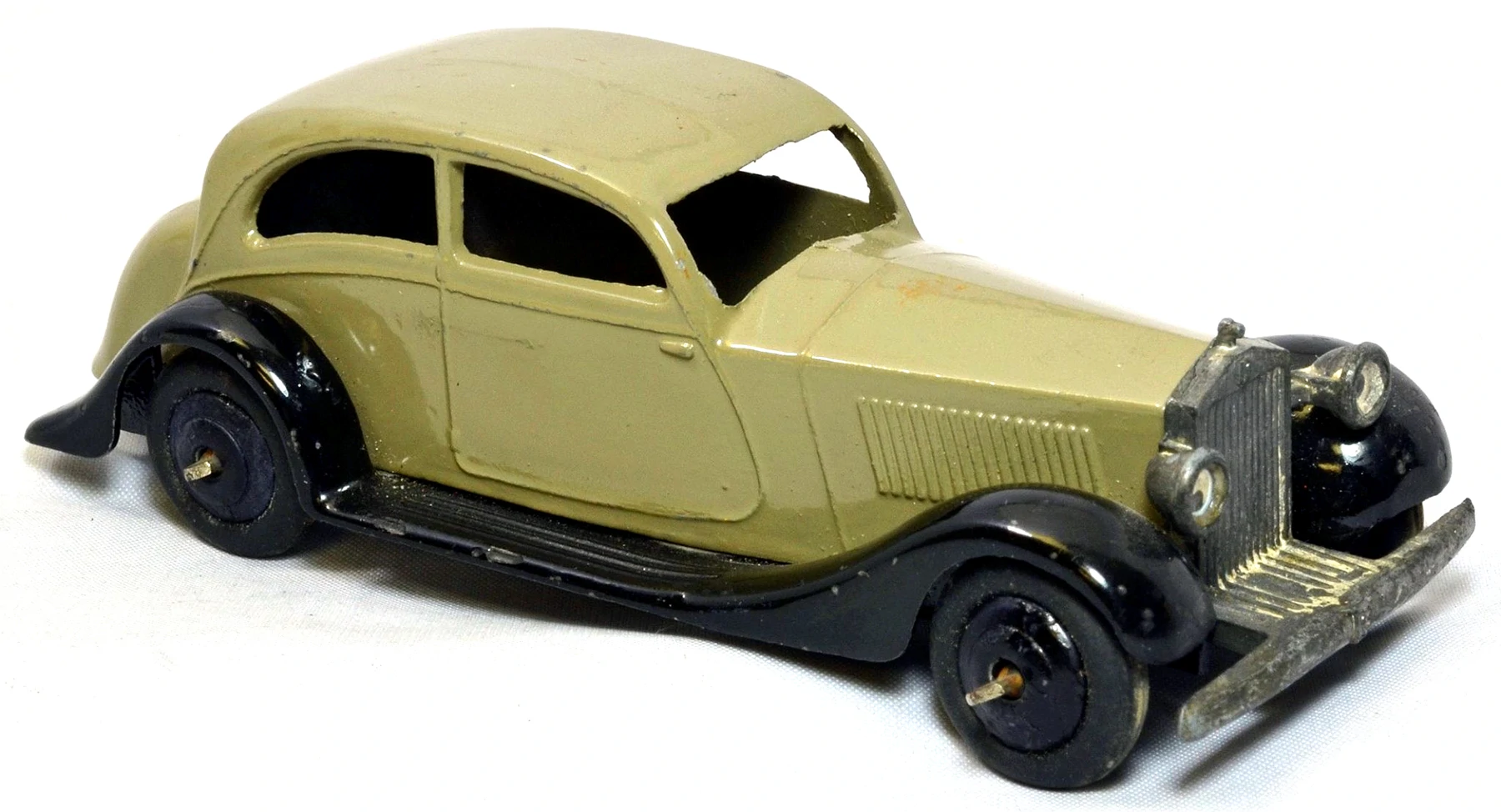
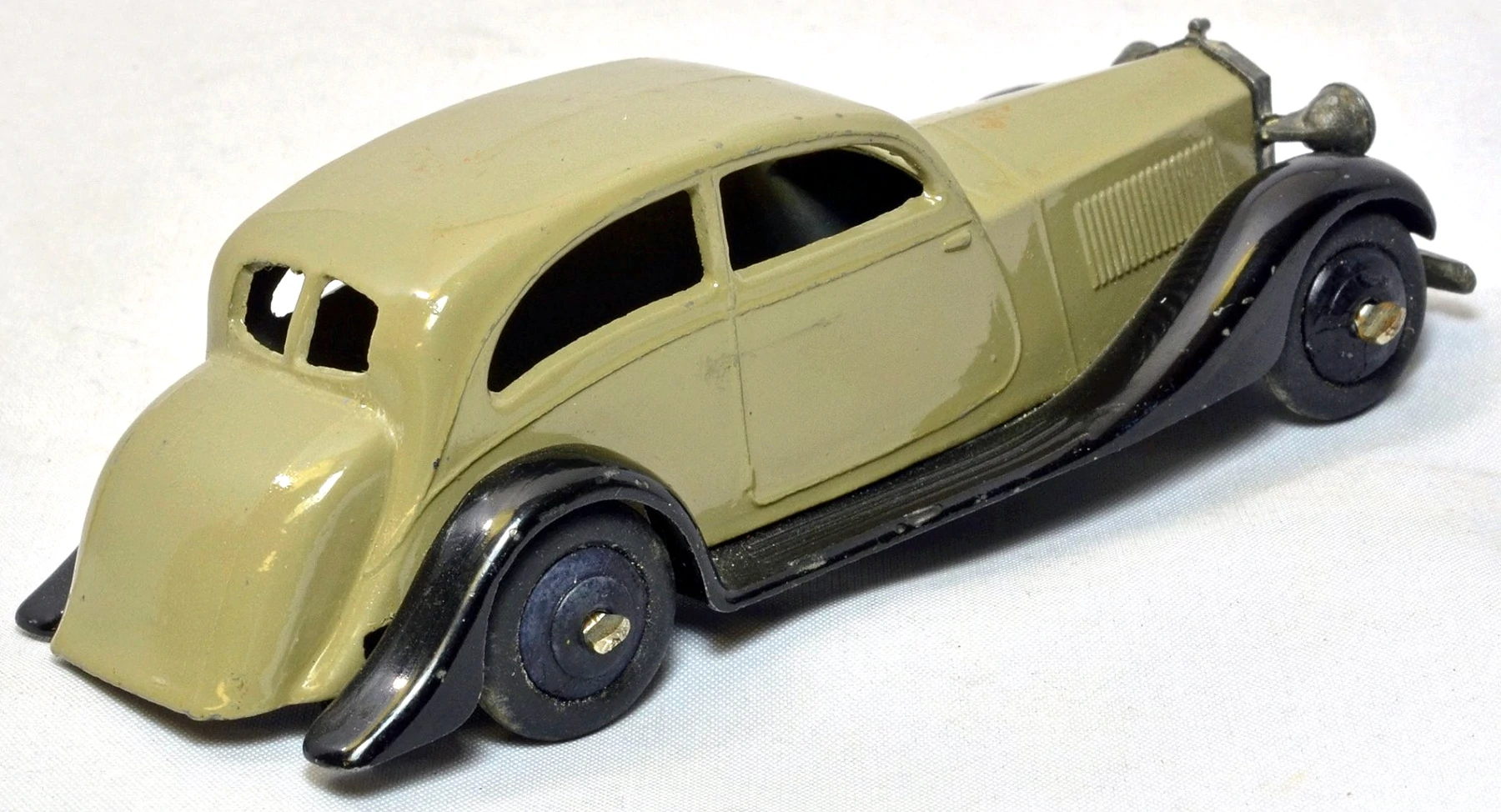
Dinky made this early Rolls-Royce Saloon that continued briefly after WWII, from 1935 through 1950. Although not my favorite when compared to the Vauxhall or the Daimler, it was nonetheless a rather stylish car from the pre-war era with distinctive sloping rear windows.
30C Daimler
The 30C Daimler was made in either 1945 or very early 1946, as it features the earlier smooth, black wheels used on pre-war models with white tires, and also has a pair of triangular openings on the baseplate. However it lacks the thin axles that were only fitted on pre-war Dinkys. All post-war production switched to using thicker axles.
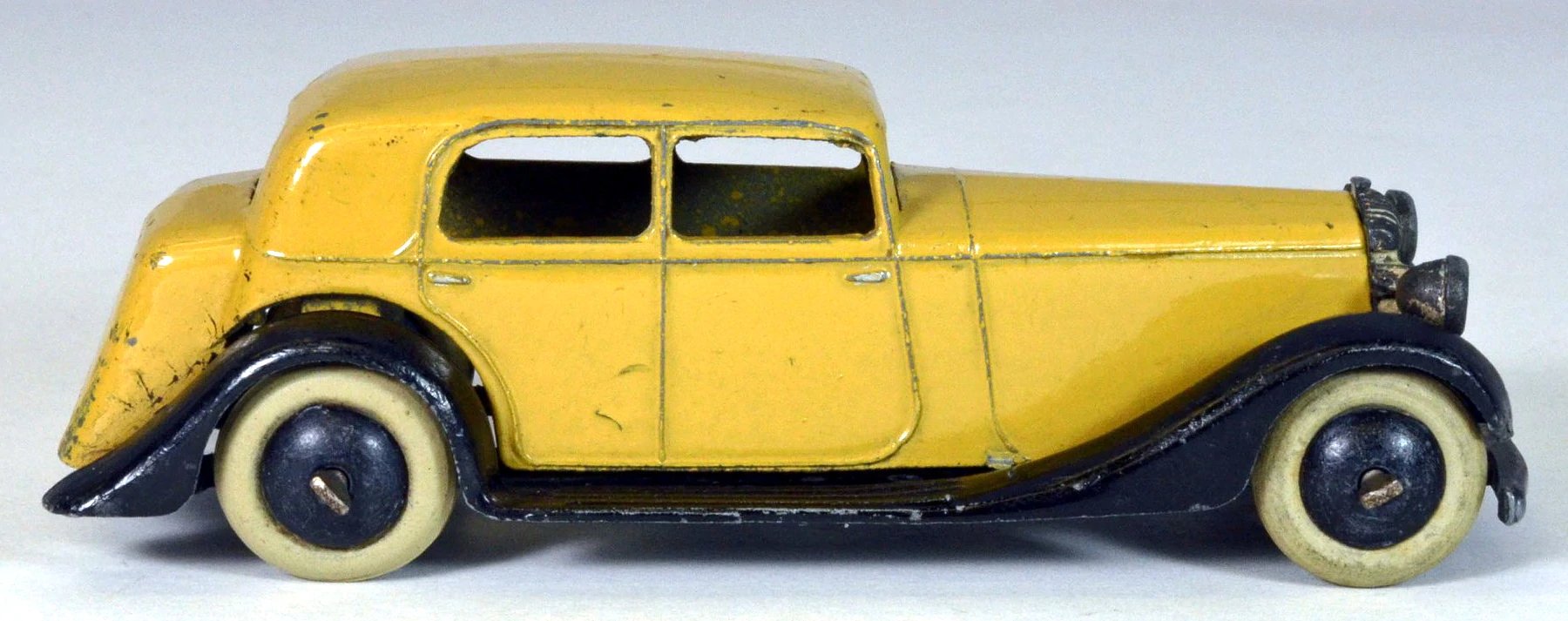
There was a brief transition period around 1946, when several pre-war variations were still used, and the Daimler is one of them, having pre-war tires and wheels, and wearing a pre-war paint color. These pre-war stocks were quickly used up, and a great many later versions produced, so this instance is a special glimpse back to the very early days of Dinky Toys.
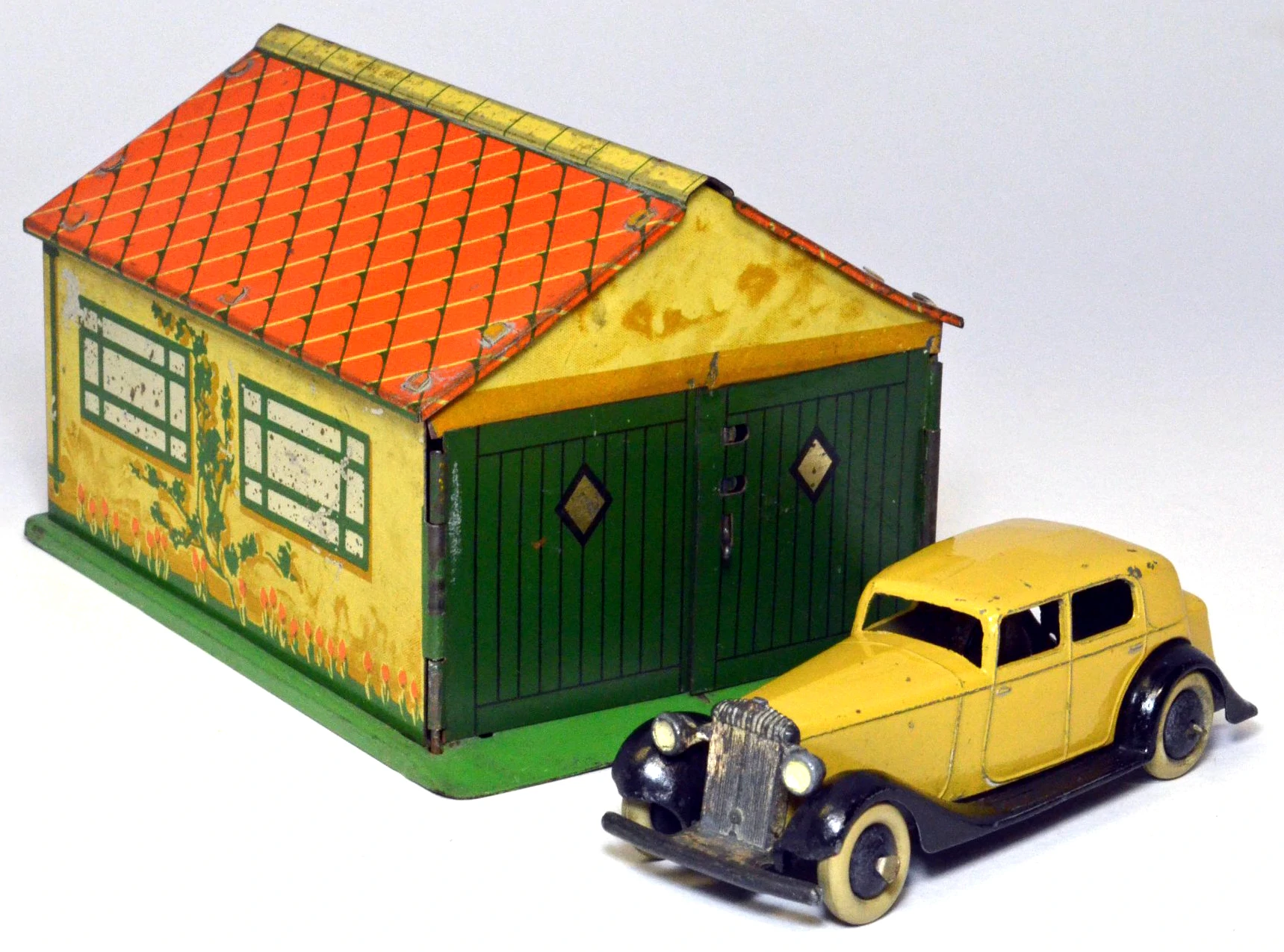
In this picture, the Daimler is parked in front of the Dinky Toys tinplate Garage from around 1939. The garage was only produced pre-WWII, so is fairly rare now.
30D Vauxhall
Even as a young boy in the mid-1950’s, I was taken by the wonderful paint quality of these early Dinky Toys. Meccano had long before figured out how to create a high quality paint finish, which to me was always a hallmark of these models.
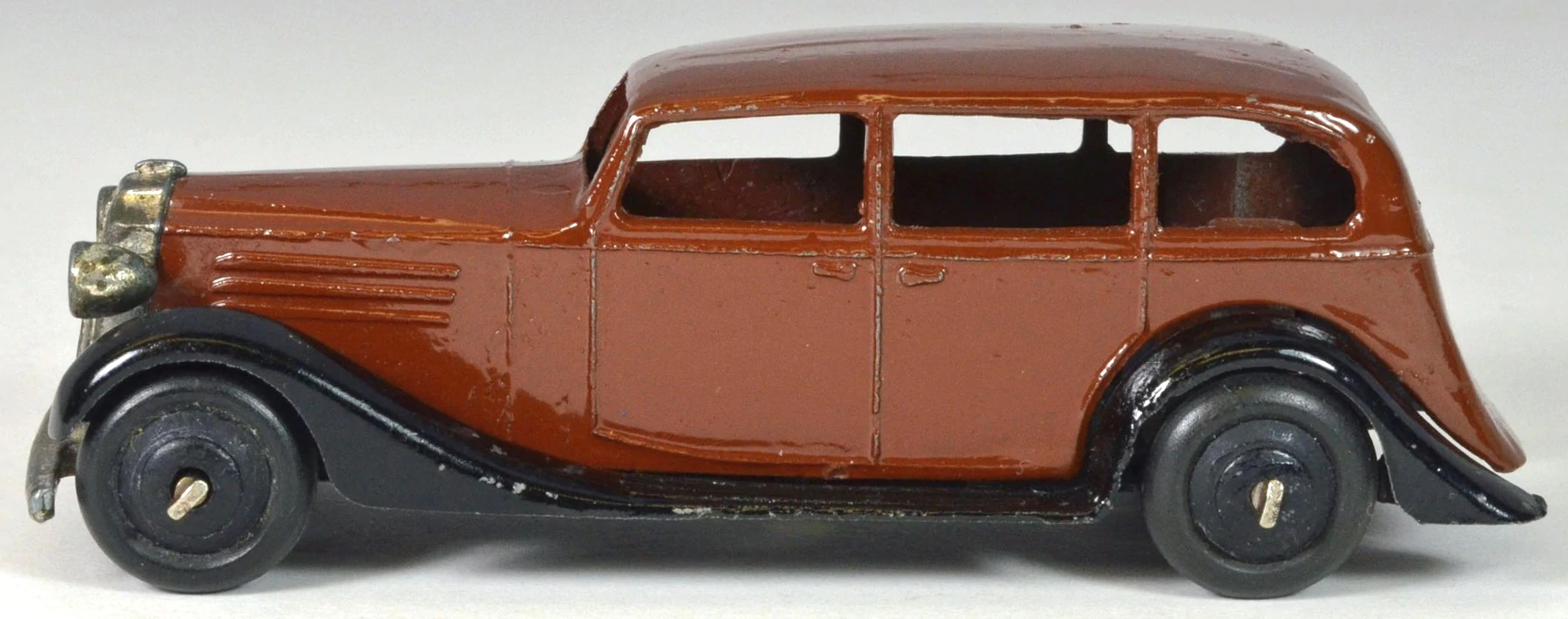
A nice example is this 30 Series Vauxhall from around 1950. The paint is lustrous and deep even after 70 years, and this post-war version is almost mint with its very rich, dark brown color.
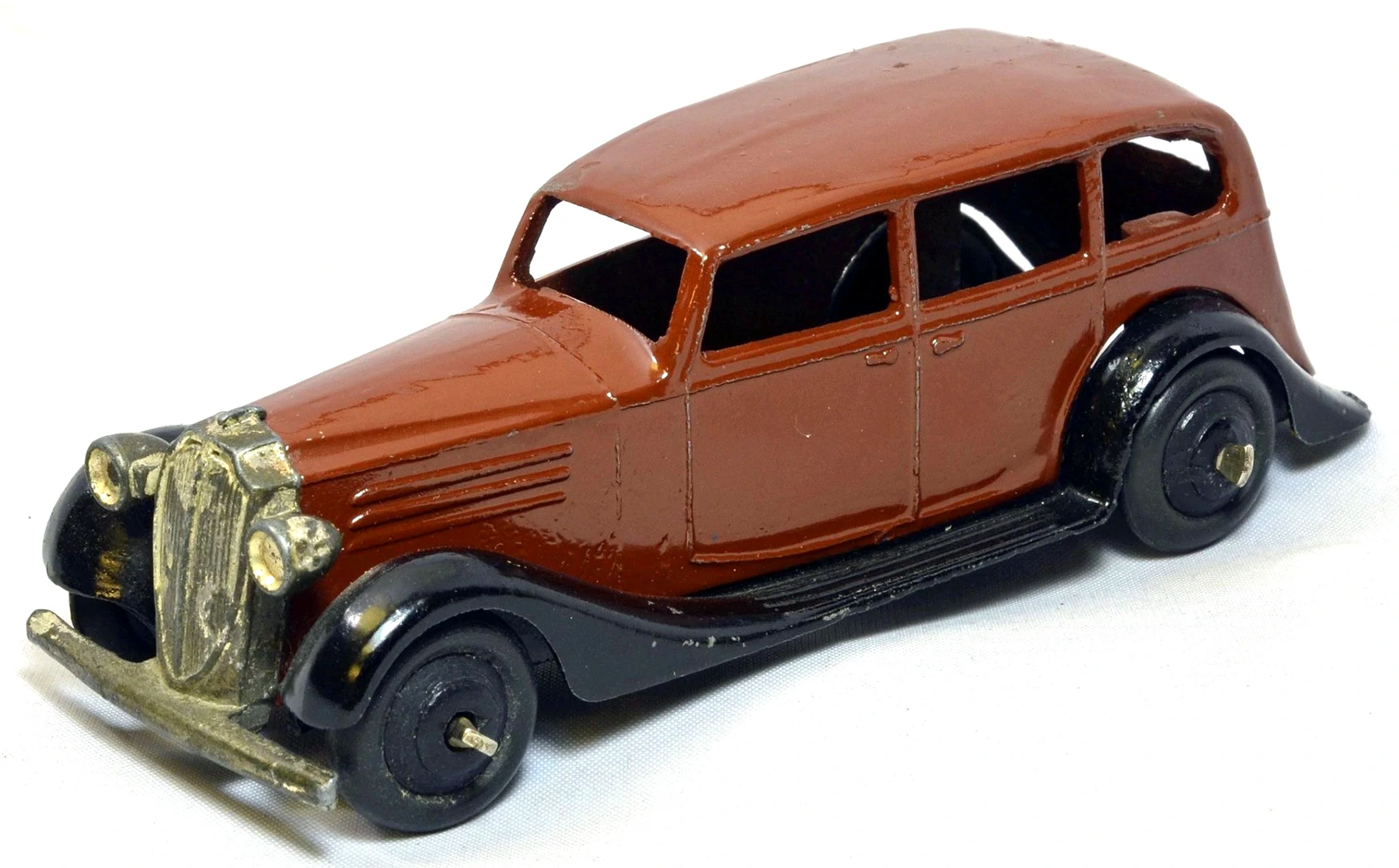
The 30 Series Vauxhall is one of my favorites and has very handsome lines. It even retains a small amount of “plating” that Dinky used on the grills. It’s another nice little diecast model from so long ago.
30F Ambulance
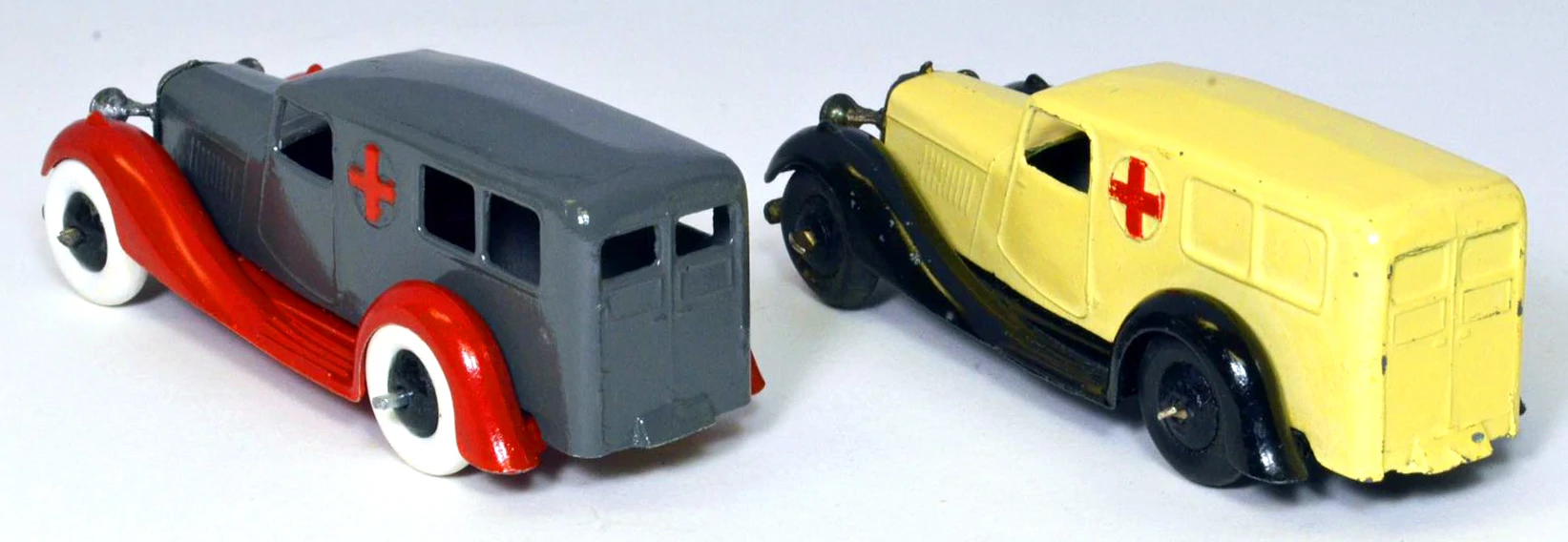
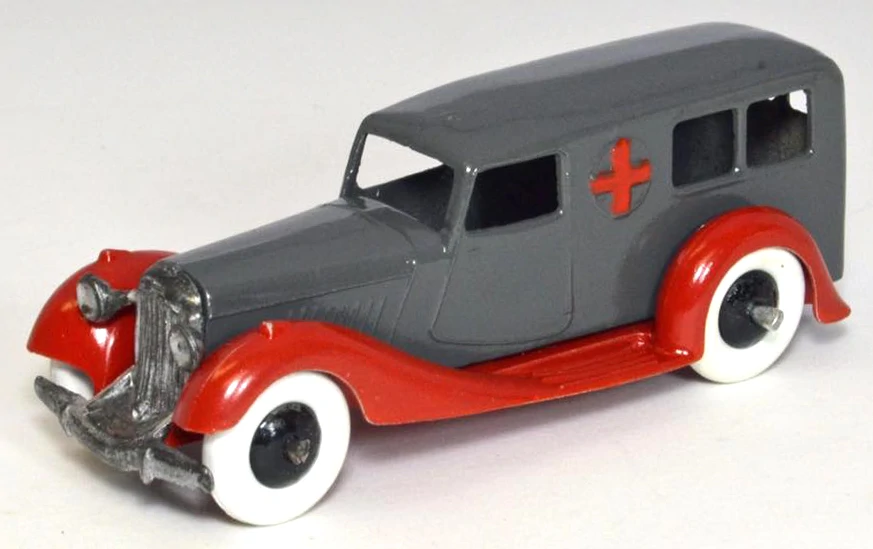
The 30 series Ambulance is probably my favorite model of both the 30 and 36 series, and I particularly like the earlier versions with the still open side and rear windows. It’s such an interesting and neat looking model. I originally owned a cream colored later post-war version without the open windows, but looked for several years, waiting to find a nice earlier example. When the darker one became available for sale, I couldn’t believe my eyes, especially after it arrived. Although not mint, it’s in excellent condition and with smooth wheels and open windows, it has to be from 1946. It also still has a surprising amount of plating on the front radiator grill.
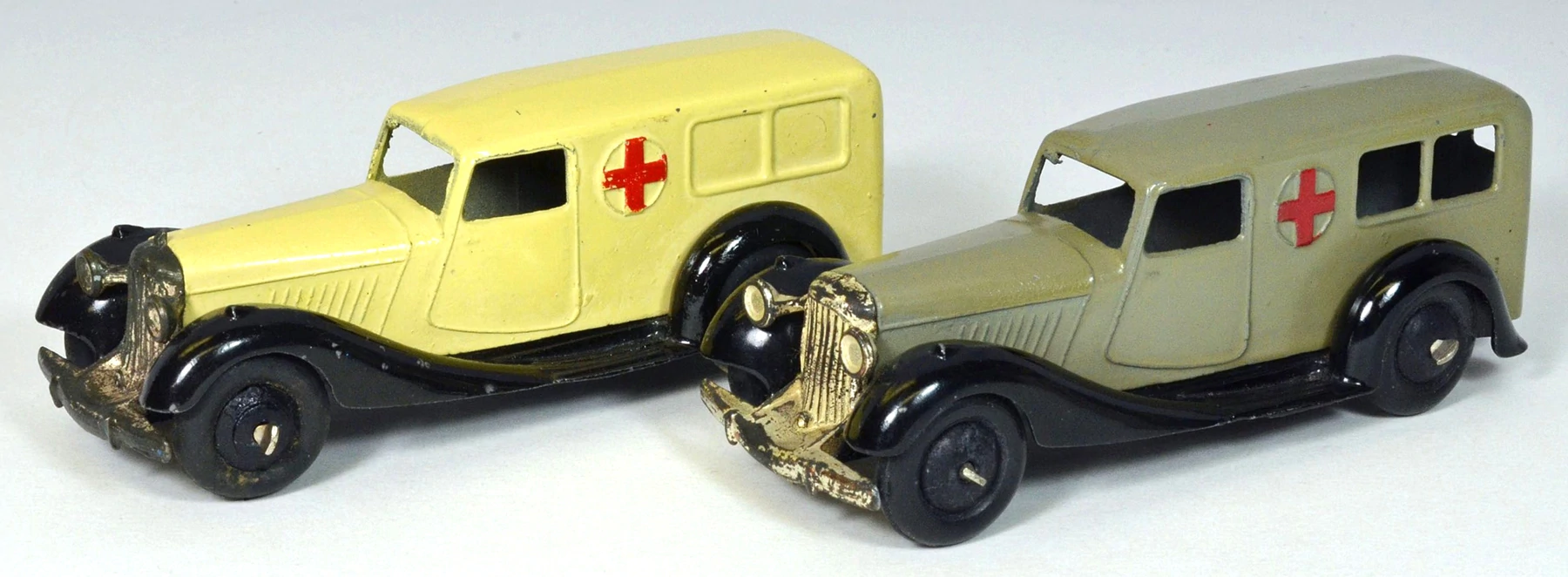
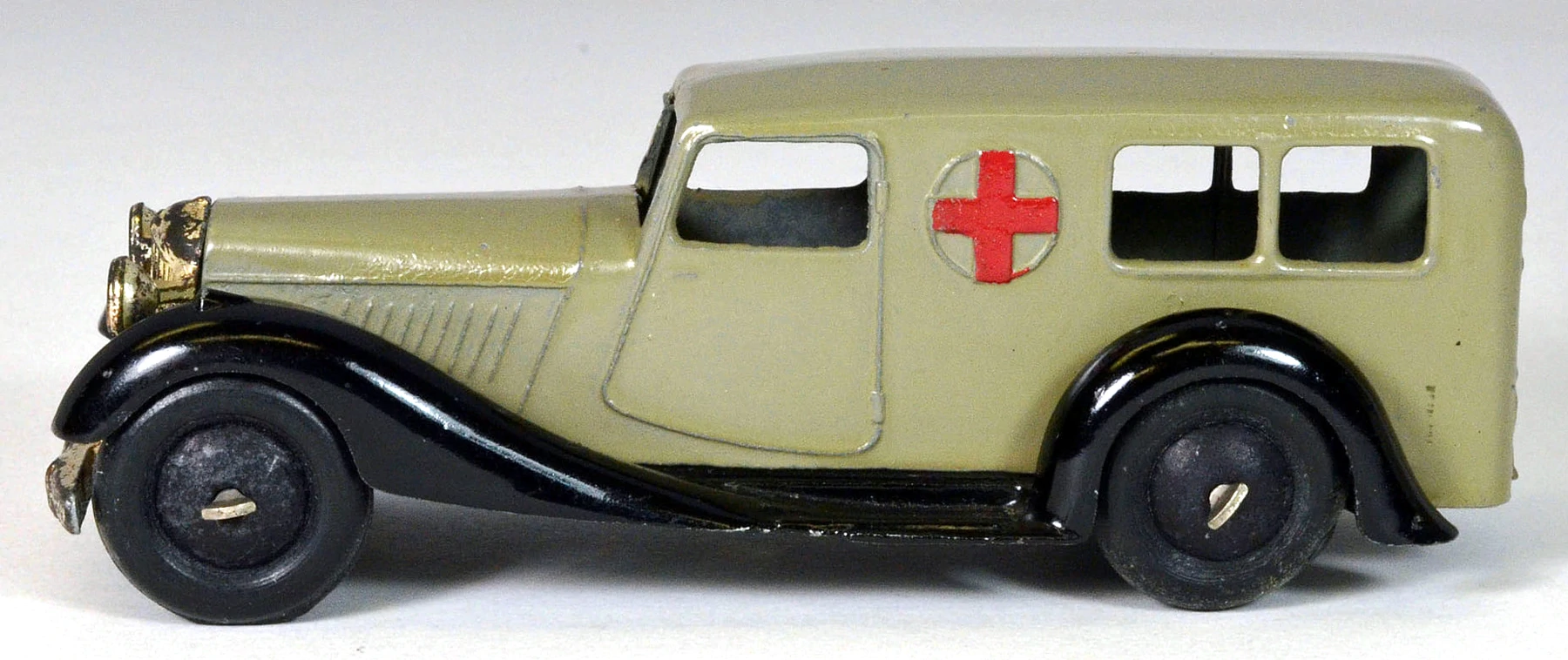
Shown below is my first cream and brown Ambulance along with one with red fenders, grey body and white tires, which has been carefully restored to look just like the first pre-war version with open windows. Shortly after the war, Meccano got rid off the open rear windows; a big mistake in my opinion.
30G Caravan Trailer
Shown below is the 30G Caravan, made only for a few years pre-war, starting in 1935 and discontinued in 1941. It’s a neat little model that goes well with all thee period 24 and 30 Series automobiles that Dinky introduced.
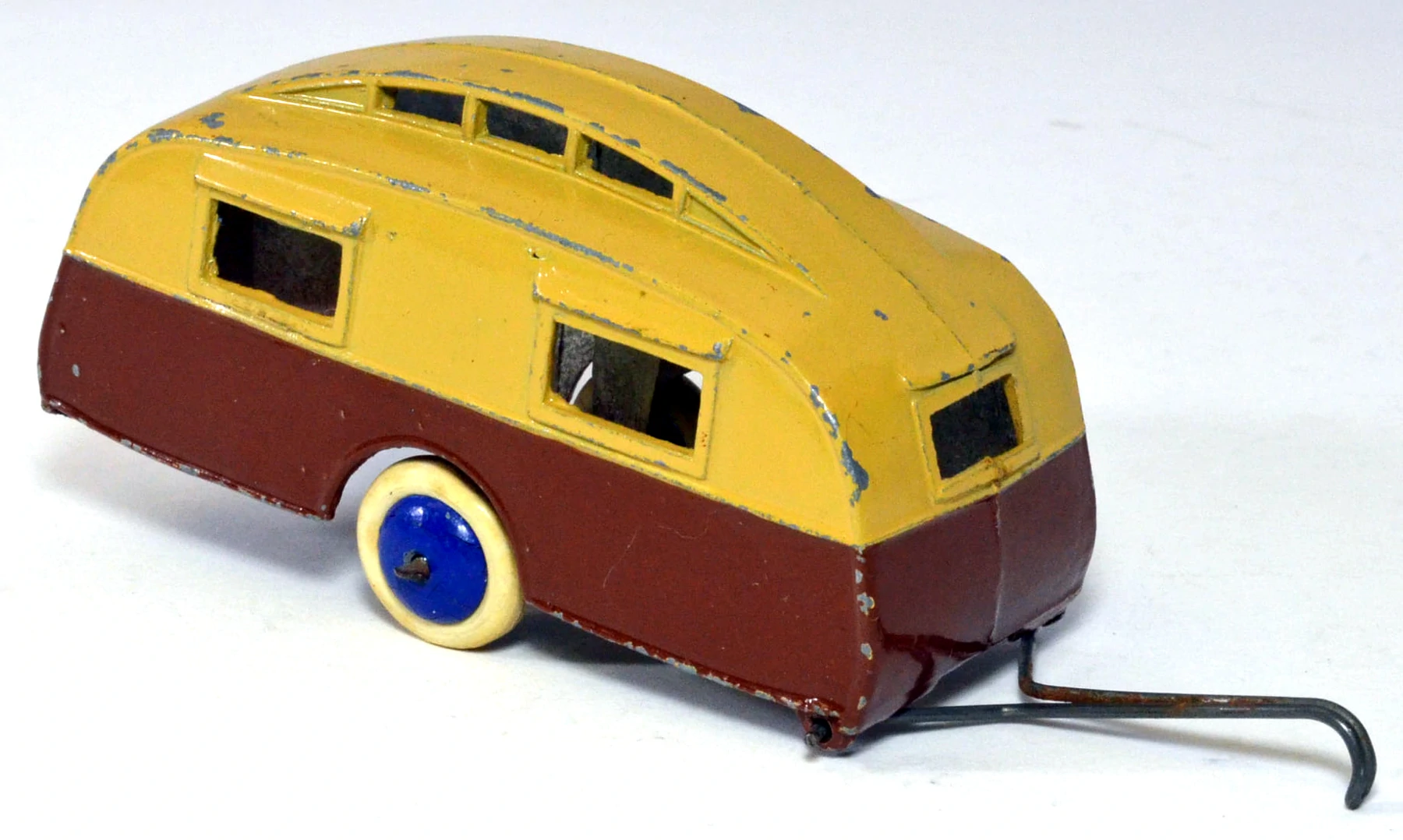
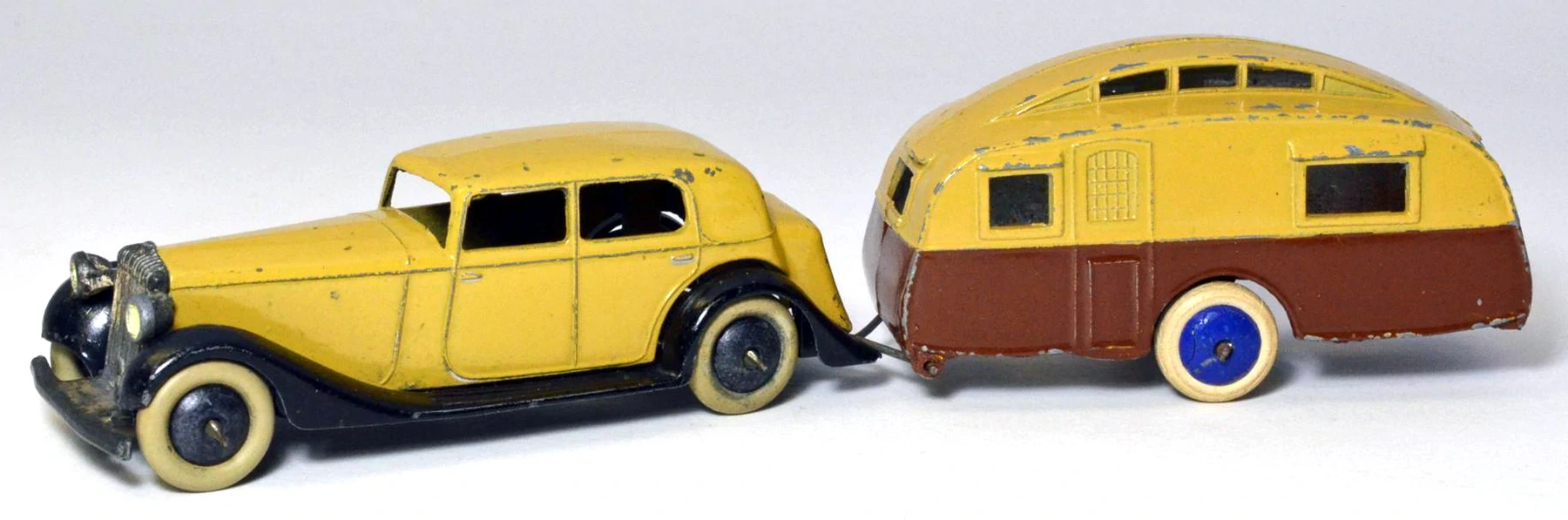
These can still be found, but many have substantial metal fatigue. I’ve never heard of a prototype attributed to it, but I did my own research several years ago and came up with something very similar.