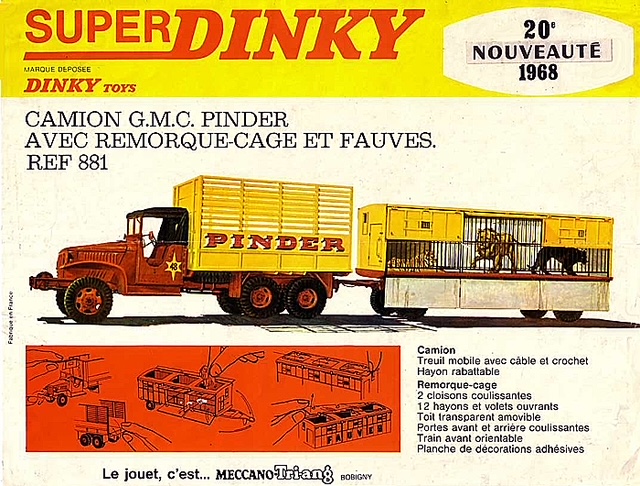
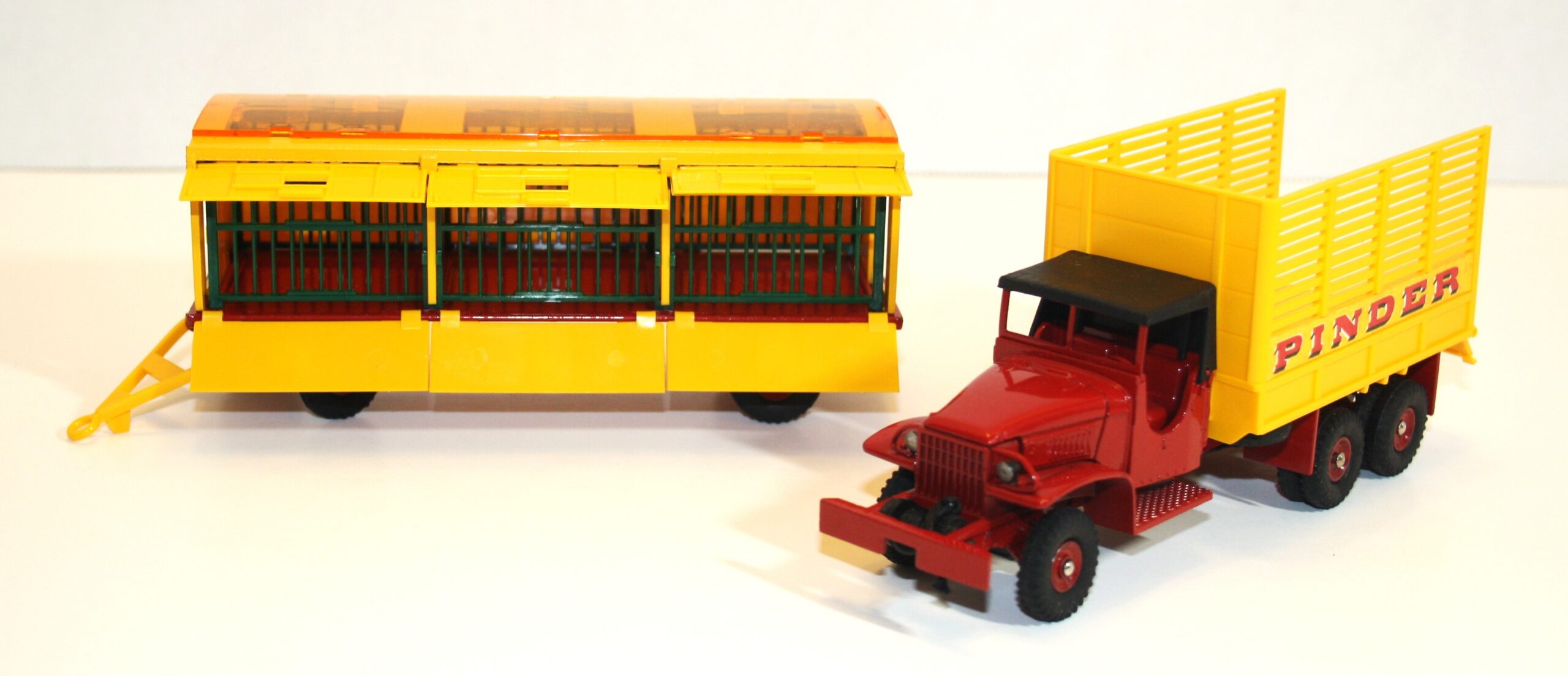
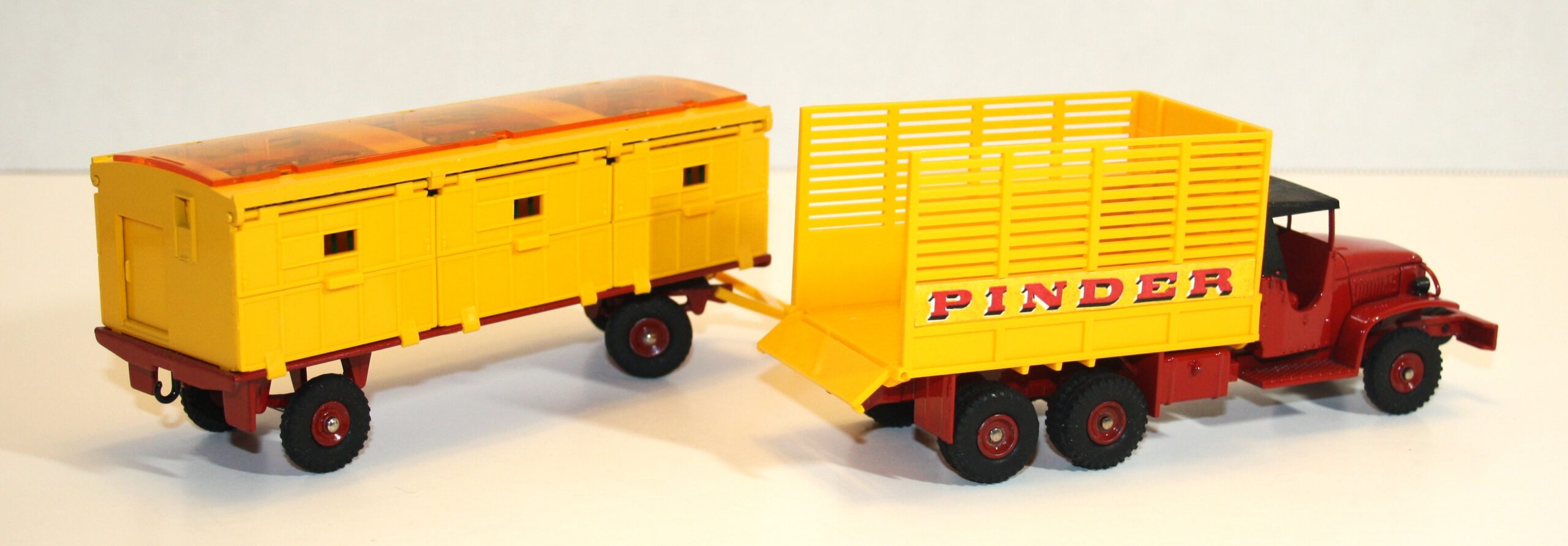
The 881 Pinder circus truck and cage trailer was released in 1968. It was the first GMC model in the four GMC model lineup. The first image shows the original Meccano France ad while the next pair of pictures show two views of the model.
Military toys were ever-present in the Dinky Toys lineup, from the start of the company in the 1930s all the way up to their demise in 1979. Dinky France also had military toys in their offerings, and many of these Dinky France military models were considerably more detailed than their English Dinky military cousins — especially when it came to the superb GMC army truck models that first appeared in 1968.
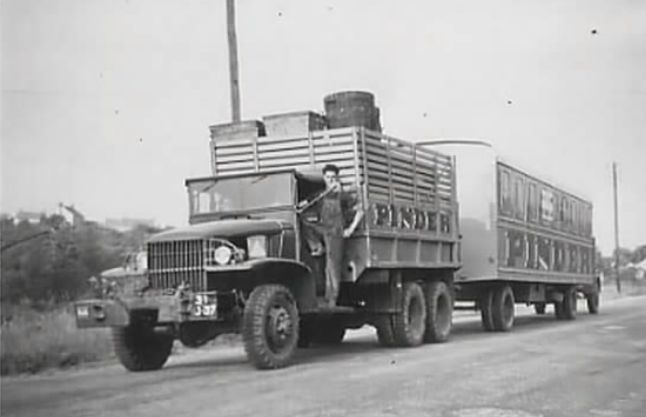
This is the actual Pinder truck that Meccano modelled.
Image: Jaap Schroder
These detailed Dinky France models were based on the legendary WWII GMC CCKW 2.5 ton 6x6 trucks which went into service in 1940. After the Jeep, these trucks are probably the most recognized truck ever made. The 2.5 ton cargo truck was considered such an asset that (as General Eisenhower wrote) many officers regarded it as one of the six most vital vehicles to win the war. Over 570,000 were built from 1941 to 1945, and they served in every combat theatre during WWII with US Forces and the Allies. They were extremely reliable and very durable vehicles.
After the war, the US left thousands of these trucks behind in Europe to assist in the rebuilding of the shattered postwar infrastructure. Many were rebuilt, some fitted with European diesel engines and re-bodied with unique locally sourced cabs that completely transformed their appearance. Especially popular in the Netherlands and France, many were still in operation into the 1990’s – in civilian and military service – a testament to their robust construction.
The CCKW name is from GMC model nomenclature. The first C is for the year 1941, the second C is for conventional cab, K is all wheel drive and W is tandem rear axles. They were powered by GMC’s own 91.5 hp 269.5 inch six cylinder engine, driven through a Warner 5‑speed manual transmission with a two-speed transfer case.
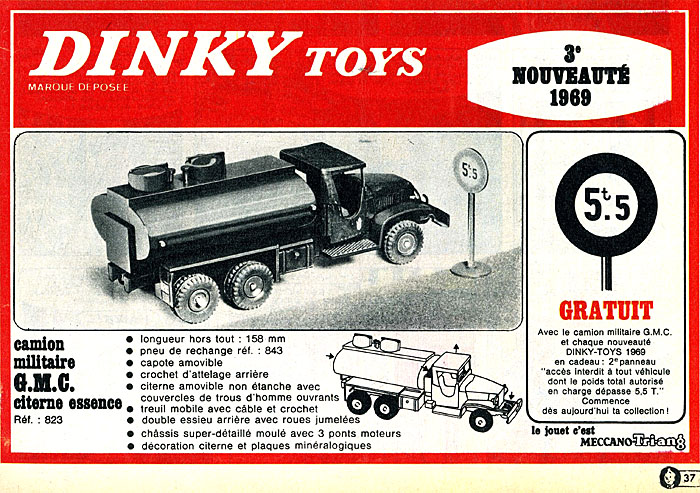
The very detailed 823 GMC tanker was released in 1969. It was advertised as a fuel tanker but was really a “Truck, Tank, Water, 700 gallon”. The unique elongated manhole type filler lids were only used on the water tanker. This picture shows the original Meccano ad for the model.
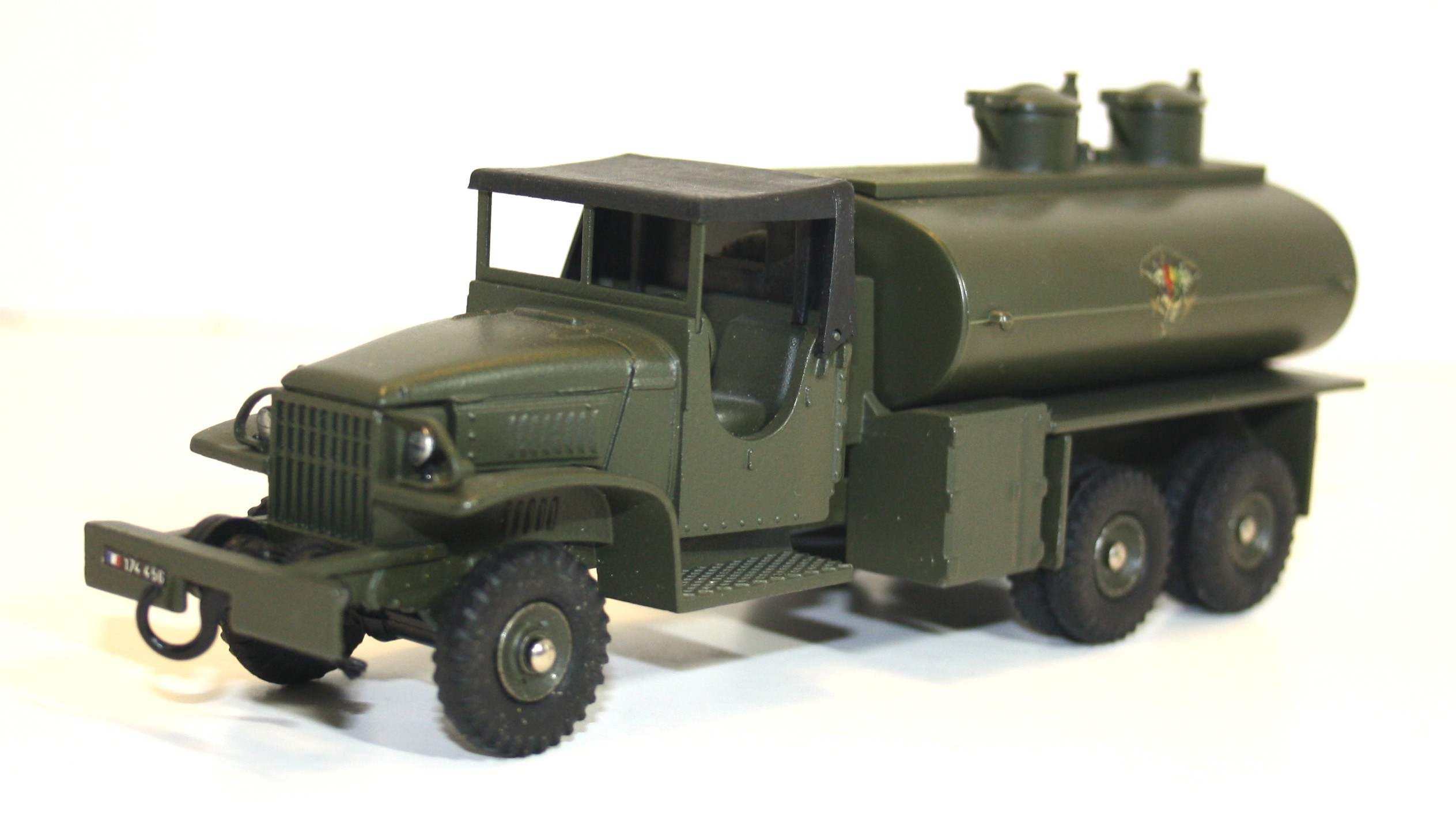
A front and left view of the model.
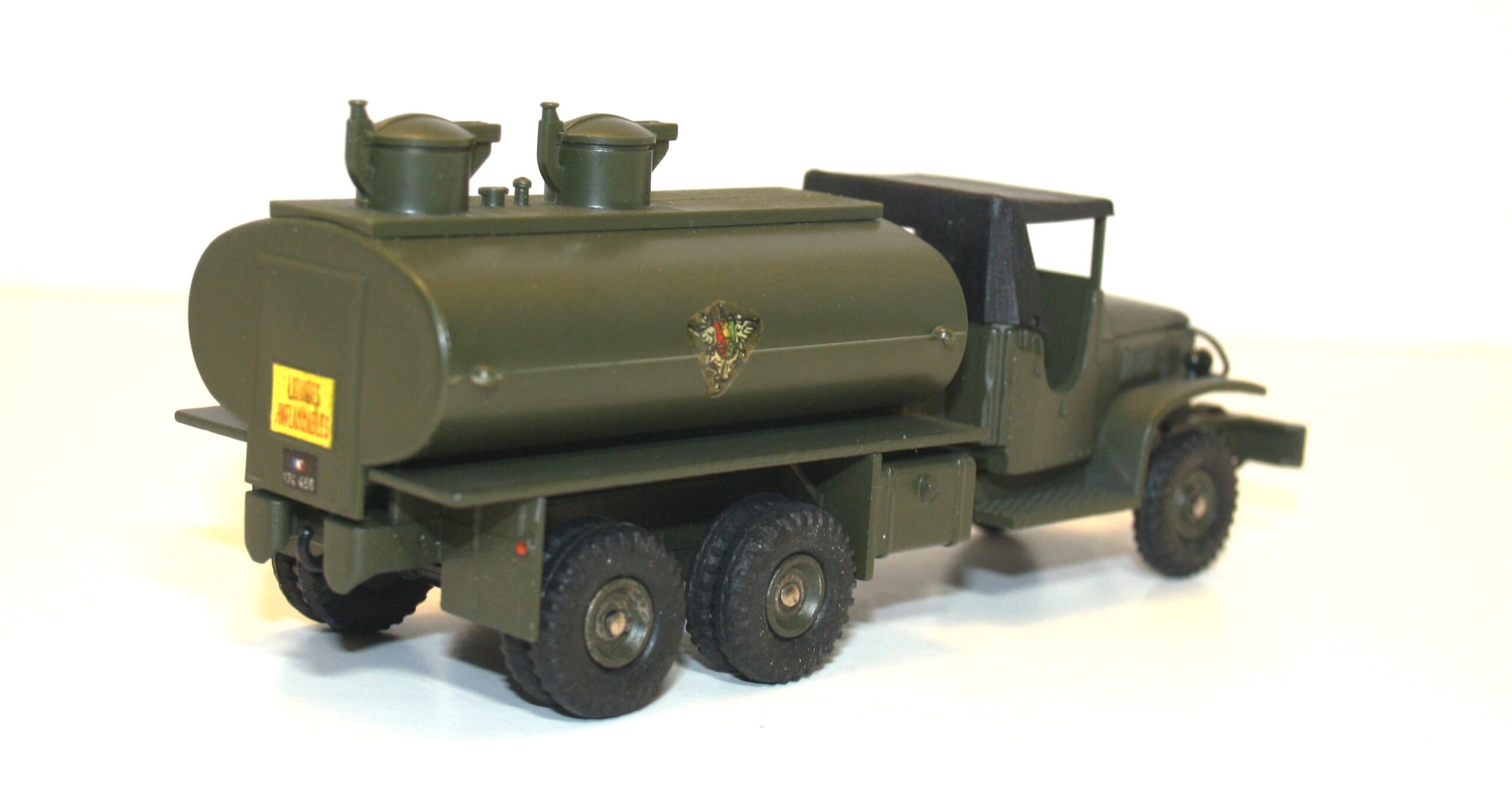
A rear and right view of the model.
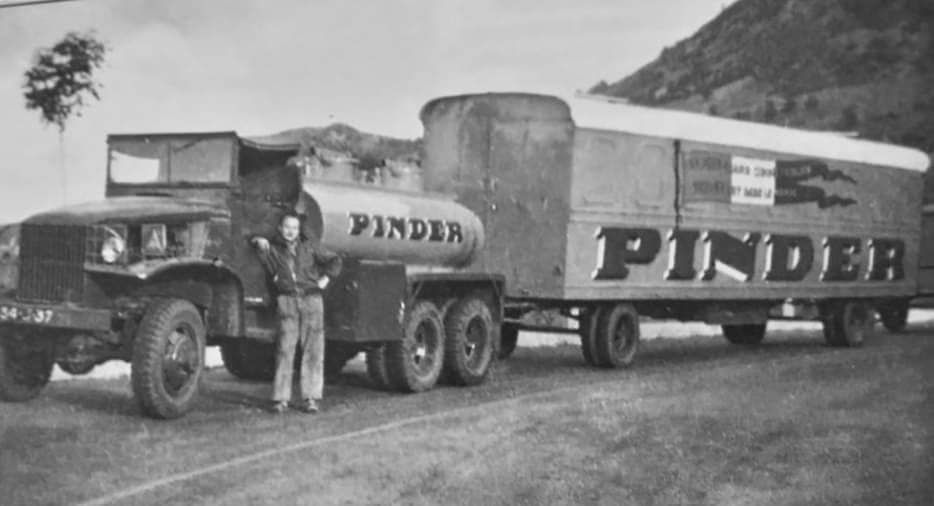
The Pinder GMC water tanker with trailer.
Image: Jaap Schroder.
The CCKW was built with an almost endless list of bodies. These included a short wheelbase CCKW-352 and a long wheelbase CCKW-353. Steel closed cabs were offered first but later; to save steel, soft-top cabs became the norm. These long wheelbase trucks were easily identified as they had the spare tire mounted under the chassis on the driver’s side. Many of the trucks were fitted with front winches supplied by Braden and Garwood.
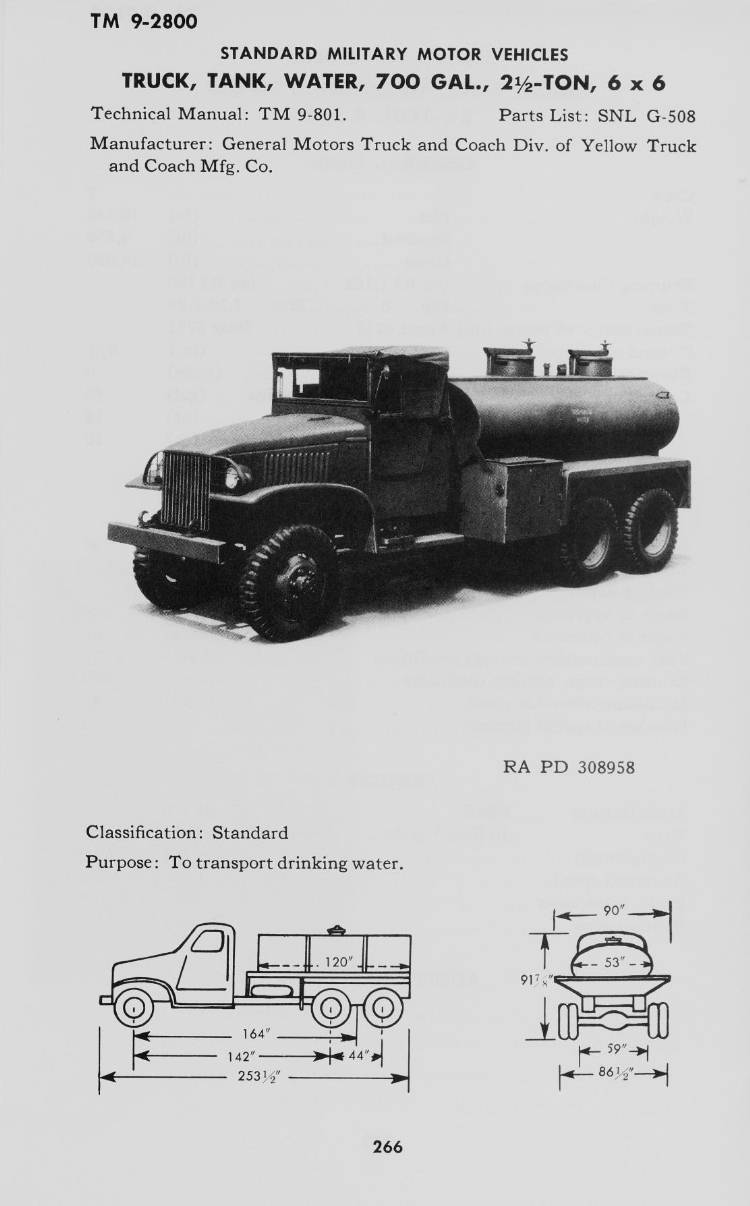
The original U.S. Army Technical Manual sheet of the real thing.
The CCKW-353 with a soft top cab was modelled by Meccano in 1/43 scale. Dinky France offered these in four versions: a cargo truck, tanker, wrecker, and a Pinder Circus truck with trailer.
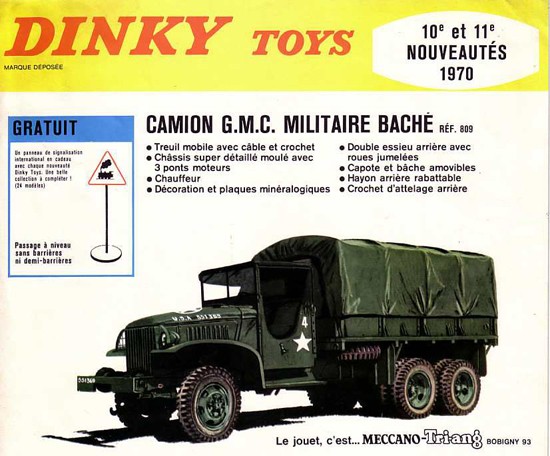
The third GMC released was the cargo truck in 1970. Early versions came with the typical of the era road sign while later versions didn’t. This picture shows the original Meccano ad.
All the Dinky GMCs shared some common traits. These included a removable plastic soft top on the cab, plastic silver painted headlights with guards, rear tow hitch, a very detailed drivetrain, under chassis spare tire, and an operable front winch. The cab and chassis were die-cast with metal wheel hubs and ten rubber tires. They were all packaged in illustrated end flap boxes (typical of the era) labelled Super Dinky. Unfortunately, these are flimsy and prone to damage, due to the weight of the models.
The first model in the GMC lineup was the 881 Pinder Circus truck with trailer, released in 1968. This long and colorful model was available until 1971. It features a high sided yellow plastic cargo body on a red truck with an operable tailgate. It towed a two-axle, three-cage animal trailer with opening cage doors. The trailer was molded in yellow plastic and had a red diecast chassis. Stickers were included along with three animals (a lion, tiger and panther) in a waxine bag and – typical of the Dinky France era – a road sign with an informative leaflet. The inner packing on this model was a long yellow cardboard base which the truck snugly sat in. There was also a yellow long four-sided cardboard packing piece which sat on top of the truck and trailer.
Next released was the 353 Military Tanker in 1969. This green truck was the most detailed in the lineup as well as the most fragile. The tank body was plastic and featured opening filler caps. It came with a water slide decal sheet as well as a road sign and informative leaflet. French Army Fuel Service decals adorn the sides of the tank, and a flammable liquids decal was factory installed at the rear. Despite being marketed as a fuel tanker, it was modelled on the 700-gallon Army water truck. The water tankers had the very distinctive elongated pair of almost manhole like filler lids, whereas the fuel tankers did not. When Meccano sent the model makers out to photograph the real truck it had been most likely converted into a fuel tanker by the French army. They did a superb job modelling the tank body and filler caps as well as replicating the small cabinet behind the driver’s side cab that on the real truck housed a one cylinder air cooled motor that could fill or drain the insulated and heated tank. The 353 also came with a yellow lower box insert like the Pinder model and a unique upper packing piece that protected the ever so fragile filler caps. This truck was withdrawn in 1970.
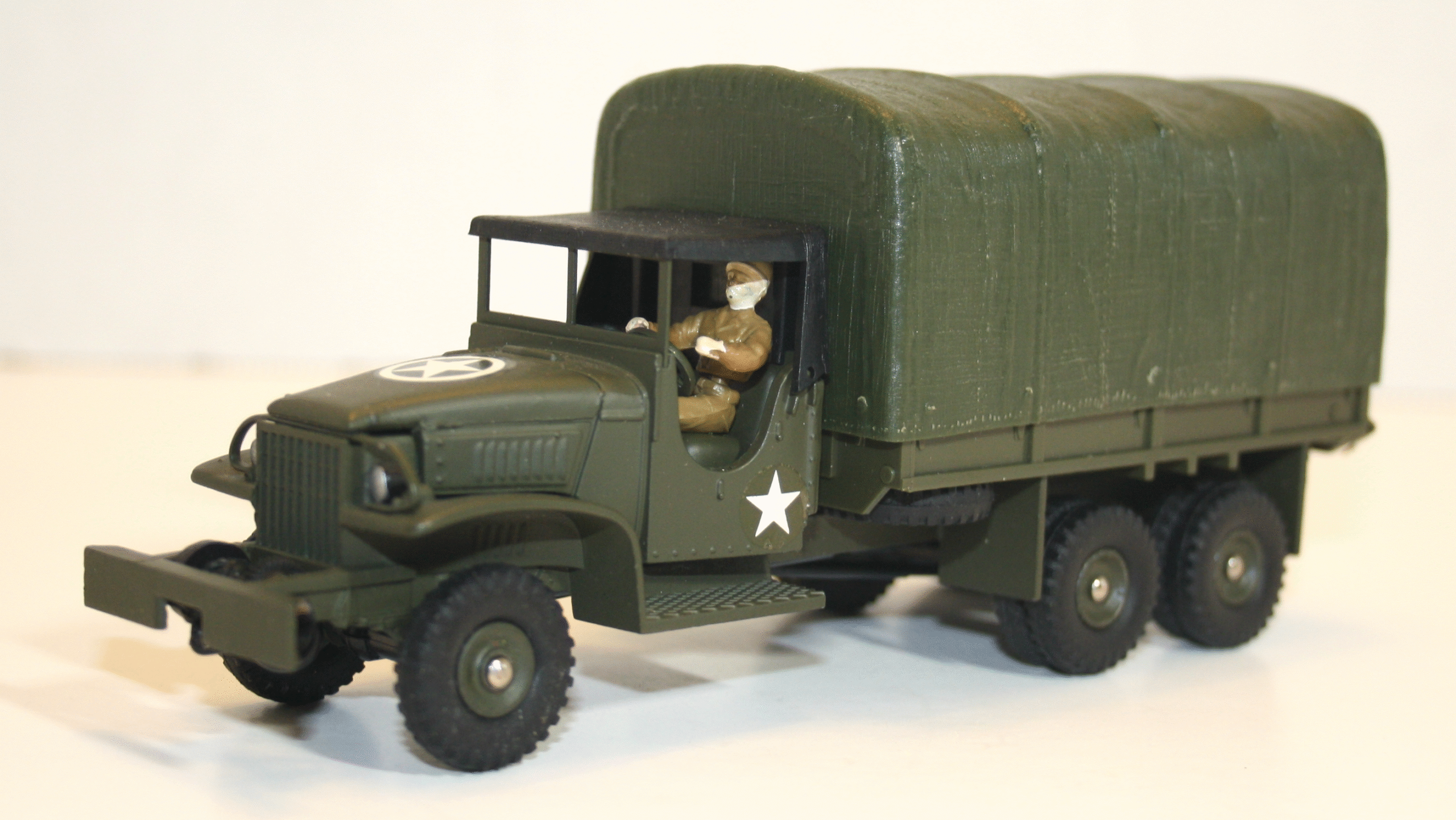
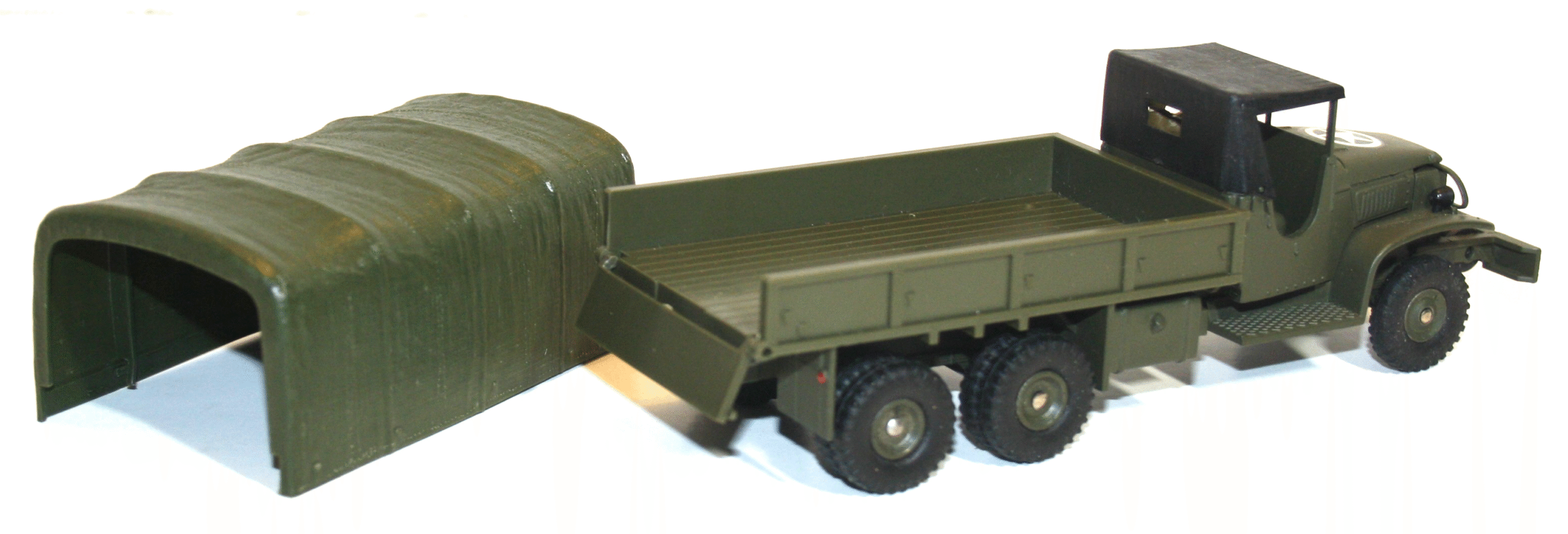
Two views of the model.
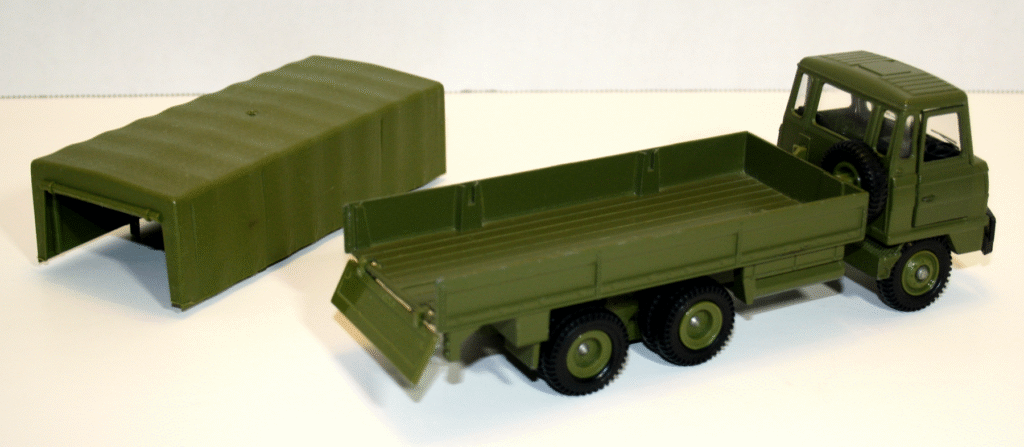
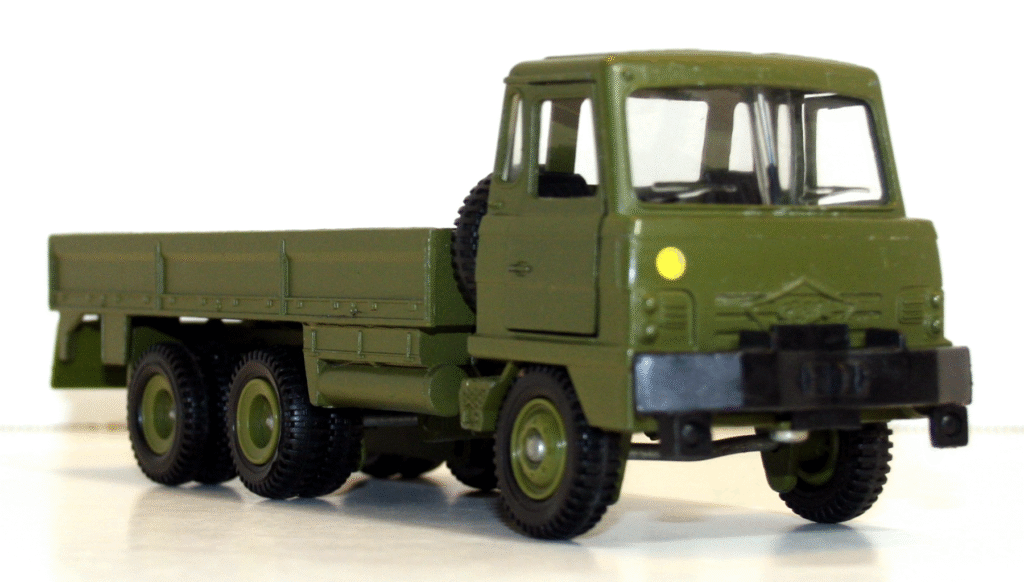
The 809 cargo truck was released in 1970 and featured a removable plastic tilt covering a plastic cargo body, with operable tailgate and a plastic two-piece driver. Despite some of the other GMCs having a hole in the driver’s seat, this was the only GMC to be fitted with a driver. Like the tanker it was army green and included a water slide decal sheet. It also came with a lower box insert like the tanker. Early versions came with a road sign and informative leaflet while later versions did not to save costs. It was withdrawn in 1971.
The last model in the GMC series came after Meccano had closed its factory in Bobigny and was therefore produced in Calais. This was the sand-colored 808 wrecker of 1972, withdrawn in 1973. The green version would follow in 1974 and was withdrawn in 1976, marking the end of the GMC series.
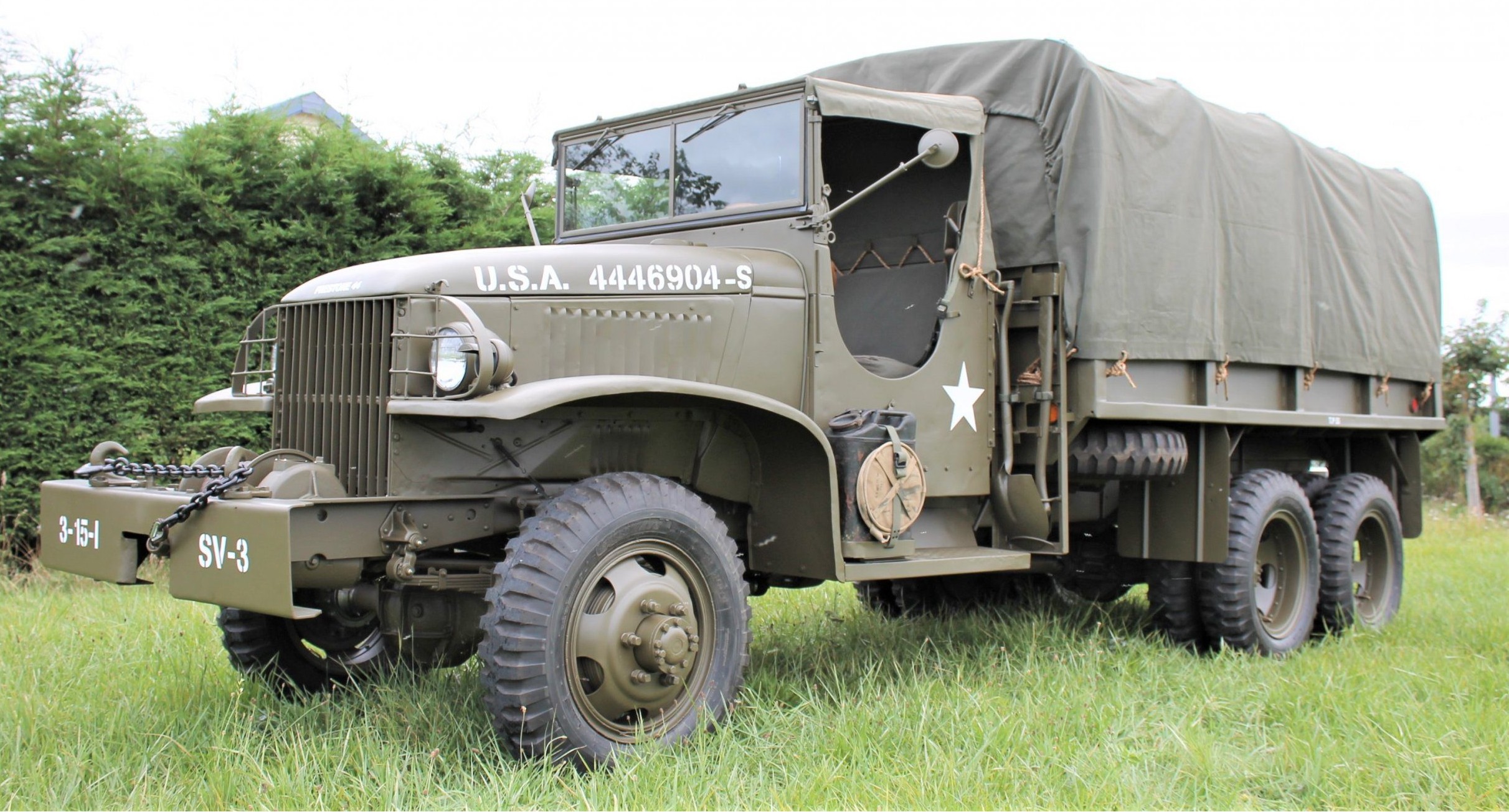
A real CCKW 353 that’s been beautifully restored and is just like the No. 809.
Image: Mathieu Dumias of Military Classic Vehicle,
Grandcamp-Maisy, France.
These identical models featured the plastic cargo body from the cargo and circus truck models sans tailgate. They were fitted with number plates and a plastic overhead I‑beam frame assembly with an operable sliding hoist with hook. There was an off white corrugated packing piece to protect the fragile boom and no lower packing piece.
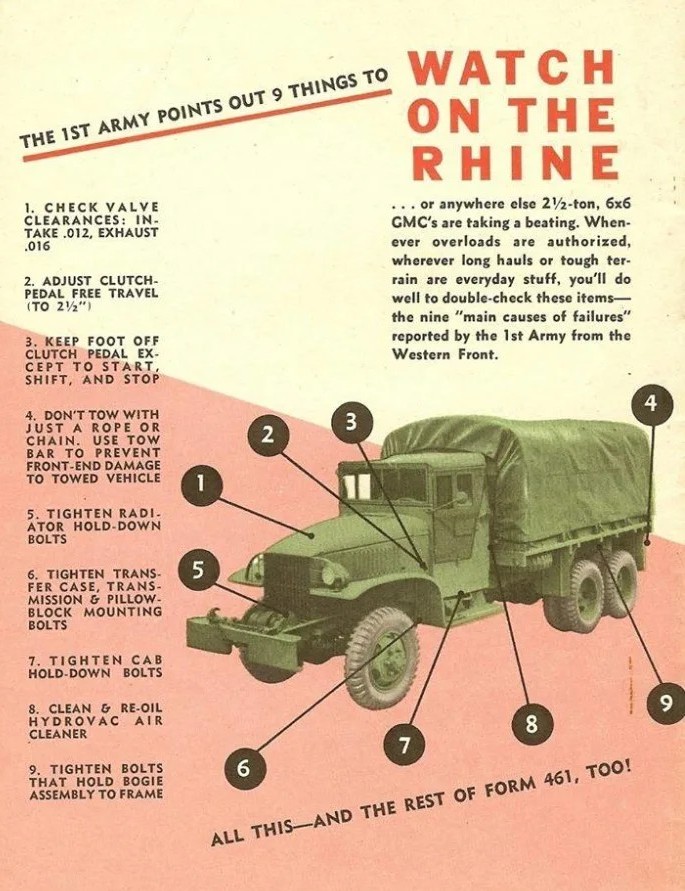
The road to victory was absolutely grueling so preventative maintenance checks were crucial for the GMC and the U.S. 1st. Army from the Western Front highlighted the “nine main causes of failures” to watch for in this notification.
There have been varying opinions over the years about this model being a bomb truck rather than a wrecker and I have detailed the differences here to clarify this. There was only one CCKW wrecker in real life and it was known as the Set No. 7. The Set No. 7 truck had a simply designed inverted U frame I‑beam hoist support that goes down to connect at the front center of the truck bed, just as the No. 808 does. It also has a pair of tubular supports running from the rear of the hoist frame up to the very end of the hoist rail to provide support, again just as the No. 808 does. However, the No. 808 tubular supports don’t go to the end of the hoist; they go to the middle of the rail and grab the top of the rail, which is incorrect compared to the real truck. With Meccano doing such a fine job replicating these models it seems odd that they replicated the support incorrectly.
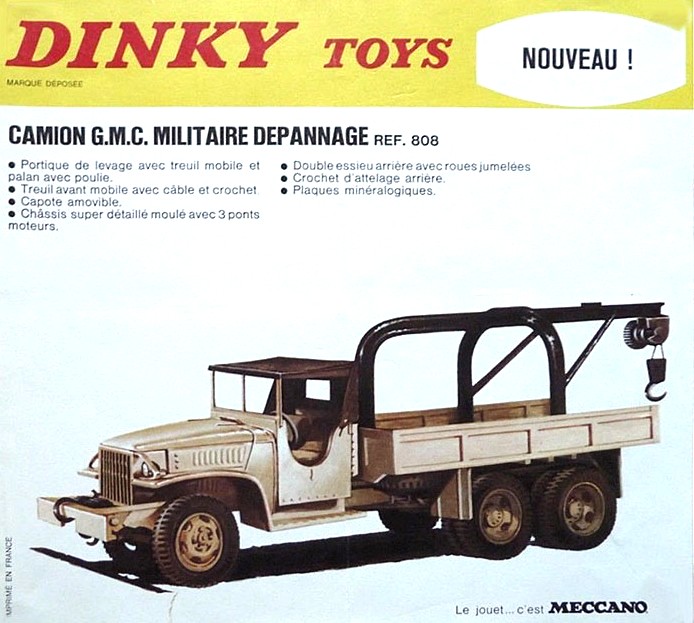
The No. 808 wrecker, first appearing in sand in 1972 and green in 1974, replacing the sand version were both identical models. It was withdrawn by 1976, ending the GMC series. These models were most likely based in real life on Set No.7 wrecker which was the only CCKW that was a wrecker. This picture shows the original Meccano ad.
Meanwhile, there was only one CCKW bomb service truck in real life: the M27 and the later M27A1 models. These trucks have a noticeably different, taller, more complex full length hoist rail with double sliding trolleys supported by two A frames that don’t bend down to connect with the truck bed at the front center like the Dinky GMC and Set No. 7 wrecker. The other “wrecker appearing” CCKW was the Truck, Chemical Service, M1. This truck used the almost identical inverted U frame I‑beam hoist as the Set No. 7 truck, but without the pair of tubular supports coming off the rear to reinforce the rail. These trucks were used for transporting large chemical barrels.
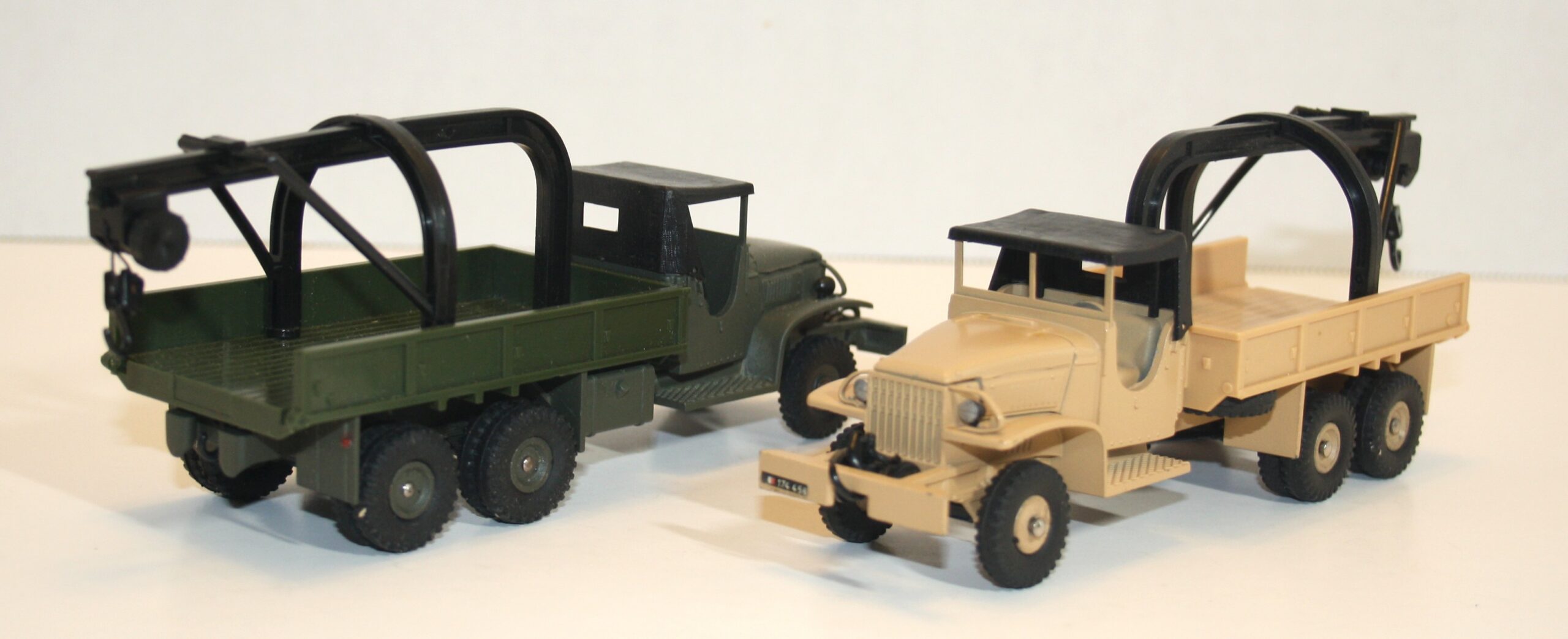
Two views of the models.
These Dinky France GMCs are more model than toy and are the most detailed replicas of the CCKW ever produced by a toy company. Meccano could have been marketing these more towards the adult collector more than children, especially considering all the fragile features. Many “Golden Age” Dinky collectors frown upon these fine trucks due to the high amount of plastic used in their construction; this is unfortunate as they are very accurate representations of the real thing. They are truly in a different class of military Dinky Toy with the level of detail they offer compared to their Golden Age counterparts.
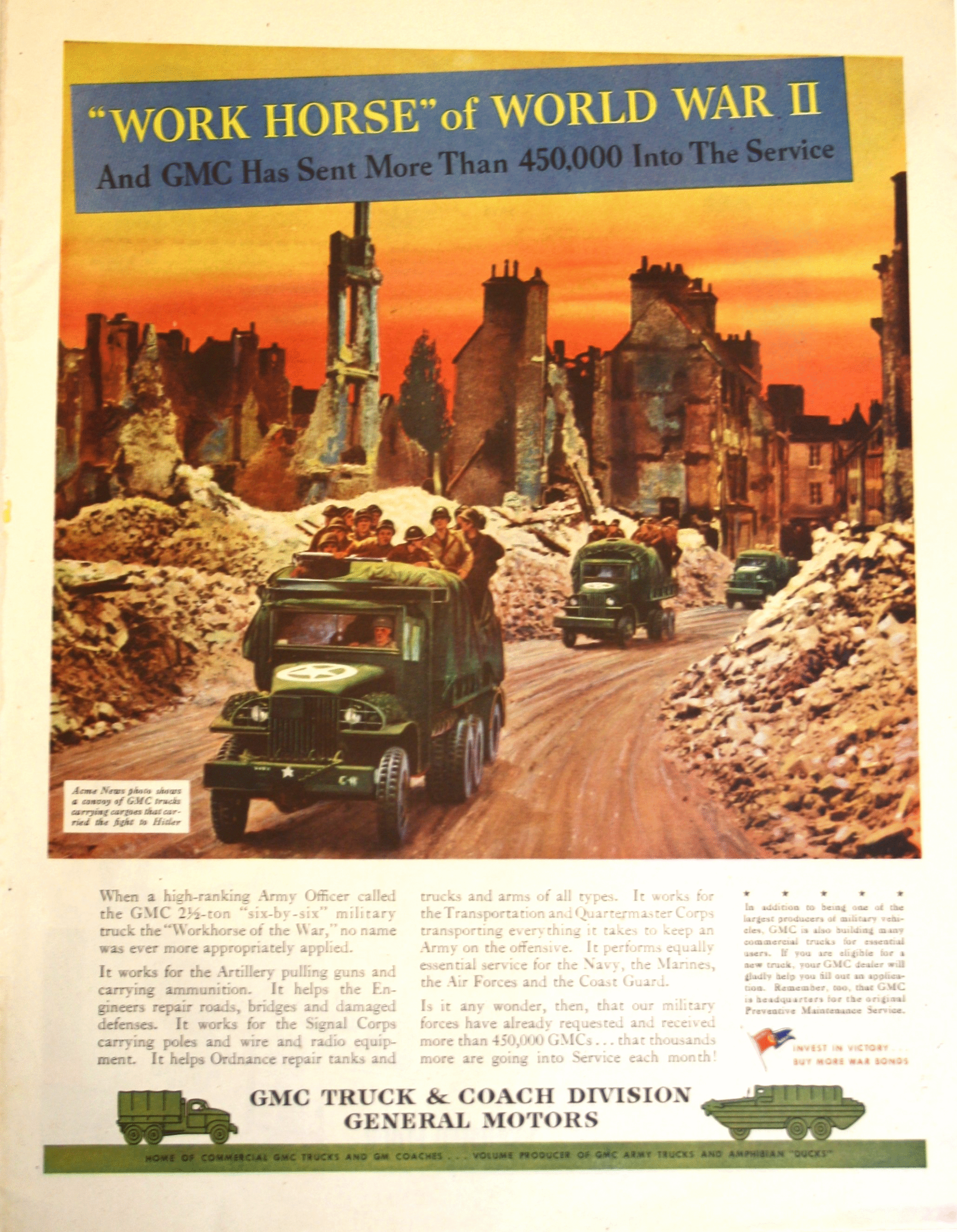
This 1945 Saturday Evening Post ad is one of the few that General Motors made for the CCKW that featured the later soft top cabs.
Having been born in 1970, I never knew these models – or other Dinky France models for that matter – existed until the late 1980’s when I purchased my first Dinky Toys collectors’ book by Dr. Edward Force. As a child I never saw any French Dinky Toys in toy stores because they were not being officially imported into the USA like some of the French lineup had been in the past. However, Dinky France models were unofficially imported to the USA by several firms including Memorable Things of Towson, Maryland and Marque Products, a Southern California importer of fine toys and diecasts during the early 1970s. Fellow lifelong collector Jonathan Angel confirmed this fascinating part of USA Dinky Toys history with me as he purchased his French models new back then from these importers.
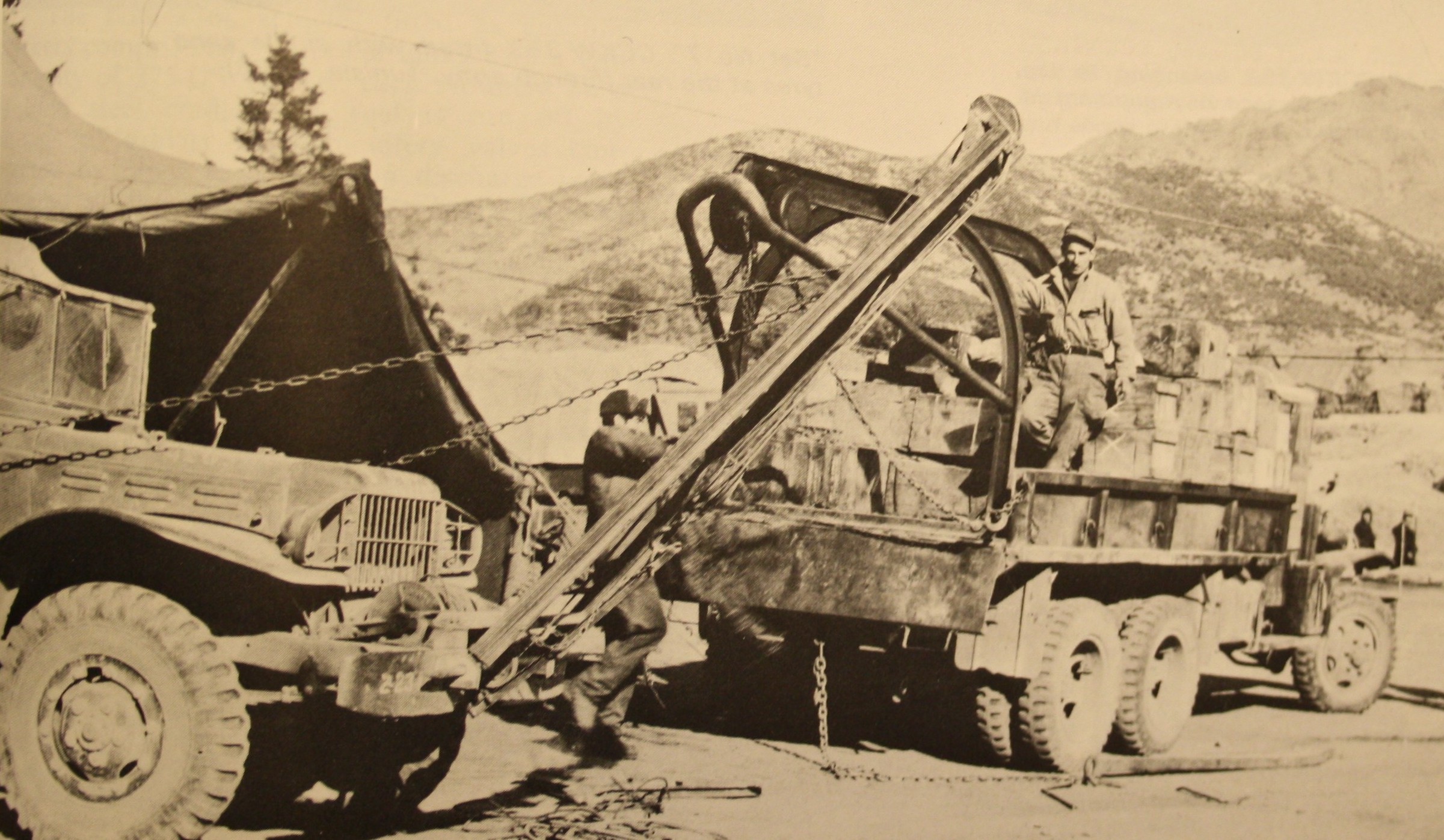
The vintage photo is a Set No.7 in Korea with the U.S. Army in 1953. Note the clearly visible rear support which Meccano incorrectly replicated and the cargo load on the real truck. Its view is partially blocked by an WC 52 ¾ ton truck fitted with an A‑frame hoist.
On the collectability front, mint/boxed examples of all four of these trucks are getting harder to find as time marches on, and they have never been inexpensive. The fragile construction didn’t help their survivability, and they didn’t have long production runs. I’ve been looking at prices for years and the Pinder GMC is the most valuable with the tanker coming in next, but the tanker seems to be the most elusive to find and is often broken, whereas the wreckers, Pinder version and cargo trucks show up more frequently.
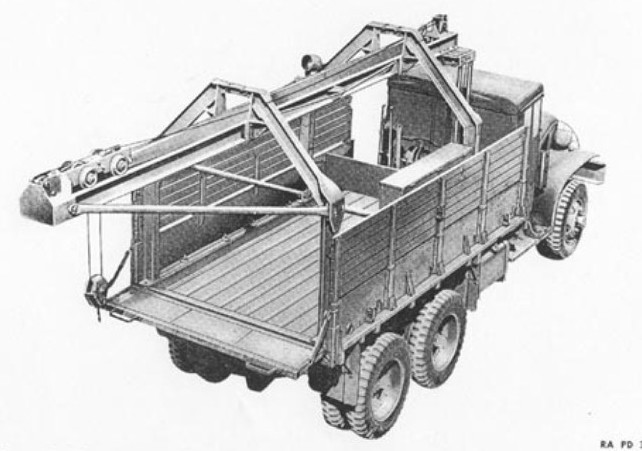
Some have suggested that the No. 808 was a bomb truck but the M27 bomb trucks overhead boom assembly is clearly different and more complex than the Set No. 7 wrecker
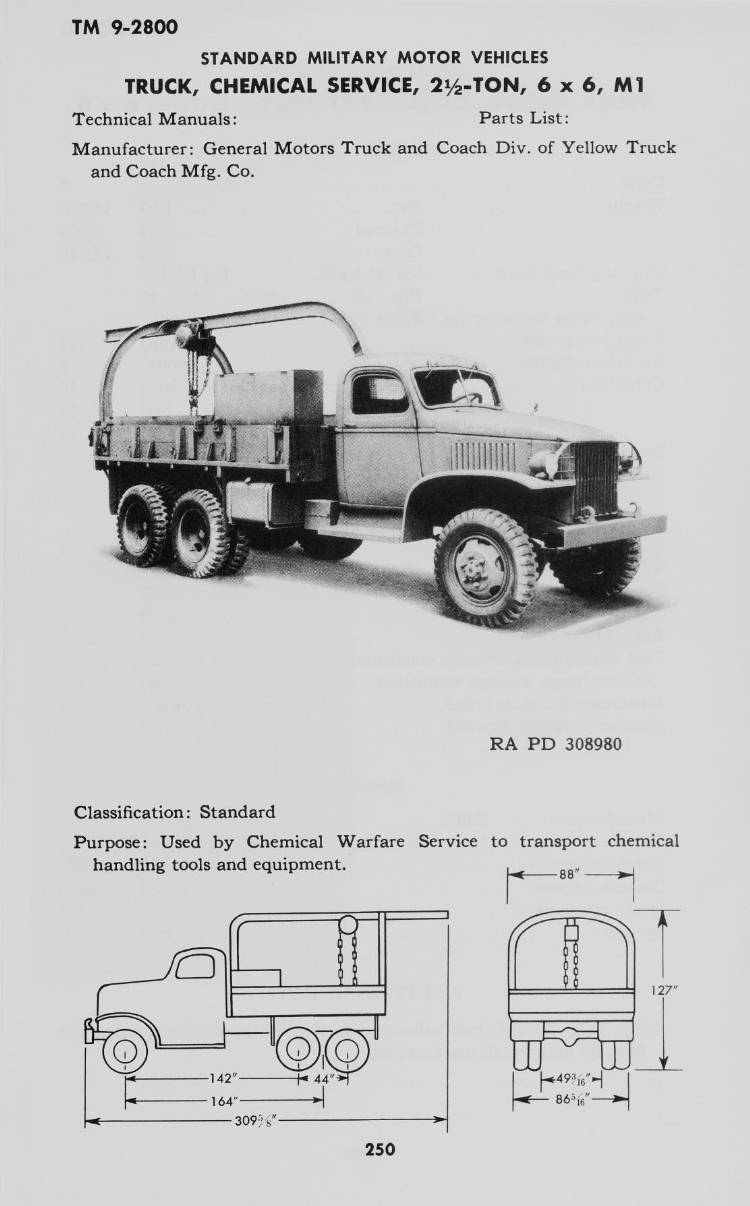
The only other “wrecker appearing” CCKW was Truck, Chemical Service, M1. It transported heavy chemical barrels and lacked the rear support brace of the Set No. 7 wrecker.
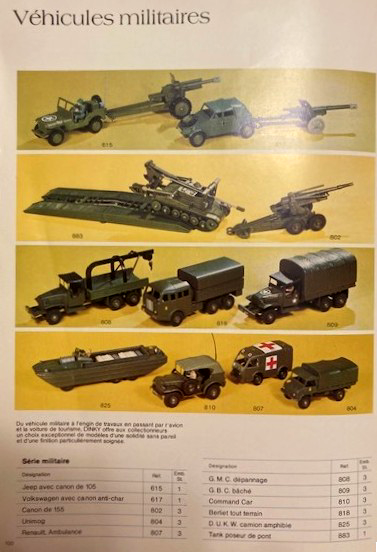
The 1976 Meccano France trade catalog featured the wrecker and cargo truck.
The models shown in this article and group photo represent almost 35 years of collecting for me. I have always strived to get the best and most complete examples I could afford, with all the correct packing and accessories.
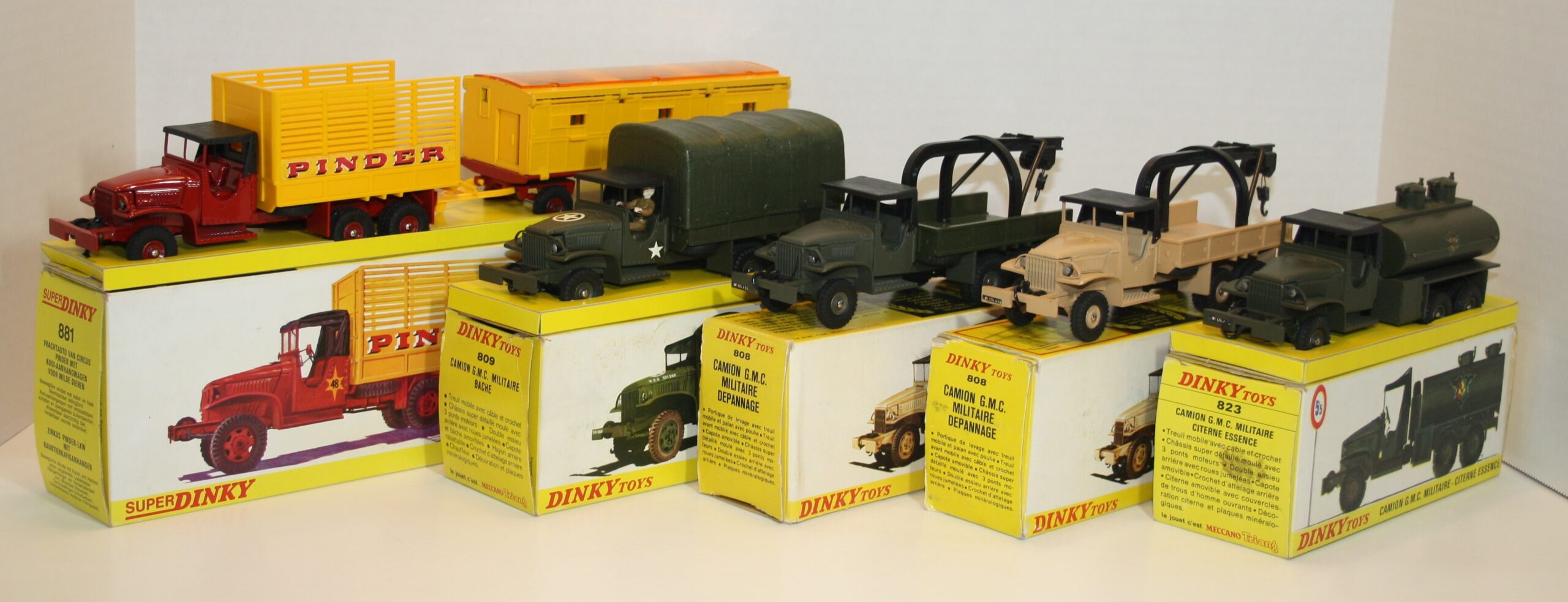
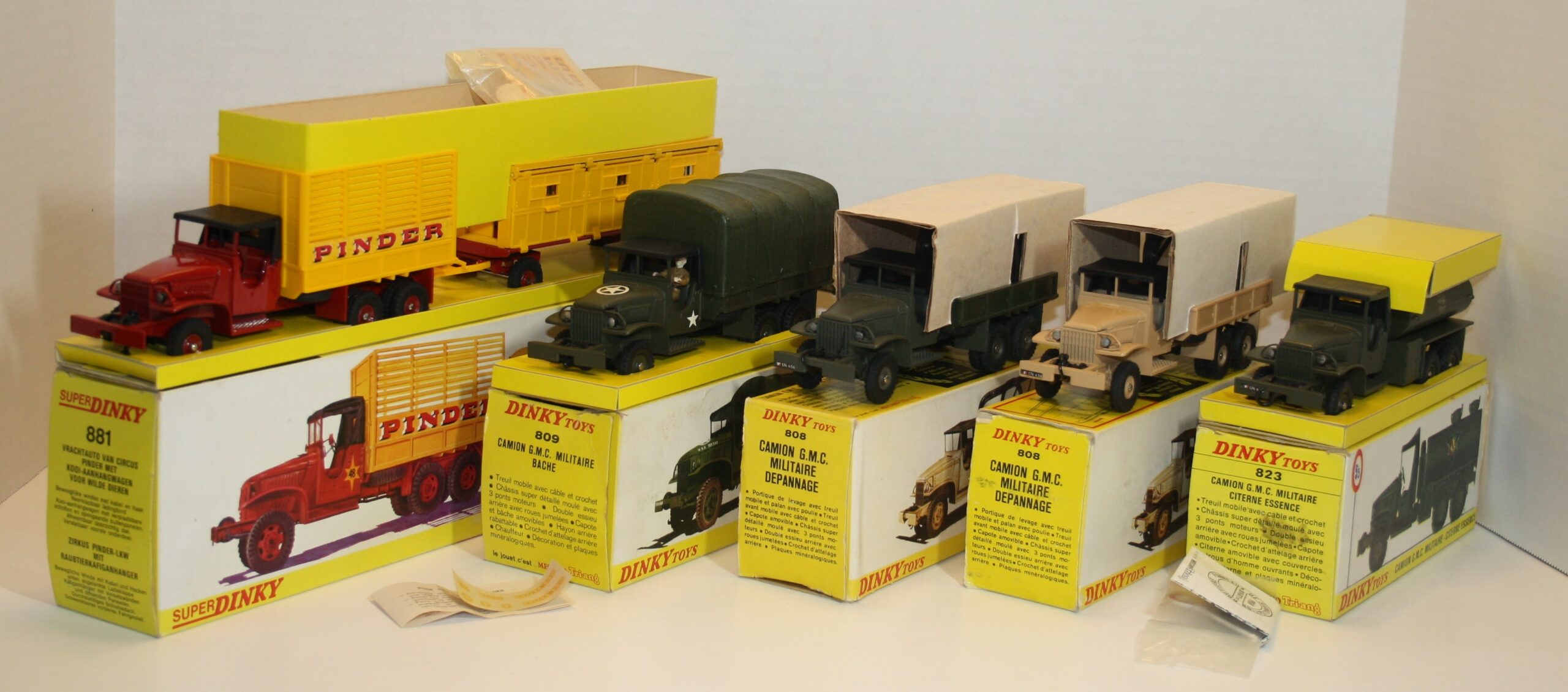
My tanker and cargo truck came from Andrew Clark in 1993. Both models are nearly pristine and the ever-so-fragile tanker caps are intact. The cargo truck is the later issue without the road sign.
My sand wrecker–the more common version–was purchased from Cartel in 1992, and the green wrecker came from Dominion models in 2014.
Finally, my Pinder truck was purchased in 2018, and it came from a Southern California eBay seller who I had purchased from in the past. While I always admired this version, I preferred the army versions over the Pinder variant and the fact that this truck is always very expensive was discouraging. They are also often incomplete with missing animals, decals and the inner packing pieces. However, this one caught my attention from the auction’s starting price and the seller’s description which stated it was recently removed from deep storage since purchased new. I was the only bidder for what was an affordable price, and the model and box are as new. It looks like it was made yesterday. The seller/collector was very nice and shared that the original owner, also from Southern California, purchased hundreds of assorted new diecasts beginning in 1950’s into the 1970’s.
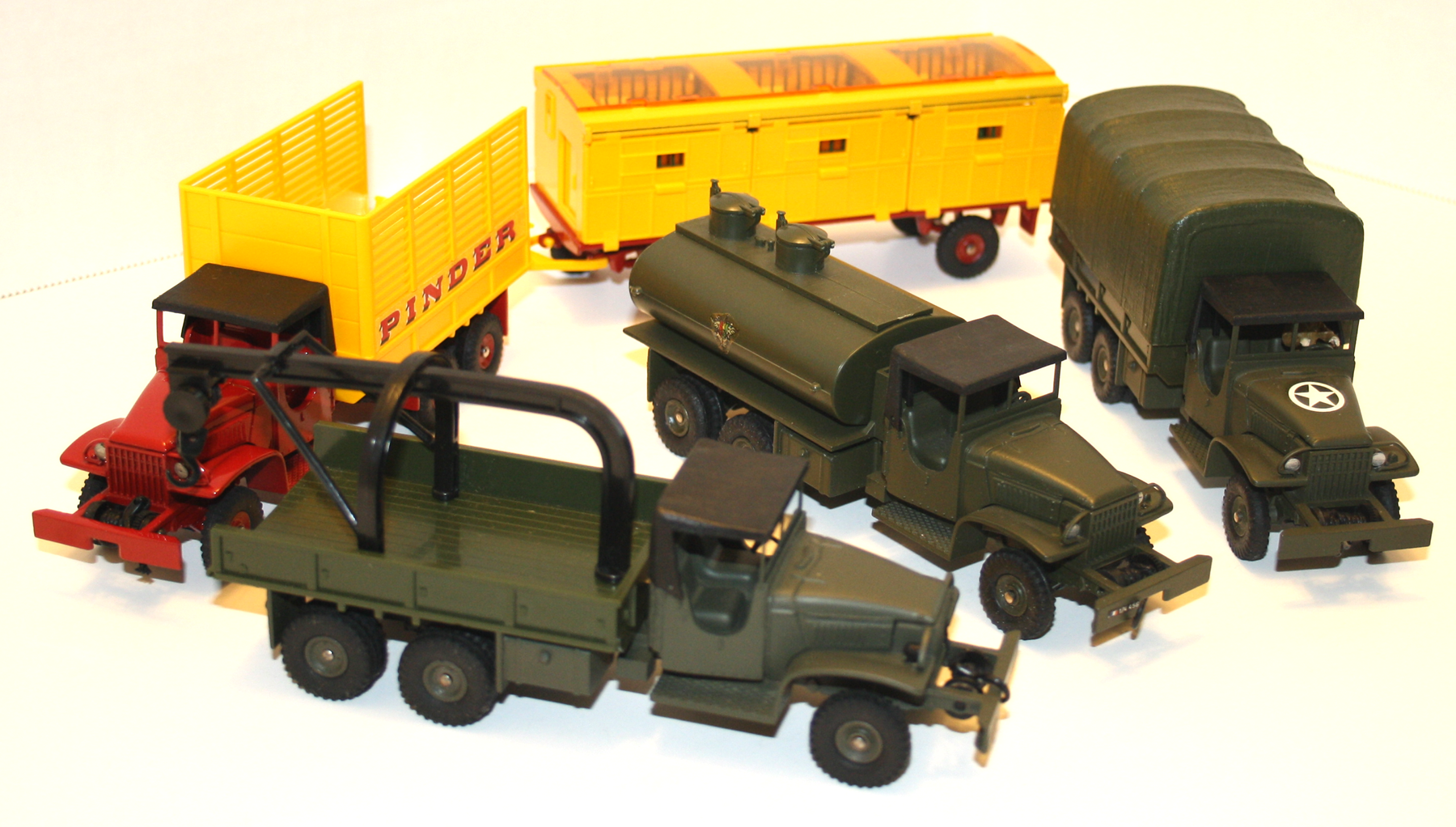
They were then stored away, never to be seen again until the first owner’s passing. It was an incredible find and it completed my GMC collection.
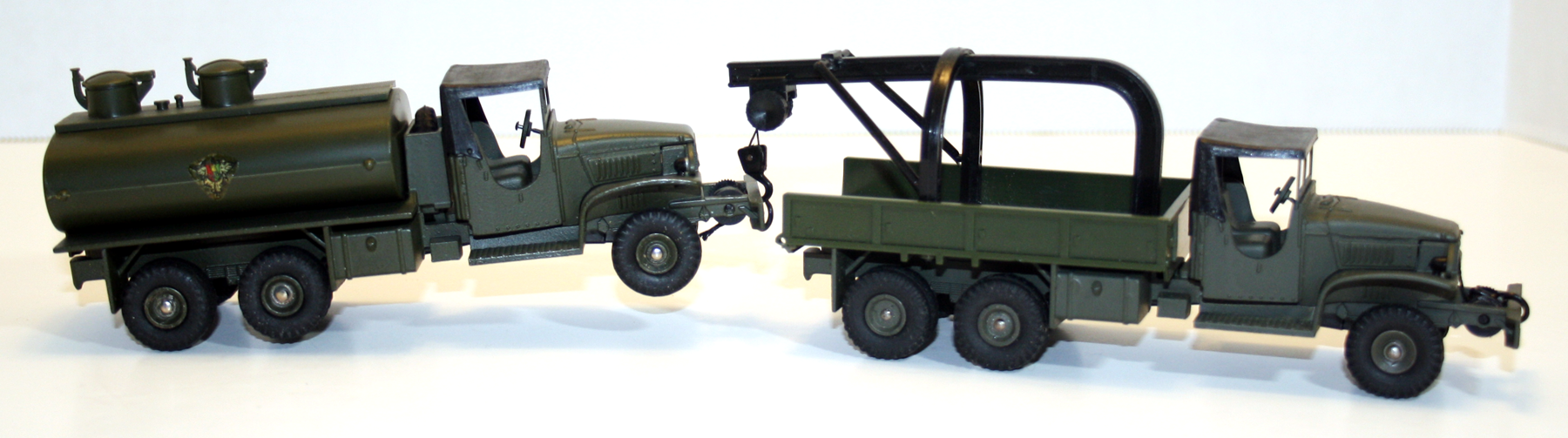
This was an enjoyable article for me to write as I have been a commercial and military vehicles enthusiast since I was a child and I always learn something new when I break out the truck books from my transport library!
Acknowledgement
Writing an article like this is never a one-person endeavor so very special thanks go to Jonathan Angel, Mathieu Dumias, Jaap Schroder and his great Het tweede leven van GMC’s (The second life of GMC’s) site, Jacques Dujardin and David Doyle.