Blog

  • Coles Cranes on Display

    Coles Cranes on Display

    After a sug­ges­tion by fel­low col­lec­tor Jan Wern­er for a group pho­to of my recent­ly com­plet­ed col­lec­tion of Dinky 972 Coles Crane vari­ants, I decid­ed to share one by writ­ing this arti­cle. The 972 was intro­duced in May 1955 and its arrival was adver­tised by a full page ad in that mon­th’s issue of Mec­ca­no Mag­a­zine.

    Although oth­er sub vari­ants of these very pop­u­lar mod­els exist, I chose to col­lect the obvi­ous ones when it comes to wheel and box types, so these six com­plete my col­lec­tion. Because I don’t have the space to dis­play my entire col­lec­tion of diecast mod­els, group pho­tos like these are a treat for me to view and I sus­pect for oth­er Dinky Toys fans as well.

    My collection of Dinky 972 Cole Crane models.

    From left to right:

    • My first 972 pur­chased in 1990 from Unique Col­lec­tions in the UK. It was also my first Gold­en Age Dinky Toy.
    • The French issue was bought on eBay France in 2004.
    • The Ger­man Coles Crane pro­mo­tion­al came from my crane col­lec­tor friend Hubert Moller in Ger­many in 2021. It also includes the unique Coles Cranes Ger­many leaflet.
    • The illus­trat­ed lift-off lid box ver­sion came from a one own­er Cal­i­for­nia col­lec­tion in 2025. There’s great art­work on this box which fea­tures the Mighty Antar with pro­peller.  The mod­el and box are vir­tu­al­ly new.
    • The last issue all-card end flap box with black plas­tic wheels came from a one own­er col­lec­tion that was pur­chased new in 1969 and 1970 from FAO Schwarz in New York City. The own­er lived in Pater­son, NJ and his nephew was sell­ing the col­lec­tion on eBay in 2024.
    • The last issue all-card end flap box ver­sion with yel­low plas­tic wheels came from my crane col­lec­tor friend Hubert Moller in Ger­many in 2015. The 972 is my favorite Gold­en Age Dinky Toy and I’ve always been a fan of real truck cranes too.

    Here are close up pic­tures of the mod­els, which rep­re­sent thir­ty five years of seek­ing out the nicest exam­ples I could find and afford. They are also com­plete with all the cor­rect inner pack­ag­ing, which is a must for me.


    See Also

  • Austin Atlantic A90

    Austin Atlantic A90

    As is well doc­u­ment­ed, Mec­ca­no mod­eled the the Austin A90 Atlantic Sports Car at ¼ inch to a foot. This was a stream­lined mod­el of the real car that was pro­duced in the UK from Sep­tem­ber 1948 to June 1952.


    “Export or Die!”

    In a des­per­ate attempt to earn for­eign cur­ren­cy to pay off enor­mous war loans, the British Labor gov­ern­ment turned to the motor indus­try to pro­vide cash. Sir Stafford Cripps issued the chill­ing dic­tate to CEOs: “Export or die!”

    For many com­pa­nies, export­ing meant pump­ing cars out to coun­tries with pref­er­en­tial trade sta­tus like Aus­tralia, New Zealand, South Africa, etc. But it was the U.S. dol­lar the gov­ern­ment real­ly had in mind, by tap­ping what they felt was a lucra­tive Amer­i­can mar­ket. It was per­haps a bit naïve to expect Amer­i­cans to want to buy “quaint”, out-of-date and expen­sive British motor cars when they had a per­fect­ly good motor indus­try of their own that catered bet­ter to their needs, and could reli­ably pro­vide spare parts and ser­vice. Nonethe­less, British man­u­fac­tur­ers — des­per­ate to achieve their quo­tas — made the attempt.


    Enter the Austin A90

    One of the first prob­lems encoun­tered was the resis­tance to con­ser­v­a­tive British styling. So a spe­cial­ly styled mod­el to appeal to Amer­i­can tastes became the ‘idee fixe’ of com­pa­ny chair­men. A new gen­er­a­tion of motor cars was born: “Ameri­co-Angli­can”. Of all the British com­pa­nies that par­tic­i­pat­ed, Austin was prob­a­bly the most vig­or­ous expo­nent of stream­lined styling, and the Austin A90 was their best attempt.

    Austin Atlantic A90.
    Image: classic.com

    One con­cern of the Amer­i­can pub­lic was reli­a­bil­i­ty. They also had to over­come prej­u­dice against a 4 cylin­der car com­pet­ing in a 6 and 8 cylin­der mar­ket. Jour­nal­ist, dri­ver and broad­cast­er Alan Hess, then in charge of Austin pub­lic­i­ty, had the idea of com­bin­ing the sales dri­ve with an attempt to break Amer­i­can Stock Car records in order to attract atten­tion to the new mod­el.

    Racing driver Alan Hess (left) takes Arthur H. Marlow, the British Consul General at Chicago, for a ride in the high-speed Austin Atlantic at the Indianapolis Speedway, USA, 19th April 1949.
    Image: Keystone/Hulton Archive/Getty Images

    There were only two Austin Atlantic pro­to­types in the USA at the time and they were used for deal­er eval­u­a­tion. Well known auto­mo­bile speed record break­er George Eyston trav­elled to Amer­i­ca and con­vinced the AAA (Amer­i­can Auto­mo­bile Asso­ci­a­tion) to accept a stan­dard pro­duc­tion A90 Atlantic con­vert­ible as an entry by the Austin team to attempt a speed record at the Indi­anapo­lis Speed­way dur­ing 12–19 April 1949.

    George Eyston , circa 1931.
    Image: Palmes family of Naburn.


    A Record Breaking Performance

    After sev­en days and nights of con­stant dri­ving at an aver­age speed of 70.54 mph, the record was beat­en of any open car at any capac­i­ty. Hess and his team had col­lect­ed no less than 63 records, com­plet­ing 11,875 pun­ish­ing high-speed miles.

    Alan Hess, with helmet, replacing Charles Goodacre, who has just finished three hours of driving.
    Image: simanaitissays.com

    This record break­ing now car resides in the Birm­ing­ham City Muse­um. The achieve­ment was sig­nif­i­cant and Austin got the pub­lic­i­ty they want­ed.

    The Austin Atlantic A90 driven by Hess and his team.
    Image: Birmingham City Museum.


    Colorful Advertising

    The Amer­i­can mar­ket was flood­ed with adver­tise­ments and brochures for the Austin Atlantic from 1949 to 1952, includ­ing the last known cat­a­log shown in the pic­tures below. The ask­ing price at the time was $2,995, which was large­ly out of reach for the aver­age con­sumer.

    It’s inter­est­ing to note that the col­ors offered were:

    • Sea foam green with maize uphol­stery
    • Ensign red with red beige uphol­stery
    • Cream with scar­let uphol­stery
    • Ming blue with blue uphol­stery

    This like­ly explains why Mec­ca­no pro­duced a lim­it­ed batch of toys for two of these col­or schemes, red and turquoise blue, both very rare and hard to find, for export to the Amer­i­can mar­ket along with the real car, per­haps to be offered by deal­ers to poten­tial buy­ers as a pro­mo­tion. These col­ors can be seen in the brochure above.

    It was cus­tom­ary in the USA for auto deal­ers to offer a “pro­mo” scale mod­el of the real car to cus­tomers as give­aways to their chil­dren. Toot­si­eToy 1/43 mod­els of the La Salle sedan were giv­en away in the ear­ly for­ties; and lat­er, plas­tic 1/24 scale cars in the fifties and six­ties.


    Missing the Mark

    But the Atlantic failed to take Amer­i­ca by storm, despite a $1000 USD price cut. A mea­ger 350 units found their way state­side, and no more than 3,500 cars left the UK dur­ing its pro­duc­tion peri­od. It was esti­mat­ed that between five to ten thou­sand units were pro­duced in the four years of exis­tence, although the offi­cial num­ber stands at 7,981.

    When Auto­car test­ed the Austin Atlantic con­vert­ible in August 1949, it was described as one of the ‘star cars pro­duced after the war’, of out­stand­ing mer­it and appeal. The Atlantic was cer­tain­ly val­ue for the mon­ey at 952 GBP, which includ­ed a pow­er-oper­at­ed hood and elec­tri­cal­ly oper­at­ed door win­dows. The four cylin­der, over­head valve engine was large­ly unbreak­able and pro­pelled the car to a dizzy­ing 96 mph. Unfor­tu­nate­ly, due to poor sales, the con­vert­ible ceased pro­duc­tion in Jan­u­ary 1951. A fixed head coupe that was intro­duced in 1950 was can­celled in 1952. Cars con­tin­ued to be sold until 1953, when the stock even­tu­al­ly deplet­ed.

    Coin­ci­den­tal­ly, a rel­a­tive of mine bought one in Peru in 1953 — a lux­u­ry at the time — and used it to enter a begin­ner’s ral­ly in Lima. Unfor­tu­nate­ly he crashed and suf­fered grave injuries, but sur­vived despite the car rolling out of con­trol on a curve.


    My Dinky Austin Atlantic Models

    The over­all length of the Austin Atlantic was 177”, and com­pared to the Dinky Toys mod­el of 3.75” which was scaled to 1/47.32, or rough­ly 1/48. Pro­duced by Mec­ca­no from 1951 to 1958, first as 140A, then chang­ing to 106 in 1954, the toy out­last­ed the real car. By its stream­lined design, the Austin Atlantic Con­vert­ible is one of the nicest British Dinky Toys, and sought after.

    Here are my Dinky 106/140A Austin Atlantic mod­els.


    Acknowledgement

    This arti­cle was writ­ten by Jose Her­aud and our late friend Dave Bus­field and first appeared in the July 2012 issue of the Jour­nal of the Dinky Toys Col­lec­tors’ Asso­ci­a­tion.

  • Dinky Dublo 066 Bedford Truck

    Dinky Dublo 066 Bedford Truck

    Dublo Dinky Toys were announced by Mec­ca­no Ltd. in late 1957, and appeared in stores in 1958. The series were in 1:76 scale and were intend­ed to work with 00-gauge Horn­by Dublo rail­ways. This arti­cle describes the three ver­sions of the Dinky Dublo 066 Bed­ford Truck and the two dif­fer­ent box­es in which they came.

    Production run

    Dinky/Meccano start­ed plan­ning the Dublo range in late 1954, but it was not until late 1957 that the first three in the range were released: the 064 Austin Lor­ry, the 065 Mor­ris Pick-Up and the 066 Bed­ford Flat Truck, which were adver­tised on the back cov­er of the Decem­ber 1957 issue of Mec­ca­no Mag­a­zine.

    Dublo Dinky Toys debut in the December 1957 issue of Meccano Magazine.

    The Dublo Bed­ford Flat Truck did­n’t have a long life. Its pro­duc­tion last­ed just under three years, with its last appear­ance being in the 1959 Dinky Toys cat­a­log.

    Dublo Dinky Toys in the 1959 Dinky Toys (UK) catalog.

    Although the Dublo range con­tin­ued to expand in 1960, I find it strange that Dinky dropped this truck from its line up, being that it seemed to be a pop­u­lar toy and it’s one of the most com­mon Dublo mod­els in exis­tence.

    Dublo Dinky Toys in the 1960 Dinky Toys (UK) catalog.

    Versions

    The three ver­sions of the Dublo Dinky 066 Bed­ford Flat Truck are:

    • With smooth grey plas­tic tires.
    • With tread­ed grey plas­tic tires.
    • With tread­ed grey plas­tic tires and an added tow hook.

    The three versions of the Dublo Dinky Toys 066 Bedford Flat Truck (front view).

    The three versions of the Dublo Dinky Toys 066 Bedford Flat Truck (rear view).

    The three versions of the Dublo Dinky Toys 066 Bedford Flat Truck (bottom view).

    The addi­tion of the tow hook is a bit of a mys­tery as there was­n’t any­thing in the Dublo range for the truck to tow. Fur­ther, it was a late addi­tion. From what can be gleaned from the fac­to­ry draw­ing, it was added around Octo­ber 1959, just before this mod­el was delet­ed from the range. This does make the ver­sion with the tow hook quite rare.

    Factory drawing of the Dublo Dinky Toys 066 Bedford Flat Truck.

    A draft illus­tra­tion of the mod­el for the Dinky Toys 1959 UK cat­a­log seems to imply the Bed­ford Flat Truck was­n’t just designed to work along­side Horn­by Dublo mod­el rail­ways, but was also designed to be able to car­ry Dublo rail­way ship­ping con­tain­ers.

    Draft illustration of the Dublo Dinky Toys 066 Bedford Flat Truck for the 1959 Dinky Toys (UK) catalog.
    Image: Brighton Toy & Model Museum.

  • Dinky 51D Empress of Britain

    Dinky 51D Empress of Britain

    Despite being a mod­el ship enthu­si­ast, I was­n’t aware of the Dinky 51D Empress of Britain until I made its acquain­tance as a 1:1800 scale diecast mod­el, one of the six pas­sen­ger lin­ers in the pre-war No. 51 Mec­ca­no Dinky Toys Famous Lin­ers Set.

    The No. 51 Meccano Dinky Toys Famous Liners Set.

    The Empress of Britain (1931–1940) was a huge ocean lin­er and cruise ship of 42,348 GRT (gross reg­is­tered ton­nage) that sailed the north­ern trans-Atlantic route from Eng­land to Que­bec in Cana­da for the Cana­di­an Pacif­ic Line (of the Cana­di­an Pacif­ic Rail­way Com­pa­ny, C.P.R.). When seen from the front she looked rather square, but appeared gra­cious when viewed from the side, with her white hull and impres­sive super­struc­ture crowned by three huge but well pro­por­tioned fun­nels.

    The Empress of Britain. circa 1931.
    Image: Stewart Bale, New Zealand Maritime Museum.

    The Empress of Britain was the largest, fastest, and most lux­u­ri­ous ship sail­ing between Eng­land and Cana­da and was just as new as the oth­er ships rep­re­sent­ed in the Dinky 51 Famous Lin­ers Set. She was laid down in 1928, just before the big cri­sis struck the world’s econ­o­my, and was entered into ser­vice in 1931. With an up-to-the-water­line rein­forced stem and bow, she could eas­i­ly resist any inci­den­tal ice encoun­tered on her route.

    Because the Saint Lawrence Riv­er isn’t nav­i­ga­ble dur­ing win­ter, the Empress of Britain was annu­al­ly con­vert­ed to a first class lux­u­ry cruise ship, mak­ing cruis­es in warmer Mediter­ranean and trop­i­cal waters. Hence the all-white fin­ish. The three yel­low ochre fun­nels of the ves­sel were enor­mous; about 20 meters high and 10 meters in diam­e­ter. Like so many oth­er lin­ers, the Empress of Britain was often por­trayed in art deco style trav­el posters.

    Period travel posters showing the Empress of Britain.

    Like the real ship, the Dinky 51D mod­el is the third longest in the 51 series at 130 mm, Europa being the longest at 165 mm, fol­lowed by Rex at 152 mm. How­ev­er, in real­i­ty the Rex had the largest gross ton­nage. The model’s hull and super­struc­ture are all white, like the impres­sive lin­er. The sides of the life boats are accen­tu­at­ed with man­u­al­ly applied dash­es of dark brown paint. The deck hatch cov­ers, wheel­house roof and wire masts are paint­ed mid-brown, and the air intakes are touched up with dots of red paint. Appar­ent­ly it was­n’t fea­si­ble for Mec­ca­no to apply the tricky slim green line all along the hull and the more appro­pri­ate green tops to the life boats.

    I was delight­ed to recent­ly find a larg­er M 548 Mer­ca­tor 1:1250 rep­re­sen­ta­tion of this ship, which clear­ly shows the dif­fer­ences between the Dinky Toy and the Mer­ca­tor mod­el. Even after tak­ing the 50% larg­er size and greater detail of the Mer­ca­tor into account, the Dinky mod­el appears con­sid­er­ably less ambi­tious. More details have been omit­ted from the Dinky mod­el than the inevitable gen­er­al­iza­tion of the model’s fea­tures for the 1:1800 scale would have demand­ed. The Dinky was ini­tial­ly sold as a rel­a­tive­ly inex­pen­sive and com­pact diecast toy, where­as the Mer­ca­tor ren­di­tion is a heav­ier, vul­ner­a­ble and more expen­sive col­lec­tor’s mod­el made out of white met­al.

    Mercator RMS Empress Of Britain 1931 Liner Model 1:1250 M‑548.
    Image: Boat House Collectables.
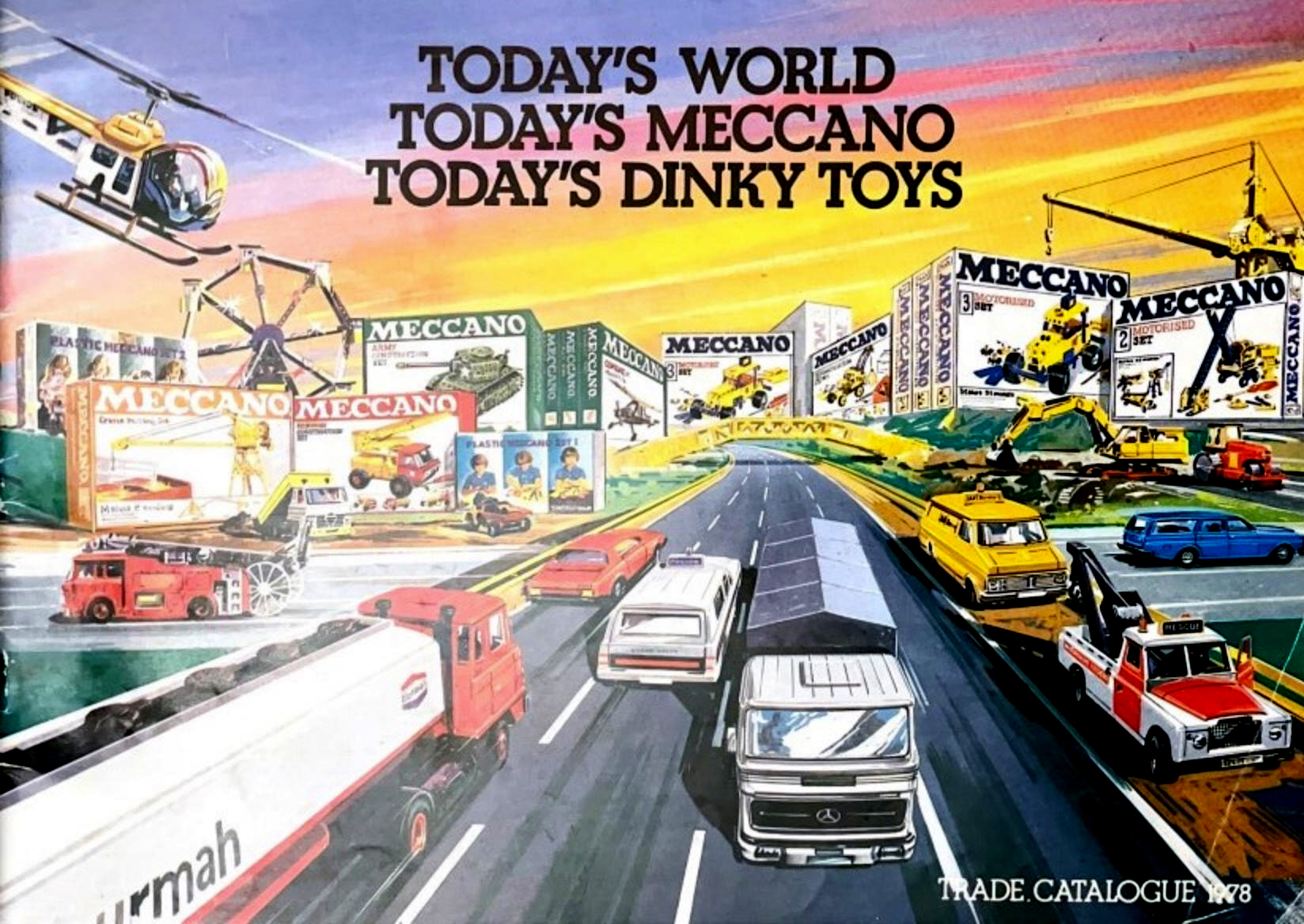
    The Dinky Empress of Britain intro­duced under the ini­tial ear­ly Mec­ca­no Dinky Toys brand in 1934, is best known as part of the con­tents of the No. 51 Dinky Toys Famous Lin­ers Set box, which had sev­er­al vari­a­tions over the course of the 1930s. A sep­a­rate mod­el, how­ev­er, was also avail­able. They were sold by the retail­er from trade box­es con­tain­ing twelve mod­els, which seem con­sid­er­ably scarcer nowa­days than the full set pre­sen­ta­tion box­es.

    Like the Ital­ian lin­er Rex, the Empress of Britain did­n’t sur­vive World War II. She was attacked by a Ger­man long-range bomber and sub­se­quent­ly tor­pe­doed by a sub­ma­rine on 26 Octo­ber 1940 and final­ly sank on 28 Octo­ber, mak­ing it the largest allied lin­er lost dur­ing World War II, for­tu­nate­ly with only few casu­al­ties. I believe many Dinky mod­els of this ship have also per­ished, though less from ene­my action than met­al fatigue.

  • The Dinky Mighty Antar

    The Dinky Mighty Antar

    The 1950’s were fun times for many young boys, and most were fas­ci­nat­ed with mil­i­tary mod­els. Mec­ca­no saw that inter­est devel­op with the start of World War II, and was quick to bring out sev­er­al Dinky Toys mod­els that became very pop­u­lar, both right before and right after the war. By the ear­ly 1950’s, the old pre-war style mil­i­tary vehi­cles were obso­lete, so start­ing in 1954, sev­er­al new mod­els were intro­duced. But the real­ly big play for Mec­ca­no was unveil­ing the new Dinky Super­toys 660 Tank Trans­porter in May-June 1956. Based on the very large Thor­n­ey­croft Mighty Antar truck, this was a most impos­ing mod­el for that era, mea­sur­ing over 13” with its rear ramps down, and loaded with play val­ue.

    In spite of its high sales price of $4.50 in the US (very expen­sive in 1956), it was a must-have for many boys, and, from all indi­ca­tions, Dinky amped up pro­duc­tion and made these by the thou­sands. This is a sto­ry about the orig­i­nal Mighty Antar vehi­cle and the three ver­sions that Dinky made over a peri­od of 8 years.


    The Thorneycroft Mighty Antar

    Devel­op­ment of this over­size truck real­ly began in the late 1940’s, as a vehi­cle suit­able for work­ing in oil fields, capa­ble of trans­port­ing over­size pipe hun­dreds of miles in the desert. This called for a vehi­cle to be able to tra­verse rough, unpaved ter­rain, climb moun­tain­ous grades, and haul large loads. So the chas­sis was designed as a 6×4 lay­out, with pow­er pro­vid­ed by a large V‑8 engine. The engine, designed by Rolls-Royce, was a scaled down ver­sion of the V‑12 used in tanks, and was called the Mete­orite. This engine dis­placed 18 liters and ran on gaso­line. Rover end­ed up mak­ing these engines to Rolls-Royce spec­i­fi­ca­tions. Lat­er in pro­duc­tion, a diesel ver­sion was devel­oped.

    A rare photo of a civilian version of the Mighty Antar being used in the desert in Libya. Image: From internet.
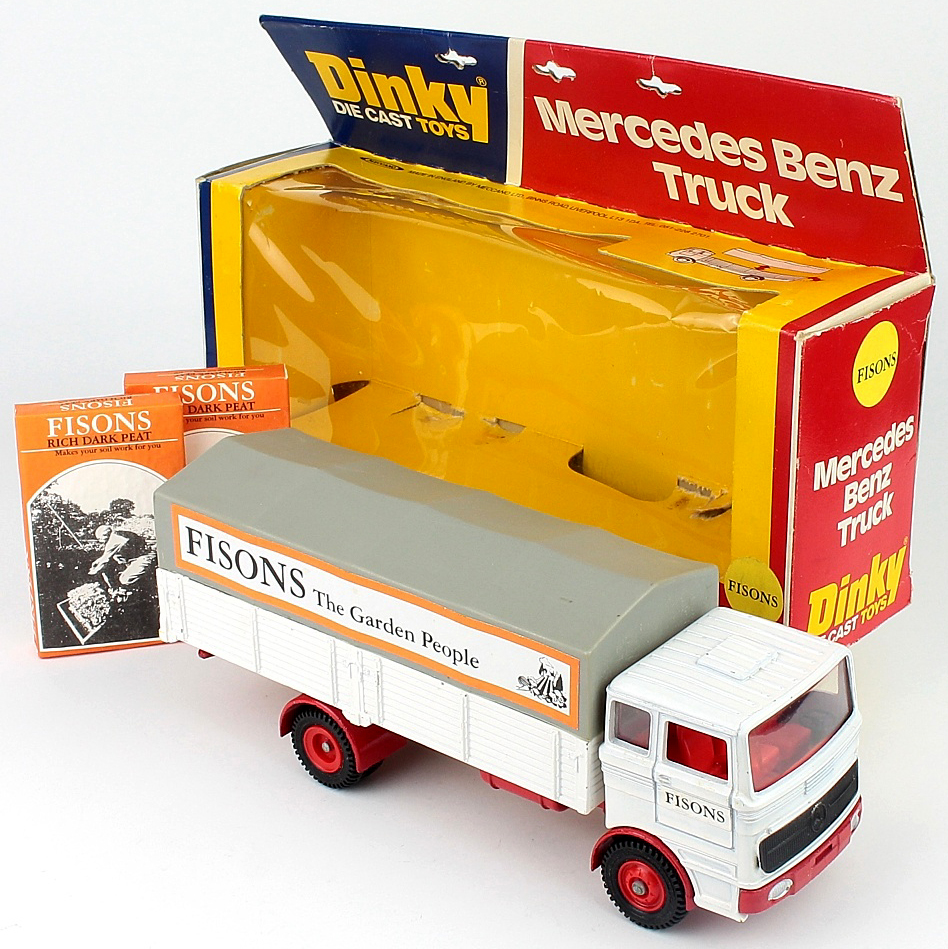
    Thornycroft Antar Sandmaster hauling an 80 ton load in the Libyan desert.
    Image: Original press photo (negative 5071) from the Richard Stanier collection.

    The first cus­tomer, and whom the truck was real­ly designed for, was the Anglo-Per­sian Oil Com­pa­ny. That is sig­nif­i­cant when one con­sid­ers the name, Mighty Antar. The name Antar was a ref­er­ence to Antar Ibn Shad­dad, a pre-Islam­ic poet-war­rior, so using that name was very flat­ter­ing.

    An early Mighty Antar Tank Transporter, virtually identical to the Dinky Supertoys model.
    Image: From internet.

    Short­ly after the ini­tial trucks were pro­duced, it was quick­ly con­sid­ered to be ide­al as a tank trans­porter, to car­ry the then some­what new British Cen­tu­ri­on Tanks, and this is where it gar­nered most of its fame and use.

    A closeup view of the Mighty Antar Tractor.
    Image: www.talkmodeltoys.com


    Specifications

    Pro­duc­tion1951–1964
    Weight of the trac­tor44,220 lbs
    Length of the trac­tor27’
    Width9.25′
    Height10.25′
    Trail­er capac­i­ty50–60 tons
    EngineRolls-Royce designed Mete­orite, V‑8, 18 liters
    Top speed28 mph
    Trans­mis­sion4 speed, with a 3 speed trans­fer case
    Ver­sionsMK 1, MK 2, MK 3 (the Dinkys are the MK 1)

    The Dinky Supertoys 660 Tank Transporters

    Intro­duced in May-June of 1956 with much fan­fare, this was the first of the three Mighty Antar ver­sions pro­duced by Mec­ca­no, and remained in pro­duc­tion until 1964. When first made, it fea­tured a dri­ver, an attached trail­er, no win­dows, and was made to a scale of about 1:51. In many ways, this is a very accu­rate mod­el of the real vehi­cle, with a cou­ple of excep­tions: in the 1950’s, Mec­ca­no insist­ed on using sin­gle rear tires and wheels, when many trucks had duals. It wasn’t until the 1960’s that they final­ly came around on this detail, which would have looked much bet­ter on this mod­el. The oth­er slight error was using the same size tire and wheel for the trail­er. The pho­to of the orig­i­nal clear­ly shows the trail­er wheels and tires being of a small­er size than the trac­tor.

    The first announcement of the new Mighty Antar Transporter in the June 1956 issue of Meccano Magazine.

    Around 1959, Dinky Toys decid­ed to allow the trail­er to be detached from the trac­tor unit. Orig­i­nal­ly it was pinned in place. And in March 1961, win­dows were final­ly added. In 1957, Mec­ca­no wise­ly decid­ed to offer the Tank Trans­porter togeth­er with the 651 Cen­tu­ri­on Tank in Gift Set 698 which sold for $6.95 in the US. This was pro­duced until 1965.


    The Dinky Supertoys 986 Mighty Antar Low Loader with Propeller

    Fol­low­ing on the great suc­cess of the Tank Trans­porter, Mec­ca­no saw an oppor­tu­ni­ty to get some more mileage out of its Mighty Antar unit, and in June 1959 intro­duced the Low Loader with Pro­peller ver­sion. This used the same Mighty Antar trac­tor unit but was now paired with a new low loader type of trail­er, upon which rest­ed a real­is­tic mod­el of a large brass ship’s pro­peller. As was com­mon with Dinky Toys in the 1950’s, this mod­el was paint­ed in bright col­ors that appealed to young boys. The cab was fin­ished in red and the trail­er in grey.

    Ear­ly ver­sions had the trail­er per­ma­nent­ly attached to the trac­tor unit, and lacked win­dows. But by 1961, it had both. I believe this was the very first Dinky Toy to use plas­tic in some form, as the pro­peller was made of poly­styrene and has the word “Scim­i­tar” on a decal, refer­ring to the man­u­fac­tur­er. When intro­duced, this mod­el was also sold at $4.50, mak­ing it some­what out of reach as an ordi­nary toy, but a fine Christ­mas gift. While not as pop­u­lar as the tank trans­porter, it still sold quite well, and was even­tu­al­ly dis­con­tin­ued in 1964.


    The Dinky Supertoys 908 Mighty Antar
    with Transformer

    By 1962, the Mighty Antar mod­el which had been around for some time began to lose some of its allure. So it was prob­a­bly a bit sur­pris­ing when Mec­ca­no announced that they would make one more ver­sion of this icon­ic mod­el. They would revert back to the orig­i­nal mil­i­tary ver­sion, with its tank trail­er, but would con­vert it to civil­ian liv­ery, and add a some­what unique load — a very large 5,000 KVA trans­former. What’s inter­est­ing about this is that the French Mec­ca­no fac­to­ry was also re-pur­pos­ing its Berli­et Tank Trans­porter to a sim­i­lar ver­sion, car­ry­ing the very same trans­former. This trans­former was anoth­er ear­ly use of plas­tic, and was actu­al­ly made in France. It was includ­ed with the mod­el in a plas­tic bag and need­ed assem­bly.

    Since the tank was quite heavy and could eas­i­ly sit on the trail­er, Mec­ca­no engi­neers had to design some way to keep the much lighter trans­former from slid­ing around dur­ing play. So they wise­ly decid­ed to add some mount­ing brack­ets or flanges to the bed of the trail­er, and the trans­former fits snug­ly in those. The French did not do this for their ver­sion, so the trans­former does in fact slide around.

    By the time this was intro­duced, the mar­ket for toys was rapid­ly chang­ing, with much more com­pe­ti­tion. This look also began to appear quite dat­ed by 1962, so this mod­el was nev­er a big sell­er, and Mec­ca­no dis­con­tin­ued it in 1964. All of these came with both win­dows and the detach­able trail­er, and since they were nev­er a big sell­er, are now quite hard to find and expen­sive for mint copies.

    By the ear­ly 1960’s, Mec­ca­no Ltd was in seri­ous trou­ble, with mount­ing debt, out of con­trol costs, and ris­ing com­pe­ti­tion on many fronts. By 1964 things had dete­ri­o­rat­ed so bad­ly that the com­pa­ny was forced to accept a bid by Lines Broth­ers to take over the com­pa­ny, and so over half a cen­tu­ry own­er­ship by the Horn­by fam­i­ly ceased.


    Post-Meccano Versions

    By 1968, things had wors­ened even more, and the com­pa­ny decid­ed to sell off some of its die mak­ing and tool­ing equip­ment, espe­cial­ly on some of the old­er, obso­lete mod­els. In 1968, a quan­ti­ty of tool­ing and dies were sold to the Indi­an firm S. Kumar and Com­pa­ny, trad­ing as Atam­co Pri­vate Ltd. in Cal­cut­ta, along with a license to use them. But sub­se­quent qual­i­ty con­trol was so poor that Mec­ca­no, upon see­ing the work, insist­ed that the names Dinky Toys be removed from the base­plates, and new box­es designed and used. These were then named Nicky Toys, and were sold for some time.

    These toys used the orig­i­nal Mec­ca­no Dinky Toys dies, but were assem­bled, paint­ed and pack­aged by oth­ers, to dif­fer­ent stan­dards, so they are con­sid­ered to be a sub­set of real Dinky Toys, but are nonethe­less col­lect­ed by hob­by­ists. One of the more strik­ing exam­ples was their reis­sue of the Mighty Antar Trans­porter, fin­ished in a sim­i­lar col­or scheme used on the Mec­ca­no Trans­former ver­sion, but now with­out the trans­former.

    More recent­ly, French based DAN Toys has repro­duced sev­er­al of the Dinky Toys mod­els, from their fac­to­ry in Chi­na. These are pret­ty well made and very close­ly match the orig­i­nal Dinky Toys. Because they employ new tech­nol­o­gy and tech­niques that weren’t avail­able in the 1950’s and 1960’s, they always appear to be fin­ished to a high­er stan­dard; some would argue too nice. To date, they have made copies of both the Mighty Antar Low Loader with Pro­peller and the Mighty Antar Trans­porter with Trans­former. Below is a pho­to of the lat­ter, with its trans­former still boxed and unassem­bled.

  • Dinky Toys for our Hornby Trains — AA Patrolmen, RAC Patrolmen and Policemen

    Dinky Toys for our Hornby Trains — AA Patrolmen, RAC Patrolmen and Policemen

    The first part of this arti­cle con­cerns two influ­en­tial motor­ing orga­ni­za­tions with very dif­fer­ent back­grounds and fas­ci­nat­ing his­to­ries, fol­lowed by a look at law enforce­ment offi­cers and some of their vehi­cles.

    The Auto­mo­bile Asso­ci­a­tion (AA) was found­ed in 1905, orig­i­nal­ly with a mem­ber­ship of just 90, which has now grown to 15 mil­lion. They start­ed using bicy­cles fol­lowed by motor­cy­cle com­bi­na­tion patrols, then moved on to cars and now use sophis­ti­cat­ed vans. Ini­tial­ly the busi­ness focused on break­down cov­er which con­tin­ues to this day. How­ev­er they have since diver­si­fied sig­nif­i­cant­ly and nowa­days offer finance, dri­ving lessons, motor­ing maps, insur­ance, leisure and lifestyle ser­vices. The AA employs over 7,400 peo­ple and is head­quar­tered at Fanum House, Bas­ingstoke.

    The Roy­al Auto­mo­bile Club (RAC) was found­ed in 1897 as a pri­vate social and ath­let­ic club. In the ear­ly 1900s it was influ­en­tial in work­ing with the gov­ern­ment to amend out-of-date speed lim­its and advise on oth­er issues. They orga­nized the first British Grand Prix at Brook­lands in 1926 also the first RAC Ral­ly, now Ral­ly GB, in 1932 and were influ­en­tial in many more motor­sport events. They remained a respect­ed voice in the devel­op­ment of gov­ern­ment pol­i­cy for roads and motor trans­port.

    In 1901 an asso­ciate sec­tion (RAC Motor­ing Ser­vices) was formed and had uni­formed mobile patrols using Match­less motor­cy­cle com­bi­na­tions. The side­cars con­tained a tool kit, fan belts, hoses and cans of spare petrol. Ini­tial­ly they used to park up in lay­bys and along­side major road junc­tions, and from 1957 were sup­plied with two-way radios which sig­nif­i­cant­ly helped get­ting to strand­ed motorists. In 1978 the RAC Motor­ing Ser­vices was split off from the par­ent com­pa­ny to form the RAC Motor­ing Ser­vices Ltd. which was sold to Lex Ser­vices in 1999. After a num­ber of oth­er changes it is now RAC plc with its head­quar­ters in Wal­sall, West Mid­lands and employs 3700 staff.

    Both the AA and the RAC used to oper­ate their own very dis­tinc­tive road­side tele­phone box­es for use by their mem­bers in the event of a break­down or an emer­gency. There was some coop­er­a­tion between the two orga­ni­za­tions, with the access keys to all these box­es hav­ing a com­mon key pat­tern.


    The AA Patrolmen

    Dinky Toys and Somerville Models AA patrolmen.

    Two designs of AA guides were made by Dinky Toys; the 44C fig­ure who was direct­ing traf­fic and the 44D fig­ure who was salut­ing. They were intro­duced in the Octo­ber 1935 edi­tion of Mec­ca­no Mag­a­zine priced at 3d (pence) each and remained in the range until 1940. Both fig­ures are 36mm high and sport a brown uni­form with a black sash, brown peaked caps and black knee length boots. The 44C has white gloves while the 44D has no gloves. Nei­ther of these fig­ures were released again by Mec­ca­no after the war.

    It was the prac­tice in the ear­ly days of the AA for patrol­men to salute a pass­ing motorist who was dis­play­ing their mem­ber­ship badge on the front of their vehi­cle. The oth­er Dinky fig­ure shows a patrol­man direct­ing traf­fic. This was showed to very good effect dur­ing the coro­na­tion of Queen Eliz­a­beth II; the police con­cen­trat­ed on secu­ri­ty and the AA were called upon to man­age tem­po­rary road sign­ing, park­ing facil­i­ties and traf­fic con­trol.

    Doug McHard was the Edi­tor of Mec­ca­no Mag­a­zine in the ear­ly 1970s and lat­er the Mar­ket­ing Direc­tor of the Mec­ca­no and Dinky Toys ranges. When he left Mec­ca­no he was allowed to take a num­ber of molds of Hornby/Dinky fig­ures with him. In 1978 he set up Somerville Mod­els in Lin­colnshire and spe­cial­ized in pro­duc­ing low-vol­ume, high-qual­i­ty diecast mod­el cars.

    He did some test casts of the fig­ures with a view to pos­si­bly sell­ing them but these plans nev­er mate­ri­al­ized. Two of the cast­ings he acquired were of the pre-war AA patrol­men and two exam­ples which were recent­ly sold at auc­tion are shown above. For some rea­son these nev­er went into pro­duc­tion and the two fig­ures shown here are test cast­ings.

    The paint­ing of the Somerville fig­ures has a slight­ly high­er lev­el of detail, and the uni­forms are of a brighter col­or. From mem­o­ry I believe that the col­or of the Dinky ver­sions is more accu­rate to the orig­i­nal AA uni­forms.

    The AA Road­side Tele­phone Box was intro­duced in Octo­ber 1935 and remained avail­able until 1940. It’s a love­ly mod­el made from tin­plate and was nev­er reis­sued after the war. The design is exquis­ite and com­pris­es a beige cham­fered base. The box body is col­ored yel­low, black and white and the roof is white. A wire flag­pole is locat­ed on the top and sup­ports three tin­plate direc­tion signs; one for Lon­don, one for Glas­gow and one for Liv­er­pool. Being tin­plate it is prone to rust and these are hard to find in any con­di­tion.

    The AA roadside telephone box.

    A preserved AA box at Brancaster.

    The AA first intro­duced road­side box­es in 1912. They were intend­ed for use as shel­ters by the Patrol­men, but were soon equipped with tele­phones. The new larg­er box­es were intro­duced in 1925. They were illu­mi­nat­ed by lamps on the roof and incor­po­rat­ed a tele­phone and include a fire extin­guish­er for use by mem­bers and Patrol­men. Each box was num­bered and the AA web­site lists a total of 862 in use by 1962 through­out Great Britain. In 1947, AA and RAC box keys were made inter­change­able. Now only 19 box­es sur­vive, eight of these are list­ed build­ings. The one shown above is in a lay-by and is num­ber 530 at Bran­cast­er, Nor­folk, on the A149 (Hun­stan­ton-Wells) around 300 yards west of the junc­tion with Com­mon Lane, Bran­cast­er Staithe. My old AA key is shown below but I doubt if it will now fit the box at Bran­cast­er.

    A key for AA and RAC roadside boxes.

    Dinky 44B AA motorcycle combinations.

    Dinky 270 AA Motor Cycle Patrol trade box.

    Different versions of the AA logo over a period of 25 years.

    When the AA was formed in 1905 the Patrol­men used bicy­cles but every­thing changed in the 1920s when motor­cy­cle and side­car com­bi­na­tions were intro­duced. This meant a more rapid response and enabled tools and spares to be car­ried in the side­car. The AA motor­cy­cle was a 2.5hp Chater Lea, who had a fac­to­ry in Ban­ner Street, Lon­don EC1. These were lat­er super­seded by Tri­umph and BSA mod­els.

    The Dinky Toys AA Motor­cy­cle Patrol was intro­duced in 1935 as cat­a­logue num­ber 44B. The advent of WWII caused this mod­el to be dis­con­tin­ued in 1940. The motor­cy­cle is 45mm long. The first ver­sions were fit­ted with sol­id white rub­ber tires and they were rein­tro­duced in 1946 with black rub­ber tires until 1950. All the Dinky motor­cy­cles are made to a gener­ic design and the AA ver­sion incor­po­rates a rid­er in a tan uni­form. The motor­cy­cle is black and the side­car is yel­low with an AA sign on the front.

    The com­bi­na­tion was rein­tro­duced in 1959 as cat­a­log num­ber 270 and remained in the range until 1962. Some had black rub­ber wheels that were lat­er replaced with grey plas­tic wheels. The AA updat­ed their logo on a num­ber of occa­sions and the Motor­cy­cle Patrol can be found with four dif­fer­ent ver­sions between 1935 and the 1960s. For more details of the AA logo his­to­ry see the arti­cle A sign of mem­ber­ship at the AA web­site.

    This mod­el was avail­able indi­vid­u­al­ly and was sold out of a deal­er trade box which would have ini­tial­ly con­tained 6 mod­els. In addi­tion to the AA ver­sion there were two oth­er vari­ants avail­able for export mar­kets only. They were the num­ber 271 “TS” (Tour­ing Sec­ours) for the Bel­gian mar­ket and the num­ber 272 “ANWB” (Algemene Ned­er­landse Wiel­ri­jder­s­bond) for the Nether­lands mar­ket. These are quite rare in the UK.

    Different versions of the AA logo over a period of 25 years.

    Before the war all the AA mod­els were avail­able in the num­ber 44 AA Box, Motor Cycle Patrol and Guides Gift Set (shown above) which was avail­able from 1935 to 1941. This com­prised the 44A AA Box, the 44B Motor Cycle Patrol, the 44C and the 44D AA Guides. These were set against a very attrac­tive pic­to­r­i­al box insert.

    Dinky AA Mini Vans: early version on the left and the later one on the right.

    In 1962 Mini Vans start­ed to replace the motor cycle com­bi­na­tions and were soon seen through­out Eng­land. Scot­land had a fleet of Land Rovers. I’m sure these would have been very well received by the Patrol­men, espe­cial­ly dur­ing the win­ter months.

    The Austin and Mor­ris Mini Vans were intro­duced in 1960 and these very pop­u­lar vehi­cles remained avail­able until 1983. The van was renamed to just Mini Van in 1978. Dur­ing the 23 years of pro­duc­tion over 520,000 were made. It had a 4 cylin­der 848cc engine, inde­pen­dent sus­pen­sion and front wheel dri­ve. It was built on the longer Mini Trav­eller chas­sis and had a car­ry­ing capac­i­ty of ¼ ton and a max­i­mum speed of 73mph. The first 200 vans were hand­ed over to the AA on 26 March 1964.

    The ear­li­er motor­cy­cle and side­car com­bi­na­tions car­ried 29 items of equip­ment, includ­ing two red flags. The mini van car­ried 97 items of equip­ment, includ­ing two red flags. The num­ber 274 Dinky Mini Van was intro­duced in July 1964 and remained in the range until 1970. This tru­ly is a delight­ful mod­el with many excel­lent details. These include a detailed diecast base plate, accu­rate yel­low paint­work (lat­er yel­low with a white roof), a pair of open­ing rear doors, a roof sign, a roof ven­ti­la­tor, win­dow glaz­ing, an inte­ri­or includ­ing seats and a steer­ing wheel, spun alloy wheels, spring sus­pen­sion and steer­able front wheels. The inte­ri­or seats can be either red or blue. On a mod­el that is only 3” (78mm) long this is diecast­ing at its absolute best.


    The RAC Patrolmen

    Dinky Toys and Somerville Models RAC patrolmen.

    Two designs of RAC guides were made by Dinky Toys using the same molds as the AA fig­ures; the 43C fig­ure who was direct­ing traf­fic and the 43D fig­ure who was salut­ing. They were intro­duced in the Octo­ber 1935 edi­tion of the Mec­ca­no Mag­a­zine priced at 3d (pence) each, and remained in the range until 1940. Both fig­ures are 36mm high, have a blue uni­form with a red sash, blue peaked caps and black knee length boots. The 43C has white gloves where­as the 43D has no gloves. Nei­ther of these fig­ures were released again by Mec­ca­no after the war. Somerville Mod­els also repro­duced these two fig­ures, details as per the AA patrol­men cov­ered above.

    The RAC roadside telephone box.

    The 43A RAC Tele­phone Box was intro­duced in Octo­ber 1935 and remained in the range until 1941. It is made from tin­plate and is a lot more sim­ple than the AA ver­sion. Stand­ing on a blue base, it is print­ed blue and cream with black hinges and has a white roof. The base is 30mm x 30mm and the box is 51mm in over­all height. Like the AA Box, being tin­plate it is prone to rust and these also are hard to find in any con­di­tion.

    The RAC Box­es start­ed to appear in 1912 and ini­tial­ly were shel­ters for patrol­men to be used in poor weath­er. The box­es fit­ted with tele­phones appeared around 1930 and mem­bers were issued with keys to gain access in case of a prob­lem. At their height there were approx­i­mate­ly 500 box­es through­out the coun­try. Their demise was caused by the rapid uptake of mobile phones.

    The box­es were made from tim­ber with a two-part sta­ble door. The loca­tion of the box was clear­ly shown and they were pro­vid­ed with first-aid kits and petrol cans. The only sur­viv­ing RAC Box­es are to be found in Her­itage muse­ums; there is one locat­ed in the East Anglia Trans­port Muse­um at Carl­ton Colville, Low­est­oft, Suf­folk.

    Pre-war and post-war Dinky 43B RAC motorcycle combinations.

    RAC Motor Cycle Patrol trade box.

    The 43B RAC Motor Cycle Patrol was intro­duced in 1935 and dis­con­tin­ued in 1940. The motor cycle was paint­ed black and the side­car was dark blue. This was a dif­fer­ent design from the AA side­car and the tires are usu­al­ly sol­id white rub­ber. The motor cycle is 45mm long. Odd­ly, the Dinky RAC side­car is plain blue with no RAC logo. In real life all of them were clear­ly marked as RAC vehi­cles. It’s not known why Mec­ca­no made this sur­pris­ing omis­sion. The com­bi­na­tion was re-released after the war between 1946 and 1949. The lev­el of paint­ing detail of the dri­ver is much greater on the pre-war vehi­cle than the lat­er ver­sion and the tires are sol­id black rub­ber. When sold indi­vid­u­al­ly the RAC motor cycle was deliv­ered to deal­ers in a trade box ini­tial­ly con­tain­ing six mod­els.

    RAC Gift Set.
    Image: Vectis Auctions

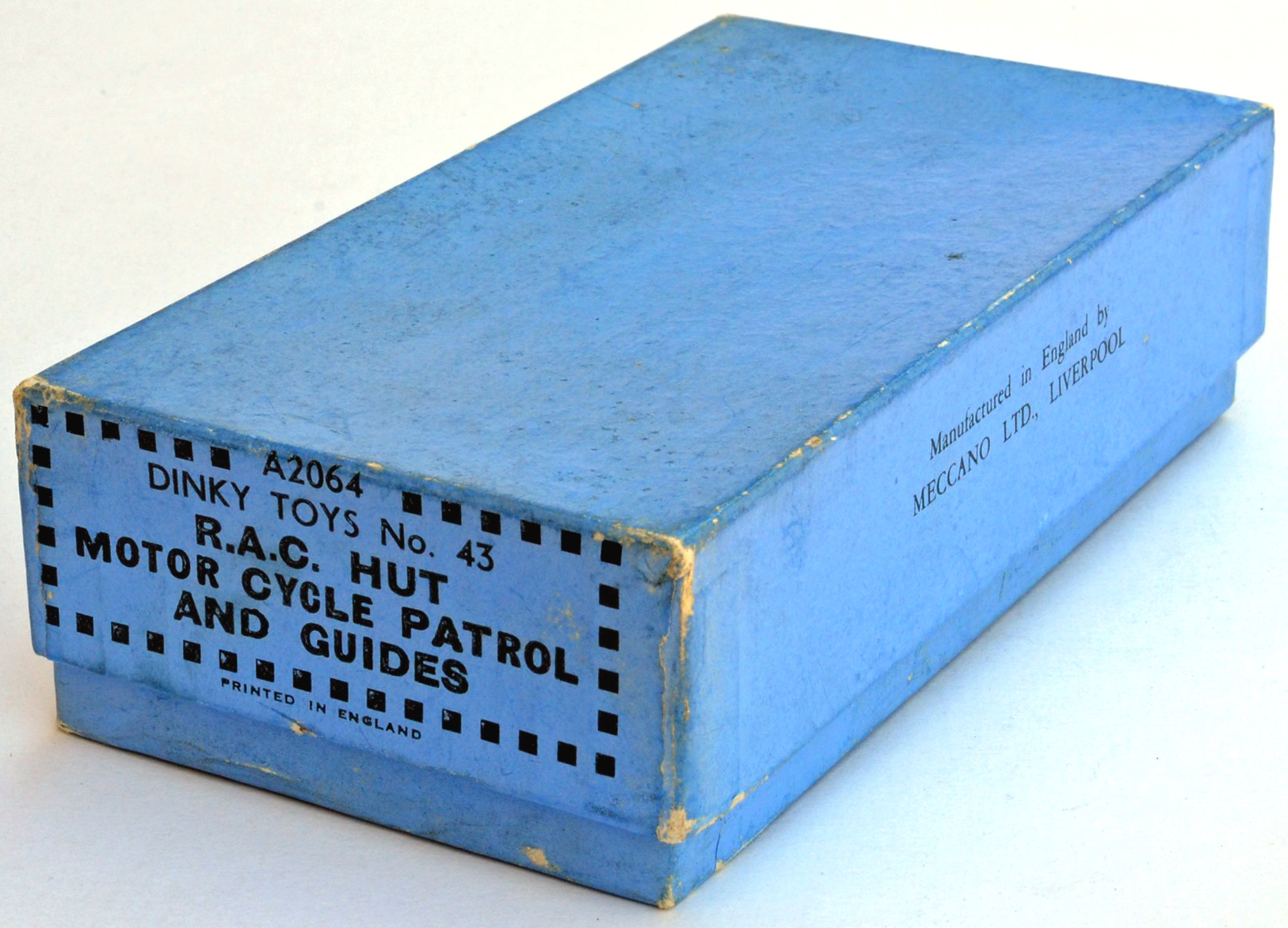
    Before the war all the RAC mod­els were avail­able in the num­ber 43 RAC Box, Motor Cycle Patrol and Guides Gift Set which was
    avail­able from 1935 to 1941. This com­prised the 43A RAC Box, the 43B Motor Cycle Patrol, and the 43C and 43D RAC Guides. These were set against a very attrac­tive pic­to­r­i­al box insert. The RAC gift sets seem much rar­er than the AA ver­sions and quite hard to find.

    RAC Mini Van.

    The 273 Mini Minor Van RAC was intro­duced in Decem­ber 1965 and remained in the range until 1970. It is an iden­ti­cal cast­ing to the 274 AA van described ear­li­er.

    The dif­fer­ences are that it is paint­ed dark blue with a white roof and a blue roof sign and has RAC mark­ings on the roof sign, rear pan­el and rear doors. The inte­ri­or seats can be either red or blue. The style of the RAC logo and mark­ings did not change through­out the life­time of the mod­el.


    Policemen and Police Cars

    The range of Dinky police­men and acces­sories was first announced in the July 1936 edi­tion of the Mec­ca­no Mag­a­zine and the advert is shown below. In those days, for Dinky Toys there was no spe­cif­ic pro­mo­tion, new items were sim­ply added in to the exist­ing range with no fan­fare what­so­ev­er.

    Advertisement in the July 1936 issue of Meccano Magazine
    announcing the police related models.

    There were two dif­fer­ent designs of Police­men made by Dinky, both of them were on point duty (traf­fic con­trol). The num­ber 42c is in a white coat with a blue hel­met and trousers with an over­all height of 42mm. The num­ber 42d is in a blue uni­form, blue hel­met and long white gloves which reach down to the elbows, he is 40mm high. Both fig­ures were new in July 1936 and dis­con­tin­ued in 1941. Nei­ther of these fig­ures reap­peared after the war. Mod­ern ver­sions of the police­men were tri­aled by Somerville Mod­els and these are shown below.

    Dinky policemen: on the left three Dinky figures, on the right two Somerville figures.

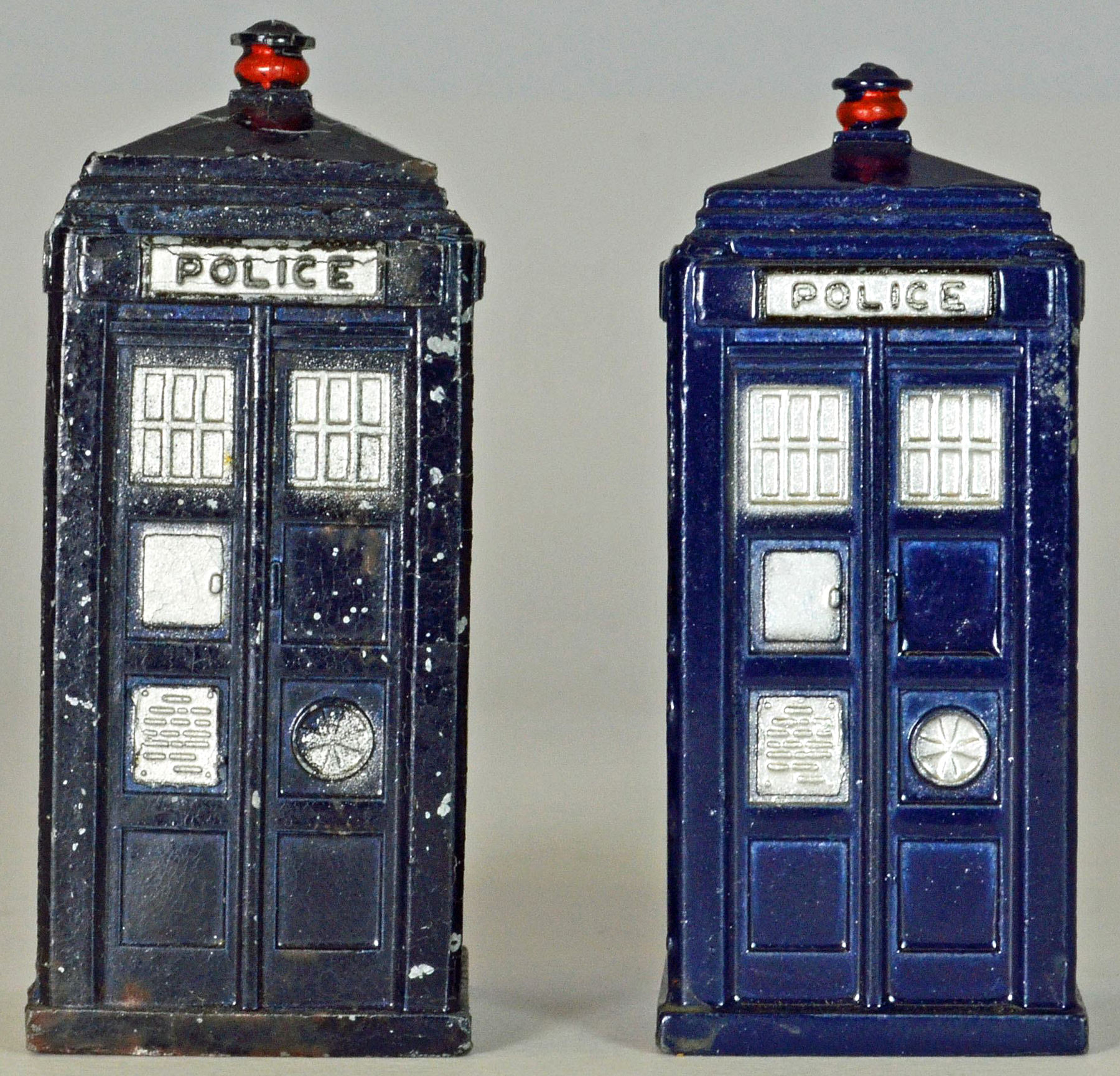
    The Police Box or Hut was intro­duced in July 1936 as cat­a­log num­ber 42a and was dis­con­tin­ued in 1941. It was released again after the war from 1948 to 1960 with the cat­a­logue num­ber chang­ing to 751 in 1954. It has an over­all height of 54mm.

    The Dinky Police Hut and the dealer trade box. By the mid 1960s, thanks to Dr. Who, these police boxes became known as the Tardis figures.

    This is prob­a­bly the best known Dinky Toy of all as it has become syn­ony­mous with the extreme­ly pop­u­lar BBC series ‘Dr. Who’ and his time machine the Tardis.

    The Box is paint­ed dark blue with sil­vered win­dows and a ‘Police’ sign at the top on all four sides. On top of the roof is a light, this is some­times paint­ed blue and some­times red.

    Under the left hand win­dow on the front is a hinged pan­el, behind this is a tele­phone for use by the pub­lic. Under­neath this is a pan­el con­tain­ing instruc­tions for use and along­side this is a ven­ti­la­tor. These three fea­tures are sil­vered.

    The Police Box that the Dinky mod­el is based on was designed by The Dinky Police Hut and the deal­er trade box. By the mid 1960s, thanks to Dr. Who, these Police box­es became known as the Tardis Gilbert MacKen­zie Trench and was in use from the late 1920s until the late 1960s. Not all the box­es were paint­ed blue, some were green and some red.

    The pub­lic could use the box to con­tact the police via a hinged pan­el which revealed a tele­phone. A police­man could phys­i­cal­ly enter the box which was in fact a minia­ture police sta­tion, there he could read and write reports, con­tact the sta­tion and take meal breaks in pri­vate.

    The box con­tained a first aid kit and a fire extin­guish­er, if the light on the roof was flash­ing this alert­ed a police­man that he was required to con­tact his sta­tion imme­di­ate­ly.

    At one time there were thou­sands of these box­es but with the advent of mod­ern com­mu­ni­ca­tions they have all now sad­ly dis­ap­peared from our streets. There are some pre­served box­es in muse­ums.

    The police motorcycles.

    Shown in the image above are the 37B Police Motor Cyclist, the pre-war 42B Police Motor Cycle Patrol and the 42 post-war Police Motor Cycle Patrol.

    Police motorcycles trade box.

    The 37B was new in Novem­ber 1937 and dis­con­tin­ued in 1941. It was reis­sued after the war in 1948 until 1954 but only as an export item for the U.S. mar­ket. The motor­cy­cle is black with sil­ver han­dle­bars and the rid­er is in a blue uni­form with brown gauntlets. The over­all length is 45mm. This cast­ing was used for all the motor­cy­cles in the Dinky range with only a minor change to accom­mo­date the side­cars when used as a com­bi­na­tion. The 37B was only sold from a deal­er trade box con­tain­ing six mod­els.

    The pre-war num­ber 42b Police Motor Cycle Patrol was intro­duced in 1935 and remained avail­able until 1940. The motor­cy­cle is paint­ed black with a sil­ver exhaust and the rid­er and pas­sen­ger are both in dark blue uni­forms with detailed paint­ing of the faces. The side­car is paint­ed green and some have white rub­ber wheels while lat­er mod­els sport black wheels. This mod­el was reis­sued after the war between 1948 and 1954 as an export only item to the Unit­ed States. This had sim­pli­fied paint­work, no sil­ver on the exhaust and no detail­ing in the faces. It was fit­ted with black rub­ber wheels.

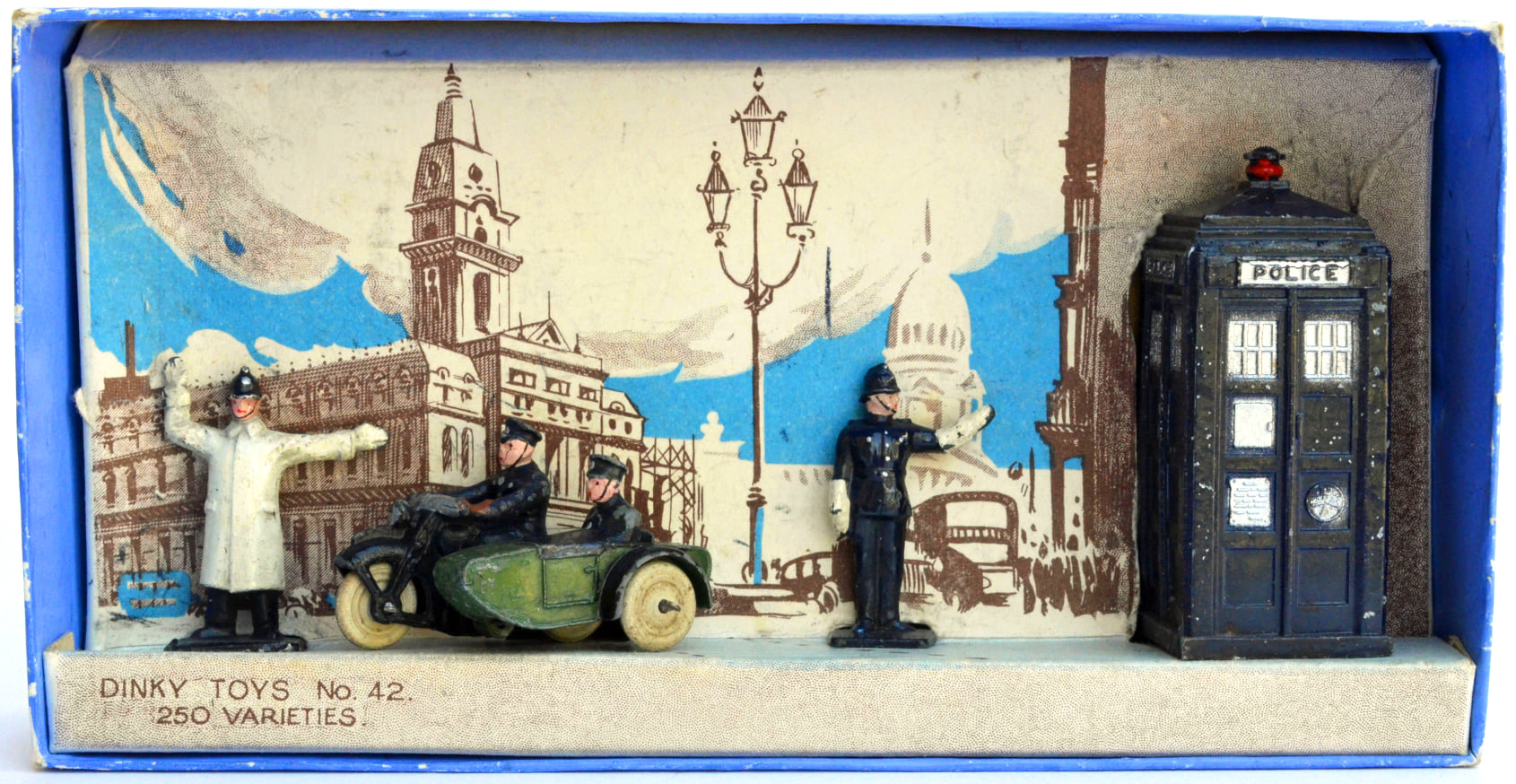
    Number 42 Police Gift Set.

    The No. 42 “Police Box, Motor Cycle Patrol and Police­men” Gift Set was intro­duced in 1935 and remained avail­able until 1940, it was nev­er reis­sued after the war. It con­tained the 42A Police Box, the 42B Police Motor Cycle Patrol and the two Police­men 42C and 42D. It was con­tained in a blue lift-off lid box and the mod­els were shown against an attrac­tive dis­play card in the box base.

    Number 42 Police Gift Set.

    The Dinky Toy range from the ear­ly 1930s always con­tained an ambu­lance and a fire engine but very sur­pris­ing­ly they nev­er fea­tured a police car until 1955. This was an amaz­ing omis­sion as all the oth­er diecast toy man­u­fac­tur­ers in the UK fea­tured one in their ranges. Dinky had no short­age of suit­able saloon cars in their cat­a­logue which could have eas­i­ly been offered as police vehi­cles with a sim­ple alter­na­tive col­or scheme. I’m sure that such a vehi­cle would have been a good sell­er.

    The first such Dinky vehi­cle was the num­ber 255 Mersey Tun­nel Police Van which was new in Sep­tem­ber 1955 and avail­able until 1961. This icon­ic vehi­cle, paint­ed bright red, was based on a short wheel­base Land Rover (Series 1) and would have been famil­iar to young boys from Liv­er­pool and oth­er vis­i­tors to the city. Even though the real vehi­cle would nev­er have been seen by the vast num­ber of boys in oth­er parts of the coun­try, it was still a very pop­u­lar mod­el and a firm favorite of mine at the time. This was the only unique cast­ing of a police vehi­cle made by Dinky. All the oth­er exam­ples are mod­i­fi­ca­tions of exist­ing cars in the range.

    The next mod­el was the num­ber 256 Hum­ber Hawk Police Car, new in Decem­ber 1960 and avail­able until 1964. This was a love­ly mod­el paint­ed black and includ­ed a roof sign, an anten­na, spring sus­pen­sion and glazed win­dows. It also had inte­ri­or seat­ing, a steer­ing wheel plus a dri­ver and police­man pas­sen­ger. The Hum­ber Hawk was a sub­stan­tial vehi­cle made by the Roots Group and an excel­lent choice for an emer­gency vehi­cle.

    Britain’s motor­way net­work com­menced in 1958 with the Pre­ston Bypass (M6), and the first part of the M1 was opened in 1959. This pre­sent­ed the police with a prob­lem as there were no speed restric­tions in the ear­ly days and the bad guys would use fast cars to get away from the law. The response was the intro­duc­tion of spe­cial­ist faster police vehi­cles and Dinky announced the num­ber 269 Jaguar Motor­way Police Car in April 1962, which remained avail­able until 1966. This is paint­ed white and fea­tures an anten­na, a roof mount­ed blue light, a ‘Police’ sign on the boot lid, steer­ing and sus­pen­sion, win­dow glaz­ing, seat­ing, steer­ing wheel and a dri­ver and police­man pas­sen­ger. Some of these vehi­cles are paint­ed using gloss white paint and some with matt paint.

    We start­ed this part of the arti­cle with two police­men on point duty and we now fin­ish with the last Dinky Toy to offer a very sim­i­lar func­tion but using a com­plete­ly dif­fer­ent design. The num­ber 753 Police Con­trolled Cross­ing was new in Novem­ber 1962 and stayed in the range until 1967. I quote from the Novem­ber 1962 issue of Mec­ca­no Mag­a­zine:

    This delight­ful lit­tle minia­ture, man­u­fac­tured from high-impact poly­styrene, has a police­man who can be turned around in his box by means of a knurled knob pro­trud­ing at the base of the box. It is avail­able in kit form with the lamp stan­dard, police­man and his box being sup­plied sep­a­rat­ed from the base. These are easy to fix, and if required, can be glued per­ma­nent­ly in place. A must for your lay­out!

    The Police Controlled Crossing.
    Image: Vectis Auctions

    This arti­cle con­cerns fig­ures which are suit­able for use with Horn­by O gauge mod­el rail­ways and I have also includ­ed direct­ly asso­ci­at­ed Dinky vehi­cles. As Horn­by O gauge was dis­con­tin­ued in the ear­ly 1960s I have only includ­ed the Dinky vehi­cles made between the 1930s and the ear­ly 1960s. The Dublo Dinky range nev­er incor­po­rat­ed a police car, so sad­ly the Horn­by Dublo boys had to look else­where to achieve law enforce­ment on their lay­outs.


    Acknowledgement

    This arti­cle by our late friend Dave Bus­field first appeared in the April 2020 issue of Horn­by Rail­way Col­lec­tors’ Asso­ci­a­tion Jour­nal.

  • Dinky 39F Studebaker State Commander Coupe

    Dinky 39F Studebaker State Commander Coupe

    The 1939 Stude­bak­er Com­man­der was a main­stream, styl­ish mod­el with dis­tinct yacht-like lines, designed by Ray­mond Loewy’s firm, and fea­tured two and four-pas­sen­ger coupe body styles with both stan­dard and deluxe trim lev­els. It was part of the Com­man­der line, a mid-range Stude­bak­er mod­el, and was known for its attrac­tive design and well-appoint­ed cab­in with fea­tures like col­umn shift and vent win­dows.

    1939 Studebaker Commander advertising brochure.

    1939 Studebaker Commander Business Coupé Model 9A.
    Image: Antique Automobile Club of America

    Some time ago I bought this pre-war Dinky 39F Stude­bak­er State Com­man­der Coupe with black smooth hubs, pre-war thin axles and a lac­quered base plate. It’s in the hard­er to find yel­low, the same col­or as the mock-up shown below it.

    Dinky 39F Studebaker State Commander Coupe.

    Dinky 39F Studebaker State Commander Coupe mock up.
    Image: autojauneblog.fr

    This yel­low pre-war mod­el with a lac­quered base plate is very hard to find in any con­di­tion. For me it’s also a sym­bol of one of the last Dinky Toys pro­duc­tion runs before the stop­page due to WW II. Series 39 is one of the most beau­ti­ful car series ever made. In this arti­cle I share some addi­tion­al infor­ma­tion and pic­tures about the Dinky 39F.

    Although still in orig­i­nal con­di­tion, this mod­el is well played with and has some paint loss. I real­ly like the yel­low col­or of the body whose paint is still shiny and am drawn to its lac­quered base plate. Only the smooth hubs show slight traces of fatigue and I don’t see met­al fatigue on the body that’s com­mon to most pre-war Dinkys.

    The smooth and shiny lac­quered base plate is par­tic­u­lar­ly beau­ti­ful and looks sil­ver in col­or, but under some light­ing con­di­tions can appear gold or beige. I there­fore find it dif­fi­cult to accu­rate­ly iden­ti­fy its col­or. The actu­al mod­el is even nicer than it appears in the pic­ture. All pre-war Series 39 base plates were lac­quered, while the post-war issues were black. Fur­ther, all Series 39 base plates are loose and held in place by the axles, except for the Dinky 39C Lin­coln Zephyr Coupe which has three pil­lars to which the base plate is riv­et­ed. I find the loose base plate vari­a­tion very spe­cial, and as far as I can tell it’s only present in the Series 39 mod­els.

    Pre-war Dinky 39F with beautiful shiny lacquered base plate held in place by the axles.

    On page 63 of Mike and Sue Richard­son’s Dinky Toys & Mod­elled Minia­tures, the authors describe the Series 39 mod­els as:

    The group of vehi­cles num­bered 39 con­sti­tute a new con­cept in Dinky Toys. They had one piece diecast bod­ies with flow­ing lines and were accu­rate rep­re­sen­ta­tions of spe­cif­ic vehi­cles with tin­plate base­plates inscribed with the vehi­cles names. Though it was not the first time that Dinky had issued such accu­rate mod­els, these are the first in the scale that came to be used for most of the toy cars for many years to come, and also the first to use this form of con­struc­tion.


    Pre-war Series 39 models

    The Dinky 39F belongs to the Series 39 “Sedans and Coupes” group and was intro­duced in the June 1939 issue of Mec­ca­no Mag­a­zine with the announce­ment “Ready July” and lat­er in the August issue with the announce­ment “Look out for these!” So it’s not entire­ly clear when this series was in fact avail­able for sale. As WWII approached, Mec­ca­no Liv­er­pool like­ly focused on pro­duc­ing mil­i­tary mod­els. This lack of clar­i­ty of avail­abil­i­ty was also the case with the Series 38 Sports Cars, of which only three of the six adver­tised mod­els were in fact released before or dur­ing the war.

    Dinky Series 38 and Series 39 models introduced in the June 1939 issue of Meccano Magazine.

    The 1939 U.K. Dinky Toys cat­a­log was unique in that the page describ­ing the Series 39 mod­els includ­ed a tech­ni­cal descrip­tion of the real cars. This was­n’t the case in the gen­er­al 1939–1940 Mec­ca­no cat­a­log. The Series 39 mod­els also appeared dur­ing the war in the August 1940 Cana­da Dinky Toys cat­a­log (with prices) and the July 1941 USA cat­a­log (sans prices), and was one of the last Dinky car series to be pro­duced before and dur­ing WWII.

    Dinky series 39 in the Dinky Toys 1939 UK catalog with a technical description of each real car.

    The Series 39 mod­els were all large Amer­i­can cars and I think Mec­ca­no Liv­er­pool focused espe­cial­ly on the Amer­i­can and Cana­di­an mar­kets with this series. Despite the sale stop­page that occurred on Sep­tem­ber 1943 due to the war effort, the Dinky 39D Buick Viceroy Saloon Car con­tin­ued to be adver­tised in Mec­ca­no Mag­a­zine until Sep­tem­ber 1944, was either still avail­able or act­ed sim­ply as an adver­tis­ing sym­bol for Dinky Toys prod­ucts dur­ing the war.

    Series 39 saloon cars in the Dinky Toys August 1940 Canada catalog with prices.

    The pre-war Dinky 39F was avail­able in a yel­low trade box of six with box num­ber A2291, and in Gift Set 39 “USA Saloon Cars from 1939–1941”.

    Dinky 39F in yellow with yellow trade box of six.
    Image: “Collection Gérard Dulin

    Pre-war Gift Set 39 USA Saloon Cars with Dinky 39F in yellow. Note the red USA export label on the lid of the box.
    Image: Vectis Auctions


    Post-war Series 39 models

    As is well known, all six of the Series 39 mod­els were reis­sued after WWII. The post-war Series 39 appeared for the first time in the Mec­ca­no Dinky Toys UK price list of Novem­ber 1945, with only a total of 54 Dinky Toys avail­able for sale at that time. The Series 39 was includ­ed in the Mec­ca­no Dinky Toys UK price list until Octo­ber 1948, after which they were only issued as export mod­els.

    Meccano UK November 1945 price list showing the Dinky 39 Series.
    Image: Stephen Hanson

    Meccano Dinky Toys UK October 1948 price list showing the Series 39 for the last time in the UK


    Export to the US market

    The Dinky 39F, along with the com­plete range of Series 39 mod­els, appeared for the last time in the 1950 Dinky Toys USA cat­a­log. After that, mod­els 39B to 39E remained only as US export mod­els, of which the 39B, 39C and 39E were paint­ed in a two tone col­or scheme and includ­ed in the Dinky Toys USA cat­a­log until 1952. The 39A and 39F were import­ed into France by Mec­ca­no Paris.

    The complete Series 39 without 2‑tone paint schemes appeared for the last time in the Dinky USA 1950 catalog.

    The Dinky 39B, 39C and 39E models in the Dinky Toys 1952 USA catalog. The two-tone paint schemes are identifiable by the dark color of the fenders.

    The Two-tone Dinky 39 BU, CU and EU (U = USA) exported to the US. Note the red USA export labels on the boxes.
    Image: QDT


    Import to the French market

    Due to scarci­ty of French car mod­els after WWII, the British 39A and 39F were import­ed by Mec­ca­no Bobigny in 1949 and appeared in the Dinky France 1949 cat­a­log for only one year, an exceed­ing­ly short time!

    Dinky Toys 1949 French catalog showing the 24O Coupé Studebaker and 24P Packard.

    In France, the 39F Stude­bak­er Com­man­der Coupe was sold as 24O and the 39A Packard Super Eight Sedan as 24P in the 1949 Dinky Toys France cat­a­log. They were fit­ted with a black French base­plate with the inscrip­tion “Fab en France par Mec­ca­no” and black met­al wheels. The 24O lat­er received rub­ber tires. Pic­tures of the scarce 24O and 24P with their French base­plates and their very nice orig­i­nal col­ors fol­low.

    1949 French Dinky 24O Coupé Studebaker.
    Image: Wallis & Wallis Auctions

    Base plate of 1949 French Dinky 24O Coupé Studebaker.
    Image: Wallis & Wallis Auctions

    French Dinky 24P Packard.
    Image: au jouet parisien

    Base plate of French Dinky 24P Packard.
    Image: au jouet parisien

  • The Fabulous Dinky Toys Encyclopaedia

    The Fabulous Dinky Toys Encyclopaedia

    In the 1950’s as a young Dinky Toys col­lec­tor, I built my own list of what had been made in both the Eng­lish and French fac­to­ries. At that time, there were no books or mag­a­zines for diecast. I start­ed the list using Dinky cat­a­logs and Mec­ca­no mag­a­zines.

    Ever since, this list has grown up until the inter­net start­ed, and I met dig­i­tal­ly dozens of col­lec­tors, at about the same time dig­i­tal cam­eras appeared mak­ing the price of pho­tos accept­able. I added large col­or pho­tos to my list which I made look like a web site with links to surf around, I was also able to trans­fer my typed list to my com­put­er and this slow­ly devel­oped into the present Fab­u­lous Dinky Toys Ency­clopae­dia which I sold on a CD to share my knowl­edge of Dinky Toys with oth­er col­lec­tors.

    I did not know what I had put my foot into, but I dis­cov­ered hun­dreds of cast­ing and col­or vari­a­tions, mock-ups, pre-pro­duc­tion mod­els, all the dif­fer­ent types of box­es, and a load of infor­ma­tion about Dinky Toys.

    Now, the Ency­clopae­dia con­tains almost every­thing about these mod­els. It is writ­ten in both Eng­lish and French and is an absolute must for any Dinky Toys col­lec­tor. It had grown so much from that orig­i­nal CD that I had to use DVDs, and lat­er dou­ble lay­er DVDs. When I reached the capac­i­ty of DVDs, I switched to large USB mem­o­ry sticks; this is how the Ency­clopae­dia is now dis­trib­uted. Today it con­tains more than 3300 pages and more than 12000 large col­or pho­tos.

    For infor­ma­tion and orders, please email:

    dinkycollect[at]gmail[dot]com

    The Dinky Encyclopaedia home page

    Table of contents

    Dinky Toys Encyclopaedia pages about the Dinky 110 Aston Martin DB 5

    For infor­ma­tion and orders, please email:

    dinkycollect[at]gmail[dot]com